40 Questions About Church Membership and Discipline by Kimble

book 40 questions

This book provides a unique format to get you thinking deeply about church membership and discipline. You can read through the table of contents for a specific question on the subject, or you can as I did, read through the entire book and be blessed to think through the issues from a variety of vantage points. Mr. Kimble has provided a nice resource here. Though there are many new titles in the area of church membership and discipline published recently, this book carves out its own niche and will be appreciated by readers everywhere.

The author divides the questions into four main parts. Part One defines terms and gets us thinking in the right direction for the questions that follow. Part Two contains general questions about church membership. These questions cover theology, ministry, and practicality. I can’t think of a question he left out, nor of a question he answered carelessly.

Part Three contains general questions about church discipline. If anything, the subject of church discipline is even more bewildering to most Christians than that of the little-discussed subject of church membership. The author again divides the questions into theological, ministry, and practical questions. Part Four asked two concluding questions about the significance of these two interrelated subjects.

As a Baptist pastor, I find this volume biblical, well-written, and helpful. Its design makes it the ideal volume to have on the shelf to pull down when a question comes to mind. Even if you squabble about some conclusion the author makes, he writes succinctly and carefully lays the issue out for you. The reader cannot help but be blessed by this volume. I highly recommend it!

I received this book free from the publisher. I was not required to write a positive review. The opinions I have expressed are my own. I am disclosing this in accordance with the Federal Trade Commission’s 16 CFR, Part 255.

The Most Thoughtful Article I’ve Seen On North Korea


This article is important because it illustrates the one thing we are overlooking. At least I was overlooking it. Maybe you were not.

Total war is different than limited war. Let’s just bomb them like we did Iraq won’t bring the happy results it did then. We’ve fought limited wars for so long you’d have to go back to the WWII generation to have any idea.

Whatever we do, and likely there is no perfect option, we must keep this in mind.

Without further ado, here the timely article we all need to consider:

Into the Abyss-the Scenario for the Next Korean War 

The Reformation in England (2-volume set) by D’Aubigne

book ref eng

What a classic! I’ve heard of this jewel for years and am excited to see this reprinting by Banner of Truth. D’Aubigne is an able historian who writes with spiritual fire. These volumes lived up to the hype I heard and I was not disappointed!

Volume 1 was made up of 4 books and took us all the way back to the earliest days of Christianity in England (2nd to 6th Centuries). I enjoyed the fine Introduction to the writer and this work. When we jump into the text, we hear of St. Patrick, the early infiltration of Rome, Wycliffe, the Lollards, and the very origin of the Reformation in England. There’s amazing, inspiring tales of martyrs for Christ. The latter part tells how the divorce of Henry and all that led up to it had an amazing impact on the Reformation. He won’t allow you to believe that the Reformation is a secular event, though, but rather the Lord working through amazing means.

Volume 2 was made up of 3 books and takes us on through Henry VIII’s death as the author sees that as the ultimate birth of the Reformation in England. Henry was a despicable, unstable man! His treatment of his wives was heinous. Still, it’s clear that the Lord works behind the scenes to free England from its religious darkness through these political events. It’s incredible how much blood was spilled along the way. If you’re a Baptist like me, you will love the respectful way he mentions the Anabaptists.

This 2-volume set is well-written, captivating, and illuminating. The author clearly knows what he’s talking about and knows how to tell us. He reads much better than some of the usual heavy reading of that time period. As with other Banner titles, the set is beautiful and bound to last. Frankly, I loved it. It’s THE title for those with an English background for the 500th anniversary of the Reformation.

I received this book free from the publisher. I was not required to write a positive review. The opinions I have expressed are my own. I am disclosing this in accordance with the Federal Trade Commission’s 16 CFR, Part 255.
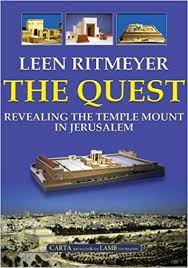
The Quest by Leen Ritmeyer

book quest temple

This book is without doubt the preeminent resource on the Temple Mount in Jerusalem available today. Whether you desire the historical or archaeological perspective, this is your book. This book’s success likely springs from the fact that no one but Leen Ritmeyer could have authored it. Both from his long years of working in this field and his work as the architect of the Temple Mount excavations, as well as his other work on the Temple Mount itself, demands that Ritmeyer produce this extraordinary resource.

This book is filled with pictures from the earliest scholarly explorations of Jerusalem, other helpful pictures on a range of issues, extraordinary reconstructions, and the wonderful, accurate Carta maps. It’s hard for me to effectively portray the visual treat the reader will have in this book. The text is the equal of the visuals and gives the most up-to-date, scholarly, detailed information that can be found on the Temple Mount.

The book begins covering the Herodian Temple Mount walls. Since archaeology digs down into older time periods, chapter 2 provides a lengthy chapter on the Temple of Nehemiah’s day. Some of the reconstruction models in that chapter were extraordinary. After a chapter on the Hasmonean Temple Mount, he turns to the interesting subject of the underground cisterns of the Temple Mount. I’ve never seen better on that subject. Chapter 5 examines how Herod extended the Temple Mount. That includes things like how he had to expand the drainage system and some of the gates he added. Chapter 6 nails down the location of the Temple on the Mount and has some great pictures of the inside of the Dome of the Rock.

In chapter 7 we find a reconstruction of the First Temple. Again, the graphics and reconstructions were eye-catching and instructive. In chapter 8 we follow that up with reconstructing the Second Temple and all the history behind it. The book goes full-circle with chapters on reconstructing the Herodian Temple Mount as well as Herod’s Temple itself.

Readers are going to love this book. I can’t imagine anyone finding something they thought was left out on the subject of the Temple Mount and its history. Helpful, beautiful, and thorough – what more could you ask for? I give this book the highest possible recommendation.

I received this book free from the publisher. I was not required to write a positive review. The opinions I have expressed are my own. I am disclosing this in accordance with the Federal Trade Commission’s 16 CFR, Part 255.

Introverts in the Church by Adam McHugh

book introverts

What a wonderful book! As an introvert myself, I’m thrilled to report that introvert Adam McHugh has looked into who we are and explained it perfectly. Only a true introvert could have explained the feelings and perceptions of an introvert with such accuracy. Not only does this book contain what introverts have been waiting a long time to hear, but it’s also a perfect primer for extroverts to understand all of us introverts that they have always been clueless about. As the title suggests, McHugh brings this important discussion into churches. He seeks to guide introverts in “finding our place in an extroverted culture”.

I was hooked by the preface. When he explained that we would have to dig in this subject to the point that it might appear that he was “feeding the impression that we are misanthropic weirdos”, I knew I wanted to hear what he had to say.

He makes a case in the introduction that introverts can thrive in the church. As he will do throughout the entire book, that does not mean that we introverts must deny who we are or act like something we are not. He makes a clear case that local churches today are all geared toward the extroverts. He explains how our culture values extraversion over introversion, though without compelling proof that it should be so. As we said before, he explained so beautifully what life inside an introvert’s head is really like. He clarified how we feel at some social gatherings or settings. He encourages us to quit feeling like we are weird or of less value, and to seek healing from the bad misconceptions that we have lived with.

He explained what introverted spirituality is, and though it’s easily distinguished from the extroverted type, it still has great depth. He explained how we are in community and relationships. We don’t live without community or relationships, but we are different.

Finally the book turns to the subject of leadership and introverts. There is an unsubstantiated belief that only extroverts make good leaders. Fact and history both prove this to be untrue. Some extroverts succeed by being charismatic, dominant, gregarious, or even a superstar, and can even operate a cult of personality. In some cases, the company doesn’t glean anything from the tightness of the followers of these extroverted leaders. In other words, it’s only been about them. He gives wonderful thoughts about how we might lead without yielding the essence of who we are as introverts. He is very practical in how we might be a better leader, as well as thoughts about a subject that most all introverts find difficult: evangelism. He concludes with encouraging us to make sure introverts have a place in our churches.

This book spoke to me. I’m convinced that every Christian introvert ought to read it. Further, it would be quite wonderful if we could talk a few extroverts into reading it with us.

I received this book free from the publisher. I was not required to write a positive review. The opinions I have expressed are my own. I am disclosing this in accordance with the Federal Trade Commission’s 16 CFR, Part 255.