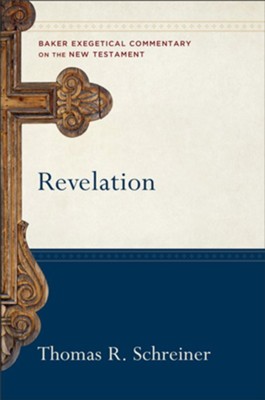
Revelation (BECNT) by Thomas Schreiner

I was surprised to see Schreiner in Revelation. I unfairly had him as a Paul guy only in my mind. It turned out those skills that he is well known for on Paul are found here.

This commentary is, without doubt, a major work on Revelation. It walks in the room and joins the big boys. But just like the other champions of the modern major academic, exegetical commentaries this one takes an “eclectic” viewpoint. That’s the rage of the hour. Doesn’t make anyone too happy, but then again not too angry either.

Like me, you may not take an eclectic approach but rather a specific viewpoint in one of the major categories. Will you still be helped by this commentary? I think you definitely will.

What are its strengths? Impeccable scholarship stands out. Sometimes that’s a pile of dry bones, but here it has life. Here the scholarly “interacting” pays off. It begins in the Introduction and continues in the commentary proper. Here the interaction necessarily involves the different perspectives and that enlightens no matter where you come from.

Another asset of this commentary is its tone. He fairly represents other viewpoints and humbly assesses and shares his own. I often don’t exactly agree, but he’s easy to follow. It’s easy for me to weigh as I’m looking at a fairly represented picture.

I wouldn’t call the structure of Revelation as a whole a strength here. Perhaps that’s the collateral damage of an eclectic position, though he gives a serviceable outline. He does give, however, some nice thoughts on structure in the smaller periscopes.

I’m convinced he sheds light in each passage no matter your overall prophetic outlook. Outside of one that lines up perfectly for you (rare), what more could you ask for?

I received this book free from the publisher. I was not required to write a positive review. The opinions I have expressed are my own. I am disclosing this in accordance with the Federal Trade Commission’s 16 CFR, Part 255.
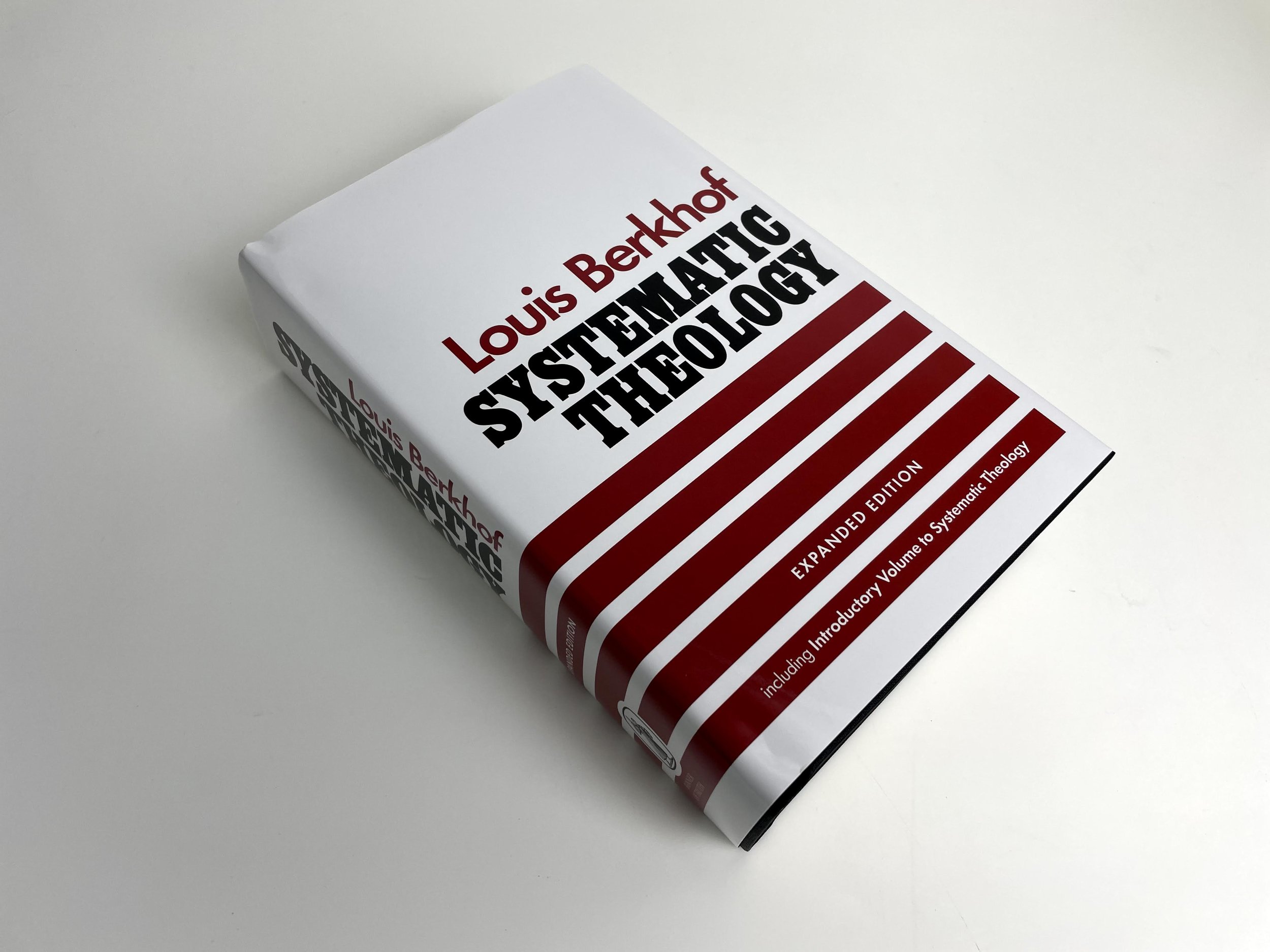
Systematic Theology by Louis Berkhof

This influential book has merited this beautiful new release. Included now as an extra is Berkhof’s Introductory Volume to Systematic Theology. That’s almost 200 pages of additional material. It’s slightly more academic as it explains Dogmatic Theology including description and methodology. It particularly gives additional insights on the Doctrine of Revelation or Scripture.

The main text gives a treasure trove for students of near 800 pages. He gives what I’ll call the classic reformed position. If you’re trying to get a handle on that view, start here. I like to have systematic theologies from a few perspectives on hand and I want them dogmatically written. My thought is, give me your best shot. From there, I can compare and weigh. Probably systematic theologies are the only category of books I want in that style.

Berkhof won’t fail you on that score. In fact, my only slight criticism of the book is when he goes off on certain personalities and groups. He is not insulting, but he wants you to see them as off the reservation.

Still, the book is an awesome resource. What amazed me is that even though he wrote as a teacher, he was wonderfully clear, engaging, and even lively. In a systematic theology that helps. I read several sections and thought, I’ve got to come back and work through this the next time I’m doing major work on that doctrine.

This is one of the heavy hitters in the systematic theology category. I guarantee you I’ll always be consulting it in the future.

I received this book free from the publisher. I was not required to write a positive review. The opinions I have expressed are my own. I am disclosing this in accordance with the Federal Trade Commission’s 16 CFR, Part 255.

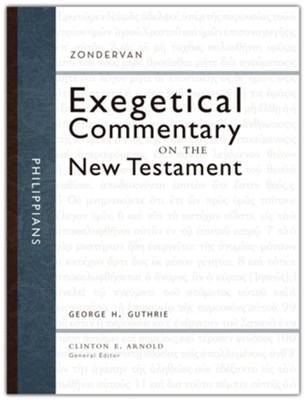
Philippians (ZECNT) by George Guthrie

This latest volume in the ZECNT on Philippians is a work of mature scholarship that possesses all the warmth you could hope for. Guthrie particularly succeeds in taking rich detail and weaving a tapestry that displays an inviting picture of what’s really going on in Philippians.

Guthrie takes all the pieces that you look for in a commentary and actually fits them all together rather than offering us a collection of near unconnected parts, which describes many commentaries today. Some of those might be indispensable, but we can enjoy one like here where all the pieces do in fact make a whole.

You will see what I’m talking about in the Introduction. It’s masterfully done. Things that are dryly given in other works here are marshaled into a view of a wide horizon. It’s not just what Paul said, but why he said it. As a case in point, notice the section on crafting the letter, particularly “The Church in Philippi and Paul’s Reasons for Writing”. That was eye opening for what’s really going on in Philippians. Still, while I’m bragging on his forest, there are enough trees here to fill the appetite of the more rigorous types.

The Commentary proper carries on what the Introduction began. The rich details are woven into an incredible unveiling of structure. Structure, as you may recall, is an aim of this series. I might not have thought of structure as being so essential to Philippians, but Guthrie proved me wrong. I say that even as I admit that some parts of this letter’s structure are baffling.

Philippians is much loved by all of us, but writings on it can easily grow stale. They can drown in a nebulous sea of joy as if that is all this letter had to say. There’s no drowning here! This is a keeper.

I received this book free from the publisher. I was not required to write a positive review. The opinions I have expressed are my own. I am disclosing this in accordance with the Federal Trade Commission’s 16 CFR, Part 255.