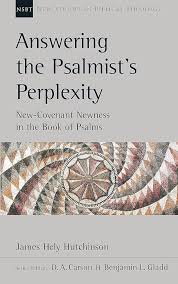
Though the topics can be narrowly constructed, I’ve thoroughly enjoyed the NSBT series. Can you believe this volume is #62 in the series? Regarding narrowly defined subjects, perhaps this one is even more so. Because of that, this book may not find as big a round of acceptance as the others. When you are sixty-two titles deep into a project, you clearly have a homogeneous audience that can be easily described. So why do I feel perhaps that mutual admiration society might not hold up in this case? Well, it’s more, to be sure, the fault of the subject than the author.
He’s jumping into the covenant theology- dispensational theology divide. But he dives deeper still using a 7-model spectrum running from Westminster Covenantalism to Classical Dispensationalism. Though Models 1-5 are more on the Covenant Theology side and 6-7 on the Dispensational Theology side, you are still going to make six out of seven groups at least marginally unhappy.
Let’s give credit where credit is due—he lays out well the seven groups and is fair minded to those even farthest from him. He makes clear the whole Continuity versus Discontinuity that is the trendy way to lay out the issue. Continuity is God’s people (Israel and the Church) are mostly the same ties to Covenant Theology while Discontinuity separates them in distinct ways and ties to Dispensationalism.
Instead of stating Hutchinson’s viewpoint or my own, I’d rather mention the larger problem. His approach reminds me of walking into an opulent room and focusing on one immaculate lamp. It is a nice lamp, but what about that gorgeous mahogany desk? Must the room forever be oriented to the lamp? You mean I can’t talk about the couch or the ceiling tiles unless I speak in terms of the lamp? That’s the problem to my mind with either Covenant Theology or Dispensationalism. They are asked to explain more than they can. Their adherents see them as more a throne in a throne room, but I say they’re still a lamp. Nice lamps, ok, but not strong enough to bear the weight of the room. They explain something, but no where near everything. Less esoteric, less enticing to scholarly vanity, and more accessible to the common Bible believer, are ideas like Jesus, or say relationship between the Trinity and us. Make these ideas (I’ve learned much from all seven of the viewpoints while having some clear opinions on some of those issues) the condiments and Jesus the meal and what a feast we can have.
Let’s move on before someone gags on my review. The richness of this volume is to take the Scripture Index and use with all the texts he uses in Psalms. He can help with exegesis.
He’s a clear writer too. Surely we can do better than the term “New-Covenant Newness”, but he communicates his line effectively.
Agree with Hutchinson and you’ll love the book; not fully agree and you’ll see the boundaries more carefully; agree or not and use the exegesis for Psalms and you’ll be helped at least.
I received this book free from the publisher. I was not required to write a positive review. The opinions I have expressed are my own. I am disclosing this in accordance with the Federal Trade Commission’s 16 CFR, Part 255.
 The Reagan Review