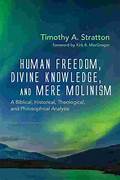
Human Freedom, Divine Knowledge, and Mere Molinism by Timothy Stratton

Don’t let the clunky title fool you. This is a great book. I’d come to believe that molinism was the way out of the conundrum of sorting divine sovereignty and human responsibility, but it was this book that led me fully to the invigorating air of clarity. Stratton’s gift is logical argumentation that guides you by the hand to conclusions.

So persuasive was his logical arguments that I went online and watched debates he had with others. It was as if others brought their knives to his gunfight. Strangely enough, some he debated were even more polished in the art of debate, but he just seemed to have them where it counted—actual arguments. It didn’t hurt that he was gracious either. Fortunately, that gracious spirit is also found in this book, though he is relentless in marshaling arguments and looking at the subject from all different angles.

The first two chapters are foundational and I suggest you take your time with them. Here is where you will make a quick observation. This is not casual reading. Make sure you notice that there is no fault in Stratton’s writing, but just that this is a deep subject. I think if you read an occasional paragraph over, and read slowly at all times, you will find this work quite lucid. In my judgment, we have for so long talked in broad generalities about things, and have just not followed through on what they mean. I think there’s a lot of layers inside us that have to be worked through. For example, he will explain what he calls exhaustive divine determinism (EDD), which he wisely defines as “all events are casually determined by God”. When I say there are many things that we have not thought through, you will see the profound implications if God has truly caused every single thing that happens, including every choice that’s ever made.

You probably already know, and it’s an argument that Stratton makes, that a lot of people can kind of agree with libertarian freedom until we touch upon salvation. Then we enter old battlegrounds where we must stay true to our alma mater, so to speak. Then, the focus shifts from merely seeking the truth to the propping up of the home team. I am being a bit vague on purpose here because a lot of people predetermine what they’re going to think about a book like this before they ever read the first word. This book is such a great one and it deserves better.

Chapters 3-10 survey historical periods successively to see how the debates crystallized. Sometimes I think this is not always helpful for a theological work, but in this case, it really is essential. Quite simply, many things, including definitions and categories, have all sprung from debates rather than a direct study of scripture.

Chapters 12-13 bring us back to direct theological issues. What libertarian freedom and its logical necessity simply must be addressed. I thought Stratton was masterful in showing that there logically must be some level of libertarian freedom.

The next chapter introduces us to Luis de Molina. He was a guy who made a brilliant observation that God must possess middle knowledge. Far more than anything about the guy himself, is the scriptural and logical weight of what he said. To my mind, it is profound.

Chapter 15 is the capstone of the book. Here he makes his arguments for middle knowledge and molinism. It is hard for me to see how someone coming with an open mind and a desire for truth could walk away without agreeing with what is presented here.

Chapter 16 is something of an icing-on-the-cake type of chapter. There is some apologetic ways that this teaching can help us. It’s not the heart of the book, but it is very interesting.

I rarely use the term “tour de force ” because it can be so cliche, but it fits here. Another thing I rarely say for the same reason is that I wish this book were so much better known, but I can hardly think of when I meant it more. 

I received this book free from the publisher. I was not required to write a positive review. The opinions I have expressed are my own. I am disclosing this in accordance with the Federal Trade Commission’s 16 CFR, Part 255.

A Theology of Revelation by Scott Duvall

A book on the theology of Revelation likely makes you ask, what is the author’s approach to prophecy, followed by you deciding if you find it interesting all based on that approach being in your lane. What would you think if I told you that you could have a fantastic book on Revelation’s theology and it made no difference at all what your interpretive preferences were? This volume is that book!

In fact, I’m sure Mr. Duvall and I do not agree in our approaches to prophecy and I love this book. I hardly can describe all I found that enlightened me and opened avenues that I will want to travel in future studies. All the volumes in this series so far are impressive, but this is one of the best. Perhaps it is the intense coverage of a smaller portion of Scripture. Perhaps it’s just the fascination of the Revelation. Whatever it is, it’s simply the case.

By the end of chapter 6 you have mostly covered areas typically found in a traditional introduction of a major commentary. When chapter 7 addresses grammar it delves into symbolic language. Some of us might believe not everything he finds symbolic actually is, but he gives nice coverage. The next chapter covers the prevalent use of the OT found in Revelation. Chapter 10 overviews the major interpretive systems that so often dominate discussions and he is gentle in his presentation.

Chapter 11 entitled “A Literary Theological Reading of Revelation” is a lengthy chapter of over 100 pages that gives what I guess we’d call a streamlined commentary. The learning and help in this compact section is impressive.

This work saves the best for last as the final section gives nine extraordinary chapters on the major theological themes. Again, no matter the interpretive grid you filter through, these themes are both profound and undeniable. If I had to pick a favorite, I guess I’d go with the one on worship. If you think about it, how pervasive worship is in Revelation.

I’ll be using this book for years to come. If you give this one a try, I think you might join me.

I received this book free from the publisher. I was not required to write a positive review. The opinions I have expressed are my own. I am disclosing this in accordance with the Federal Trade Commission’s 16 CFR, Part 255.
J.C Ryle Classics Bundle

J. C. Ryle is finally getting his due. Many have enjoyed his work on the Gospels that have been available in one form or another for many years. Banner of Truth has taken on the task of gathering and reprinting many other works of this fervent man. They cut no corners either. He gets the deluxe treatment in these quality bindings with attractive dust covers. To be sure, they look sharp on the shelf, but they are best found in your hands.

Obviously, these books are individual releases, but Banner always gathers them in a lot they call the J. C. Ryle Classics Bundle and offers them in a more affordable way. To me their pricing structure is quite commendable considering the quality of their physical books as compared to the slipshod offerings of some Christian publishers.

Just as I received this set, one volume, “Christian Leaders of the Eighteenth Century”, went out of print (Banner usually brings great books back into print, and it is already back). Still, it was replaced in the classics bundle by a brand new release, “The Christian Race”, that I’ll check out later. Ryle had a second niche in biographical writing. I suppose those in this volume (Christian Leaders) are his heroes and who can blame him. A few well known (Whitefield & Wesley) and nine lesser known men who had God’s hand on them are what he covered. There’s a thread between all of them—revival. God did it, of course, but what men!

“Light From Old Times” is another biographical turn toward stalwart spiritual men. While I had heard of several of them, a few were new to me. Another unique feature is that several of them were martyrs. I must admit that such biography is on a higher plane, even dripping with ethereal beauty. Ryle is not here in a cradle-to-grave vein, but more an admirer explaining why they stand so tall. And tall they do stand, straight and stately.

Perhaps the most famous title in this collection is “Holiness”. I’ve heard it lauded by many for as long as I can remember. It’s not a doctrinal treatise on holiness, but dives deep into practical holiness. Lamentable as it is, most such books aren’t popular, but this one caught on. Strangely enough, this book has an impact far beyond its original target. He addresses certain shallow displays of Christianity popular in his day that’s not of particular interest these days, but the book is in no way hobbled by it. The reason for that success is the timelessness of the biblical material. It’s still just sermons, but they do somehow weave a unified whole that has something meaningful to say about practical holiness. Some sermons here use a Bible character—Moses, Lot, Lot’s wife— to great effect while others tackle a concept directly. Let’s call this one pure gold.

Next is “Practical Religion”. These 21 sermons are a cross between textual and topical. In my opinion, Ryle was especially good in these type sermons. To me, these type sermons are hard to put together and Ryle must have given lots of time to them. The subjects covered are all those he calls “practical religion”. He suggests it might best follow reading “Holiness”. The first sermon “Self-Inquiry” is almost totally topical, but what a catchy verse launches the sermon. The next one on “Self-Exertion” is more textual and revolves around the “strait gate”. The next sermon (“Reality”) is shorter, but piercing. For the preacher, it might suggest several sermons. A specialty of his is going after false professors. Then there are some straightforward sermons that might help even new Christians. In that stretch I thought the sermon on zeal stood out. In the sermon “Formality” the spiritual temperature rises again. In a sermon on the world he sensibly covers separation. That’s not always sensibly presented by many, but he is well balanced here. The sermons continue to be practical. The last 6 are on a clear trajectory to Christ’s Return and Heaven (except for those who went another way in The Great Separation).

Knots Untied” is the Banner title that introduced me to Ryle outside his work on the Gospels. It piqued my interest and brought me back for more.

“The Upper Room” is a tidy collection of sermons and addresses gathered in old age from across his ministry. Two popular offerings of Ryle are included here: “The Duties of Parents” and “Thoughts for Young Men” that are often reprinted alone. I read them to advantage years ago. Before those two sermons are some exciting offerings by Ryle. Almost out of place among them, though, is an address on the simplicity of preaching. He got very practical with that article, but it does lay out some good things for any new preacher to consider. The sermons were my favorite in this book. While perusing these sermons, I felt a keen desire to return to these texts and preach them someday myself. That’s always a good sign of a successful sermon.

I’m not surprised that one of these volumes was entitled “Old Paths”. That is where he lived even in his day. Can you imagine what he’d say about our day? I suspect he’d be right too. The subjects are ones you’d think would never go sideways among believers as they are the core beliefs—inspiration, sin, forgiveness, justification, conversion, faith, repentance, etc.— though they often do. These are topical sermons. Few really do topical sermons well, but Ryle consistently does. There’s a mass of thoughtful learning here given in a pastoral style.

Finally, “Charges and Addresses” might not be the best of these books as it is certainly a hodgepodge. I’m guessing only those who really love Ryle will be attracted to this book. But here you are thinking about getting this lovely J. C. Ryle Classics Bundle, so I guess that would be you. Only the most revered authors get these type sermons in print. That’s Ryle.

You see loving hands putting this Ryle set together. Their work provides beauty for us all. Ryle loves Jesus, His Word, and possesses a pastoral tenderness that suggests he’s quite fond of us as well. You can’t go wrong here.

I received this book free from the publisher. I was not required to write a positive review. The opinions I have expressed are my own. I am disclosing this in accordance with the Federal Trade Commission’s 16 CFR, Part 255.

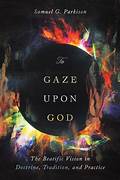
To Gaze Upon God by Samuel Parkison

Sign me up as a fan of the beatific vision! Before I had barely paid attention to the whole concept, and thought, at most, well, that’s a sweet little idea. Now Mr. Parkison has won me over.

This is one of the best books I’ve read this year. Remember in the Psalms: “Mercy and truth are met together; righteousness and peace have kissed each other.” Well here the kisses are between scholarly work and devotional manna. I suppose he was aiming at scholarly, but the devotional came bursting out. How the scholarly rigor didn’t bury the moving manna is beyond me. But I’ll take it.

There were places, to be sure, where he played with the fire of scholasticism that has burned up many a good book, but somehow he darted back out into the sun quite often. The chapters in question are three and four. Here he worked through the history of how the beatific vision has developed and been viewed. He even dared enter into the debated points and with charitable grace he kept it interesting and productive to matters of faith. I was about to be perturbed when he started down the pointless path that this lined up with Reformation thinking. Isn’t being biblical enough? But I couldn’t do it. Every time I tried he said some other touching thing.

Before these chapters were ones explaining what the beatific vision even is and its biblical credibility. Let me describe it this way, this gazing upon God takes some of the things that seem most big picture to me and tied them together in a way that they should have always been. I need not rehash it. You can read it yourself. But it sure moved me.

Chapter 5 (“Retrieval for Reformation Evangelicals”) has as dull a title as possible, but it was full of life. And it grew more so as it went along. There was doctrinal profundity in spades. Its gift was tying all back to a full orbed Trinitarian theological understanding.

The final chapter takes this grand doctrine and rubs it on like healing oil all over many facets of the Christian life.

How have I never heard of Samuel Parkison? I bet I’ll be watching for his name in the future.

I received this book free from the publisher. I was not required to write a positive review. The opinions I have expressed are my own. I am disclosing this in accordance with the Federal Trade Commission’s 16 CFR, Part 255.
The IVP Atlas of Bible History

This is a nice Bible atlas! I’d seen in the past its earlier iteration called “The Lion Atlas of Bible History”. When I saw that work decades ago, I kind of thought it stood out in some ways, but over the years it started to look quite dated, and I didn’t often consult it. In this polished rebroadcast, it again has “pop”. Its being so easy on the eyes serves to highlight its judicious choices for coverage. In short, it has exactly what you’ll likely be looking for in a Bible Atlas.

The list of things that I like about this volume is quite long. Its maps are vivid, scaled appropriately, and imaginatively designed. The charts and graphs are well chosen. The pictures, especially of Bible sites, were fantastic and nice to just pause and drink in. A Bible Atlas is not a book that you usually read from cover to cover, but anything that tickled your fancy certainly had wonderful text to go with it. I thought every article was excellent and said so much without overly accumulating paragraphs.

It was one of the better Atlas as well in providing a variety of maps for specific Bible events. Some Bible Atlases try to cram large swaths of Bible history into one map. What you have here is more to my liking for sure.

I thought this atlas was especially successful in providing chronological and archaeological data. It always mentions conservative dating respectfully, even if the authors appear to lean another way. Actually, it’s even good at laying out the reasons why there is debate about certain dates in the first place. For example, the dating of the Exodus, and why it is debated, is clearly presented.

We as Bible students are particularly blessed as there are a plethora of outstanding Bible atlases in print. Be sure to consider this one as one of your main options.

I received this book free from the publisher. I was not required to write a positive review. The opinions I have expressed are my own. I am disclosing this in accordance with the Federal Trade Commission’s 16 CFR, Part 255.

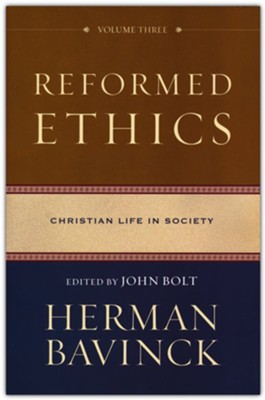
Reformed Ethics (Volume 3) by Bavinck

Fascinating! I’ve just never read anything before on the material covered here. I’ve read Bavinck, of course, but here he digs in with that penetrating style of his in a place I need led by the hand.

Somehow I missed the publishing event of this three-volume set and make my introduction through this volume 3. When it arrived, I laid other things aside and jumped in. You probably wouldn’t normally label an ethics book captivating. As good as Bavinck is, you might not call him captivating usually either as he is quite exacting in his approach. His gift is depth of content. What a mind he possessed and to read him makes you a learner. Still, I can’t believe how quickly I went through this work.

The bulk of the book is on “The Life Spheres in Which the Moral Life Must Manifest Itself”. As heady as that title is, the material distills a mountain of study and lays it at your feet in around 200 pages. Along the way, he covers family, the “duty” to marry (hadn’t thought of that), qualifications for marriage (who you can marry), betrothal and wedding, essence of marriage, and divorce.

Here’s why the book is so fascinating. He gathers all the Bible says and on some points the Bible says little specifically. He covers what Christian groups have thought from the most to least known. What you will discover is the lack of consistency among Christians. He is not so “dogmatic” except where he feels the evidence warrants it. He is honest enough not to just trumpet his opinion. He also shows how these ethics have often showed up in laws. It’s a bit tilted towards Dutch law, but that’s understandable as he ministered there. You will at least leave this book knowing what questions you must ask yourself.

The last third of the book changes direction. It addresses philosophical ethics first. I thought he was good at probing the subject, putting it in perspective, and making sure to not allow it to plow over the gospel. In the last part, contemporary morality is covered. You can decide for yourself how contemporary it is. In my view, we must at least wrestle with some of the things he brings up.

I want to consult Bavinck on any subject he covers. I may not agree, but I know I’ll be richer for reading it. Here he plows fields off the beaten trail, and I highly recommend it. 

I received this book free from the publisher. I was not required to write a positive review. The opinions I have expressed are my own. I am disclosing this in accordance with the Federal Trade Commission’s 16 CFR, Part 255.