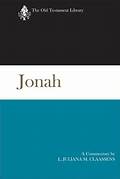
Though I’m a conservative Bible student, I have long given a look at a more critical commentary to have a better overall view. The OTL and NLT are most likely the ones I choose (sometimes the Interpretation series). I know going in that I’m not going to agree on most background or historical issues and am prepared for it. Often there’s some theological thoughts worth feeding into a more orthodox view and I’m glad to have them. With my specific expectations made clear, I have often given a good rating to such works; that is, it provided what I was looking for in the volume. Let me stay upfront, I’m really struggling to give that good recommendation to this volume.
What’s the problem? It’s the entire premise of the commentary itself. The author takes favorite subjects of our day and squeezes them into the text and then passes them off as this is what we ought to think about in arriving at an interpretation. The problem is that in so doing the author has squeezed the very life itself out of the text. For example, she loves to talk about a postcolonial interpretation. That is such a loaded term whose meaning really comes from politics, not Christianity. (I would not want this in a commentary even it more closely resembled my own views). Had she only suggested that the wounds Jonah or Israel felt from Assyria impacted them in many ways, I could at least entertain it. In fact, I’m sure the geopolitics of that era had profound effects. But it seemed to me, that she meant it in a way that it retained all of its 2025 political implications. I’m sorry, but I don’t think 2025 defines the book of Jonah. Believe it or not, the postcolonial viewpoint was the least controversial one of those she chose to be the prism to view Jonah through.
From that muddied rubric, she weaved the overall theme that this is a trauma-informed book. I’m sure Jonah would have found many things that happened in this little book as very traumatic, but this book is not about rubbing his brow and helping him through his trauma. This book was about showing him where he was wrong, and from that vantage point working through the things that he was finding painful, even if he shouldn’t have found them so. Again, had the author only offered that as an application after arriving at an interpretation, I could’ve bought into it. Life brings trauma, and sometimes I bring trauma into my own life, but the Lord will help me work through it and it most likely will involve showing me where I am wrong.
In the introduction, when she really goes big picture, notice how she writes about the divine paradox. There is something of a paradox when we think about theodicy, but I wonder if the biggest paradox is the corner that she herself has backed this little book into through a novel approach that obscures far more than it brings to light. 
There’s even a problem on the scholarship side. Look at the bibliography. It is an echo chamber. She only brought those fringe works in which turned her writing into a self-fulfilling prophecy. If scholarship at large were consulted, I don’t think the top five or ten works that would be voted for even appeared.
The author can write from whichever perspective she chooses, but when it is this far out, it is quite over-the-top to tell the rest of us that that’s the way it should be viewed by everyone. That would be better offered in her memoirs than in a major, reputable series like the OTL. I think if we could bring Jonah back, he wouldn’t understand what this commentary is even talking about.
My bias is clear in this review, but I think as someone who has found value in other volumes in this series, it’s fair to say that there is something more going on here than simply being a more critical offering. 
I received this book free from the publisher. I was not required to write a positive review. The opinions I have expressed are my own. I am disclosing this in accordance with the Federal Trade Commission’s 16 CFR, Part 255.
 The Reagan Review