Here a nice TNTC volume gets an update that will extend its usefulness for a long time to come. When I think of Wayne Grudem, I think Systematic Theology since that volume is perhaps as influential as any in print today. What he proves here is that he can run too in the commentary-writing world. He may have written a couple paragraphs in a systematic theology style in this book, but this a truly helpful commentary.
The 50-page Introduction is pretty full as this series goes. He is consistently conservative in his conclusions and I found myself agreeing with him at many points. More important to you, he explains how he arrives at those conclusions quite lucidly. For those who care, he interacts with scholarship well without letting that dominate. He also is not afraid to go against the grain where scholarship has gone amok. For example, he dispenses with the idea that 1 Peter is meant to be read as a baptismal sermon. As he effectively shows, baptism is hardly mentioned in Peter and then mostly in cursory way. How do scholars fall in these ditches?
Half way through the Introduction he transitions to theology and major themes. Don’t miss this section as that can be a great aid to understanding Peter. He works through twelve themes found in 1 Peter and you’d be hard pressed to disagree with his twelve.
If you are familiar with this series, you’ll find this a good representative of it. There are constraints on length, so it’s the type of work where every sentence counts. And here they did. Background, exegetical understanding, and a bit of theology pervade the writing on every passage. This is a fine commentary. 
I received this book free from the publisher. I was not required to write a positive review. The opinions I have expressed are my own. I am disclosing this in accordance with the Federal Trade Commission’s 16 CFR, Part 255.
This book is a fascinating resource. Its varied uses cover more territory than you’d ever imagine. It is so profusely illustrated that I’d love to take it on a trip to the sites of Paul. I can imagine reading it every evening as a precursor to the next day’s adventures. As nice as that is, it’s not a travel guide though, but a Bible study guide. Written in the order of Paul’s ministry, this book would be phenomenal to have at your side as you work through Paul’s itinerary.
It addresses what archaeology tells us about these sites, but that’s not the lead. Foremost it’s the biblical background that makes the book what it is. David deSilva is a scholar rather than an archaeologist. He’s quite an accomplished one at that. Most books of this type totally get immersed into archaeology at a level that is beyond what Bible students are looking for. Here the balance is perfect.
My only criticism is that he is a bit more critical in his scholarship in a few places than I’d prefer. You might add that a few maps would have helped. Its gorgeous content probably would have been appropriate for a hardback as well, but maybe the publishers anticipated that many might carry the book to these Bible sites. The pictures more than make up for any deficiencies and the text reads well too. I’d call this one a winner right out of the gate.
I received this book free from the publisher. I was not required to write a positive review. The opinions I have expressed are my own. I am disclosing this in accordance with the Federal Trade Commission’s 16 CFR, Part 255.
This is one of my favorite Ryle works of the many reprinted by Banner of Truth. It’s the most sermonic of any Ryle title, but the sermons are so incredibly penetrating.
Several of the sermons are old-fashioned gospel sermons. You know the kind—no fluff but so aimed directly at the heart. When you read them, you want to go preach one right away. One theme I always find in Ryle is his penchant to define true salvation. He’s apparently alarmed by false professions. The beauty of his preaching is that he doesn’t sink to legalism or even rank condemnation. The loving offer of salvation remains. In a few of these he even reminded me a bit of Spurgeon. There are sermons aimed more at Christians as well, but the Gospel is front and center still.
I thought perhaps I should mention my favorite of the volume. That became surprisingly difficult to produce, but there were two sermons on John 10:27, 28 that I finally chose. As a good sermon will do, those two sermons made me mesmerized by the text!
The book is, as expected, in that beautiful, quality hardback for which Banner is so well known. It’s a grand thing to see Ryle get revived so thoroughly for our day and this work is a perfect example of why.
I received this book free from the publisher. I was not required to write a positive review. The opinions I have expressed are my own. I am disclosing this in accordance with the Federal Trade Commission’s 16 CFR, Part 255.
Here’s a perfect book on Acts for Bible students. Whether you are doing personal study, preparing a Sunday School lesson, or are a busy pastor preparing a sermon, this book can be a help to you. It’s the perfect length to really give help while not being so massive as many modern commentaries are. Mr. Shade has academic credentials, but did not parade his learning. His years as a missionary add another dimension that is especially dynamic for a commentary on Acts.
His Introduction is not of extreme length but touches on many issues usually found in such a chapter. I found it easy to agree with him on many points. He is well read, but gets quickly to the heart of the matter. One feature of the work is that it comes from a dispensational perspective. That’s not going to dominate the commentary but in a few spots it will provide insights many modern works won’t give you.
The commentary proper is helpful. There are even a few pictures and maps to help illustrate the work. I warmly recommend this work.
I received this book free from the publisher. I was not required to write a positive review. The opinions I have expressed are my own. I am disclosing this in accordance with the Federal Trade Commission’s 16 CFR, Part 255.
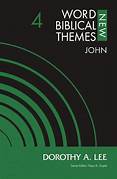
Here’s an interesting book on the themes found in the beloved book of John. The themes covered are widely agreed upon among scholars, but they’re gathered here and presented in a well-written form.
The first chapter is an introduction such as might be found in a commentary. The next chapter starts turning more toward those themes as the theology of John is covered. The author believes that though Jesus is the central character, the center of John is God. I’ll at least say that Jesus speaks often of and to His Father in John. The spirituality of John is also highlighted and the famed “I AM” statements are discussed.
The balance of the book is six chapters on theological pairs. The first is “Word and Wisdom”. I must confess that I find that connection tenuous. It’s two great subjects, to be sure, but I’ve just never seen them interacting in John. Nevertheless, several scholars agree with Ms. Lee, so I might be missing something.
The next pair is life and light. Even in a casual reading of John these two jump off the page in John. She expertly guides us to see this line as working through the book. She makes some excellent points on blindness that I hadn’t thought of. After tracing through the Resurrection, she even uses the fire where Jesus was cooking for a troubled Peter.
I found the pair of Temple and glory keenly instructive. Over the last few years studying biblical theology I’ve noticed just how prevalent and encompassing the concept of Temple is. Next is witnessing and believing that is again apparent in John. Still, her discussion is not mundane and goes far beyond the obvious.
Birth/family and Law/Revelation round out the book. Again, I was sold on their significance in John.
This book gives you much to digest. Perhaps you’ll think a point occasionally stretched, but overall these are for the most part some of the great themes of John. It’s good enough that I’ll consult it going forward on any major studies of John.
I received this book free from the publisher. I was not required to write a positive review. The opinions I have expressed are my own. I am disclosing this in accordance with the Federal Trade Commission’s 16 CFR, Part 255.
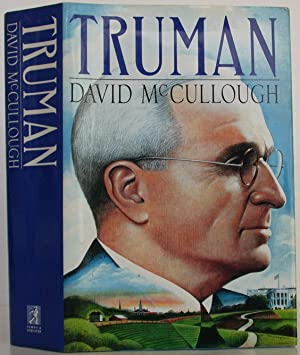
You know you’re a great presidential biographer if your work substantially moves the needle on how that president is viewed. That’s exactly what master biographer David McCullough did here. It amazes me how many people tell me they’ve read this book.
I even enjoyed the early section on his family background as it touched on several exciting events that happened around Missouri. His family history is colorful to say the least. Hard workers though they were, they could lose money with the best of them. Strangely enough, that’s exactly how it was for Truman himself. He failed in so many ways, lost so much money while having as strong a work ethic as any president I’ve read about, and got to middle age without ever hitting his stride. Had he not fallen in with the shady Pendergast machine he likely never would have. That association would always plague him, but he wouldn’t have a political career in the first place without it.
What is even more startling is how honest he was and how he managed to keep that reputation throughout his career. He is one of the rare politicians that earned that reputation. He had a very high ethical standard as well. He is the only Democratic president of the 20th century they can list avoiding a whole slew of sins that all the rest of them committed.
There was something real about him. He was who he was. He was incredibly practically minded. Perhaps you should say it was Providence itself that brought him into office at that moment in history. It could be said because that good practical nature came in handy. He was intelligent, but occasionally, I wondered if he could be a bit naïve. He had his limitations, but was one of those rare people who knew what they were. His lack of pride and hubris was perhaps his most compelling trait.
He clearly had much exposure to Christianity. He did profess to believe in it on many occasions. Perhaps the only thing that McCullough didn’t know how to uncover was whether or not it was a deeply personal faith or not. It was hard to tell whether or not he was more of a moralist than a Christian, but we will give him the benefit of the doubt by several statements that he made, and several actions he did like kissing the Bible at his swearing in.
Pretty much an afterthought on the presidential ticket of an ailing, dying FDR, no one even thought to bring him up to speed on the most pressing issues of the war. He was not prepared the day FDR died, and he openly admitted it, which was so refreshing, and yet acquitted himself quite well to see the war through to the end. He will always be the president who dropped the atomic bomb, but it clearly made sense to him from even a moral level. There weren’t many voices around him tell him not to do it either. Those voices didn’t arise till later on. He was sobered a bit more about it later as well.
His stratospheric poll numbers dropped quickly after his success with a war won quickly in his term. I personally appreciated the way he handled the Soviet Union. Just as he should have with a major WW2 ally, he gave them a chance. His domestic policies are not to my taste, but he was fairly successful in pushing them. In my view, he perfected the whole “we are for the people and Republicans are for Wall Street.” What stands out is how passionately he believed it. For many, that is just playing the game of politics, or strategy if you will; but in his simple way he was a true believer.
Perhaps his greatest political feat was pulling off his unexpected reelection in 1948. It’s almost as if he was the only person who thought he could win. He never wavered and shocked his opponents and friends.
That second term had several challenges, chiefly the Korean Conflict. I’m not a fan of the UN, but I agree with his stance overall. He set the ground rules for the Cold War and that made it possible for handling Communism without it becoming a hot war. His firing of the legendary MacArthur was a bold move too and I feel likely the correct one.
By the end of his term, Truman showed a few cracks in his amazing vitality. There were a few episodes of pettiness that were surprising, but no failings that would sully his overall reputation as a decent guy who wasn’t too big for his britches.
I wonder if McCullough exaggerated his conflict with Eisenhower. I sure hope so. It never struck me that McCullough liked Eisenhower as he described him as being unduly ugly to Truman. The two men had worked well together before.
His retirement years showed that Truman was perhaps the most “common man” modern president and tremendously likable. I don’t think he liked the work of any of his successors, but that may be only the cantankerousness of an old man. As much as I dislike his progressive domestic policies ( he was pretty good on foreign policy), I think he’d be one of the few presidents of the Twentieth Century I feel I could have related to enough to share, say, a meal or a long chat. I believe I like him personally more than professionally in some cases, or is that just attributed to master biographer McCullough swaying me? In any event, the book is majestic as presidential biographies go.
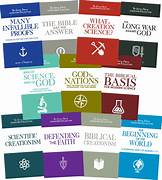
Here is a set of books that would be an incredible resource for any student of the Bible or any Christian family. Henry Morris is a stalwart figure in Biblical Creationism and for all the literature produced in recent years in that field you’d be hard pressed to find anything that he hadn’t already said here. I think of him as the perfect marriage between science and childlike faith. He has the skills to go to the deepest levels of technical science while making himself clear to those of us who’ve thought little of it since our school days. He’s no slouch in theology either.
I first encountered Dr. Morris when I was a young Christian including some of these books. It’s been fun to drink from these waters again and to encounter some titles never seen before. There’s not a dud in the lot, but let me focus on four titles:
The Biblical Basis for Science—This huge book is a semester class in itself. In fact, I wish every young person went through it. Here is where the depth of Dr. Morris’ ability shines forth. Many of the great scientific disciplines are covered to the point you’d have a grasp of them and yet it’s tied to theology just as deep. At one point he was discussing the Triunity of God as well as the Hypostatic Union. Can you image the value of young people having this exposure? For that matter, most adults need it too. If I only wanted one of his books, I’d likely pick this one.
Scientific Creationism—This one takes an interesting track. Seven of its eight chapters pit two items, e.g. chaos or cosmos; accident or plan, to discuss Creation versus Evolution. The final lengthy chapter tackles some of the main issues in Creationism with Scriptural evidence.
Many Infallible Proofs—Don’t miss this one. It takes Scriptural issues and uses science to help with its assessment. This one is also on its own track and is not a regurgitation of other books at all.
Don’t overlook the rest of the set. “Men of Science, Men of God” is a jewel of a little book that shows that all the gifted fathers of Science were avowed Bible believers. “Biblical Creationism” is actually designed like many modern works of Biblical theology. He traces the theme from Genesis to Revelation, which is a wonderful way to consider a subject at the macro level. “God and the Nations” takes a look at civilizations in biblical history and casts an eye toward prophecy. In “The Bible Has the Answer” Dr. Morris tackles a wide variety of difficult questions. This is likely one you will reference rather than read cover to cover.
Two of the titles would be helpful especially from an apologetics standpoint: “Defending the Faith” and “The Long War Against God”.
I would read “What Is Creation Science?” last not because it’s inferior, but because it’s the most technical. After you ingested the others, you would no doubt be ready for it.
These books are awesome. There is some overlap with a few of the titles, but the learning that could gleaned here is incalculable. I highly recommend them.
I received this book free from the publisher. I was not required to write a positive review. The opinions I have expressed are my own. I am disclosing this in accordance with the Federal Trade Commission’s 16 CFR, Part 255.
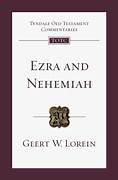
The TOTC series gives us a new work on Ezra and Nehemiah here. Geert Lorein is a unique choice for this volume as he previously wrote a commentary on these books in Dutch. While bringing us Dutch theologians used to be a thing, it’s been a while since I noticed one show up as a new commentary. Clearly, Lorein is up to the task.
Perhaps the oddest thing about the commentary is how the author switches back and forth from writing to a brand new Bible student to that then of a seasoned student. It doesn’t sink the book, but it is noticeable.
The Introduction is full for this series and concludes pretty conservatively. He digs quickly into the historical background. (It’s comical how much he didn’t like the publisher asking him to use miles rather than kilometers!). There are even occasional maps and charts that are quite helpful. He well describes the context like with, say, Xerxes. Additionally, he describes the relationship of Ezra and Nehemiah as most scholars today treat them as one work. There’s more information on the shape of the text than readers of this series would desire, but it’s here if you want it. His discussion of theology is good as far as it goes.
In this series it’s the commentary proper that most are after and it’s good. There’s around 180 pages of text for that task and so pastors can get some real help studying the passages. Getting context, comment and meaning on each section is a good design. Like Goldilocks of old the commentary section is pitched just right. For that reason, I can warmly recommend it.
I received this book free from the publisher. I was not required to write a positive review. The opinions I have expressed are my own. I am disclosing this in accordance with the Federal Trade Commission’s 16 CFR, Part 255.
 The Reagan Review