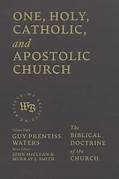
The “We Believe” takes shape as a dandy series that taken together will finally make a major systematic theology contribution. Several of these type series are reformed in nature, as is this one, and we certainly aren’t lacking works from that perspective, but this is one to consider to cover that viewpoint. While I might disagree on points, I’ve found real help in each volume of this series.
That being said, this title is a bit more militantly reformed than others in the series. The doctrine of the Church is one that kind of forces you into a distinct lane, but did this scholarly work really need to quote a denominational source of the Presbyterian Church multiple times? Even if the author thought those sources were exquisitely worded, does it really encourage a broad readership? Perhaps, though, if you are a Presbyterian, you’ll want this title even more in the crowded field.
All of that being said, I’m not denigrating the work. Waters is a good writer who presents with clarity. You won’t misunderstood what he’s saying even if you disagree with it. I imagine him to be a good teacher. So many paragraphs are him discussing by listing items one, two, three, etc.
This systematic theology theme is run through the rubric of biblical theology here. It’s also moored to Covenant Theology. Not surprisingly then, he begins in Creation. I see the Church coming along later than that, but there are still connections worth pursuing even if I might not see them as strongly as him. I have the same reservations and enjoyments in his chapters on Abraham, Moses and the Prophets.
The work grew much more captivating in chapter 6 where we meet Jesus, the Eschatological Reconstitution of the Church. The next chapter on the Apostles returns to more expected fields for a work of this type. Part II encompassing chapters 8-13 is more traditional in its contents. Still, the parts touching on local churches especially holds to the Presbyterian mindset.
Chapter 14 felt like Bavinck to me as it addressed things like church and state as well as religious liberty. The Conclusion succeeds as a clear summary as 7 statement are winsomely made to reiterate the work.
I’ve explained a few things in this review to show that you might love this book more if you’re a Presbyterian than if you’re not. Still, it’s a book much worth having.
I received this book free from the publisher. I was not required to write a positive review. The opinions I have expressed are my own. I am disclosing this in accordance with the Federal Trade Commission’s 16 CFR, Part 255.
 The Reagan Review