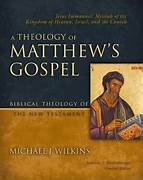
A Theology of Matthew’s Gospel by Michael Wilkins

This volume gets us close to the completion of the Biblical Theology of the New Testament series. I’ve reviewed them all so far and there’s not a dud in the bunch. Matthew deserves one of the eight volumes in this series and Michael Wilkins does a phenomenal job. I’ve had an over 20 year fascination with reading everything I could get my hands on about this wonderful gospel. With that extensive background, I can tell you that this book lacks nothing.

I feel this book could hardly be better. If I had to split hairs, maybe it could’ve used a few more charts. It’s not only the depth of coverage, but the conclusions themselves that I love. I guess you couldn’t feel the need to judge a book by me liking its conclusions, but I suggest you give it a chance. What he concludes, he develops persuasively. He covered all these background issues, but in someway in so doing he has gotten to the heart of Matthew.

The book starts a bit slowly. That is because the first two chapters cover topics I find less interesting. If we have to endure such things, I’m at least glad to see that he has dispensed with some of the dumber things that have come down the path of the scholarly world. “Q” isn’t the spectacular book behind some dependent gospels, but a foray into limited imagination; but I digress.

Chapter 3 is a skillful summary of structure. It has taken several books to put together what he explains well in a few pages. The next chapter is a literary and theological reading of Matthew’s gospel. It’s not exactly a commentary, but think of it as a collection of nuggets. In other words, it’s really good.

The next part has several chapters on major themes in Matthew’s theology. What he discusses is easily the main topics that have been on the agenda of many people over the last few decades or even longer. I call your attention to his fantastic chapter on the kingdom of Heaven. I especially was enlightened by it.

He’s also fair to various groups within Christianity. For example, he is kind to those who follow dispensational theology, but at the same time, he probably doesn’t really offend any reformed thinkers either. In other words, he’s not writing for a specific team, but is just trying to do the scholar’s task. He does it well.

This book is so good that it can probably take the place of 10 other releases from the past. You will want this one. 

I received this book free from the publisher. I was not required to write a positive review. The opinions I have expressed are my own. I am disclosing this in accordance with the Federal Trade Commission’s 16 CFR, Part 255.
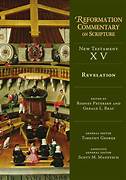
Revelation (RCS), NT XV, Edited by Petersen and Bray

These commentaries assembled from Reformation writers can be quite interesting. Just as I imagined, this one covering Revelation is exceptionally unique. I don’t think there’s any way you’d be able to grasp the big picture of Revelation in this volume. That’s no fault of the editors whose work is as diligent as others in the series, but with what they had to work with.

No matter your approach to prophecy, you will not really find a polemic for your position here. Reformers approached Revelation as passages to directly apply to the Christian life. As you might guess, that gets tremendously subjective. That almost turns it into a devotional work. What they had to say could be very accurate and insightful to the Christian life, but I’m not sure how much it fully expounded the text.

So come to this book with the right expectations. For a historical representation for how the reformers tackled this book it’s tremendously helpful. If you would approach it more as just devotional reading, you would also find blessing I would think. If you are exegeting the book of Revelation, I think you might not have much help. I’m not sure that’s a problem, because I don’t think the task of exegeting the text has this series as its first choice anyway. Again, remember what this series is about and you will have you a nice book here.

Still, it is fascinating. Just reading how they approached the thousand year reign, for example, will show you what I mean.

For the things that we should be coming to this volume for, I can fully recommend it. 

I received this book free from the publisher. I was not required to write a positive review. The opinions I have expressed are my own. I am disclosing this in accordance with the Federal Trade Commission’s 16 CFR, Part 255.
Defending Your Faith by R.C. Sproul

It’s subtitled “an Introduction to Apologetics”. After reading it, I’m prepared to recommend it as a starting place without reservation. Its writing is clear even if its concepts are deep. In other words, you might struggle a bit if it’s your first encounter with this material, but you’ll go farther in understanding than in many books three times its length. Sproul, with his philosophy background, is at his best here. I actually prefer him here over theological subjects though his brilliance is undeniable.

The first section of two chapters makes a biblical case for apologetics. He briefly explains historical reasons for the development of apologetics and then outlines its task. He further discusses the quandary of defense versus evangelism, which he defines as proof and persuasion. The bulk of the book, he says, is to defend the existence of God and the authority of the Bible. He also makes a good case against those who criticize apologetics. 

The next section of six chapters, which are the best of the book, cover the four principles of knowledge. If you are not familiar with this subject, you would never guess these four principles, but as you read, you are easily convinced of how essential they are. I am amazed by both the depth and the quantity of learning you receive in 40 pages here. It is laid out so flawlessly. He takes you step-by-step on a journey and convinces you every step of the way. I almost think that describing it would be like giving spoilers, and I figure you’d be better off to just enjoy it. I would further believe that if you mastered these 40 pages, you would be a long way down the road of understanding apologetics.

The next section of two chapters about natural reason and faith are really just overcoming the attacks against those four principles that have developed. These attacks fall to the ground like a stray bullet that hits nothing.

The following two sections really are about how we weather the later philosophical storms against belief in the existence of God. For example, some admit that there must be a higher being, but then try to negate His influence today. Others try radical ideas like saying God is an illusion, or that all that exists is self created, which Sproul explains is nonsense, or creation by chance which is pretty much the same thing, or the universe is God. He at length shows that only our God as a self-existent being explains reality. He then exposes the rogue philosophers who level these attacks.

The final section of the book is a robust defense in four chapters on the authority and trustworthiness of the Bible. Good stuff.

Sometimes you read a book that is fantastic and you lay it aside. Other times you read a great book and you know you will refer to it again and again. That is where I find myself on this book.

I received this book free from the publisher. I was not required to write a positive review. The opinions I have expressed are my own. I am disclosing this in accordance with the Federal Trade Commission’s 16 CFR, Part 255.

Genesis (OTL) by David Petersen

The OLT is my go-to for these conservative eyes to grasp the more liberal viewpoint. I know going in what to expect and that I’ll have a host of disagreements. I rate these volumes, though, on how interesting they are and how much imaginative theology is given. What did I find here? It was easy to read, it was not as extreme as I figured especially with this being on Genesis, and it was sufficiently imaginative. It gave me that out-of-my-box perspective I hoped it would.

The positions held in the Introduction were as expected, but without the usual pontificating. The raggedly worn Documentary Hypothesis theory was held to, but it seemed Petersen instinctively knew it would weary readers so he didn’t drone on about it. Some of his literary conclusions were still a bit much for me, but somehow he was still interesting in discussing it. Though I disagreed with much, there were a few nuggets along the way in the Introduction. Readers like me could safely skip the Introduction actually.

It’s when you get to the commentary proper that your time is repaid. If you work around a few subversive sentences, you will discover stimulating ones await you. I told you what I was looking for and I got it here. Better than some OTL volumes and better by far than Von Rad’s volume that preceded it, Petersen gives us a thoughtful work here. Liberal theologians should love it while we conservatives who admit we can learn from others can walk away with something worthwhile as well.

I received this book free from the publisher. I was not required to write a positive review. The opinions I have expressed are my own. I am disclosing this in accordance with the Federal Trade Commission’s 16 CFR, Part 255.