Missionary Adventure (and Our Children)

It is hard to overestimate the value of a missions trip. I count my missions trips as some of the greatest experiences of my life. They so put the world and God’s plan in perspective. They almost always come with their unique set of adventures.

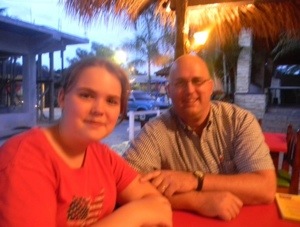
What many never think of is what these trips could mean to our children. It seems what is valuable to us would be valuable to our children as well, perhaps only more so, since the earlier in our lives we learn this the better. Two years ago I took my oldest daughter Briley with me to Honduras. What happened is hard to put in words–to her person, to her character, and even to our relationship. She had more terror than she wanted, but she will never be the same person!

To get a feel of it, I will share an email I wrote to our family at home when we came out of the remote mountains to the city with its Internet access again. We were cut off from the world in those mountains as there wasn’t even any electricity there. It was like another world! We had adventures that Briley still absolutely loves to talk about!

So here goes:

It all began Thursday moring as we drove an hour or so on nice roads. Briley begged me to let her ride in the back instead of the front. I gave in. Later the road got much worse. I wasn´t so scared as Bro. Delarca is a great driver and and I have been on jeep roads in the Smokies before. All seemed fine, but one scary moment. Bro. Delarca let the motor die and had trouble taking off and the back end started going sideways. A precarious dropoff was there that would have looked much worse from the truck bed. I knew my little girl was becoming terrified. I started praying for her. A little later Mike (Pastor friend Mike Montegomery) tapped on the window and said Briley was sick. I jumped out and took her 20 feet or so away from the truck and hugged and reassured her. She said she was blacking out from fear and cried only softly. I put Elijah (young preacher Elijah Grimm) in the front and practically held her the rest of the way. I wouldn´t let her look at the dropoffs and keep telling her this next spot wasn´t bad. We finally arrived and she held up so good while so scared. For the rest of the time she and I had often prayed that we could go back the easier way which required the river be down. She often asked about it and it was a fear she had to carry.

Our quarters and bathroom were primitive. She really handled it well. She got into mean ants twice and has several bug bites. The amazing thing was how she would bouce back from every terror so well and be her pleasant self. I took care of her and never allowed myself to be out of her sight for a moment.

We learned once when it was raining that Briley was not very scared at all in the truck cab, so I saw to it that she never was in the back of the truck again. From here on I was in the back instead. We went to a nearby village for church, about 20 minutes away over rough roads, but no dropoffs! Hondurans have a few peciliar features like knowing it´s going to rain and not leaving quickly to avoid it. We left with a truck full of people hanging on for dear life to go back to our village. It came a terrible cold mountain rain. I was soaked and cold and miserable. Briley was in the front where I saw to it she would be. Just before we left, a man opened Briley´s door and handed her a baby about 6 months old or so. I was panicked! How could Briley hold that baby with the truck jostleing around so. When we arrived, I learned that Briley had paid no attention to the mud or rain or driving but held that baby so well she put her to sleep! I was strutting like a rooster. That was my girl!

The preacher lived about a mile away from the church where we stayed and one hill with deep ruts had to be gone over each time. Usually it wasn´t bad but the first evening it rained as we went and this was the first day before Briley started riding in the front. Actually this was the straw that broke the camel’s back that required that Briley ride in the front from then on. I was standing holding the rail when a rock about 2 feet wide rolled in the gully and caused us to stop. It was hard to get over it and so Bro. Delarca had to gun the motor! I was thrown down hard and my thigh hit the tirewell. It hurt terribly and I was afraid I had bone damage. I couldn´t let Briley know as that scared her to death for me. I had trouble with it for 2 days and then it got better.

There´s more things for me but it got better for Briley. My mat went flat, we went and cut wood for the preachers, and I had to ride high on top of the wood on the truck. Briley was fine then.

She and I prayed together every morning and evening and anytime she was scared. Mike has told me repeatedly that he was so impressed with Briley. She rode much with Bro. Delarca (an outstanding veteran missionary)and he said he would remember her the rest of his life.

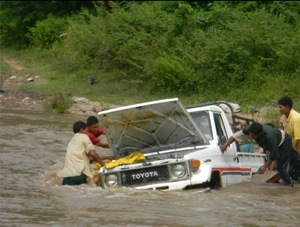
Briley talks much about the river. She doesn’t exaggerate. We first thrilled that God had answered the prayer to spare Briley going back the scary way. Don´t think we had a perfect road though as it is relative. We had lumber, about 10 bags of beans, and 10 other people in the back. It wasn´t a comfortable ride! At the river we saw it was crossable but Bro. Delarca got too far down and got the truck hung up on a rock. I jumped off to push with the men but we couldn´t budge it. We realized we couldn´t move and would have to get to shore. I got around to Briley who had water up to her waist but was not in danger of drowning as we were stationary. (I later learned she thought she might). Another man already had her door open as they are faster in the water than me. I grabbed her and walked her to shore.

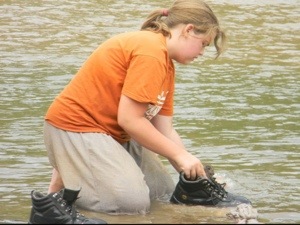
Fortunately the current was much worse at the rear of the truck than where she had to walk. I explained that we were safe and in no danger now. She was recovered after about 10 minutes but every time we men were called back in to push the truck she was afraid I would die. I am touched about her concern for me. We were there for hours and had to be hauled home in another truck. She found a little side creek fully in my view. I told her that I knew what she was doing and she said she was finding something good in something bad. The ride home was much worse for me than her. I secured her a seat in the front and we all rode in the back under a piece of plastic like a can of sardines. It was a smaller truck and was a 2 and 1-2 hour drive. One of the Honuran ladies vomited several times, so it could have been worse. We had services on the river as we waited for help to come. Mike and I both preached. BTW, the Lord especially helped me preach at that time. We finally got back in Yoro.

The rest of the trip was much calmer, but we had such enjoyable services with several congregations.
————————————————————————————————————-

Missions trips are life changing, for you and your children, so why you start planning one now.

20130915-211148.jpg

20130915-211222.jpg

20130915-211248.jpg

20130915-211319.jpg

Archaeology and Studying The Bible

samaria ruins

It’s not exactly Indiana Jones, but archaeology is a fantastic aid to Bible study. Much of the Bible customs we know today have been either verified or enlarged upon through archaeological findings. In addition we have more accurately labeled certain Bible sites, which is a wonderful thing if you get the chance to visit the Holy Land and stand and visualize the Bible.


Archaeology doesn’t trump the Bible at any point. When your archaeological findings come into conflict, you need further study and, of course, keep believing the Bible. As great as archaeology is, it is only as good as the presuppositions that the archaeologist holds. That can make for scandalous news stories. Personally, I have never once seen an unbiased archaeologist have findings that fully contradicted the Bible.

One famous case is the dig done at Jericho by the famous Kathleen Kenyon. She was, without question, an accomplished archaeologist. The problem was the miraculous tumbling of the walls of Jericho as recorded in Scripture. If you hold an anti-miracle position, it would be an embarrassment for your archaeological findings to match the Biblical record. She did good work except for dating the findings too far away to match Joshua’s account. It wasn’t the facts that required the dating, but her presuppositions and biases.

Interestingly enough, archaeologist Byrant Wood has done further work and reviewed the massive details of Ms. Kenyon’s work. His findings? The pottery would, in fact, match the time of Joshua. Even more amazing, there were burnt items and jars of stored food in the ruins. Likely there would have been fire in Joshua’s conquest. If the walls fell suddenly, then you would expect the food to be found in containers. Had Jericho been overthrown at the end of a siege as some claim, the food would have been all consumed. I didn’t need that to believe what the Bible said, but it is absolutely fascinating!

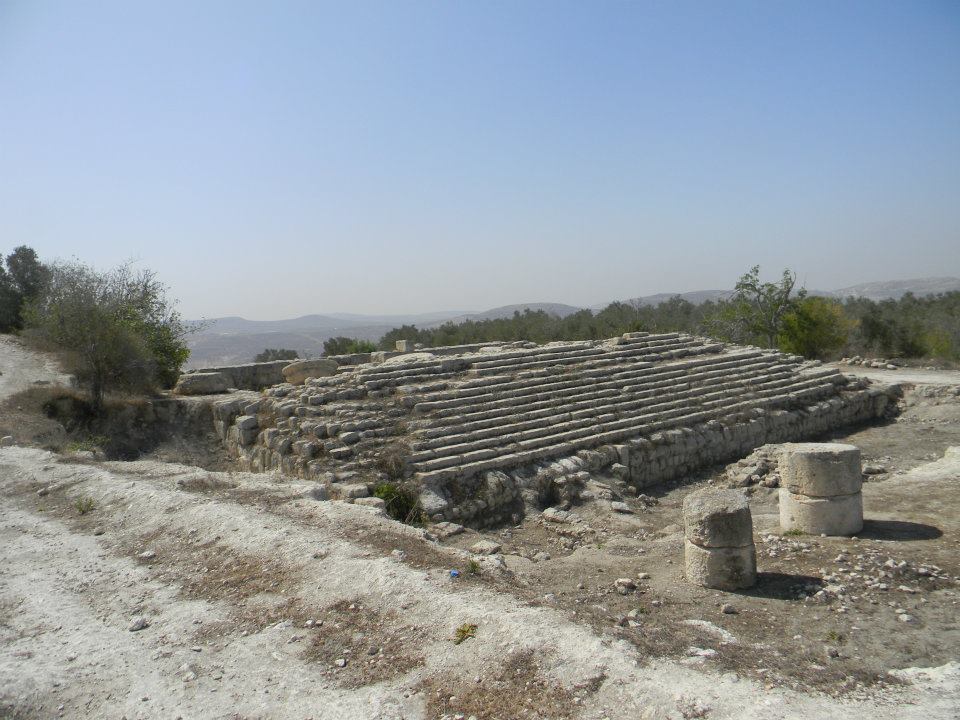
Time and time again, findings match exactly what the Bible said. In the first two pictures here, you are looking at Samaria. You can see what efforts are required to do this type of study. Herod built a palace here in Jesus’ day right where the Kings of the Northern Kingdom had their palace. Archaeological findings only backed up what the Bible said. Deep in the West Bank in the current day, it is a beautiful site that commands an impressive view. No wonder the palace was there. What a thrill it was for me to go there and imagine Ahab being visited by Elijah and Elisha, or daydream about the four lepers at the siege. I couldn’t help but notice the evidence of past archaeological work there too.


samaria ruins two

Archaeology isn’t the only element in identifying a Bible site in Biblical lands. Place names carried down through the years, what previous generations have believed, texts preserved, and a correlation to all the facts the Bible mentions are all essential. Now we just add archaeology to the list.

Sometimes all of these elements still fail to yield a conclusive answer. Take, for example, Sodom. There has always been debate. Some scholars I respect have suggested a place called Bab edh-Dhra. I am convinced by their evidence. Though difficult to find, I went there when I was in Jordan. In the picture below, you see it looks so God-forsaken. I fear presuppositions have hindered study of the site of Sodom too.

Archaeology can add a helpful level to our study of God’s Word. Some understanding of a process we don’t have to be part of (though being part of a dig would be awesome), can yield us great results.

sodom

Book Review:

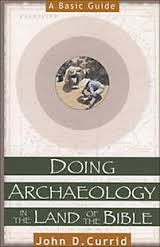
doing archaeology

Doing Archaeology in the Land of the Bible by John Currid is a fine aid to grasping what archaeology is, how it is done, and what it brings to us. It is a basic guide and all most Bible students need. In 120 pages it gives a real overview that would make descriptions of archaeological results more meaningful to you. As a pastor, I would give it high marks.

Preachers and Preaching by Lloyd-Jones (Books on the Ministry # 6)

If you had to list the two or three greatest books on the ministry, you would have to consider Preaching and Preachers by Martyn Lloyd-Jones. Since it was published in 1972, it has perhaps been the most influential title on the subject.

Why has it been so popular? On the one hand, Lloyd-Jones clearly stands as one of the masters of the pulpit. He could open the Scriptures with a deftness most of us who preach could only dream of. Then there is the fact that he is a racy lecturer. This volume is a written record of his lectures on preaching near the end of his career. What he has to say is worth hearing! He gives life to what some call “the romance of preaching.”

He begins at the beginning–the primacy of preaching. As he says, “…the work of preaching is the highest and the greatest and the most glorious calling to which anyone can ever be called.” He laments the increase of entertainment in worship at the expense of preaching. That is only more true today. He disdains the shift from our great task–the exposition of God’s Word. His solution is to bring preaching back to its proper place. Actually, it is his answer to every issue that he will discuss. I suspect that he is exactly right!

Lloyd-Jones carefully unfolds what preaching is as well as what a sermon itself really is. Along the way he drops nuggets of gold as if he were dispensing cheap candy. For all the criticisms of preaching today, his explanation that preaching smashes pride, with our need of being humbled so real, preaching then is the avenue to reach people. He believes people with come to hear preaching if, and only if, it be real preaching.

To him real preaching must be expository. Though there can be an occasionally blessed topical message, he is right. The reason is that we need God’s Word, not our own creative message. It is the Bible first, not your sermon idea. How contrary to most preaching today, but perhaps a good explanation for preaching’s low standing in current times.

In the larger context of preaching, he elevates the importance of corporate public worship. He writes of the wonderful long term benefits of preaching in people’s lives. He explains what a call to the ministry really is. He is adamant that “the pew” not control “the pulpit.” He explains how people can pull the preacher away from what we are to do, but we must hold true for their good.

His chapter on “The Preparation of the Preacher” is incredibly good. It gives us so much on personal growth. He ends with a discussion on the necessity of the unction of the Holy Spirit in our preaching. That is a correct emphasis.

Some criticize how dogmatic he is in this volume. He is truly harsh on a few occasions and a little too picky on some minor matters. Still, if you just overlook a few such lapses, you will find incredible treasure throughout this volume.

Be sure to look for Zondervan’s 40th Anniversary Edition of this great classic. In addition to his text, six modern well-known preachers explain why this volume is so good. What they have to say is worthwhile too.

I love this book and I think you will too.

Related Posts:
You can find all posts and books reviewed in this series here in this introductory post.

Introductory Post

Previous Post

20130921-174531.jpg

Next Post

A Man In The Making — A Book To Instill Character Into Your Son

a-man-in-the-making-book-cover

Do you ever worry about instilling character and values into your sons? Do your even feel awkward about it in light of our culture’s rewrite of what it even means to be a man? What values most need reinforcing? This volume by Rick Johnson and published by Revell can be a help to you.

Johnson takes from the lives of twelve great men from history to illustrate great character traits that we so need to see in the next generation of men. Personally, I find some of the men more worthy of emulation than others in his list, but he does a fine job drawing these traits out of the men he looked at. His rationale is that boys need role models. It is the absolute best way to see these traits in our boys. What is modeled will be followed!

It is not just biography we find here, however, as he gives practical advice of how to help boys take these traits into the fabric of their being.

He is not afraid to be politically incorrect and that certainly makes the volume refreshing. I agree that it is time we quit going with the current of cultural downgrades and turn and swim toward what previous generations almost intuitively knew. Our boys are too important to play the games played today!

There is little Gospel here. He is not writing about what God can do, but what we should do. For what it is, it is good and I recommend it.


I received this book free from the publisher. I was not required to write a positive review. The opinions I have expressed are my own. I am disclosing this in accordance with the Federal Trade Commission’s 16 CFR, Part 255 .

Together Is A Beautiful Word by Guest Blogger Jennie Bender


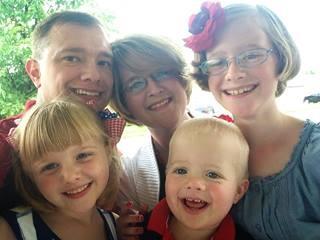
bender family
Here is a story that will reach your heart. Jennie Bender and her family walked through the fires of trial. She is wife to Shane and mother of Sabrina, Elaine, Darcy, and Davison. They are a wonderful Christian family living now in Fairborn, Ohio. The other day when I wrote a blog post called “What If Your Healing Doesn’t Come”, Jennie privately wrote my wife and I on her experiences with praying for a healing that didn’t come. In her case, it wasn’t for herself, but for her child. That is just as appropriate to the subject as any parent would realize. What she wrote was so touching, powerful, and real, I asked if I could share it as a guest blog post. Be sure to read the extra information she gave at the end. It is an honor to give her piece here. It is little edited so nothing of her heart is lost. Here it is in her words…

I just read your piece on healing. It was a blessing. I believe He can, but I have peace that He didn’t. God gives grace, mercy, and peace to go through trials. I could not do without any of those three at any given time. I have learned more, gained more, so much more. If I could go back– I’d probably selfishly choose to take away trisomy 18 (explained below) and have my daughter alive– without sleepless nights and burning tears, without knowledge of impending death, without… But I’d not know this great grace, I’d not have a strong realization of Heaven, I’d not have a measure of faith, I’d not have the blessings of brokenhearted strangers who reached out and gave me friendship through our mutual suffering, and I’d not have lifelong friendships given to me on her behalf by God’s hand…

I had so many say that God would take away this problem and it’d just go away– because He is God. Death was surely not coming to my house– according to them. They meant well; it was what we all wanted.

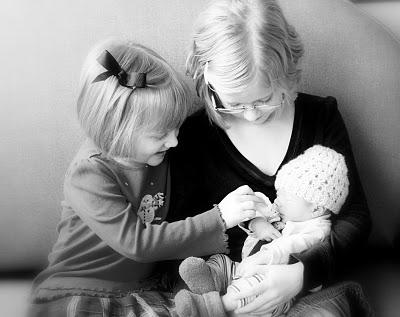
bender children

The Lord showed me that wasn’t the way I was going– though I wanted it badly, more than anyone passing by could fathom. I remember my own prayer– “Lord, I know you are praying for me because I don’t know what to pray.” I even went so far as to pray for her death so she could be truly safe– and hastily recanted it as soon as I spoke it– because I couldn’t believe I spoke it aloud. Only a mother dealing with a fatal disorder could understand that prayer and its depth. I wanted her more than I could bear, but my love for her wanted the fullest, happiest life for her– and with her diagnosis the best place was not with me but with God.. There was a guilt after I prayed that prayer because of my absolute humanity, but my heart later knew that prayer was because of my love for her — her grave struggles and future caused me to desire to give her to God– though it broke my heart in pieces. And I am sure someone will say that’s wrong, but the Lord knows how desperately we wanted her– with or without her so-called deformities. She was perfect to us and still is, no one dare question our love for her. Even if they did, there is no point to prove to them. We stand before God Almighty; He knew and knows our hearts. We only wanted her best– and that is love– and the greatest love is someone else’s best over your own selfish desires.

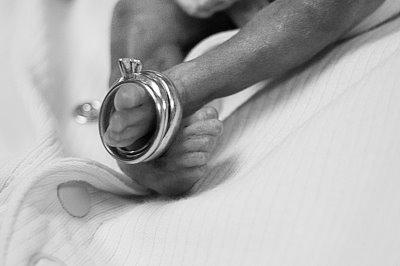
baby pic

This is a real issue, as you say. There are so many remarks you receive… some are not helpful. I am so thankful for the people who came into my life– people who were broken hearted, mended, and ministering because they had seen God. They all spoke the same words, just like a painter’s hand is recognized in every painting, you could see His hand and hear His voice through their unique stories. Others did not have that, only the broken ones. They had seen God work –they were compelled to comfort as He had personally comforted them and as they had been blessed by His people through their own sorrow.

I am changed because of those days. They are painful at times to recall, but the changes God made have only made our lives better. Every move He makes is for our good, and I trust the loving kindness of the Lord.

And as for your family and mine, our situations are not the same and not to be compared, but the Lord has made us better friends because of our trials.

(Editor’s Note: There is a hard-to-explain camaraderie in suffering.)

Trisomy 18 is a generation of an extra chromosome. It can be shattered, misplaced, or a duplicate chromosome. The simplest explanation is– it is like an extra puzzle piece. It fits, it is perfect, it is useful, fully functioning, alive. The only problem is–it is extra, therefore it destroys the whole. It can be genetic, it can be due to the age of a mother, but most of the time, as in our case, it is simply an accident at the onset of the division and multiplication of cells. Every time the bundle of life multiplies and divides it creates more problems. Since it is in the actual cells, there is nothing to do but wait. We were told she would die before her due date, she would have great struggles and die eleven days after her birth on average, and if she survived beyond those early days–she would surely be dead within a year.

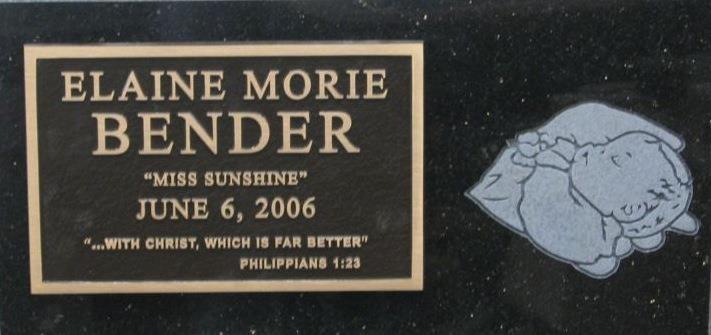
Gravestone

Elaine had an extra finger, water on the brain, strawberry shaped skull, a twisted foot, and three holes in her heart– nearly every marker of T18. Our marriage was given a 1% survival rate because of the stress before and after her delivery. God has been good, we’ve not been prefect, but He has led us gently all the way. We have an unexplainable daily joy and gratitude that was given to us because we put our child and our broken hearts in God’s hands. “We are better for knowing her–even if it was just for a moment.”

She is the reason we say and know, “Together” is a beautiful word.

Thanks Jennie

ADDITIONAL INFORMATION:

If you know anyone going through such times, please let us know –jennie@benderparty.com.

Also, Now I lay Me Down to Sleep is a non-profit organization consisting of professional photographers who photograph families whose children have been given a fatal diagnosis. They were a great blessing to us. Lori Anderson of Simply Southern Photography took pictures of Elaine through NILMDTS.org.

RELATED POSTS:

What If My Healing Doesn’t Come? The original post Jennie responded to.

Confessions of a Disability Marriage Jennie mentioned God’s grace in her marriage getting through what wrecks many marriages. It is tough and I have written on my own case.

Future Grace by John Piper

How would you like a book that takes the concept of grace and interweaves it through the whole of Scripture? By that I mean what grace really means to us. How does faith play out to bring the dramatic power of grace into our lives? How does grace, faith, sin, and the promises of God interrelate to make the Christian life the awesome thing it is? I assure you that Mr. Piper makes one of the strongest explanations I have seen in that regard.

Not that I would agree with everything he writes (I don’t), but he takes you to thoughts that need to be entertained though you have never thought them before. That interrelation of key Bible concepts I spoke of is the volume’s greatest asset. He connected a few dots for me.

Though he ties many things together, his theme is one: we must live by faith in the future grace of God. We find that that simple theme brings great clarity to the Christian life as expressed in the Scriptures. Or as he further explained, “…the faith which justifies also sanctifies, because the nature of faith is to be satisfied with all that God is for us in Jesus.”

I can at best whet you appetite in this review of the things he brings out. For example, he describes sin as what you do when you are not satisfied with God. We sin, he says, because we believe we will find happiness there. That presupposes a lack of faith in what God said. If we believed His grace will deliver what it promised, it would be impossible to think that the sin in question could bring happiness. I can see that truth, can’t you?

Perhaps you will be as shocked as I was to follow his discussion on the debtor’s ethic. He justly describes how we so often try to motivate ourselves and others by saying that we owe the Lord for what He did for us. Though what He did for us is monumental beyond description, he shows that is not at all how the Bible seeks to motivate us. No, he rightly argues, our problem is always a lack of faith, not a lack of gratitude, when it comes to the matter of radically following and obeying Jesus Christ.

Pride, he goes on, is a specific form of unbelief that is a turning from God to self. With that goes a loss of faith that comes a foolish faith in the promises of self. That ties the hands of grace’s work. Building on C.S. Lewis he tells of the “itch of self-regard and the scratch of self-approval.” He quotes: “The pleasure of pride is like the pleasure of scratching. If there is an itch one does want to scratch; but it is much nicer to have neither the itch nor the scratch.” He explains how the craving of the praise of others is a loss of faith in future grace.

There is so much more. He goes all the way to a faith in future grace that can triumphantly lay down one’s life for the glory of God as many martyrs before us have done. How did they do it? They believed the promises of God and the grace they contain.

Besides a few points of disagreement, I love this book. I find it superior to his writings on Christian hedonism, though he believes they are connected. It is 400 pages that I had to read slowly, but it is worth it. He has conveniently given this work in 31 chapters if you want to take a month with it. That might be the best way.

This volumes re-establishes how my faith in what my Lord has told me is so essential to the overall success of my Christian life. For that, I thank Mr. Piper.


I received this book free from the publisher. I was not required to write a positive review. The opinions I have expressed are my own. I am disclosing this in accordance with the Federal Trade Commission’s 16 CFR, Part 255 .

20130901-165302.jpg

A Night To Be Much Observed

“It is a night to be much observed unto the LORD for bringing them out from the land of Egypt: this is that night of the LORD to be observed of all the children of Israel in their generations.Exodus 12:42


Do you look back to some special, unforgettable moment in your life? A moment that defined you and forever changed your life? For me, it was 33 years ago when I accepted Jesus Christ as my personal Savior. In this passage, the nation of Israel had such a time, a time when she in fact became the nation of Israel. It was “a night to be much observed.”


Preparing For This Night

Much will go into preparing for this night. On this thought consider facing a plague. This story begins in Exodus 11. We come there to an ongoing battle between Pharaoh and God Himself. The Lord has been represented by Moses, and nine plagues have already been poured out on Egypt. One plague remains and its story begins here. This tenth plague will be the one that finally breaks Pharaoh’s back and causes him to let Israel go. This plague will be so effective, in fact, that the Egyptians will beg the children of Israel to leave. In its aftermath, the Egyptians will proclaim, “we be all dead men.”


This final plague involves the death of all the firstborns in Egypt. I’m a firstborn myself, and I imagine any firstborn would find this story especially interesting. In reading this story, we probably ask ourselves just what is the significance of the firstborn. If you have children, think about what your firstborn means to you. It means that your family will continue. My grandfather had eight daughters and two sons. The older son had all daughters and my dad, his other son, had one daughter and me. I remember my grandfather telling me that he was depending on me to preserve the family name. When my first son was born, I thought of my grandfather and the importance he attached to carrying on the family name. To Egypt all the firstborn sons represent the furtherance of them as a people.


In her pride, Egypt assumes that her firstborn sons means she will continue forever. When Pharaoh had the male babies of Israel killed, we see that apparently Egypt did not think Israel would continue but rather be obliterated under Egypt’s hand. This last plague will remedy that thinking. When the “night to be much observed” is over Egypt will never think that again. At midnight on the night the Lord chooses, everyone irrespective of station in life will lose their firstborn. This plague will reach from Pharaoh’s palace to the poorest home in Egypt. In this unusual plague even the animals will lose their first born. Every home will give up a cry of terror at its loss. It will be like nothing they have ever seen. To imagine this scene, remember what it was like in your home when you learned of the death of a dear loved one. Now expand that scene to every house, on every street, and all across the land!


What is really happening is that the Lord is bringing out Israel and no one will stop Him. Exodus 11: 7 says, “But against any of the children of Israel shall not a dog move his tongue, against man or beast.” When the Lord makes His move, not even the dogs of Egypt will have the nerve to bark. Verse 7 continues to show the reason why: “that ye may know how that the LORD doth put a difference between the Egyptians and Israel.” After this night, Egypt will learn that there is a difference between God’s people and His enemies.


Also notice needing a lamb. Even to the Israelites this plague is going to be interesting. Israel faced the first three plagues with Egypt – the river turning to blood, the frogs, and the lice. It wasn’t until the fourth plague, the plague of flies, that God differentiated between Israel and Egypt. From the fourth plague until the ninth, Israel was completely spared. Israel didn’t have to do anything to keep the flies from bothering them, or for any of the others until the tenth plague. But with this last plague, the Lord will require that they do something to avoid it. They will need a lamb. There is such significance in this act that Moses will carefully get the instructions to all the people of Israel. This night will be so special that they will observe it every year.


For this special night not just any lamb will do. It must be a one year old male lamb with no blemishes. You couldn’t just buy the first lamb you saw. You couldn’t purchase a three-legged lamb to save money. No, there could be no imperfections. Perhaps you would see a beautiful lamb and notice a small black spot somewhere on its body. It wouldn’t work. Perhaps the lamb would be a magnificent specimen with a shiny coat and good size, but have a slight problem with one hoof. The deal would be off. For the lamb to have no imperfections was essential. Whatever it took, you had to get yourself a lamb. There were provisions for the especially poor like a couple of families sharing one lamb, but there had to be a lamb for you. This is not something that only Moses had to do, or something that he could do for everyone, but every home must make its own preparations. In this case he couldn’t say, “just watch me as I do this,” but he had to instruct each home in how to have its own lamb. And it had to be a lamb that the Lord would accept, a lamb without blemish.


The instructions were even more explicit. Each home must kill its lamb at the same time. Then they were asked to do what must have seemed so shocking. They were to collect the blood of the lamb in a basin. Before they cooked the lamb for the special meal that they were to have, they were to take the blood they collected to their door. Then they were to take a hyssop, which is a bushy stalk with leaves and small flowers, and rub the blood on the side posts and upper post of the door. If you had a weak stomach, you might not like this job. The father of the home would keep dipping the hyssop in the blood and slapping it on the door posts to make sure it was thoroughly covered in the blood.


After following those grotesque instructions, they were to take the lamb and roast it that very night. They were to eat unleavened bread and bitter herbs with it. None of the lamb was to remain by morning. If necessary, they were to burn it to comply with this instruction. Then the Lord tells them the point of these instructions. On this special night He will pass through the land and look at every door to see if the blood has been applied to it. Where He sees the blood on the door, He will pass over that home and spare it this bitter plague. Obviously, where there is no blood on the door, He will not pass over but will come inside. If He comes inside, the firstborn will die!


Facing This Night


It’s amazing what facing this night will entail. On this thought consider waiting as a family. Moses begins explaining to the elders what the Lord would expect in each home. The story is told in Exodus 12:21-28:


21 Then Moses called for all the elders of Israel, and said unto them, Draw out and take you a lamb according to your families, and kill the passover. 22 And ye shall take a bunch of hyssop, and dip it in the blood that is in the bason, and strike the lintel and the two side posts with the blood that is in the bason; and none of you shall go out at the door of his house until the morning. 23 For the LORD will pass through to smite the Egyptians; and when he seeth the blood upon the lintel, and on the two side posts, the LORD will pass over the door, and will not suffer the destroyer to come in unto your houses to smite you. 24 And ye shall observe this thing for an ordinance to thee and to thy sons for ever. 25 And it shall come to pass, when ye be come to the land which the LORD will give you, according as he hath promised, that ye shall keep this service. 26 And it shall come to pass, when your children shall say unto you, What mean ye by this service? 27 That ye shall say, It is the sacrifice of the LORD’S passover, who passed over the houses of the children of Israel in Egypt, when he smote the Egyptians, and delivered our houses. And the people bowed the head and worshipped. 28 And the children of Israel went away, and did as the LORD had commanded Moses and Aaron, so did they.


Imagine the father of each household explaining to his family what is taking place. He explains that the family must get a lamb to be ready for this incredible night that is coming soon. The Lord instructed that each family must have its lamb four days. So the family gets the lamb, a lamb with no blemishes, and keeps it those four days. We can be assured that they brought this lamb into their home and took wonderful care of it. The stakes were too high to risk losing the lamb. If the children in this home are like most children, they would play with this lamb and become quite fond of it. Four days time would be more than enough time for the children to make a pet of the lamb, and we can easily imagine that in their innocence they beg their father to not go through with killing their new lamb.


In addition to the children begging to keep the lamb, the father notices the nervous expression on his wife’s face. As she glances at her firstborn son, she probably asks her husband, “Honey, are you sure you got those instructions down right?” As the father scans the room, he sees also his fidgeting firstborn son sitting in the corner. That boy’s heart skips a beat with every bleating of that lamb. He probably says, “Dad, I hope we are doing this correctly.” There is an awkwardness pervading the entire room as all, even some of the other children, are thinking what life would be like without their older brother.


To ease the tension and because it was his duty to explain the significance of this night, the father spends much time in describing that this night will forever have great meaning. “We will think often,” he will explain, “of this night and even celebrate it once each year.” In other words, he attempts to explain, this night will define our lives. This night always will be for an Israelite “a night to be much observed.”


At last, the time came to kill the lamb. The father carefully follows the instructions. He would kill the lamb, collect its blood in a basin, take a hyssop, and sling the blood upon the door posts. What a bloody mess there would be as he took such care to make sure that he had plenty of blood on that door frame. The children were probably horrified as they watched their father work. They had never seen him do anything like this! To reassure them, he no doubt explained that the Lord required this and further talked about what it meant as best he could. If they were like my children, they would naturally ask “why” through the whole process. He probably said, as he had one eye on his firstborn son, “If the Lord requires blood on our door, then we are going to put blood on our door.” He would not stop until he had the blood on those doorposts as thick as he knew how to get it. I’m sure that when he closed the door that blood even trickled down the inside because he had put so much on the outside. He will have the blood on his door when the Lord brings that last plague down his street.


With the bloody work now done, they will cook the lamb and prepare the meal as instructed. After the meal they must wait until midnight. Had you lived in those days of hard work, you would never sit up until midnight. But no one sleeps this night. They just wait. If their faith wavers at all, they probably continue glancing at the firstborn son. The room grows quiet as all are lost in their thoughts about what midnight will bring.


Finally, midnight comes. They have no clocks that keep exact time, but they know that it is midnight by the faint screams they hear in the distance. Let’s suppose that this family lives in the first house as you enter the land of Goshen, which is the area of Egypt set aside for the Israelites. Those screams are in the direction the farthest Egyptian homes that can be heard from their house. As they listen, they notice that the screams grow louder and approaches nearer. They can sense that because of the screams He is passing one house at a time but coming in their direction. As the plague comes closer they can make out what some are saying in those screams. Then they hear someone distinctly yell, “My son is dead.” The children, who are already in their parent’s lap, snuggle in as close as is humanly possible. As they stare at their door, they are now so glad that their father had put the blood so heavily on the door posts and that blood could even now be seen dripping down the inside of the door.


Now notice trusting in the blood. Earlier in the night they had probably wondered why the Lord had asked for such a gross act. They probably wondered why He didn’t do something more beautiful, or something more religious. They wished they could have had more exciting instructions rather than these events that were making for such a terrifying night. But in spite of their earlier thoughts, they were sure glad to have that blood on the door now. In fact, no one dared go outside, but all stayed hid behind that blood.


After a few more excruciating moments, the screams got so close that all in this home knew that the Lord was almost to Goshen. You could almost count off the distance until you knew that the Lord was now passing your door. With all eyes bouncing from the firstborn son to the door and back, a smile began to form. What begins as a faint smile, grows into an explosion of emotion! Can you imagine all the laughing and happy tears? All embrace the firstborn son with the hardest hugs he had ever experienced. For this night, “a night to be much observed,” you would have expected something festive, not something so solemn. But when you think that older brother still lives, it was quite festive after all. As the emotion died down, all surely marveled at how the blood had worked.


It had been a shocking night, as Exodus 12:29-30 relates:


29 ¶ And it came to pass, that at midnight the LORD smote all the firstborn in the land of Egypt, from the firstborn of Pharaoh that sat on his throne unto the firstborn of the captive that was in the dungeon; and all the firstborn of cattle. 30 And Pharaoh rose up in the night, he, and all his servants, and all the Egyptians; and there was a great cry in Egypt; for there was not a house where there was not one dead.


No, there was not a house among the Egyptians where one had not died, but the blood had been sufficient for this modest Israelite home.


Learning From This Night


If we could take to learning from this night, we could gain eternal results. On that thought consider accepting the Lamb. This night the Lord had, among other things, been teaching. Those lessons were that it would always be true that a Lamb was needed, that a substitute was necessary, and that the innocent must die for the guilty. Here in a beautiful Old Testament picture we see what the New Testament carefully explains – that Jesus Christ is the Lamb of God. I Corinthians 5:7 says, “Purge out therefore the old leaven, that ye may be a new lump, as ye are unleavened. For even Christ our passover is sacrificed for us:” Yes, what took place this night was gory, but Jesus Christ was sacrificed. His blood was shed. He was for you and me what the little lamb was to that little Israelite family.


Jesus Christ, just as that lamb, was “without blemish.” He was perfect and had no sin. Even Pilate, who cared only about what was expedient for his political career, had to admit, “I find no fault in him.” The requirements for the lamb demanded that he be a male and Jesus Christ the Son of God was made a man. The lamb was to be “of the first year” and Jesus Christ, though the eternal God, was in the prime of His earthly life at 33 years of age. Exodus 12:6 says, “ . . . and the whole assembly of the congregation of Israel shall kill it in the evening.” Part of the suffering of Jesus Christ was His crucifixion before the gaping eyes of a cruel mob. And never forget that as a sinner your fingerprints are all over His bloody, broken body. It was your sin and mine that brought him out of Heaven to the tortures of Calvary. Further, all the lambs had to be killed at the same time. Jesus Christ died at just the right time for Romans 5:6 says, “ . . . in due time Christ died for the ungodly.” Amazingly, Jesus Christ died on the cross at the very moment the Passover lambs were being slain.


The instructions also required that the lamb be “roasted with fire.” This is a picture of Jesus’ incredible suffering. With the extreme loss of blood, thirst, and bones out of joint, Jesus went to the farthest reaches of suffering. After the lamb was roasted with fire, it was to be eaten “with bitter herbs.” This is a picture of Jesus’ deep sorrow. Jesus Christ knew sorrow. John 1:11 reads, “He came unto its own, and his own received him not.” In fact, the very ones He came to die for were screaming, “Crucify him!” Another key instruction was that none of the lamb was to remain by morning. That the meal had to be eaten at one time illustrates that salvation is both a one-time and a once-for-all-time transaction in Christ. It is not a process but an instantaneous new birth. You don’t get a little bit saved today and a little bit more tomorrow; no, in an instant you “pass from death unto life.”


Now notice applying the blood. Folks, we already have the perfect lamb. We need not keep searching since the lamb without blemish has already been provided, the blood has already been shed, and it stands ready to be applied. You need not worry yourself about finding a better lamb. None could be found. So the question, then, is not about the acceptability of the Lamb but is really will you accept the Lamb already lovingly provided. Will you take the blood of the Lamb and apply it to the door of your heart?


Sin leads to death. So death is coming down your street. Don’t you hear it coming? Go to any funeral home and see its work. Death will make its way past the door of your heart. You know you have heard the distant screams and that it gets closer to you every day. In the Bible death is more than just dying. It is spiritual death that entails eternal separation from God in a place called Hell. The only way this spiritual death will pass over you will be if it finds the blood of Jesus Christ applied to the door of your heart. Can’t you see that when death came down the street only one thing made any difference? The Blood! Did you notice that the house made no difference? It made no difference if the windows were washed or if the lawn was mowed or if there was a new paint job. There was no consideration for whom your family was. Pharaoh’s firstborn son was just as dead as the son of the lowliest home in Egypt. Only the door was looked at. Only the blood mattered. And so it is with you and me. It makes no difference what your background is, or your religion, or anything else, but only the blood of Jesus Christ. Remember Romans 5:8-9:


8 But God commendeth his love toward us, in that, while we were yet sinners, Christ died for us. 9 Much more then, being now justified by his blood, we shall be saved from wrath through him.


See this great lesson of Scripture – Hebrews 9:22 “without shedding of blood is no remission.” This flies in the face of everything the prideful heart of man holds dear. Yet the eternal happiness of every man depends on it. The simple truth is that for every man, great or unknown, the Lord will look at the heart to see if the blood is there. Can’t we see that it is either the blood or the screams? In this case the screams are of one sinking into Hell! Have the blood of the perfect Lamb of God applied to your heart today by trusting Jesus Christ as your personal Savior.


What was a night of terror for some was a night of deliverance for others. -You do not have to seek the terror; it’s already on its way. But you can have the deliverance. If you already have this salvation, then remember that this must be our clear message to perishing souls.


This special night was one that the delivered understood, and a night that they forever thank the Lord for. It was a night worth being ready for. It was a night worth remembering. It was “a night to be much observed.”


 

20130822-131851.jpg

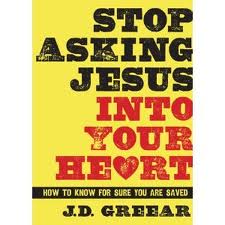
Stop Asking Jesus Into Your Heart– A Book Review and Personal Observations


forlornstop asking jesus in your heart

Well, can one really know if he or she is saved? Can those lingering doubts ever be put to rest? Must we have to make that fifteenth profession of faith? Or in a few weeks will it be what it always comes to–the pain of just not being sure if you are going to Heaven or not?

Perhaps this issue is the ultimate elephant in the living room for Christians. Over the years I have come to the opinion that it touches more Christians than it does not. I have not personally dealt with it in my own heart, but I have certainly worked with those who have. That I have not doubted has nothing to do with living so highly that I was insulated from it. To the contrary, I have done plenty enough to raise doubts since I was saved all those years ago. I credit an incredibly clear presentation of the Gospel for sparing me. I have always known it was Him and not me. I praise God for it too.

Still, many have a storm raging in them. Happiness always runs just out of reach. It makes sense. Who could be happy if you just didn’t know if you would open your eyes in Heaven or not someday? To make it worse, it is hard to fathom exactly what is at stake if we lack assurance. Our entire Christian life gets tied up in knots if we can’t get out of this struggle. Obedience struggles too because obeying to gain salvation is flawed and doomed to failure. It can only thrive when we know where we stand.

A book I recently read, “Stop Asking Jesus Into Your Heart” (reviewed below), got me thinking about it again. I have read plenty on it, but apparently we don’t have enough written on it as of yet.

I don’t think we can give generic advice as all cases of doubting one’s salvation don’t spring from the same place. If you battle a lack of assurance, I suggest you figure which category you are in:

1. Confused

You hear much preaching and teaching that throws you onto the merry-go-round. Just when you think you got it, along comes another sermon and presto, there you go again! It is not a matter of not really wanting to be saved, or of being insincere, or any such thing. It is an intellectual misunderstanding of a heart that truly loves Christ.

2. Backslidden

Since salvation is as eternal as the fact of physical birth, The Lord uses different means to reach us when we go the wrong path. A lack of assurance is actually a tool from His toolbox to help us. Such a lack of assurance really traumatizes and can lead us back. First John is a whole book about dealing with a lack of assurance and joy.

3. Unsaved

Of course it is an option. Jesus Himself said in Matthew 7:23, “And then will I profess unto them, I never knew you:depart from me, ye that work iniquity.” These folks have a false assurance. Surely at times they hear the little voice that says you are not saved. To trust something other than Christ can’t satisfy,and in such a case, a lack of assurance is a glorious gift.

Now let’s talk solutions to these cases of doubting one’s salvation (in reverse order):

1. Unsaved

You need to see your condition before a Holy God and throw yourself on His mercy provided in the Person of Jesus Christ. There is no other hope for you! ( please write me if you have questions).

2. Backslidden

I imagine you know exactly what to do. Just remember this gnawing will never go away till you do!

3. Confused

You likely are putting yourself through needless torture. Do you love Jesus? Do you want desperately His salvation? Do you really think One as loving as Him wants to make it so hard? We are the ones who make it so hard by always thinking that some of His work is ours to do. Ours is but to see the absolutely helpless conditions of our souls, the gory depths of sin in ourselves, and the infinite grace of Jesus Christ. Run to Him! If you did, He did save you as He expressly promised in His Word.

Examine your heart. Are you downplaying your sin and imagining that you just need a little help? If not, I think you can trust His Word. Spend your days looking at Jesus. Learn of Him. Don’t stop until you learn once and for all what grace is. Until you do, the torture may dog you.

The main thing is that it is Jesus, not you. You bring your brokenness, He brings His peace; you bring your failure, He brings His righteousness. You don’t contribute to your salvation, you only bring your lostness. It might be that you just need to remember your part (nothing) and remember His part (everything). It can be no other way.

And by the way, heaping more guilt on yourself will only add to the problem. Being ashamed of your situation is pointless too as you are one of so many. The right approach is dealing DIRECTLY with the problem with no One other than Jesus! Get the other voices out of your head and His voice will be kind, calm, loving, and will lead you back to peace.

BOOK REVIEW:

J. D. Greear has given us a thought-provoking volume. The title (Stop Asking Jesus Into Your Heart) alone titillates! I do not agree with everything he says (there is some Calvinism), but he helps us get away from a life of multiple professions that plague so many. The book digs into the subject and helps us wrestle with this critical subject.

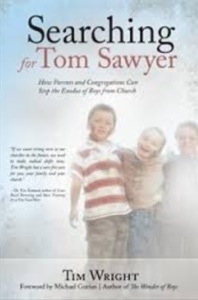
Searching For Tom Sawyer–Help Keeping Boys In Church

“How parents and congregations can stop the exodus of boys from church” reads the subtitle and sums quite nicely the theme of “Searching For Tom Sawyer” by Tim Wright and published West Bow Press. You read much these days about how men are shunning the church, and even some about what we might do to make our churches more palpable to men. This volume looks to solving the problem before it begins–with boys.

Mr. Wright begins by presenting a solid case for males and females having distinct differences designed by the Lord, even though both are of equal worth to Him. He repines our culture’s mistaken emphasis on sameness at the expense of differences. These differences must be considered if we are to have a church that reaches men and women.

He even digs into the differences in how our minds are wired. Boys develop a little slower than girls and most Sunday School classes are geared more toward girls. Girls begin reading earlier so boys naturally don’t like getting called on to read and be embarrassed in front of those same girls. As time goes by, boys are by their Creator’s design likely to squirm and hate being forced to sit still. Again, we often set things up this way. So, boys start hating church at a very young age. The author makes some suggestions about setting things up differently. Whether we would exactly follow his instructions or not, these are issues worthy of much thought.

I appreciate that in his recommendations he discusses lower-cost ideas for those of us who don’t have massive budgets. The model of mega-wow factor simply won’t work for us all. The book ends with a few sample lessons designed to appeal to boys.

Our culture almost seems embarrassed by manhood. No amount of indoctrination, however, will ever remove how God made us. It is particularly ridiculous to organize church against what we know to be true! This is a helpful book that we should consider carefully.

I received this book free from the publisher. I was not required to write a positive review. The opinions I have expressed are my own. I am disclosing this in accordance with the Federal Trade Commission’s 16 CFR, Part 255 .

Related Post:
Why Men Hate Going To Church why men hate going to church

20130817-184134.jpg

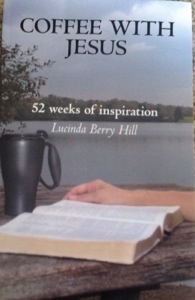
Coffee With Jesus–A Book Review

Here is a book to aid with your devotions. It is written by Lucinda Berry Hill and published by West Bow Press. It is designed to be used over the course of 52 weeks. You have an original poem by Mrs. Hill and a corresponding Scripture. Obviously, this isn’t made to be the whole of your devotions, but a supplement to it. She wants to bring inspiration to your devotions.

Not every one gets into poetry I know. Others find great inspiration in it and have favorites from the years. If you enjoy poetry at all, I recommend this book to you. I met Mrs. Hill on social media and she is always a kind, encouraging person there. The book comes with scriptural and topical indexes as well to help you find something for the occasion. She has been writing poetry for years that has been read on special occasions and even run in the newspaper.

20130804-094317.jpg