Some Fruits Of Solitude

some fruits of solitude

Here’s a treasure trove of wisdom from yesteryear. Written be William Penn and given as “Proverbs, Wisdom, and Principles For Better Living.” Yes, that is the William Penn of Pennsylvania fame. It’s not a book about solitude, but the wisdom he came up within periods of solitude. Perhaps we need more solitude if we could have as much insight as he did.

The book is set up in categories like pride, luxury, frugality or bounty, right marriage, and many more. Yes, as you would expect, a category on friendship is included. This book can be taken in large or small chunks. I read several of these statements to my family and they spurred some good discussions. I would find my wife picking it up and reading it as well. Guess which one she found and loved the most?  “Between a man and his wife nothing ought to rule but love. Authority is for children and servants: yet not without sweetness.” Strangely, that’s the very same one the publishers found best to put on the back cover. She and I both felt this book had good things to say to families. Our children need these forgotten truths.

Older words are used at times and that may turn off some, but you can pretty easily understand the statements. Plus it has that classic look and feel to it.

As I read it I so wished the people with influence in our country still viewed the world as Mr. Penn did. I say let’s bring back this type of common sense.

I received this book free from the publisher. I was not required to write a positive review. The opinions I have expressed are my own. I am disclosing this in accordance with the Federal Trade Commission’s 16 CFR, Part 255 . 

Father Hunger–An Urgent Read

Just how important is fatherhood anyway? Our culture has no answer as it can’t think of one good reason for fatherhood beyond the biological one. For that matter, many fathers can’t add any more items to the list. Shall we listen to our culture? I’m not sure what our listless age has to commend to itself to be our guide. God, as the Master Designer, is left out of our thinking and the consequences are horrific. That’s where one of the most incredible books on fathers I have ever read comes into play. “Father Hunger” by Douglas Wilson is profound and greatly impacted me. Every page was like the hard steel blades of the plow tilling through the soil of my heart.

What Mr. Wilson was able to accomplish in this volume is rarely done. When the subtitle proclaims “Why God calls men to love and lead their families”, the book actually delivers on the “why.” Few books can give us the big picture and get especially practical as well. As an avid reader, it’s my opinion that most authors can give us only one or the other. Mr. Wilson, with verve, skill, and a pastoral heart actually pulls it off.

With deftness he upholds the essential equality of men and women while showing that the Lord, again the Master Designer, has assigned men and women different roles. That will probably keep this book off the New York Times Bestseller List, but it will have the smile of Heaven for its Biblical faithfulness. God is Father, so do you imagine in His design fathers would have a non-essential role? Ladies, don’t panic—Mr. Wilson never gives men power to be selfish brats, just power to love and be unselfish and sacrifice himself for his family. Listen to this incredible statement on men taking responsibility: “… to take on a lifetime of sacrifice and hard work. A man who takes a woman to the altar is going there to die to himself. But that is all right because it is not good for man to be alone.”

He looks at our country and where it is today and sees the absent father as the biggest culprit for the mess we are in. From fathers who provide the seed for a child and vanish to the fathers who live at the same address and mostly do their own thing in life, we have a generation of absentee fathers. The Lord designed everyone to need a father. A father’s loving hand is needed in the life of every child. He says, “Your actual pursuits are a running scoreboard. They reveal what you actually prize.” Are you challenged here? I am.

He shows how feminism, or the dire warnings of overpopulation, or the design of the welfare system, or the plea for gay marriage are all direct attacks on fatherhood. It also a direct attack on what every one of us needs to thrive as God intended. Statistics on everything from crime to education are given. The jury is in and the verdict says that homes without fathers are destroying children today. Without a Dad they will much more likely be a school dropout or be in prison. Also, the worst we see out of men comes from not encouraging them to settle down, accept responsibility, and protect their family.   He shows how God is masculine (not male) and how masculinity (defined with care) is needed all around.

There’s so much more, but this review is getting ridiculously long. For the practical side, the chapter “Some Father Mechanics” is worth the price of the book alone. I saw my lack all over its pages. Thank you Mr. Wilson. If no one else needed your book, I did.

I received this book free from the publisher. I was not required to write a positive review. The opinions I have expressed are my own. I am disclosing this in accordance with the Federal Trade Commission’s 16 CFR, Part 255 . 

G. Campbell Morgan (Great Preachers Series)

(Here’s part of a series that has already included Charles Spurgeon and Alexander MacLaren ).

He was the envy of the preachers of his day. The great F.B. Meyer once confessed as much! Morgan joins Moody and Spurgeon in never having any Bible college training. He was discovered by Moody and many feel the Lord sent him to teach the Bible to the massive amount of converts that came from the great revivals of that time period.

You might have had your doubts about him earlier on as after preaching a trial sermon to enter the ministry as an ordained Methodist preacher, he bombed out. A dejected Morgan wired his Dad to tell of his failure. His wise father wired back: “Rejected on earth–accepted in Heaven.” That was a close call to losing a mighty preacher that over time just became something hard for the Methodists to live down! He rose to fame just after Spurgeon and others of that golden age of preaching passed off the scene. Still, he was of their ilk.

Though he didn’t have formal training, he decided that to be the preacher he should be he should master the English Bible. Of course in his studies he referred to language works, but the task that lay heavy on his heart was opening up the Bible in the English language. His laser focus reaped huge dividends as he opened up God’s Word for the masses. Like the other great masters his work ethic in the Word would shock most of us who preach the Word today. He didn’t just look for a sermon to fill his given slots, he was compelled to get at what the Lord was saying. Likely, this is the exact point where his success and our failure meet.

His great strength was synthesis–how the thing before us fits the larger context of God’s Revelation to us. Frankly, he would see obvious things that everyone else would miss. I don’t mean forced points designed to make the speaker appear exceptionally intellectual and brilliant, but things that upon reading we can’t imagine why we hadn’t already noticed it.

He was a man on the go. Some have criticized him for a “nomad ministry.” Perhaps he won’t go down as one of the greatest pastors ever, but the harshest critic would be hard pressed to deny his amazing and God-blessed preaching skills.  He could literally mesmerize an audience with nothing but the Bible. Strangely, he almost never used an illustration. We don’t have to ditch illustrations like him, but that might suggest that the Bible carries more punch on its own than most think. He was at his best in the Gospels, preached less on doctrine and more on Bible stories and passages. He, like a few others, shows us the latent power of expository preaching. If only we could catch a little of what he had.

There’s a few biographies on him like the one by Harries. Jill Morgan’s “A Man of the Word” gives us the best impressions of his method. Don Wagner’s “The Expository Method of G. Campbell Morgan” teaches well as does Morgan’s own “Preaching”. He is at his best in the volumes on each Gospel, Acts, the Corinthian letters, and Jeremiah. The best of his sermons to read are in the 5 combined volumes, or 10 volume set called “The Westminister Pulpit.” Any of his books are worth having. In a word, I’d call G. Campbell Morgan spellbinding!

Meet The Skeptic–A Timely Subject

Here’s a book we’ve been needing–“Meet The Skeptic” by Bill Foster. So many of us witness by routine with a rote presentation with no regard if the person we witness to can make any sense out of a word we say. Or perhaps we use theological words, though great to us, which can no longer be understood in our Biblically illiterate world. Mr. Foster talks us through this problem, reminds us that it is people we are after, and guides to better methods and word choices.

For example, “salvation” would in no way mean to a guy with no church background what it would to those of us who have grown up in church. To ask “if you died today, would you go to Heaven” wouldn’t mean much to a lady who doesn’t believe there is a Heaven. To only quote the Bible might have little impact if that person has been indoctrinated to believe the Bible is full of errors. I believe the Bible has the answer, but how can I turn the conversation in a direction that would make Biblical truth something that the listener must reckon with?

That’s where this book comes in. Mr. Foster does a masterful job reorienting us. He introduces many insights that I honestly had never thought of before. What makes his presentation so powerful is his uncanny ability to let us know how others think, how they’ve come to think it, and how we might finally get through with the Gospel of Jesus Christ.

He explains the 4 main types of skepticism you may meet: spiritual skepticism, moral skepticism, scientific skepticism, and biblical skepticism (not believing the Bible is trustworthy). He describes the root idea behind the skepticism and offers probing questions to get them thinking. There’s even a quick reference chart at the end of the book designed to help you grasp what is fully brought out in text.

It’s not a gimmick; this book talks sense. I’ll keep mine handy for reference. Mr. Foster clearly admits that not everyone will turn to Christ with his approach. But wouldn’t you feel better knowing they rejected what they understood instead of what you ineptly explained?

I received this book free from the publisher. I was not required to write a positive review. The opinions I have expressed are my own. I am disclosing this in accordance with the Federal Trade Commission’s 16 CFR, Part 255 . 

It’s Tough Being A Dad

I know that title sounds pitiful. I also know that 6 little people are going to say “Happy Father’s Day Daddy” to me in the morning. That little ritual never gets old and I am confident it never will.

This year I’m really pondering this Dad thing. I’m reading a great and challenging book (which I will review later) and have been re-evaluating with my wife where we are with our children. My oldest daughter, Briley, will be 13 soon while the next two, Caleb and Isaiah, will be 11 and 9. These are the pivotable years. They are right now forming views that will define who they are and who they will be through life. The other three, Audrey, Macey, and Elisha, are still in that more innocent and simple time, but those older three are thinking some pretty grown-up thoughts.

So, I said, it’s tough being a Dad. Why does the Lord address so many things to we fathers? Why does he single us out to not “provoke” them? That’s spooky. We are given a unique authority in our home, not because we deserve it, but because the Lord chose it. At first glance that sounded like a lot of fun, but once you read the fine print of what we are to do with that authority that gets a little hairy too. Since the Lord gave us a role that reflects His role as Father, we are the key to our children’s viewpoint of God. That means my children’s view of God is shaped by me more than anyone else on Earth! Of course the grace of God is sufficient for those with no father or a bad one, but still here I am and this the Lord expects of me. That is somewhere between sobering and terrifying. On reflection, it’s a little closer to terrifying!

To make it worse, our culture misplaced the blueprint God gave us. No one even knows what a man is good for anymore. The feminist movement has been far more effective in its indoctrination than people realize. It’s not that men and women are equal (because before the Lord of course they are), but that men are unneeded, incompetent, and perhaps, pointless. Add our culture’s disdain for a man doing what he ought to do with the Lord’s high expectations, and WOW, it’s a mess! The Lord convicts me on one hand and the world tells me I’m not even needed on the other. I told you it’s tough being a Dad.

I know what you’re thinking, and you are right. Philippians 4:13 (“I can do all things through Christ which strengtheneth me”) is as good for Dads as any other Christian. Tough or not, it must be done even if I’m riding Christ’s strength all the way. Men don’t like to admit their lack of strength, but it’s more true than you will ever know.

So I must spend time with my children. That’s as far as most fathering advise goes these days, but it’s true. My Dad, Gerald Reagan, invested so much time in me that to this day he is both my Dad and one of my dearest friends on Earth.

Then, I must mold, teach, and train. I must prepare them for life with its brutal twists. I must convince them that Christ is the Rock in all things. Most of all, I must love. Love will always cover a multitude of sins!

As I said, my children will say happy Father’s Day to me no matter what tomorrow. If it had to have Christ’s approval before it could be said of me, would I get His vote of confidence? Lord, help me to be what you ask me to be and what I want to be. Even if it’s tough.

Happy Father’s Day!
Think…On What?

What role does thinking play in your life? Is it fair to say that in many ways you are what you think? I don’t think that fact could be overrated. Haven’t you had your thoughts take you to a far different place than you were just moments before? Your thoughts and your mastery of them have a direct impact on all of your life, even the spiritual side.

That’s why Philippians 4:8 is so special: “Finally, brethren, whatsoever things are true, whatsoever things are honest, whatsoever things are just, whatsoever things are pure, whatsoever things are lovely, whatsoever things are of good report; if there be any virtue, and if there be any praise, think on these things.” Here we are told what to think. The word “think” here means “meditate” and so refers to that deep thinking we do.

The verse begins: “Finally”. After being told to rejoice, to not worry, to pray and have faith, and receive the peace of God which is beyond understanding in the process, we are given one warning. The wrong thoughts may derail the whole thing.

So, as some have said, the battle is in the mind. I must put my mind on the right things or suffer tremendously. That doesn’t mean I never have a negative thought. That’s where the “power of positive thinking” folks have it wrong. There are truly negative things that must be faced in life.

When I face something negative, then, the plan is not to stick my head in the sand as if weren’t true. Such an approach is only a form of dishonest thinking. What I must do is keep my thinking true, honest, just, praiseworthy, and even pure. For example, if the doctor gives me some gut-wrenching news, I don’t block it out as if it weren’t true. No, I’ll think nobly about it. I’ll think–how can I handle this appropriately? If I face some disappointment or injustice, I’ll think–how can I honor the Lord in this? I’ll also think true and honest all the way through. I’ll think the Lord is in control and He loves me. That’s the truest thought we could ever think!

The next verse speaks of the things “learned, and received”, and surely refers to bringing God’s Word into my thinking. This is the only place we can get good thoughts when blasted with bad news.

What are you thinking on today? Whatever it is, good or bad, defines the day. Over a life, it will define me.

Regrets

Regrets. Failure accumulates as the years roll by and what grows with it? Regrets. You know, those things no one knows. Or even worse, those things that someone well knows. Those things for which we grab the eraser only to find you didn’t write it with pencil but the strongest ink.  How are you and I to deal with regrets?

Paul had regrets. You can sense at various places in the Epistles that they had the potential to haunt him were it not for the fact that he had learned some things about dealing with them. Take for example, Philippians 3. He begins the chapter rejoicing and speaks with passion about a life of serving Jesus Christ. By verse 10 he reduces the focus of his life to the simple idea of intimately knowing Jesus Christ. As he continued it was mingled with reflection. As said before, things that he didn’t really like to think about rushed again into his mind like a wave races across the sand on the seashore.

In verse 12, though a great man, he let us in on the cold hard facts of his existence. He had not “already attained”, which is like saying he hadn’t fully arrived. Nor was he “already perfect”, which is not so much perfection as it is to be complete in his maturity. He was saying, “I’m not finished yet. I’m still a work in progress.”

Then he said “But I follow after”. Compare that to “press forward” in verse 14 since it is the same idea.  In verse 13 he confesses he doesn’t understand everything, but he has one thing down pat. It turns out to be the secret to getting beyond regret.

It’s rather simple:

1. Forget. The blood of Jesus Christ cleanses us from all sin including the very guilt of it that so fuels our regrets.

2. Press on. The meaning is not stroll on down the road, but a vigorous and speedy travel. Reach forth for those things that are higher, higher than the living you did in forming your regrets. It’s the “high calling of God in Christ Jesus.”

As you press on and reach up remember that the One Who called you to this higher call is the One Who best knows, even in vivid color and detail, the things you did that made for regrets. If He knows and calls you still to live for Him, why can’t you go on past regrets today? Let’s take Paul’s secret and use the transforming power of Jesus Christ!

A Book Our Children Need Before They Leave Home

It’s not academic analysis but real life that confronts us in “How Do We Know The Bible Is True? Volume 1”, edited by Ken Ham and Brodie Hodge. Yes, it passes the academic test, but it wants us to be able to face an antagonistic world. It addresses the questions the world is asking Christians today. Not only do we have little effect on a world for which we have no answers, but these are the type of questions that pull our children away from Christianity.

Product Details

The chapters are 28 relevant questions answered by various authors. The first one had me hooked as it answered the question “How Do We Know The Bible Is True?”  How would you answer that question? We might answer “by faith”, but that means nothing to the non-Christian. Here and at other places in the book the laws of logic are brought to bear. What could be better in a world that says we believe the Bible against reason. Find out here that though faith will never be taken out  of the equation, our belief is not against reason!

In chapters on the reliability of the Old and New Testament we get answers (really good answers) to questions Christian young folks hear on college campuses or at the workplace. I heard these things attacked when I went to the University of Tennessee several years ago and I had to dig hard. I want my children to read this before they get in such a situation. I saw others then have their faith crumble as they had no answers to such things. But there are answers, and this book lays them out beautifully.

Some questions are not as critical as others–like the 3 days of Christ in the Tomb and so which day was Christ crucified on, or issues like polygamy. Others are great! People throw up Bible contradictions, or who wrote Genesis, or how to view evidence. In several places you will learn that carbon dating doesn’t prove a thing because of the assumptions made, that the assumption of uniformity is not legitimate on the part of evolutionists, or best of all, the strongest arguments that evolutionists make is only possible if God exists. You’ve got to read about that great fact.

I highly recommend this book. If Christian young people mastered the contents of this book, far fewer of them would drift away. May the Lord use this book to that end.

I received this book free from the publisher. I was not required to write a positive review. The opinions I have expressed are my own. I am disclosing this in accordance with the Federal Trade Commission’s 16 CFR, Part 255 . 

Unashamed To Bear His Name by R.T. Kendall–Book Review

 
unashamed to bear his nameWe have here a tale of two books–it was the best of times and it was the worst of times! The first book is quite a read as it highlights the very scriptural idea that Christians are called upon to bear reproach for the Name. That Name is the name that moves the heart of every believer–Jesus. A Christian should expect and gladly bear any shame the world hurls at us for that Name.  He defines using the words “stigma” and “scandal.”

He well explains that it is a privilege to bear this stigma as well as highlights the foolishness of being consumed with what others say. This is not so difficult a cross to bear. Why would followers of Jesus care what His enemies say?

Then he weaves his theses into the Gospel itself. Or perhaps we could say the practical side of bearing shame for Christ is upholding the truths of His Gospel. To say a positive word for Christ may get you in trouble, but saying that we are sinners in need of Christ will really get you in trouble. Mr. Kendall did a piece of work in defending this.

He further showed how Bible characters across the Scriptures suffered this reproach, and many of them did it gladly and reaped obvious benefits.  He follows this with defining what is bearing shame and is not bearing shame. The question is broached by what would he be willing to go to the stake for. That will put it in perspective quickly. I agree that Christ and the salvation He provides pretty much exhausts the list. Finally he vividly shows that needing vindication here in this life is a fault. His quoting of the song “Nobody Knows the Trouble I’ve Seen” tells the whole tale. Read it–you’ll see.

Now there’s the second book. He disintegrates into comparing his getting entangled in charismatic doctrine as this same idea. I could in no way see the connection. When his friends turned against that direction in his ministry, he feels like he is bearing shame for the doctrine of the Spirit. The book is still a worthy read though you may not need to read it to the end. You won’t need me to tell you when the book changes completely.

I received this book free from the publisher. I was not required to write a positive review. the opinions I have expressed are my own. I am disclosing this in accordance with the Federal Trade Commission’s 16 CFR, Part 255.

Train Up A Child?

train up a child

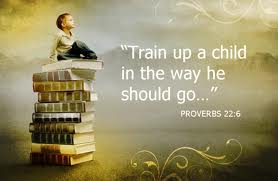
Here’s a verse every Bible-believing parent knows: Prov. 22: 6, “Train up a child in the way he should go: and when he is old, he will not depart from it.”

If you are like me, you could quote this verse, but you wonder exactly what it means.  Is it a guarantee that if I raise my child correctly he or she will go through life and never stray from the Lord? Or is it, as I have heard it said, if he strays he will return? In meditating a little deeper on that this morning, I concluded a few things. The meaning must be wrapped up in the meaning of “train up.” The word originally carried the idea of “a narrowing.” This world, with help from the Devil and our own flesh, throws a wide stream of thought about life at us. Much of it bad, some of it is ridiculous, and most of it is worthless. The parents job, then, is to narrow that flow to what is true and right. We train them to see the world before the Lord as it really is, not as most are deceived to believe it is. This task is daunting (or at least it seems so to this father of six), but this verse surely says good things can follow the effort.

So the question becomes, how do we “train up?” Are you like me and are ever trying to “teach up?” Hey, it makes sense to me, so why can’t these knucklehead kids see it like I do? Think of how the military trains up soldiers. The trainers are out on the field with those being trained all involved in what soldiers do. Those drill sergeants are battle hardened and train up in what they live and breath. I don’t think our military today would be as efficient as it is were the new recruits trained in a classroom by out-of-shape guys who had never fired a gun! Run the gauntlet ahead of me and let me follow is the way to train me.

I recently read and reviewed a book about troubled teens (https://reaganreview.wordpress.com/2012/05/03/hope-for-parents-of-troubled-teens-by-connie-rae-book-review/) and quite frankly, it spooks me. I love those six rascals of mine and so want the Lord to use them and see that they follow Him all their days. I “teach up”! I’ve told them everything imaginable. I wonder if the greater need is for me to run ahead and let them see me exercise faith, or demonstrate the victory the Lord can give our lives even in daily living. Will 5 minutes of inexcusable impatience undo an hour of careful teaching? Of course the teaching should stay, but does the trainer even know what he is talking about? If the Lord is making no perceivable difference in my life, does my teaching ring hollow? What I might make you believe about my spiritual prowess will never fly with those who live under my roof. Whatever this verse really means and promises is tied to my training up my children.

The other word on which the meaning of our verse hinges is “depart.” That word originally meant “to turn off.” If I train by teaching and real demonstration, the Bible says they will not depart. Perhaps the verse means more, but at the bare minimum it says they can’t turn off what they learned when they were truly trained up. If they stray from the Lord, or take up drinking, or live with sexual looseness, there will be something deep inside them that is probably not true of the wild peer group around them–they know the truth. They know (if it is real in me) that my God is real, that I wasn’t just “whistling Dixie”, but the Lord is the focal point of my life, a life that is better than the one lived far from God. Perfect? Far from it! But somehow far better than I would have been without the Lord? Obviously (or so it should be).

I guess this dashes the cold water of reality right in our faces. It comes up in every area of life —everything Christianity has to offer me is tied tightly to my relationship to Jesus Christ. There are no promises in the Bible that will do me much good with a disengaged fellowship with Christ. No good can spring from my life to anyone else, including my children, outside of what is real between me and my Lord. A lot rides on it too. The lives of my children being at the top of the list.

Lord help me to train up my children.