Life Counsel Bible

Here’s a major new Bible release aimed at those interested in counseling. Think of it like a two-for-one special. On the one hand, there is a regular, quality study Bible while on the other there is a counseling resource.

First, as for the study Bible, it has all that you’d expect, and I suspect, all that some other CSC study Bibles provide. Each book of the Bible has a helpful Introduction. Word studies pop up throughout the text and the selections are judicious. Cross references and alternate renderings abound. The collection of maps at the end really pop.

Second, there’s the counseling material that really presents itself as a collection of articles interspersed throughout the text. They don’t necessarily coincide with the text nearby, but it you’re reading through the Bible they will show up at a rate that would not bog you down as you journey through the Bible. The articles are filled with biblical wisdom, professional sensitivity, and real life appropriateness.

Who is this Bible aimed at? Not professional counselors most likely. I’d imagine that common people who want to speak Bible wisdom into their own lives and those they minister to would be the successful target. Some seasons of your life might find this Bible even more of a treasure. This Bible is worth a look.

I received this book free from the publisher. I was not required to write a positive review. The opinions I have expressed are my own. I am disclosing this in accordance with the Federal Trade Commission’s 16 CFR, Part 255.
The Books of Joel, Obadiah, and Jonah (NICOT) by James Nogalski

The pace of NICOT volume releases has happily quickened. Here the work of Leslie Allen is replaced on Joel, Obadiah, and Jonah. Allen also wrote on Micah, but that omission will be remedied by a separate volume on Micah to be released next year. Personally, I like this new release better than the older Allen work, but both were quite scholarly proficient. Nogalski already has an impressive collection of writings, particularly on the Prophets. He is a clear writer, but his tone is scholarly. That’s a plus or minus, of course, depending on you.

In my view, his best work in the volume is on Joel, followed by Obadiah, and then his Jonah clearly brought up the rear. To be fair, I’m a very conservative reader/believer so I’m often disappointed with commentaries on Jonah. Making something allegorical only on the basis that it seems miraculously is quite the slippery slope, distinctly in the Bible.

So my caveat on a good review of this volume is in that way of viewing Jonah’s historicity (sorry it can’t be fixed for me by simply changing the genre label) and his overuse of “there’s scholarly consensus on this”. How is that verified? And even if it’s true, what does that prove? I digress.

Other than that, this volume has all the characteristics of a NICOT volume firmly in its grasp. Over the last few years the series has replaced its entire Minor Prophets offerings and this volume continues that successful run.

The worlds of Joel and Obadiah are well illustrated. I disagreed on I few points in Obadiah, but I’m picking now. The exegesis is top-notch. That’s where most want their help anyway. Overall, I will use this book in the future and I recommend it.

I received this book free from the publisher. I was not required to write a positive review. The opinions I have expressed are my own. I am disclosing this in accordance with the Federal Trade Commission’s 16 CFR, Part 255.
Genesis 1-11 (CSC) by Kenneth Mathews

I’m so glad that Kenneth Mathews’ work in the NAC series has been imported and updated here in the Christian Standard Commentary (CSC) series. I just happened to be doing some work in these early chapters of Genesis and found this volume a godsend. It gave me such tangible help, even providing that help at every point I needed without exception.

Just like the Isaiah entry in this series, we will have to wait on volume two. Don’t wait, though, to get volume 1. It’s that good. Genesis is so foundational to the entire Bible that we simply must get our bearings straight. That’s what this volume will do for you. Genesis 1-11 is a natural unit anyway.

To my point, this volume gives great help on structure. I would argue that structure is exceptionally vital here. Both in the Introduction and then throughout the text that aid is rendered. For what it’s worth I’d say the structure points are right on in this volume.

The Introduction is a success. For sure it addresses what I like to see rather than the speculative stuff that’s of no substantial value. The place of Genesis in the Pentateuch is thoroughly developed with even more structural insight. Finally, the theology section does what it’s supposed to and somehow summarizes everything else the Introduction suggested.

The commentary proper was outstanding, consistent, and never lost sight of the big picture. Again, it helped me on several tricky passages.

This one is a must-have!

I received this book free from the publisher. I was not required to write a positive review. The opinions I have expressed are my own. I am disclosing this in accordance with the Federal Trade Commission’s 16 CFR, Part 255.
Discontinuity to Continuity by Benjamin Merkle

This book is needed. Or at least I needed it. I always felt books of this nature have so often in my experience been a proponent of one view at the expense of the others. To be sure, there’s a place for a few of those, but I found it helpful to have each of the positions laid out respectfully side by side. Mr. Merkle excelled with that set up. The careful reader can probably find his position, but that it was hard to find is amazing on this subject where everyone likes to be a screaming fan of the team they are on. In other words, this subject with its implications for the big picture of Scripture needed this approach. And Mr. Merkle delivered.

The only negative, and it’s not that huge, is that the terms “discontinuity” and “continuity” are loaded terms in this case. “Discontinuity” is really a negative term and is not a great distance from “chaos”. Clearly those on the side of “continuity” slyly chose these terms. In Mr. Merkle’s defense, he did not create these labels.

It’s also not surprising that this discussion is tricky. Dispensationalism and Covenant Theology have been the big boys at the table for a long time. Both have issues because they, with good intentions I’m sure, tried to make sense of the Bible at large. They both tried to pack in more than the systems could hold resulting in ruptures in places where the excess pops out. There’s as much theological positions from other major issues being crammed in as unadulterated Bible being brought in. No wonder it’s hard to keep straight.

Mr. Merkle was a gentleman in a space where few reside and it paid off. I enjoyed going through his thoughtful, careful presentation of each position. Every position had something to be commended for even though they may have been boxed in at times. You could tell (he listed them in the acknowledgements) that he genuinely interacted with those in each position. That paid off too.

His framework of comparing, a) basic hermeneutic, b) view of the covenants, c) view of Israel and the church, and d) view of the Kingdom of God was well conceived. It didn’t favor any position and got at the real goal of just explaining positions.

I didn’t change my position, but I honed a few important points in my mind. This book helped me and I suspect it could help anyone. It’s a keeper.

I received this book free from the publisher. I was not required to write a positive review. The opinions I have expressed are my own. I am disclosing this in accordance with the Federal Trade Commission’s 16 CFR, Part 255.
Joshua (BCOT) by Goldingay

I can’t think of another witty statement for the speed at which Goldingay turns out commentaries since, apparently, I ran out of wit before he ran out of full-length major commentaries from his pen; but in any event, his latest here is on Joshua. Strangely enough, he admits in his preface that Joshua was not the book of the Bible that he wanted to write on next. As he tells it, he had a different book in mind, and the editors convinced him he needed to do Joshua. Kudos for transparency! He did, though, explain that he came around to enjoying the process of studying Joshua.

As I have so often said in other reviews, Goldingay is a living contradiction as a writer. He will make you angry in one paragraph and then grab your attention beautifully in the next. His consistency is amazing on that score. As usual, I so like his flashes of brilliance that I will put up with the other. It’s here again…in spades. Since he is so prolific as a commentary writer, I am sure you already have your opinion of him. So the first thing I can communicate to you in this review is that it will be exactly what you are accustomed to. And as usual, I must force myself to say I’m glad to have this volume.

The part I didn’t like came early in the introduction. though I overall like the lively way he approaches an introduction to one of his commentaries. He appeared in this one to too quickly fall into a defensive stance. In acknowledging critics, he came close to becoming one. As you probably know, scholars are engrossed with discussing the violence in Joshua. It wasn’t long before he was drowning with them. The problem with that whole discussion is that it presupposes that there is some higher morality or ethic than God Himself. That strikes me as quite disingenuous for a Christian commentary writer!

By page 22 perhaps he began anticipating what people like me would be thinking as he said, “In the context of modernity we assume that we can formulate views about the propriety of God’s action, and not just the other way around”. It was also grating in how he tied what might be wrong with Joshua with the failings of Western culture, and even American culture in particular. That struck me as an overexposed portrayal of Joshua thrown off by modern political pontifications of those he lives around. Or maybe the tunnel vision of the scholarly world he works in.

And just like that he gets a little deeper in the Introduction and starts pouring out that good stuff that he is equally known for. The section on theology particularly stands out.

The commentary proper continues the dichotomy pretty much along the same lines. If you are of his mind, I doubt you could find a better commentary. For those of us to his right, and who are discerning readers, the nuggets outweigh the mud enough to land a solid 4-star rating.

I received this book free from the publisher. I was not required to write a positive review. The opinions I have expressed are my own. I am disclosing this in accordance with the Federal Trade Commission’s 16 CFR, Part 255.
Proverbs, Ecclesiastes, Song of Songs (RCS)

This latest entry in the Reformation Commentary on Scripture (RCS) may not be as overtly helpful as some in the series as a commentary of this pattern probably doesn’t lend itself to the design of Proverbs, Ecclesiastes and the Song of Solomon. What it lacks in general effectiveness, though, it more than makes up for in sheer fascination. These three, and especially the Song, have veered from the approach of the Reformation era. For my money, it has not changed for the better, so maybe the potential value of this volume should be that of reorientation.

The Introduction is well done and perhaps admits to the changes I alluded to above. Mr. Fink, does not, perhaps, want to go back as far in approaching the Song as me, but he doesn’t obscure the differences. You will want to check this out. Even in Proverbs and Ecclesiastes the Reformers simply found more treasure than we do today.

In these three books, the selective nature of the materials marshaled here could hardly be more fatal to gaining the big picture. You’ll likely be perturbed that the passage you want to address isn’t here in depth, but honestly how could anyone have done better?

Use this one more as a guide of how to do it rather than straight commentary and you will have uncovered its cache.

I received this book free from the publisher. I was not required to write a positive review. The opinions I have expressed are my own. I am disclosing this in accordance with the Federal Trade Commission’s 16 CFR, Part 255.
Jeremiah (KEL) by Michael Shepherd

There are two elements to consider in evaluating this commentary. First, there is the novel, almost experimental approach of using as his Hebrew source text the old Greek text of Jeremiah! Yes, I said Greek. Second, there is the commentary skill exhibited as he works through the text. To my mind, he scores far better on the second one than the first.

For the life of me, I can’t see why that Greek text as his basis was a good idea. Yes, I read his reasoning, but I’m still unconvinced. Perhaps the scholarly world will eventually canonize him as a bold pioneer, but I don’t think still I’d be convinced. Perhaps, too, since he mentioned the plethora of commentaries on Jeremiah today, he felt he needed an angle to join the fray. I would have thought, but what do I know, that delivering a commentary in a major commentary series on one of the largest books in the Bible would have been enough. If I’m studying anything based on the Masoretic text, as most would be doing, won’t this commentary leave me high and dry where they differ? Will this be along the lines of Coca-Cola bringing out New Coke, which of course if you’re younger than me you probably never heard of?

If I’ve been sounding super-critical, let me balance it. Mr. Shepherd is a quality scholar. His writing is fine, his research thorough, his conclusions clear headed and the help he gives quantifiable. His earlier commentary on the Minor Prophets in this same series was top notch. It would not be fair to write him or this commentary off for one questionable idea even if it unfortunately pervades the whole work. To be even more fair, what he did is not one iota as bad as those who take the Masoretic text and chop it to pieces, as if you couldn’t believe a word of it. Finally, perhaps anticipating the criticism, he mentions what the MT says often throughout the commentary.

Every commentary has its strength and this one is the exegesis despite the incessant discussion of the Greek text. The exegesis is better than, say, the theology, but it’s not barren of theology and often makes good Scriptural connections.

I’ll give this 4 stars, but you can add one more if you happened to be looking for a commentary on the Greek text of Jeremiah. If that were the case for you , I doubt this one could be beat.

I received this book free from the publisher. I was not required to write a positive review. The opinions I have expressed are my own. I am disclosing this in accordance with the Federal Trade Commission’s 16 CFR, Part 255.
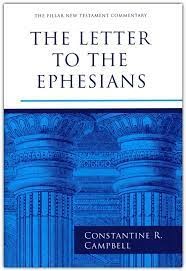
Ephesians (PNTC) by Constantine Campbell

When I first beheld this book, the first surprise was how slender it was. I mean Ephesians is one of the most prominent NT letters of all. Perhaps the quick turnaround from when Pillar’s previous Ephesians volume was retired contributed to it. Still, I knew Constantine Campbell’s expertise on union with Christ and union’s prominence in Ephesians suggested the volume would have to possess distinct advantages. The size turned out to be not a factor really and the expected proficiency was present as well.

The Introduction was sufficient, thoughtful, and well reasoned even if it too was shorter than some similar volumes. Authorship, background, and date lined up with conservative conclusions. Themes, beginning with, you guessed it, union with Christ, was the best section of the Introduction. Structure was given something of a short shrift, but overall the Introduction satisfied.

The commentary impressed me. I found the flow of logic that he laid out for arriving at his conclusions was truly enlightening. All the main passages including the thorny Household Code were well handled. I felt I was getting real help in every case.

I know it’s a bit overused in commentary reviews these days, but the word for this one is judicious.

I received this book free from the publisher. I was not required to write a positive review. The opinions I have expressed are my own. I am disclosing this in accordance with the Federal Trade Commission’s 16 CFR, Part 255.
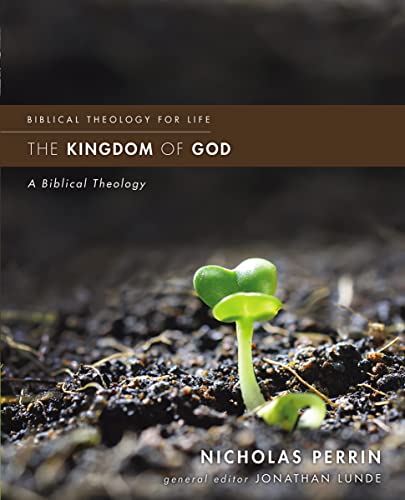
The Kingdom of God (Biblical Theology for Life Series) by Perrin

This book sneaks up on you. At first, you will think Mr. Perrin is not coming at his subject head on, but more a coming in from the side. You will be gaining incredibly interesting information as you go, but it may be nearing the end, at least if you are like me, before you realize that he has really delivered on bringing out what precisely is the Kingdom of God. It’s not exactly like other books on the subject I’ve seen, but by the end that’s why it’s good.

He has a lively writing style. He’s a little heavy on pop culture. I mean he named several popular modern musicians that I couldn’t identify in a police lineup, but it’s not really a detriment to the book. He writes in a vein that is happily catching fire in biblical theology these days where the main themes of the Bible are held on to no matter the subject at hand. That’s a richer track to travel in my book.

The beginning is a bit clanky as he discusses scholarly background stuff, but he reaches cruising altitude by the second chapter and maintains it to the end. Only chapter 8 on the signs of the Kingdom had me scratching my head AND never quite putting it together. The fault, though, may be mine. Mostly you get nuggets dug out and laid before you.

My only slight criticism would be occasional exegesis that seemed a little overwrought. He did like sometimes an obscure linguistic choice that you wonder if hardly anyone else would agree and then make it key to interpreting the passage. I’m not saying he was wrong, but you might need more proof to really accept it. Overall, however, the work is provocative in a meaningful way.

This book with its scriptural index is a treasure trove where you go could go seeking specific insights; but more importantly, it really contributes something tangible to the often nebulous topic of the Kingdom of God.

I received this book free from the publisher. I was not required to write a positive review. The opinions I have expressed are my own. I am disclosing this in accordance with the Federal Trade Commission’s 16 CFR, Part 255.

Genesis (BCOT) by Goldingay

Goldingay marches on. He seems to turn out commentaries at the pace other scholars turn out articles. How he does that is a mystery to which I can make no contribution. I’m sure some would say had he slowed down he might have, say, written a more detailed and meaningful Introduction for Genesis here. Those same observers would be hard pressed, though, to deny his penchant to turn a phrase or to make his work stand out. I think if I read just a few pages of his work I could peg him as the writer. I don’t mean idiosyncratic in a heavy way, but unique and lively.

His viewpoint is predictable and grates on me at times (perhaps because he doesn’t bury it in lifeless prose), but in recent years I’ve found it more palatable. The more I think about it, I suppose neither he nor I have changed our outlook much, but he puts more charming concepts at the center of his presentation even if things I vehemently disagree with sometimes underlies his position. Perhaps commentary series like this one (BCOT) line up best with his gifts. Or at least it seems so to me. (On that score, I see real potential in this recently-birthed series).

For the record, I came to this particular volume thinking there’s no way I would like it as much as his work on Hosea-Micah in this same series. And to some degree that’s true but it wasn’t overly a self-fulfilling prophecy on my part. I know what Goldingay believes but I still try to listen to what he says. There was some of what I don’t like; for example, his explanation of genre. To formulate categories centuries after the fact and then read them back as if more informative than what was said, and then to reduce divine Scripture to just another writing, strikes me as disingenuous, at least for believers. To deny the underlying premise that drives such thinking—God could not have done these things so we must find a more polite explanation—is one thing I’ve never understood from scholars who help us in so many other ways. But I digress.

Still, I did enjoy this volume more than I expected. I love how in a few paragraphs he neutered the whole Documentary Hypothesis. Throughout the text, he provided so many brilliant insights or things I had never thought of before. This more than compensated for his brief introduction. I don’t need a commentary to be the best in every area, only brilliant in some ways makes it much worthwhile to me. Sometimes Goldingay gets into real life for those on the pages of the Bible and that I love. Sometimes I scratch my head too, but he makes me think.

With my usual caveats for Goldingay, I warmly recommend this commentary!

I received this book free from the publisher. I was not required to write a positive review. The opinions I have expressed are my own. I am disclosing this in accordance with the Federal Trade Commission’s 16 CFR, Part 255.