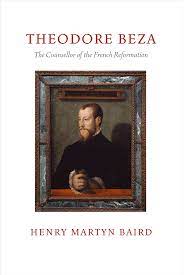
Theodore Beza by Henry Martyn Baird

Banner of Truth has a knack for publishing great Christian biographies and for not caring if the subject is wildly famous or not. That in itself is encouraging as it reminds us that many have served the Lord wonderfully even though most are not especially noticed. In this case, Theodore Beza, is known in the sense of being a contemporary and even friend of Calvin while little more is known of him by most people. Calvin, loved by some and hated by others, is by any metric a seminal figure in Christianity. Beza didn’t blaze a trail but he did help establish it into a widely-traveled road.

Baird was easy to read. He was thoroughly impressed with Beza, but could admit when something wasn’t handled the best way. Beza’s story is primarily an academic career. In certain times of history that can have some drama and intrigue and this was one of those times. The ongoing interaction with government made that so.

Perhaps there isn’t as much piety or spirituality as in some recent Banner biographies like, say, Thomas Charles of Bala. That is not to call into question Beza’s piety or spirituality at all, just the focus of the biography. He came across as dedicated to his work and would unhesitatingly choose a course to follow what he believed to be right before the Lord even at great personal cost. It just seemed that his spiritual trials were all in his work, though a few personal trials were briefly mentioned, even as almost an afterthought. I’m not downgrading the biography, just explaining what to expect.

I suspect this biography will secure its strongest following among those who love Calvin and want to vicariously experience him again through Beza. This book will unquestionably recreate a portion of Calvin’s life as the lives of Beza and Calvin were prominently intertwined.

Banner never fails us on book quality and this lovely book is worthy to adorn your shelves for years to come.

I received this book free from the publisher. I was not required to write a positive review. The opinions I have expressed are my own. I am disclosing this in accordance with the Federal Trade Commission’s 16 CFR, Part 255.
Hosea-Micah (BCOT) by Goldingay

Goldingay is a prolific writer of commentaries to say the least. Sometimes you wonder if he has some captive researchers locked up in his basement. As Baker expands its major commentaries in the OT, we find that he will soon have in print a commentary for them in the Pentateuch, History, Wisdom, and Prophetic sections. At what point is he just showing out?

More seriously, I really like this commentary. In over a decade of book reviewing, I’ve found myself not particularly liking some of his earlier ones that I reviewed and then really liking his more recent contributions like Jeremiah and Lamentations. Maybe he changed. His comments don’t strike me as subversive as before to be sure. Maybe I changed. I had to make myself admit the possibility.

So for this review I want to focus on specifically why this volume and his other recent ones ( I hadn’t seen his Genesis or Joshua yet) are so effective. When you pick up this volume, read the Author’s Preface that mostly describes the process of how he wrote this commentary. I wish all commentaries told this information up front. Later it hit me. He didn’t just collate a mass of scholarly details (a fair description of many modern works), but he had something to say himself. He is one of the leading OT scholars today, so isn’t that as it should be? I can look up what everyone else says myself. I like to hear what the author has to say. The footnotes will back up this assertion.

Further, he has settled into a comfortable, mature, capable writing style that belies his scholarly prowess mingled with effective communication that belies his years of teaching. He writes as one who wants to get his message across and has honed the skills necessary to do it. In his paragraphs both what he has learned and what you have just learned rise to the top.

His next great strength is in OT background. Again, offering to us from his decades of work that we don’t have. Only when his assertion arises from critical assumptions alone does he miss. He often transports the reader to Bible times. He harnesses a mass of details and makes it a palatable morsel to swallow. He is closer to average on theology and structure, but he excels in bringing to bear the broad sweep of OT times while sitting you down in a particular text. That is really how he stands out in the pack and that really helps in these lesser-known Minor Prophets.

This book is not as long as some on just one of these prophets from Hosea to Micah, but I bet it will do you as much good. I still must spar with him in places. “Wind” instead of “spirit” in Joel 2. Ok, whatever. The historicity of Jonah? I knew that was coming. At least he said it was still authoritative. The whole theological message of Obadiah is that “God will take redress”. That’s it? Really? I could list more examples, but there are far more places where he taught me something. Even where he failed to convince me, he often made me think. I can overlook a few places where I rolled my eyes to get all that good stuff. And of course you, the reader of this review, might have rolled your eyes at me instead at these disputed points.

I like this volume so much that I wonder if I should go back and look up and review a few of his that I missed along the way like, say, the Psalms. In any event, you can’t miss with this one.

I received this book free from the publisher. I was not required to write a positive review. The opinions I have expressed are my own. I am disclosing this in accordance with the Federal Trade Commission’s 16 CFR, Part 255.
An Old Testament Theology of the Spirit of God by Wilf Hildebrandt

Why isn’t this book more well known? Rather than saying it fills a niche in the mass of books on the Holy Spirit, I’d say it fills a large hole. It covers many things that my pile of books on the Holy Spirit somehow never gets round to. Even among books specifically on the Holy Spirit in the Old Testament, it is a book that better stands back and takes in the horizon. It certainly helped me tie up some loose ends in my own thinking.

I can overview the chapters and flow of this book and you will likely go, ho-hum. It seems straightforward, but its value is not in its common layout, but the incredible things it says inside it. Chapter 1 on “spirit” or “ruah” is the best I’ve encountered. It makes sense if the nebulous. Chapters 2-5 lays out in mostly OT order the Holy Spirit in Creation, in God’s people, in leadership, and in prophecy. Most chapters take a big-picture analysis before going through the requisite biblical passages. I love the design. It’s the premise and then the proof beautifully expressed and exquisitely profound.

Chapter 6 gives a few additional insights, but the success of the book is already in your hands by then. I don’t agree with the significance of every ANE connection he finds or every scholarly strand he builds, but the synthesis that the whole of the work gives is extraordinary.

I give this one the highest recommendation!

I received this book free from the publisher. I was not required to write a positive review. The opinions I have expressed are my own. I am disclosing this in accordance with the Federal Trade Commission’s 16 CFR, Part 255.
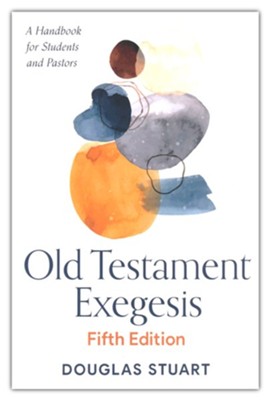
Old Testament Exegesis (Fifth Edition) by Douglas Stuart

With this Fifth Edition, the abiding value of this book is beyond question. Were it not so it would have fallen off the radar by now. I’m guessing it lives on in classrooms for the most part, but I feel it’s a title new pastors should take in tow. Perhaps your style will differ from his, but it’s good to know how OT exegesis is being taught these days and at least consider if you’re reasonably on track even with differences. Additionally, he suggests a lot of tools that will help you weight purchasing choices as such reference tools are quite, and in some cases excessively, expensive.

I’ve had some of the earlier editions, but they are in storage at the moment so I must compare from memory. He says in the preface that this work is substantially revised, but it seems to me to be primarily in book or reference recommendations. That is nothing to sneeze at with all the changing options. While there are other changes, I do not think the overall approach has. I suppose some tweaking has come about as he has continued to interact with students. Students will need the new edition, and newer pastors will want this one as well. More experienced pastors might get by with the previous edition unless they are really considering to expand their reference titles since Stuart’s recommendations carry as much weight as any OT scholar today.

All the superlatives of the previous edition remain, so this title is one I still recommend.

I received this book free from the publisher. I was not required to write a positive review. The opinions I have expressed are my own. I am disclosing this in accordance with the Federal Trade Commission’s 16 CFR, Part 255.
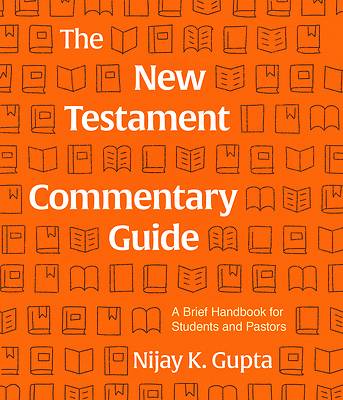
The New Testament Commentary Guide by Nijay Gupta

I’ve always enjoyed these books that help us by ranking the best commentaries among the nearly endless options available. Here Nijay Gupta throws his hat in the ring and offers up his choices. Of necessity, this type book is going to work best for you the better you line up with the one doing the ranking.

To be sure, I don’t align with Gupta as much as others with similar offerings. I simply wouldn’t choose many of his top choices and am baffled by some of his omissions. If you were a bit less conservative than me, he would likely fall right in line for you. I also feel his selections are more apropos for scholars than pastors though he attempts to offer advise to both.

The best value here for me is at the margins. I like to have a few works outside my box, and he offers real help in making those selections. A few recommendations he provided were totally off my radar and gave me a few good ideas for future selections.

If all such books were of the same stripe, you really couldn’t find much value in multiple authors recommending. It’s where disagreements arise that having a few of these type books on hand could help you.

I like the format more than the selections. That style of presentation makes a clearer case for what he’s suggesting than many such formats.

Commentaries cost a fortune, so some evaluations are needed. Let this title be one such evaluation.

I received this book free from the publisher. I was not required to write a positive review. The opinions I have expressed are my own. I am disclosing this in accordance with the Federal Trade Commission’s 16 CFR, Part 255.
The Ten Commandments by Peter Leithart

I knew I’d like this book. Sometimes you encounter an author that just seems to ring the bell for you each time you read them. Over the last three years, I’ve taken on 5 or 6 such writers and Peter Leithart is one of them. Where others strain to say something, he sees something. In what must induce jealousy from the cardboard writers of our day who take one catchy phrase for a title only to squeeze the life out of it for around 200 pages, along comes Leithart and says more in one page, or maybe one paragraph, than they do in their whole production. Adding injury to their insult, not only does he have something to say, but he can turn a phrase better than them in their pedestrian efforts where they think hip and cute is the real deal.

This one scores the high praise like others of his I’ve read. What’s funny is that it lacks polish. At times, it’s almost a stream-of -consciousness affair. He gives a line or two with some brilliant observation and then goes on to something else as if it wasn’t as grand as it really was. I say that though I at times strongly disagree with him (though that was far less the case here than in his work on baptism in this series). The book is kind of short too. You could read it quickly, though that would be the dumbest thing you could do. I’m not giving caveats, to be sure, as this book is beyond criticism, but really marveling at how he wrote and still how profoundly good it was.

I learned so much that either I didn’t actually know anything about the Ten Commandments in the first place, or we really have something special here.

I’ll suggest this to you—read just the material on the First Commandment alone and if you don’t love this book by then, then I for sure don’t know anything about reviewing books.

I received this book free from the publisher. I was not required to write a positive review. The opinions I have expressed are my own. I am disclosing this in accordance with the Federal Trade Commission’s 16 CFR, Part 255.
Reformed Dogmatics by Vos

It’s hard to image a new title (in English at least) from a popular writer who has been dead 70 years. But that is what we have here. Geerhardus Vos is renowned for his work on biblical theology and his highly influential “The Pauline Eschatology” and here we have uncovered for us a work from earlier in his career.

First, let’s dispense with the ridiculous criticism that some throw at the pages of this volume. Some accuse the pages of being too thin with too much bleed, but they are exactly what many Bibles use with no disadvantage. If you dislike the thinner pages, you can get this title as a multi volume set. Still, this volume is attractive and will be easy to read.

With that settled, we can now consider Vos’ work itself. Be sure to read the Preface as it gives interesting background on Vos and this work of systematic theology itself. It really prepares you for what you are going to be getting. It reminds you that he was Dutch (you may be aware of Dutch Reformed theology) and specifically his “affinity” with Herman Bavick (which may also orient you). You will also see how to distinguish it from his more famous Biblical Theology.

Next, you will notice that you are reading from one teaching students. In fact, he uses a question and answer format. Perhaps they are not all the questions that you’d like asked, but they are informative and shrewdly work through what Vos was wanting to impart. I imagine his students were far more instructed than they imagined and we likely will glean far more than the simple design might at first suggest.

Further, you might have to dig to find certain subjects. For example, when I was looking for his section on the Holy Spirit, I had to seek till I found it under the Trinity. A little digging will get you to most everything you’re looking for.

His theological prowess is on display throughout. This work is not like some of the most popular systematic theologies, but aims more at clarity and profundity. Consider it a great change up as you grab your pile of systematic theologies. It’s worthy of a place.

I received this book free from the publisher. I was not required to write a positive review. The opinions I have expressed are my own. I am disclosing this in accordance with the Federal Trade Commission’s 16 CFR, Part 255.
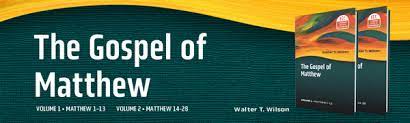
Matthew (ECC) [2 volumes] by Walter Wilson

Rumors were that the Eerdmans Critical Commentary (ECC) series was halted, but the release of this two-volume set proves them false. I have no idea what the future of this series is, but I found this set exceeding my expectations. To be upfront, I’m very conservative in my approach to Scripture, but have long enjoyed some of these series that take a more liberal viewpoint because they can have such interesting theological takes at points. Again, not across the board, but here and there nuggets of brilliance can be dug out. Now that you understand what I’m looking for, and the basis I will rate the book on, I can tell you that this one provides far more of it than I usually get. There’s some nonsense to my conservative eyes on these pages, but there’s a bunch of what I hoped to find too—yes, reams of it really.

By the standards of major commentaries of this length, this set has a short Introduction of 20 pages and the footnotes are half of that. Good for me, the subjects where I’d find the reasoning most subversive are mercifully short in coverage. That might be a downer for some users of this work, but since “Q” and source discussions are served up ad nauseam in other works I think you’ll be ok. He quickly segues into “genre and orientation”. It’s the orientation angle that sparkles with profound observation. If you can’t enrich your studies with what’s found here, I suspect you’re not even trying. It’s the broad swaths that we somehow miss that were most compelling. The section on theological interests and involvements are really more of the same at the same high level. And then the Introduction is over. As it turns out, like Goldilocks, I’ll call it , just right.

The commentary proper continues the style I enjoyed in the Introduction. When he makes a conclusion based on the sources Matthew was using, I’ll pass. But when such things don’t derail him, the exegesis is quite good. Even better is how he looks at the text with eyes wide open and sees so much. When you can see important details, can see trends across the book, and can tie it all together, you can help we commentary readers. This he does. I really like this lovely commentary (nice book and dust jacket) though it’s final rating may be a matter of taste. It tasted good to me.

I received this book free from the publisher. I was not required to write a positive review. The opinions I have expressed are my own. I am disclosing this in accordance with the Federal Trade Commission’s 16 CFR, Part 255.
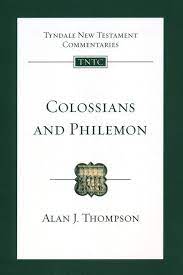
Colossians and Philemon (TNTC) by Alan Thompson

Now Colossians and Philemon get a turn at revision in the Tyndale New Testament Commentary (TNTC) series with Alan Thompson replacing N. T. Wright. As famous as Wright is, I prefer this new volume. Thompson studied under Douglas Moo and since Moo has turned out one of the most-important major commentaries on these two epistles, you might think of this as Moo in a more accessible offering. I do not mean by that that Thompson has merely repackaged Moo, but that even though Thompson has done his own work, the conclusions are quite similar. In this case, that’s not a bad thing. Good conclusions expressed by two different authors in their own way can be quite helpful.

Colossians gets a 25 page Introduction while Philemon gets 6. That’s on the longer side for this series. Most importantly, the conclusions are conservative and sufficiently worked out. The reasoning is solid. Most pastors and teachers will find all the introductory discussions they would care to find here. There’s nothing here that falls short and the last section in the Colossians Introduction on why Paul wrote Colossians is best. That’s really where he works out the theology rather than in its own section. Structure isn’t really addressed directly besides in an outline either. The one on Philemon was similar in style and conclusions. Unusual for these days, no diatribe on slavery as if were the whole point Philemon exists. Since slavery is just a background for the story rather than the point of the little epistle, that’s a good thing.

The commentary proper meets the standards of this series and is on par with several others I’ve reviewed. Solid and dependable are the words that come to mind. Just as in every title in this round of revision of TNTC so far, let’s label it recommended.

I received this book free from the publisher. I was not required to write a positive review. The opinions I have expressed are my own. I am disclosing this in accordance with the Federal Trade Commission’s 16 CFR, Part 255.

Luke (TNTC) by Nicholas Perrin

Here is another fine commentary in the widely-used Tyndale New Testament Commentary (TNTC). Before I describe this quality work, I must pause for a moment as my favorite volume of the series before this round of revision, Leon Morris’ Luke, passes from the series. For me, Perrin isn’t a replacement, but a happy addition. Morris AND Perrin will be on my shelves together for the duration.

Now for Perrin. He continues holding to conservative conclusions throughout, so he is trustworthy. He has his own specialties too. Along the way, he has written on the Kingdom of God and I see that knowledge adding sparkle to this commentary at several junctures. He, too, fully understands the design of this series and seemed comfortable in it. The book is near 500 pages, but as he points out at the beginning, Luke is the longest book in the New Testament. More pages were naturally needed, but the depth matches what we are used to in the series.

Also typical for the series, the Introduction is 12 pages. Everything is covered briefly but clear conclusions that will impact the commentary are there. I love how he is agnostic about sources. I’m kind of atheistic about them myself, but that’s a good way to stay out of the ditch in a commentary. Perhaps theological concerns and structure should have been longer in the Introduction, but I’m picking at him now.

The commentary proper is of real value. I read his commentary on Luke 1 and 2 early on Christmas morning and I enjoyed it so much that I may now be too emotionally connected to this book to give unbiased review. Still, I’m pretty sure it’s really good. You will have to cite real proof to convince me otherwise. Until you do, I’ll rate this one highly recommended.

I received this book free from the publisher. I was not required to write a positive review. The opinions I have expressed are my own. I am disclosing this in accordance with the Federal Trade Commission’s 16 CFR, Part 255.