Joshua (EBTC) by David Firth

The EBTC series has picked up speed since Lexham took it over and this latest release by David Firth is another quality commentary. The historical books of the Old Testament are clearly the forte of Mr. Firth as he has already produced a major commentary on 1 & 2 Samuel, shorter commentaries on Joshua and Esther, and a volume in the NSBT on Ruth. All were successful. In this, his second stab at Joshua, he got the chance to take a deeper dive.

The first 30 pages have a somewhat traditional introduction that you might find in any major commentary. To be honest, this was not especially the strength of this work. Sometimes he only addressed a few viewpoints and even said there wasn’t space to address them further. Perhaps that had something to do with the constraints of the series, but I am not sure. As he had done in his earlier work, he argued that the violence in Joshua is not as extensive as most think. The rest of the introductory material was somewhat pedestrian.

It was in the next section where this commentary truly flourished. Here he addressed biblical and theological themes and showed his ability to write a commentary with a theological focus. He covered faithfulness and obedience, identity of the people of God, Joshua and Jesus, land as God’s gift, leadership, power and government, rest, and the promise of God. It was in this section that you had a real introduction to what Joshua is about. I can’t imagine a better overview for the theology you’re going to encounter for the whole book.

In the commentary proper, it only got better. His skills as an exegete joined with his newly discovered trait as a theologian made for some awesome commentary. What was impressive to me was the depth of observation. In each passage he had a section entitled “context”that truly set the stage for what you were reading before he broke out into his detailed exegesis. Next, in a section entitled “bridge”, he tied all the loose ends together and brought the theology out into the brightest day. Along the way, he succeeded in delivering the goods on the stated objective of this series.

There might be a few commentaries that outdo this one in some categories, but this is the work for theology in Joshua.

I received this book free from the publisher. I was not required to write a positive review. The opinions I have expressed are my own. I am disclosing this in accordance with the Federal Trade Commission’s 16 CFR, Part 255.
Welcome, Holy Spirit by Gordon Smith

Hardly any theological subject has such diverse writings than those addressing the Holy Spirit. Pick up the first five or six books on the Holy Spirit that you come across and as you peruse them you may wonder if they are even talking about the same subject! Who the Holy Spirit is, what His importance is, how we should view Him, how we might imbibe Him into our lives, apparently, finds little agreement among Christian people. If nothing else, that suggests that there is need of thoughtful works on the Holy Spirit. Enter here Gordon T. Smith as he throws his hat into the ring.

To be honest, I had more trouble than usual in deciding how to rate this book. My trouble is that on some pages there is the most remarkable theological insight while on others I found myself asking the question, are you kidding? Though I had trouble, I think I might suggest how you can know in advance whether you will like this book or not. I’ll assume that you want good theology, so the whole thing hinges on how ecumenical you are. Are you convinced that being ecumenical is the most important thing in this day? You will love this book. If you are skeptical of being too ecumenical, then, perhaps, not so much.

I wasn’t very far into the book as I was enjoying some of his theological insights before I was thinking in the back of my mind, wow, this guy is really ecumenical. To be honest, he went fullbore in the last two chapters. Let me give an example. In the last chapter he commends the Presbyterian Church of Canada for coming up with “an extensive theological framework for engaging expressions of aboriginal spirituality including especially those that were typically of indigenous prairie belief systems.” He listed things like “the pipe ceremony, the sun dance, the powwow, the sweat lodge, the medicine wheel, and the smudge ceremony.” A little later on he made a wonderful statement that, “we must, of course, be radically Christocentric and orthodox – intentionally Trinitarian.” I love that last statement! But how could the earlier statement not be a direct contradiction to it? To be fair, he gives a detailed explanation of his reasoning. It didn’t add up to me. In my view, he went a field too far, or maybe two or three fields too far. Again, if you think being broadly ecumenical is the best way to advance the gospel in our day, you may find this riveting.

To try to give the full picture, he does write with an engaging style and comes across as likable. He doesn’t overly talk about himself, but there are a few clues that give you insight to him as a person. He grew up in a charismatic setting. He currently is part of the Christian Missionary Alliance. Along the way, he came to value liturgy too. Maybe that explains why he has more than average desire for everyone to respect each other, but I diverge with him when he says to fit their practices into orthodoxy. Respect is one thing. Syncretism is another.

Though his ecumenicalism was a glaring fault in my view that even weakened the book, I must admit still enjoying some of his theological observations. I usually read with a pencil in my hand and in the front of the book I will write the page number of special pages that really spoke to me. I just checked and I had 14 such pages notated and that is a little above average for an 180-page book. The aforementioned faults notwithstanding, this isn’t the usual fluff that clutters bookstore shelves on the Holy Spirit.

I received this book free from the publisher. I was not required to write a positive review. The opinions I have expressed are my own. I am disclosing this in accordance with the Federal Trade Commission’s 16 CFR, Part 255.
Galatians (CSC) by Timothy George

As the NAC starts morphing into the CSC series, it appears there might be a trend of the editors coaxing the authors of the best volumes of the NAC series to revise their work for the first releases in the new series. Timothy George’s work on Galatians consistently ranked high and is worthy of making the jump to the CSC. By the way, I think that is a winning strategy as it extends the life of splendid works and it gets the new series off to a quality start.

I’m the past, I’ve used the first edition by George in specific passages to advantage, but hadn’t really surveyed the whole work. I had, however, noticed it said in multiple places that George was an exceptional church historian and that he gave something that no other work on Galatians could boast of. Now that I’ve taken the time to thoroughly check it out myself, I must concur.

His speciality, I’m told, is Reformation history and you will find it meaningfully interspersed throughout. Can you imagine how that might be useful in Galatians? In any event, his historical prowess isn’t limited to to the Reformation to be sure. For example, notice how thoroughly he traces the historical development of the scholarly viewpoints about who exactly Paul’s opponents were. Or notice his excursus on Luther and Calvin on Peter and Paul. He even mentions Spurgeon standing firm in the Downgrade Controversy of how standing for the gospel being a “lonely business”. I told you it was different. But good.

His Introduction was thorough and addressed all the right questions. He laid out the North and South Galatia viewpoints clearly. As you probably know, Galatians is even more debated at several points than most Pauline Epistles are. He laid out different viewpoints and gave judicious conclusions.

His commentary is fine as well. His excursuses were meaningful. I read a major reviewer say of the earlier edition that it didn’t interact enough with current scholarship. That is not really the case, but he addresses the most influential scholarship on the matter at hand no matter the time period. I prefer that. Fascination with the latest novelty has been the Achilles heel of scholarship and robbed it and us of all it could be.

You will want to have this one!

I received this book free from the publisher. I was not required to write a positive review. The opinions I have expressed are my own. I am disclosing this in accordance with the Federal Trade Commission’s 16 CFR, Part 255.
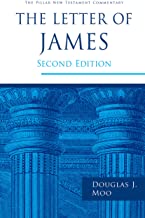
James (Second Ed.) [PNTC] by Douglas Moo

Having used the first edition extensively years ago, I’m glad the PNTC series gave Moo the opportunity to revise and update his commentary on James. Moo himself in the preface tells us that this a substantial revision that extends the volume by 30%. That additional material does not, however, mean that he has changed his conclusions overall, but just that he took a stab at strengthening them. There’s not much I can say about this author as he is well known to most Bible students and so most readers enter this volume with some idea of what to expect. What stands out the most, perhaps, is that the majority of his work has been in the Pauline epistles and he sneaks off here to James of all biblical writers!

Though I had read the introduction of the earlier work in the past, I carefully read the introduction of this revised work. It’s exactly what I love in an introduction. The word that comes to mind is masterful. Far more important than reaching the same conclusion that I favor is the author’s ability to lay out all the major viewpoints, respectfully dive in and explain pros and cons, and then present his or her own conclusion. Again, I need an author to teach me things I don’t know and I’ll then make my on conclusions. The commentary that provides that succeeds. This one does.

As a case in point, after being thoroughly impressed with Moo’s presentation of what has been the major viewpoints of the overall theme of James, I couldn’t fully agree with his ultimate view of James and how he meshes with Paul. Still, in a masterful way he laid it out where I had the tools to make a conclusion myself. I always rate highly a commentary that does that for me. Additionally, he did it in less pages than many writers can accomplish. There’s something to be said for clarity.

Everything else is here too: bibliographic information, theology, exegesis and all from a guy who knows how to do it. In you don’t agree with his conclusions in the introduction, then his coverage of James 2 might raise an eyebrow at times. But isn’t that true of every commentary on James good or bad?

The Pillar commentary series has earned its lofty praise. Someone needs to light a fire under the authors of the remaining volumes needed to finish coverage of the New Testament, but every theological library simply must have the ones in print. Moo has only made this contribution on James better and so it will have decades of positive influence remaining.

I received this book free from the publisher. I was not required to write a positive review. The opinions I have expressed are my own. I am disclosing this in accordance with the Federal Trade Commission’s 16 CFR, Part 255.
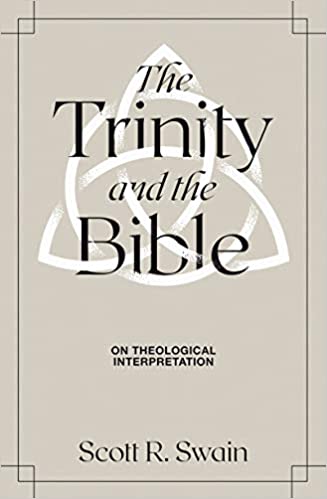
The Trinity and the Bible by Scott Swain

If you have delved into the fascinating study of the Trinity, you likely have already encountered the name Scott Swain. There are probably 4 or 5 writers who have made the greatest impact in this subject that begs for more care among Christians and Swain is unquestionably one of them. This latest title of his is not his greatest contribution on the Trinity, but it is one of those books that shows more digging and a passion to help people practically put an understanding of the Trinity to use when they open the Bible anywhere to do exegesis.

Without doubt, that is a valuable concept to entertain. In fact, even after studying the Bible for many years, when you finally do a detailed study of the Trinity, you become almost surprised at how many passages contain a Trinitarian focus. Only our Triune God knows why the Bible is designed to have the Trinity sprinkled everywhere and yet have few passages that serve as great proof texts on the subject.

When you come to this book itself, you will appreciate the big picture for sure; and yet as with any written attempt at exegesis, you might disagree at points. Occasionally, I disagreed with Swain but I was a happy traveling companion for the journey he took we readers on. Maybe you ask here: isn’t this just a collection of essays? It is. Whether the author was lucky or brilliant I can’t say, but the fragments did make a whole.

Don’t skip chapter 1 even though it is really just the preface. Chapter 2 is the best chapter and addresses profound concepts involving the Trinity. Chapter 3 on Warfield’s view of the Trinity is not merely a recap of history, but a case study on exegesis and the Trinity. The final three chapters take the Trinity into the spadework of exegesis in Mark 12:35-37, Galatians 4:4-7, and Revelation 4-5 respectively.

I enjoyed this book thoroughly as I have done much study on the Trinity recently. To be sure, this book is not a first choice when you begin a study of the Trinity, but it is a quality resource as you get farther into it. I’m glad to have to have it!

I received this book free from the publisher. I was not required to write a positive review. The opinions I have expressed are my own. I am disclosing this in accordance with the Federal Trade Commission’s 16 CFR, Part 255.
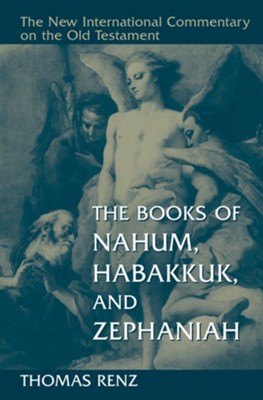
Nahum, Habakkuk, and Zephaniah (NICOT) by Renz

The latest in the New International Commentary on the Old Testament (NICOT) series covers three exceptionally interesting Minor Prophets. The term “under appreciated” comes to mind. Apparently, Thomas Renz appreciates them because he delivers here what must be one of the most thorough exegetical commentaries available on them. He almost doubles the page count of the O. Palmer Robertson volume he replaces. It’s not a matter of verbosity either as masses of content abound.

He gives both an Introduction to the three collectively and to each alone. He doesn’t see the unity of the Twelve Minor Prophets as scholars like Paul House do. That doesn’t materially affect the commentary, but in a similar vein, structure is by far the weakest attribute of this volume. It wasn’t a matter of laziness, but a genuine belief on his part that these big-picture structures are overdeveloped by many. I don’t agree with him, but with his belief what other choice did he have?

His conclusions otherwise are good and generally conservative. He tips his hat to form critics but gently admits that their contributions are unverifiable. To my mind, form critics are like the man who escaped an asylum, stole a nice suit, and entered the boardroom and sat down among the executives and miraculously convinced them he was part of the team. It worked so well that you could say the asylum merely changed addresses and expanded. In any event, you have to appreciate the masterful diplomacy that Renz displays as he deals with them as if they, wink-wink, nudge-nudge, really belonged.

The weaknesses on structure and occasional scholarly capitulation notwithstanding, this book is an exceptional scholarly exegetical commentary. That is clearly the trend of the series from its earlier expositional days, and Renz can hold his head high among his fellow contributors. In fact, it matches the quality of several recent titles covering various Minor Prophets that have appeared in this series.

The work on grammar and words as well as history is all you could want. That means the commentary provides solid value. At first, you might ask, where is the theology? You will find it immediately after commentary in each passage in a section called “Reflections”. When you look there you will find that theology is a strength of this book as well. I was impressed.

Maybe we will see this series completed eventually, but for now this is a winning contribution.

I received this book free from the publisher. I was not required to write a positive review. The opinions I have expressed are my own. I am disclosing this in accordance with the Federal Trade Commission’s 16 CFR, Part 255.
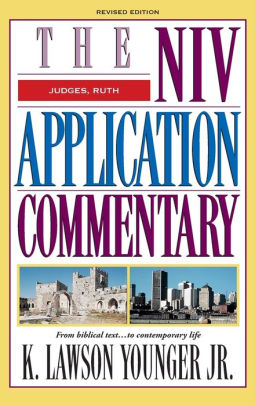
Judges, Ruth (NIVAC) [Revised] by Younger

The original edition of this book was already one of my favorites in the NIVAC series, but this revision distinctly raises its value. It doesn’t appear that many conclusions were changed, but those conclusions were bolstered. The writing was elevated. Just because this is a work with an academic bent don’t dare undervalue better writing or care with the big picture . It makes a difference. Some commentary writers think there’s a binding mandate to use five words when one will do and feel a call to plant more trees so the forest is more obscured for the common people . Apparently, such writers think that will impress other people though for the life of me I have no idea who those people are.


Want to know where the clear writing and big picture prowess are most on display? In the Introduction on structure and theology. You abuse yourself if you skip reading it. “Profound” is an overused word in reviews, but you can safely throw it out here. Some say this volume is more scholarly than others in the series, but I don’t personally think readability was sacrificed. Still, only a disingenuous scholar would rank it low.
Everything I mentioned positively in the review of the original edition remains, but there’s more. I surprised myself in how many lines I underlined. I’ll return to this book I assure you. Even those who feel this series isn’t their cup of tea better boil some water and grab a tea cup. Can you tell I like this book?

I received this book free from the publisher. I was not required to write a positive review. The opinions I have expressed are my own. I am disclosing this in accordance with the Federal Trade Commission’s 16 CFR, Part 255.
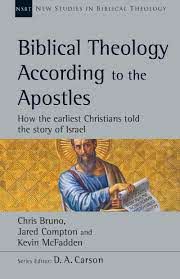
Biblical Theology According to the Apostles (NSBT)

You’ve got to admit it. Sometimes the venerable New Studies in Biblical Theology (NSBT) series finds a niche in theology that you at once hadn’t thought of before and after reading wonder why we hadn’t already. There’s a case in point here. The New Testament is rife with passages that review Israel’s provocative story. So it must be profitable to weigh how the Apostles handled the use of that story, don’t you think?


Three scholars (Chris Bruno, Jared Compton and Kevin McFadden) joined hands to produce this work. Rather than a disjointed work arising from too many cooks in the kitchen this book succeeds as drawing on the the fact the authors have been buddies since elementary school. I guess they traded the former discussions of school, sports and games for those of the Apostles thundering on the Old Testament. Maybe it’s just me but thinking about the non-typical evolution of that circle of friends brings a smile.

To maximize their contribution, the authors offer a introductory chapter that lays out a case for the importance of their idea with their criteria for inclusion and methodologies for presentation. It made sense to me.


They begin quite naturally with Matthew and his obvious connection to the Old Testament with emphasis on his genealogy and the parable of the tenants. Next, they present Luke and Acts as the climax of the Apostles telling Israel’s story with Stephen and Paul’s masterful presentation of the story in Acts 7 and 13 respectively.


Chapters on what is found in Galatians, Romans and Hebrews follow in turn. Hebrews 11 is surely a favorite of many of us. There’s a fine conclusion that sews up this unique study. Mark this work down as one of the more imaginative ones in the series that also manages to add something tangible for us.

I received this book free from the publisher. I was not required to write a positive review. The opinions I have expressed are my own. I am disclosing this in accordance with the Federal Trade Commission’s 16 CFR, Part 255.
Salvation to the Ends of the Earth [Second Ed.] (NSBT)

Andreas Kostenberger gives us a second edition of this 20-year old work in the New Studies in Biblical Theology (NSBT). This time there is no co-author other than T. Desmond Alexander contributing a chapter on mission in the Old Testament.
Though I hadn’t used the first edition, the preface explains how he organized his discussion of the theology of mission in such a way as to recast the material even if ultimate conclusions remain the same. Gone are chapters on Paul and the General Epistles and hello to one like, say, Matthew, James and Hebrews. The strikes me as merely shuffling the deck and re-dealing the same 52 cards, but if that helps crystallize the material for him to present it to us there’s no harm in it. There’s a Scripture index too so you can get when you need.
Two things stand out about this book. First, it is thorough and thoughtfully presented. I can’t think of anything he left out or any place he wasn’t clear and helpful. Perhaps you will find more or less (more likely) of mission in the passage he discusses, but I doubt you will find omissions of passages themselves. There’s also the passion that you would expect to find in a missional work.
Second, this book does not take a narrow focus on one aspect of a doctrine as is often the case in the NSBT series, but instead takes in the broad horizon of a grand biblical subject. For that reason, it will be an asset to a broader swath of Bible students too.
Kostenberger needs no recommendation from me as his scholarly work speaks for itself. I’m sure you already have some of his works around you. Add this good work to the pile!

I received this book free from the publisher. I was not required to write a positive review. The opinions I have expressed are my own. I am disclosing this in accordance with the Federal Trade Commission’s 16 CFR, Part 255.

Wonderfully Made by John W. Kleinig

Here’s a book of theology that is at once timely for our days and provocative to the mind. He delves deeply in Scripture to formulate a theology of the body. With a world that’s lost its way in viewing our own bodies and a church that in some sectors has gone wobbly, such guidance as found in this book is nothing short of a tonic.

Don’t start imaging some sort of political plea, nor even much of a cultural critique. The author assumes that you know that we are culturally in a different time (though some similarities with ancient periods exist). Further, he beautifully assumes the Bible is where truth is found. He never argues how the Bible has the better blueprint. Of course it does! Let’s just find out what it says. He writes, too, with Christian love yet without fear or apology for truth. Most authors can’t score that balance.

To be sure, he writes with a Lutheran perspective that I do not share. If you are like me and don’t share his background, don’t sweat it. It was little distraction to me. He would often speak of something like, say, baptism that would make me momentarily bristle, but it was easy to keep focused on his theme and find so much that helped and even challenged me.

After a chapter on “body matters” to orient us he divides his subject into the created body, the redeemed body, the spiritual, the sexual body, the spousal body, and the living body. The chapter on the created body was top notch on issues that we used to call “the doctrine of man” (anthropology). The two chapters on the redeemed and spiritual bodies are where you most might run into his Lutheran sensibilities on salvation issues, but good things to process still abound. The chapters on the sexual and spousal bodies (this is more than you think) are interconnected as well and address burning current issues. As started earlier, it’s not presented so much as a harbinger of the end as that of what is true, what has always been true, and what will always be true. The last chapter on the living body is really a conclusion.

The world is falling apart for sure, so it’s especially nice to read a book that keeps its head as this one does. By the way, it can hold up as a solid work of theology as well. This book is theology as it should done.

I received this book free from the publisher. I was not required to write a positive review. The opinions I have expressed are my own. I am disclosing this in accordance with the Federal Trade Commission’s 16 CFR, Part 255.