James (ZECNT) by Blomberg & Kamell

book james zec

This commentary was the inaugural volume in the developing Zondervan Exegetical Commentary on the New Testament (ZECNT) series that rivals all series in print today. This volume is shorter than the ones that followed, but must be credited with establishing ZECNT style that is outstanding on so many levels. Every passage has a section on literary context, a main idea, a translation, a discussion of structure, an exegetical outline followed by a quality explanation of the text, and a theology in application section. As a pastor, I love this design.

This volume was written by highly-respected scholar Craig Blomberg, and at his request, he was joined by his research assistant Mariam Kamell as co-author. As said before, it is quite shorter than other volumes in the series, but the quality of writing is up where you would hope.

Though the Introduction begins with a section entitled “Outline”, it’s really a review of structure and what has been thought in the scholarly world. A section called “Circumstances” gives us a historical setting including authorship. Authorship carries into more sections as it is often debated in the scholarly world though I find the reasons obtuse. In any event, conservative conclusions are reached here. The Introduction is followed by a fine bibliography.

The commentary proper is succinct, but solid; and again, the ZECNT format shines. The authors move through scholarly issues to help for expositors in a skillful way. I’m high on this series, and I recommend this volume.

I received this book free from the publisher. I was not required to write a positive review. The opinions I have expressed are my own. I am disclosing this in accordance with the Federal Trade Commission’s 16 CFR, Part 255.

Born After Midnight by Tozer

book born mid tozer

Classic Tozer! Tozer never disappoints whether it be one of his famous titles, or one not quite as well known like this one. I’ve read most of his titles by this point and loved them all, but this one is even better than several others. This title is one where he seems a little less on edge, but as challenging as ever. The title is a reference to his belief that revivals are born after midnight because that’s the time most have already given up. He really aims at personal spiritual renewal in this book. He tackles several subjects in light of renewal in his indomitable style.

He writes of our now missing inner witness that should radiate from Christians. He explains the concept of spiritually living in times of crisis. He explains the hollowness of words without deeds. There’s far more chapters than I can relay in this review, but he tackles dealing with the devil, our thinking, failure, “sanctifying the ordinary”, and much more. The chapter on wealth was especially good.

Moody has a whole series of these fine paperback Tozer titles and it’s a great idea to secure them all. Get this one near the beginning of your acquisitions! It is a dandy!

I received this book free from the publisher. I was not required to write a positive review. The opinions I have expressed are my own. I am disclosing this in accordance with the Federal Trade Commission’s 16 CFR, Part 255.

The Letters to Timothy and Titus (NICNT) by Towner

book nicnt pastorals

This book by Philip Towner is an impressive entry in the venerated New International Commentary on the New Testament (NICNT) series. Towner had already published on the Pastorals before this major work, and was known for assisting Howard Marshall on his earlier ICC work. It’s clearly a top-5 work on the Pastorals today and is the favorite of many. Even though, I couldn’t agree with his egalitarian viewpoint, I can’t deny the quality of his scholarship and the skill of writing in this work.

He provides a huge Introduction running through page 90 with a substantial bibliography preceding it. Though he’s not too keen on the label “Pastoral Epistles”, he sees value in addressing the three letters together and takes that approach in this Introduction. After addressing a few preliminary issues, he jumps into the major division in scholarly discussion on these letters–did Paul write them, or did even the same author write them ?–and he lays out the battle lines clearly. I’m more confident of the traditional viewpoints than he is, but I enjoyed his evenhanded explanations. Authorship issues bleed into historical setting and he upholds his quality discussion throughout. He covers theology, structure, and other introductory matters with great depth as well.

As you would expect in a NICNT volume, the commentary is on the English text with deeper exegetical comments in the footnotes. What you end up with is an usable volume with access to more specialized exegetical matters. The commentary itself is top-notch and enlightening for the reader. Towner used the NICNT format to good advantage and provides us with a volume well worth checking out. I recommend it!

I received this book free from the publisher. I was not required to write a positive review. The opinions I have expressed are my own. I am disclosing this in accordance with the Federal Trade Commission’s 16 CFR, Part 255.

The Book of Job (OTL) by Habel

book otl job

I’d have to rank this commentary as one of the best in the Old Testament Library (OTL) series. Whether it be on the level of theology or commentary. Norman Habel succeeds. He had written earlier on the Book of Job, but supersedes all his previous efforts here. Even better, this book is more conservative than several others in this series.

The Introduction is more in-depth (70 pages!) than several others in the series too. It rivals more exegetical works in that regard. He begins his Introduction by not disguising that he agrees with others who see Job as a literary masterpiece. He explains, too, the challenge of Job having so many unique words and idioms. He provides a lengthy explanation of the narrative plot and sees three main movements. In his discussion of integrity, setting, and date, he see the major place a critical orientation shows up–his willingness to rearrange chapters 21-28. His literary features and their significance section gives much food for thought in structural issues. He finishes his probing analysis in a message and meaning section.

The commentary proper is rich in theological insight. I look forward to having this volume at my disposal in all my future studies on the Book of Job. I would categorize it as indispensable to building a library for Bible study!

I received this book free from the publisher. I was not required to write a positive review. The opinions I have expressed are my own. I am disclosing this in accordance with the Federal Trade Commission’s 16 CFR, Part 255.

I & II Samuel (OTL) by Auld

book otl sam

Here’s one of the more substantial volumes in the well-known Old Testament Library (OTL) series. A. Graeme Auld has been turning out scholarly writings for a long time and is highly respected, particularly in critical circles. I often don’t agree with his critical conclusions, but must admit that he can make some brilliant observations and has a keen eye for what others miss.

After a bibliography, Auld jumps into an Introduction that begins by rightfully seeing I & II Samuel as the Book of David. To his mind, all the other characters are merely the supporting cast. He explains how “no other biblical books in such detail take us into the lives of their principal characters and families.” Next he delves into textual issues of Samuel. That takes him onto the slippery slope of sources and some opinions that could never be substantiated.

By page 20 we are into the commentary proper that runs all the way to page 630. This is the section where the nuggets lie in this book. Again, I couldn’t possibly agree with all his critical presuppositions and conclusions, but I appreciated his ability to point out things that I found no where else.

I love a commentary that can spur thinking even if there are things I disagree with. For that reason, I find it easy to recommend this commentary.

I received this book free from the publisher. I was not required to write a positive review. The opinions I have expressed are my own. I am disclosing this in accordance with the Federal Trade Commission’s 16 CFR, Part 255.
Mark (TNTC) by Schnabel

book tntc mark

Here’s a brand new volume in the second cycle of revisions on the beloved Tyndale New Testament Commentaries (TNTC) series. The new editor, Eckhard Schnabel, contributes this new volume. I really am not familiar with Schnabel, but have thought that whoever had the task of filling the shoes of Leon Morris really had their hands full in light of his incredible scholarship. After perusing this volume, I have great hope for a series I really respect.

There’s no doubt this volume really improves on the earlier Cole volume. Schnabel was given more space and made good use of it. I find it superior to its competitors in other similar series as well. I’ve just recently reviewed the IVPNT volume on Mark and much prefer this one.

His Introduction begins by discussing Mark’s place among the Gospels and its history of interpretation. He describes and personally holds to the priority of Mark. He reached conservative conclusions on authorship, date, and historical reliability. His section on theological emphases is well done and he ends with a clear outline.

The commentary proper makes up the bulk of the book and is not only helpful, but well written. That is a winning trait missing in many commentaries. Every passage I reviewed was never superficial nor prolix. I thought many details and good points were brought out for the reader.

For its target audience, this would have to be highly rated. I recommend it!

I received this book free from the publisher. I was not required to write a positive review. The opinions I have expressed are my own. I am disclosing this in accordance with the Federal Trade Commission’s 16 CFR, Part 255.

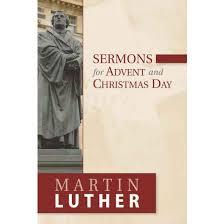
Sermons for Advent and Christmas Day by Luther

book luther

We’ve all heard so much about Martin Luther. I’ve even read his biography entitled “Here I Stand” by Bainton, also published by Hendrickson Publishers, and enjoyed it. What I had not done, however, is read any of his sermons. I’m glad to possess this book so I can get a feel of Luther for myself. Plus sermons for the Christmas season are always a blessing for sermon ideas or devotional reading.

The book begins with a fine preface that gives a biographic overview of Luther. It’s extremely serviceable if you need to brush up on Luther before you get started reading the sermons. From there the sermons are designed to correspond with the first, second, third, and fourth Sunday of Advent followed by two sermons specifically for Christmas Day.

In the first sermon Luther takes us to Matthew 21:1-9 and the Triumphal Entry of Christ. The goal, I believe, is to make us remember the why of Advent, or the why of Christ’s coming to us. Over the course of the sermon, Luther explains the mistaken views some Jews had over the Messiah. It’s in this sermon you will find that his sermons were quite long (100 points in 32 pages). Still, there’s a lot of content.

His second sermon takes us to Luke 21:25-36 where he draws out the comfort Christians can take from the signs of the Day of Judgment. The third one considers Matthew 11:2-10 and looks at how Jesus answers John’s question on if He was the Messiah they were looking for, or should they look for another. This text could, in my judgement, be used more for Advent than the previous one. The fourth sermon looks at John 1:19-28 and is something of a sequel to the last one in examining John the Baptist’s confession of Christ.

The last two sermons are Christmas messages expounding Luke 2:1-4 and John 1:1-14 respectively. There are many things to ponder in his look at Luke 2, though I could not accept them all. Still, it’s well worth reading. The last one is a perfect Christmas text rarely preached on Christmas. It is THE text of the Incarnation and Luther does well making much of Christ in it.

Beyond being an asset at Christmas time, this book is a great place to sample Luther. With two good reasons like that, I’d recommend you get this book!

I received this book free from the publisher. I was not required to write a positive review. The opinions I have expressed are my own. I am disclosing this in accordance with the Federal Trade Commission’s 16 CFR, Part 255.
Christ Exalted Sermons of Jonathan Edwards–A Review

book edwards sermons

Hurrah for more Jonathan Edwards sermons! Hendrickson Publishers already graced us with Revival Sermons of Jonathan Edwards a few months ago and now they have unearthed some other jewels for us. I’m a pastor who believes in having a healthy dose of sermons in my library, and have could we have a real sermonic library without some Edwards?

There’s no doubt that his sermons are uniquely his own. I can’t think of anyone who would organize a sermon quite like he would. He sees no problem in being long. His style usually involves beginning with some doctrine on the subject and then branching out into pointed, applicable material to take the Scripture home to the hearer’s hearts. I wouldn’t recommend that any of us preach a sermon put together as his are, but his logical mind and scriptural acumen are helpful to us all. Read him more for personal, theological, and doctrinal reflection rather than a prototype for preaching today.

These sermons, as the title implies, exalt Jesus Christ. The first sermon tackles a fine text most likely only rarely preached–Isaiah 32:2. If the title “Safety, Fullness, and Sweet Refreshment in Christ” sounds odd, I assure you he found all three in Christ for us. I love his preaching on one of my favorite texts in Revelation 5:5-6 and drawing out the excellency of Christ. He brings alive so much of Christ’s character in it. In the sermon “Jesus Christ the Same Yesterday, Today, and Forever” he not only exposes how Christ transcends time, but lays out how that fact should impact our lives.

The next sermon “Christ Exalted” explains how He is exalted in His work of redemption. It’s a treat to have the sermon he preached at David Brainerd’s funeral from 2 Corinthians 5:8. He makes clear our assurance of going directly into the presence of Christ at death. There are some post-sermon comments added as well. Preachers will find encouragement from his “Christ, the Example of Ministers” from John 13:15-16. The last sermon, “Christ’s Agony” takes us to Gethsemane in Luke 22:44. I disagree on a few points, but there is much to ponder.

Edwards’ sermon had the hand of God on them when he preached them and it’s a privilege for us to revel in these proven sermons. This book is a nice, durable, attractive paperback and I recommend it.

I received this book free from the publisher. I was not required to write a positive review. The opinions I have expressed are my own. I am disclosing this in accordance with the Federal Trade Commission’s 16 CFR, Part 255.
Deuteronomy (NAC) by Merrill

book nac deut

Eugene Merrill is a name you can trust. Without fail, his writings are clear, conservative, and helpful. This title is on one of the most important books in the OT. Jesus often quoting Deuteronomy proves that fact. Fortunately, this volume is in the economical, pastor-friendly New American Commentary (NAC) series that many pastors like me absolutely love.

Merrill begins the Introduction by explaining the meaning of the title, and then slides into date and authorship. Critics have been especially abusive to Deuteronomy, so it’s nice to have a strong case made for those of us who accept the Bible as God’s Word without reservation. He succinctly describes the historical background for us too. He analyzes structure to good effect, briefly describing the path of sometimes wobbly scholarship before bringing us back to good sense. He sees no credible evidence to question the canonicity of Deuteronomy. After providing an outline, he gives us what he calls “analysis of the contents of the book”. It is well done. He ends the Introduction with a fine overview of the theology of Deuteronomy.

The commentary itself is superb and much more trustworthy than those of many other series. Every passage I perused gave the kind of help I like to receive.

This book is an excellent addition for every pastor or teacher. I highly recommend it.

I received this book free from the publisher. I was not required to write a positive review. The opinions I have expressed are my own. I am disclosing this in accordance with the Federal Trade Commission’s 16 CFR, Part 255.
Two helpful IVPNT Commentaries

book ivpnt matt

This volume is a precursor to Craig Keener’s large socio-rhetorical commentary on Matthew’s Gospel. Over the last several years he has garnered quite a reputation as a voluminous writer of large commentaries. After that large Matthew commentary, Keener gave us a large 2-volume commentary on John and then a massive 4-volume commentary on Acts that is so big it could be made into a piece of furniture. Before all of those prolific writings, Keener tried his hand on Matthew here in the respected IVP New Testament series. This series is geared toward “solid, biblical exposition and helpful explanatory notes in … user-friendly format.”

He begins his almost 30-page Introduction with a discussion of his approach and desire that the shock value of Jesus’ statements remain. He then explains how source, form, and redaction criticisms have the study of Matthew. I’m not sure that would be as important to his target audience as he feels, but he is clear in his presentation. In different ways he discusses Matthew, his historicity, as well as the structure, authorship, provenance, and date. He is better, in my view, discussing unique features of Matthew’s Gospel.

The commentary is competent and helpful. It is more in line with the aims of the series than the Introduction. I believe it could be an asset to pastors and teachers. It’s the right length for this type of series and provides the right level of help. Worth checking out.

I received this book free from the publisher. I was not required to write a positive review. The opinions I have expressed are my own. I am disclosing this in accordance with the Federal Trade Commission’s 16 CFR, Part 255.

book luke ivpnt

Darrell Bock is clearly one of the most-respected scholars on Luke and his Gospel. It’s interesting to note that Bock first turned out a major commentary on Luke Gospel in the BECNT series before he attempted this more streamlined, expositional approach. His love of Luke’s Gospel is clear and he seems to enjoy this chance to move past the technical discussion of Luke to this more relevant approach.

He begins his Introduction of Luke by explaining Luke’s unique place among the Gospels. He skillfully discusses authorship, audience, date, and purposes and arrives at reasonable conclusions throughout. He briefly outlines Luke’s major theological themes and explains the value of preaching Luke. His is a good example of a succinct Introduction for these mid-level commentaries.

In the commentary he made the leap from his earlier exegetical commentary to this type of work. I thought he found his voice as a clear commentator on Luke quite well. In a briefer format, he was able to give meaningful help. His BECNT work is more well known, but I believe this book could help a greater swath of people. I recommend it.

I received this book free from the publisher. I was not required to write a positive review. The opinions I have expressed are my own. I am disclosing this in accordance with the Federal Trade Commission’s 16 CFR, Part 255.