Carta’s Interesting New Releases!

book hezekiah

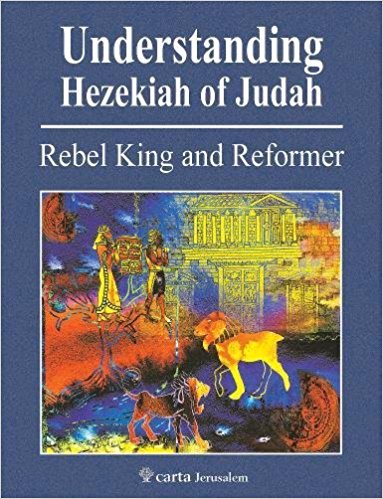
Here’s 3 of Carta’s 2017 releases plus a catalog title that was the first of these attractive large, educational, handy (40 pages each) volumes:

1. Understanding Hezekiah of Judah 

Hezekiah is a worthy focus of study for Old Testament students. Not only is he the greatest king after David, but he is the last great hurrah of Judah. His reforms ran the deepest, his faith was the most clearly on display, and it was all against the backdrop of the turbulent times he lived. This book brings it all alive!

Mordechai Cogan, a respected Jewish scholar wrote this volume. You may remember his name from writing major commentaries on 1 & 2 Kings in the Anchor Bible Commentary series. I may not agree with every historical conclusion he makes, but his passion for his subject is clear on every page.

You are going to love the gorgeous photos, fine graphic illustrations, and, of course, those wonderful Carta maps. He explains how Hezekiah eliminated rural altars and brought all worship back to the Temple in Jerusalem. (When Cogan speaks of the “Israelite cult” he is referring to their uniqueness in the religious world of their times).

Archaeological data and Assyrian accounts are brought in to enliven the story. What you end up with is a fascinating portrait of Hezekiah and his times that any Bible reader would have to enjoy!

I received this book free from the publisher. I was not required to write a positive review. The opinions I have expressed are my own. I am disclosing this in accordance with the Federal Trade Commission’s 16 CFR, Part 255.
book samaritans

2. Understanding the Israelite-Samaritans

Fascinating! I can think of no other word to describe this book. Benjamin Tsedaka, who is an Elder in the Samaritan community in Israel, is writing as one who lives his subject. As the subtitle suggests, the portrait drawn takes us from biblical to modern times. Frankly, both ancient and modern times are fascinating.

Tracing back to the Northern Kingdom days of the Divided Kingdom Era, and being prominent in some episodes of Jesus’ ministry as well as one of His most famous parables, the Samaritans are a worthy subject of study for Bible students today.

The book begins with a general history, then gives a review of their area, and even tells where settlements of their people were. In section 4, we get a careful explanation of who the Samaritans are and who they are not. We are told of their Scriptures, the Samaritan Pentateuch, which are the only Scriptures they recognize, and the difference with the Masoretic text. Then we learn their prayers, their customs, and their way of life.

A book written by someone who believes in what they write always reads the best and that is the case here. With the incredible subject, you have the Carta maps and photos, which are the best out there! There’s nothing in print quite like this book!

I received this book free from the publisher. I was not required to write a positive review. The opinions I have expressed are my own. I am disclosing this in accordance with the Federal Trade Commission’s 16 CFR, Part 255.
book temple jesus

3. Understanding the Holy Temple Jesus Knew

Leen and Kathleen Ritmeyer are Temple Mount experts. More than scholars, they have been involved in all major excavations in Jerusalem for the last 40 years. They are uniquely qualified to tackle the subject of this fine book. In fact, Carta has already published their larger work, “The Quest: Revealing the Temple Mount in Jerusalem“.

Now they give us a volume that fits in with the attractive series of 9×12 glossy, 40-page books that Carta has been turning out over the last few years. The incredible Carta maps are used throughout, as are exceptional pictures and illustrations. I love the reconstruction drawing of Jerusalem in Jesus’ day on page 6!

This is a worthy subject as several New Testament events of Jesus’ ministry took place in or around the Temple. The first half of the book explains the Temple itself as we understand it from the Bible and archaeology. A fine, succinct overview is given.

The second half of the book more specifically discusses Jesus there. What the reader gains is a vivid picture of key Gospel events!

This is another Carta winner! No Bible reader could fail to glean from this beautiful book. I highly recommend it!

I received this book free from the publisher. I was not required to write a positive review. The opinions I have expressed are my own. I am disclosing this in accordance with the Federal Trade Commission’s 16 CFR, Part 255.
book ot atlas

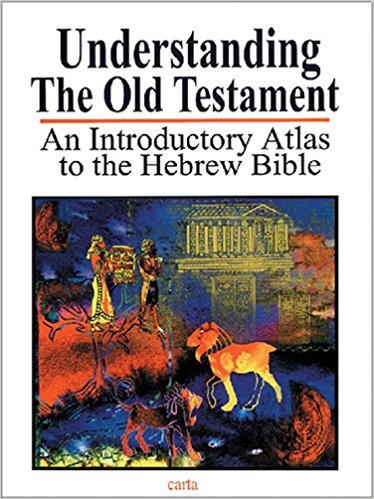
4. Understanding the Old Testament: An Introductory Atlas to the Hebrew Bible

Here’s the first of the gorgeous Carta glossy 40-page volumes for Bible students. Baruch Sarel wrote this little jewel filled with incredible Carta maps, pictures, and illustrations. The maps alone make the book worthwhile, but there’s so much more.

There’s an overview of each book of the OT, a description of the Ancient Near East, another of all the peoples and lands that impacted OT history, and an explanation of the patriarchs and matriarchs of the OT. From there, the story of the OT is told historically with text and well-chosen maps. The kings of Israel and Judah are described, as are the corresponding prophets.

I don’t see how a better overview of the OT could be fit in 40 pages. This would be perfect for Bible or Sunday School classes as well as personal study. Chalk this up as another highly-recommended volume!

I received this book free from the publisher. I was not required to write a positive review. The opinions I have expressed are my own. I am disclosing this in accordance with the Federal Trade Commission’s 16 CFR, Part 255.
Acts (NAC) by Polhill

book acts nac

If you’re looking for a good mixture of being pastor friendly and economical, you should look up this volume in the highly-regarded New American Commentary (NAC) series. John Polhill is comfortable in this territory as he has also given us the helpful “Paul and his Letters” with the same publisher. He’s had two decades of teaching and preaching on Acts and it shows in this book. In the first paragraph of his preface, he tells us that he aims this commentary at pastors first. He has succeeded in his objective.

After reading how he aimed first at pastors, I was surprised at the depth in the Introduction. I’ve reviewed a few major exegetical commentaries on Acts, and Polhill addressed every issue they did. He covered it well too.

He begins by showing where Acts can be found in early tradition. He surveyed all the information about authorship and date and reaches conservative conclusions. He covers sources and genre. He explains the importance of speeches in Acts. He discusses Luke as both a historian and a theologian. He provides some maps of Paul’s journeys and has a detailed outline. All told, the Introduction runs through page 76.

The commentary is truly helpful. I suspect that pastors will agree that’s its value is good. That’s my opinion for sure.

I received this book free from the publisher. I was not required to write a positive review. The opinions I have expressed are my own. I am disclosing this in accordance with the Federal Trade Commission’s 16 CFR, Part 255.

An Unhurried Leader by Fadling (Books on the Ministry #18)

book unhurried

I needed this book. So many leadership books offer up the same, though slightly retreaded, message of so many others, but this book is food for the soul. It’s the best book for pastors, or any in a leadership position, that I’ve read in a long time. There’s no gimmicks here to manipulate people, just a call to commune with God to the point He imbibes your work with His grace.

In a day where so many speak of effectiveness, Fadling prefers that we look at fruitfulness instead. He unearths the often-buried scriptural truth that fruitfulness comes from abiding in Christ. If the Lord makes you fruitful, you will influence others and the task of leadership is fulfilled. He makes it all sound so simple while the work of communing with God is at once challenging and the very opposite of work. If that sounds confusing, just read the book.

He begins by asking us to be unhurried leaders who stop seeing activity as productivity. He exposes the subtle pride that we often present as spiritual leadership. He explains our blind spot of working for God instead of with God. He challenges us to lead from abundance–a concept we frankly don’t get. He gently scolds us to stop running from the thirst of our souls to unquenching activity.

There’s so much more. The chapter on prayer is the most insightful I’ve read in years. More than being condemned as most prayer treatises, I want to implement what he says.

Outstanding is an understatement for this book. 5-star plus gets a little closer. I hope many will read and follow and be helped as I was!

I received this book free from the publisher. I was not required to write a positive review. The opinions I have expressed are my own. I am disclosing this in accordance with the Federal Trade Commission’s 16 CFR, Part 255.

Proverbs, Ecclesiastes, and Song of Songs (NAC) by Garrett

book nac Prov

Here’s the pastor’s choice for the three challenging books of Proverbs, Ecclesiastes, and Song of Solomon. In near 450 pages respected scholar Duane Garrett gives what most want: a succinct, weighty, and helpful commentary on these books that will likely be preached from less than many others.

Garrett begins with an Introduction on Proverbs. He starts with a general discussion of Wisdom in the Ancient Near East and transitions into Israelite Wisdom. He provides a lengthy section describing all the proverb classifications scholars have come up with. That subject is more interesting to scholars than pastors, but he explains it well. He also covers the varying opinions on structure. In discussing authorship and date, he wades through the varying conclusions to reach conservative conclusions.

The commentary is good, but he spends time defining classification of every proverb. My only criticism of this book is that the commentary on Proverbs needs to be about 25% longer if a revision is ever done.

Garrett does a fine Introduction on Ecclesiastes as well. Since so few scholars believe Solomon could have written it, he has a lot to wade through to reach conservative conclusions. This was my favorite Introduction of the three. He sees an evangelistic purpose to the book.

The commentary on Ecclesiastes is well done and especially enlightening.

He turns out another careful Introduction on the Song. I can’t agree with his conclusion that it’s only a discussion of human love, but he lays out the differing viewpoints well. The other introductory issues are laid out with equal thoroughness. Garrett went on to write a large, major exegetical commentary on the Song in WBC. The commentary here is once again quite helpful.

This book is the perfect volume for these three books for pastors or teachers. I highly recommend it!

I received this book free from the publisher. I was not required to write a positive review. The opinions I have expressed are my own. I am disclosing this in accordance with the Federal Trade Commission’s 16 CFR, Part 255.

1, 2 & 3 John (ZECNT) by Jobes

book ept jn zec

Mark this down as another outstanding entry in an exceptional series. Jobes has provided a thoughtful, scholarly, and easy to read volume here in the Zondervan Exegetical Commentary (ZECNT) series. My appreciation for the layout of this series grows with every volume I peruse.

Jobes begins her Introduction to all three Epistles of John by describing their significance. She throws down the gauntlet of a strong Christology in our pluralistic world. She concludes that the writer of these letters matches the Gospel that also carries John’s name. She reasons that the author had to be John or a close associate. As with most commentaries addressing John, she writes about the gnostic issue that has obsessed scholars. She seems to feel that scholars have overthought the issue. John has written against “some serious misunderstanding and distortion of the gospel”. In discussing the similarities of John’s Gospel with his Epistles, she provides a chart that allows you to see for yourself. She surmises a conservative dating of these epistles.

Next, she provides an Introduction to 1 John. She well explains its genre and purpose. She admits its complex, or almost spiraling structure and ends with an outline. Next, she jumps into helpful commentary on the text of 1 John. She seems quite comfortable in the ZECNT format and uses it to advantage. A brief Introduction precedes the commentary of 2 & 3 John respectively as well.

This is my favorite modern exegetical commentary of John’s Epistles. If there is any better, I’ve not seen it. You will want this commentary!

I received this book free from the publisher. I was not required to write a positive review. The opinions I have expressed are my own. I am disclosing this in accordance with the Federal Trade Commission’s 16 CFR, Part 255.

Haggai, Zechariah, and Malachi–2 OTL volumes

Haggai and Zechariah 1-8

David Petersen first gave us Haggai and Zechariah 1-8 in the Old Testament Library (OTL) series. Later, he wrote a follow-up volumes  His two books have been influential and oft-cited volumes for several years now. 

Considered by many as the best critical commentary out there, this book has several features that we of a more conservative persuasion can glean from.

In this volume, Petersen deals first with Haggai and gives it its own Introduction. After some comments about how Haggai relates to the other “Latter Prophets”, he describes the times of the prophet. He really fleshed out that subject well and interacted with several other scholars. In his discussion of the book itself, he reviews the “prose or poetry” debate and went through his beliefs on composition. Though I could not agree with him, he stated his thoughts clearly.  From there he jumped into his commentary itself. It’s quality and design holds up well with the rest of the series.

On page 107, Petersen begins his treatment of Zechariah 1-8. He immediately tells us that he follows “the critical judgment of scholars over the years who have discerned a fundamental division between Zechariah 1-8 and 9-14.” Though there’s conservative scholars who disagree, he sets out and explains well the critical position.

He begins in this case with describing the person of Zechariah. Next, he provides a lengthy section on the book in the same style as he did on Haggai. His viewpoint requires distinguishing what he sees as the different oracles in Zechariah.

Overall, he provides as good a volume as is out there on these Prophets for those who seek a clear critical viewpoint.

I received this book free from the publisher. I was not required to write a positive review. The opinions I have expressed are my own. I am disclosing this in accordance with the Federal Trade Commission’s 16 CFR, Part 255.

Zechariah 9-14 and Malachi 

David Petersen worked another decade before he finished what he began in the earlier Haggai and Zechariah 1-8. Both volumes are in the respected Old Testament Library (OTL) series.

Unlike the earlier volume, he covered both prophets and books in one Introduction. He began by stating that the last 10 chapters of the Old Testament (the chapters he covers) are as difficult as any in the OT. 

He goes into a lengthy discussion of the historical context of these prophets. Though I would disagree on several points, this discussion was fascinating and the most valuable of the entire book. 

Next, he explains why Zechariah had to be chopped up in his view. His arguments don’t hold for this reviewer, but be does write clearly so you can trace his thinking. He is briefer in his discussion of Malachi.

The commentary is in the same style as the earlier volume and for several others in the series for that matter.

This will be my go-to volume if I want to study how the other side of scholarship views these prophets. Again, he writes in a clear words and provides a transparent presentation of what he believes. For what it is, this is an important book.

I received this book free from the publisher. I was not required to write a positive review. The opinions I have expressed are my own. I am disclosing this in accordance with the Federal Trade Commission’s 16 CFR, Part 255.


The Expositor’s Bible Commentary (Rev. Ed.)–Volume 8, Daniel-Malachi

book ebc 8

Mark me down as someone who has loved and used the earlier EBC set for years. This new set, edited by Tremper Longman and David Garland, has been one I’ve wanted to check out and this volume 8 is my first foray into the set. One thing is clear: the revision is a success. Not only is much brought up to date and improved, but the way the original series was envisioned remained. In other words, real depth with a corresponding succinctness for busy pastors.

In Daniel, Andrew Hill replaced the late Gleason Archer. There’s a much more scholarly feel and less direct eschatology. Gone is Archer’s clear premillennial position that is replaced by Hill’s survey of opinions. Still, Hill provides what I’d call an astute presentation that can run with the big dogs of exegetical commentaries. A similar thing happened in Carroll R.’s replacement of Leon Wood for Hosea.

Richard Patterson took his fine work on Joel and made it better. In Amos and Micah editor Tremper Longman took the late Thomas McComiskey’s work and updated to the extent that he is now listed as the co-author. The effort is a good one. Carl Amerding updated his work on Obadiah, Nahum, and Habakkuk to good effect. John Walton turned in a more scholarly effort on Jonah than did H. L. Ellison, though I wish he could see his way clear to see it as “journalistic history”. He still came to pretty conservative positions.

In Zephaniah, Larry Walker updated his earlier work and I really loved it. Haggai and Malachi were greatly improved by Eugene Merrill, a scholar I always enjoy. Kenneth Barker updated his work on Zechariah and kept a dispensational outlook. It was yet another success for the project.

This book has a lot going for it. A quality help on Daniel and all the Minor Prophets between two covers means that for an economical price you can build your library more quickly. This is a winner all the way!

I received this book free from the publisher. I was not required to write a positive review. The opinions I have expressed are my own. I am disclosing this in accordance with the Federal Trade Commission’s 16 CFR, Part 255.

James (NICNT) by Scot McKnight

book james nicnt

Scot McKnight gives us this replacement volume in the venerable New International Commentary (NICNT) series. That series was aimed at pastors originally, but has since expanded its scope for scholarly types. Pastors can glean deeply from it, but it covers all the issues. Still like the earlier volumes is the fact that it has no untranslated Greek. A funny aside is how a major volume in another series by Eerdmans (James by Moo in the Pillar series) is written by McKnight’s dear friend. Both are well worth having.

In McKnight’s Introduction to James he shows a keen appreciation for the complexities of the letter even while confessing that some of those complexities were foisted on James by scholars. His charge of some scholars being “obsessed” with certain strange developments of study is undoubtably true.  His discussion of “James in the Story” is at once interesting and clear. He does a fine job in explaining how James gets tangled with Paul, even though it may be more of our starting point than a true divergence. Still, I can’t agree with all his Paul-James controversy points.

His discussion of who James was carefully laid out the possibilities and reached conservative conclusions after wading deeply. His dating of James was early. His portrayal of themes in James was helpful and the section on structure was excellent as it shared so many opinions of other influential scholars before he arrived at his own.

The commentary section focuses to advantage on the text. I enjoyed it. Again, it might sound scholarly, but it will add to your understanding of this letter that perplexes many. You should check it out!

I received this book free from the publisher. I was not required to write a positive review. The opinions I have expressed are my own. I am disclosing this in accordance with the Federal Trade Commission’s 16 CFR, Part 255.
Luke 3 (Hermeneia) by Bovon

book lk 3

Many multi-volume commentaries lose steam by the final volume. In this case, Francois Bovon carries a consistently high standard of quality to the end of this three-volume set in the Hermeneia series. Known in the commentary world for its great theological reflection, this final commentary continues its wow factor all across its pages.

This volume covers Luke 19:28-24:53. That means that he will pick up the story Jesus’ entry into Jerusalem and then follow Luke through the Resurrection of Jesus Christ. As with the other volumes, each passage begins with a bibliography, his translation, an analysis that includes structure and textual issues, commentary, and an excellent history of interpretation. Sometimes his comments on structure are interesting, but I usually disagree with him on most of his textual opinions and historical evaluations.

Though you will find things you may disagree with completely, there’s all kinds of interesting things throughout the story of the Crucifixion and the Resurrection. As that is the crux of the Bible itself, you will love having those insights that make you stop and say, wow, I’ve never thought about before.

You probably wouldn’t consider purchasing this final volume on Luke’s gospel, unless you intended to buy the whole set. It’s a plunge I recommend you take. Particularly, if you’re building a major exegetical commentary library. In fact, I don’t see how you can say you had that type of library unless these three attractive volumes sat on your shelves.

I received this book free from the publisher. I was not required to write a positive review. The opinions I have expressed are my own. I am disclosing this in accordance with the Federal Trade Commission’s 16 CFR, Part 255.
1 & 2 Thessalonians (ZECNT)

book zec thess

The Zondervan Exegetical Commentary is quickly becoming one of my favorite commentary series. The format is ideal for pastors or students and easy to follow. It yields great insight from the type of work scholars do and good theology that you might expect from a pastor. Don’t let the Greek scare you off as the English is always nearby and all arguments can be followed without difficulty.

Thessalonians is given treatment by scholar Gary Shogren. His Introduction begins with an exciting portrait of the birth of the Thessalonian church and the events of Paul’s ministry surrounding it. The description of Thessalonica is vividly told. A few pages in he even described life in that church and it felt like you were there. His telling of the treatment of Jews there further brought it to life.

He took on critical issues next and well described what has been believed. He was more generous than I could have been toward some of them, but you gained an awareness of the swirling of the scholarly world on Thessalonians. His own conclusions were conservative.

Some may not like his section on eschatology. Of course there’s enough eschatology in it that any commentator will have to disappoint somebody, but he was a little harsh toward those who believe in a pre-tribulational rapture. That section is followed by a detailed outline and a select bibliography.

The commentary was good as Shrogen obviously felt comfortable with the distinct ZECNT style. You will not find it shallow.

I recommend this to pastors and students seeking real help on Thessalonians.

I received this book free from the publisher. I was not required to write a positive review. The opinions I have expressed are my own. I am disclosing this in accordance with the Federal Trade Commission’s 16 CFR, Part 255.