Transforming Discipleship by Greg Ogden (Revised)

Here’s a revised and expanded edition of an influential book on discipleship. Ogden is one of the most respected authors on the subject and he is passionate about the subject as well. He gives the reader a lot to chew on.

The book is in three main parts with the first one covering what has gone wrong with discipleship. He exposes the superficiality in Christians today as the proof of discipleship going awry. He says people worship “with a reviewer’s mentality.” He cites studies that show few Christians have a goal of being committed to Christ, but are more focused on the American Dream. He laments how the lifestyles of Christians and non-Christians are indistinguishable. He says, “It would appear that Christians have been almost as seduced by self-focus as the broader population.”  He surmises that we have been diverted from the main calling we have. We are consumed with programs that does not actually disciple people. We says people don’t have the right idea about church and churches don’t have it about discipleship.

The next part is where he traces discipleship in the New Testament. He goes, of course, through Christ’s ministry. Next, he tackles Paul and even admits that Paul doesn’t use the word “disciple.” He shows Paul speaks of parenting young believers and transforming lives. He draws it out with great detail.

The balance of the book is a detailed explanation of his particular method of discipleship. He emphasizes relationships and  not expecting quick results. It’s interesting, but strikes me as working better in some areas or with professional people. Still, it’s worth considering. In an added chapter, he unnecessarily pits preaching and discipleship and is too harsh on preaching. 

This book is necessary for our shelves in discipleship.


I received this book free from the publisher. I was not required to write a positive review. The opinions I have expressed are my own. I am disclosing this in accordance with the Federal Trade Commission’s 16 CFR, Part 255
.

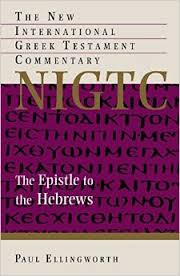
Faithful to the End by Wilder, Charles, and Easley

Are you looking for an introduction that gives more depth to a study of the General Epistles and Revelation? Then you will love this book. It’s the kind of scholarly proficient and pastorally relevant volume that can make a real impact in your studies. Besides the fact that Hebrews to Revelation is the end of the Bible, the authors see a unity of “a strong theme of being faithful and persevering in the faith.”

My favorite chapter was the first one which covered Hebrews. There were great insights on every page. It just so happened that I was recently reading the introduction in a major exegetical commentary on Hebrews and found much more here that opened up what Hebrews is all about.

The chapters on the other Epistles were good, with perhaps James and Jude getting the best treatment. Revelation was explained well, as were the schools of thought of how to view it prophetically. He attempted to explain Revelation in terms that would make sense to most of the schools of thought. In the limitations of that approach, it worked.

This is a great volume and I highly recommend it. 

I received this book free from the publisher. I was not required to write a positive review. The opinions I have expressed are my own. I am disclosing this in accordance with the Federal Trade Commission’s 16 CFR, Part 255.

Letters and Homilies for Jewish Christians by Witherington

This volume joins “Letters and Homilies for Hellenized Christians” Volumes 1 and 2 for Witherington’s three-volume set that covers the General Epistles including the Pastorals, Epistles of John and of Peter, and in this volume, Hebrews, James, and Jude. I always marvel at his output as he has written on most of the NT and other subjects as well.

Having reviewed the other two volumes, I feel he keeps up his standard of work here. He keeps that socio-rhetorical emphasis that he is famous for as well. I can’t always agree with his conclusions, but they are never uninteresting.

He deals with Hebrews first. He summarizes the different viewpoints on authorship well (he favors Apollos) and rightfully emphasizes Christology to good effect. He sees Hebrews as a rhetorical masterpiece and I agree. His commentary, though I would disagree at points, was helpful.

I chuckle at how he writes his Introductions for each book because he approaches them in a different order each time and just seems to start at random. Still, he gets it covered each time. 

Next, he tackles James. As you might imagine with his emphases, he writes on the “social ethos of James’s audience and home congregation” with good food for thought. I found his thoughts on Jude even better.

This is a quality commentary of the acedemic type and I recommend it.

I received this book free from the publisher. I was not required to write a positive review. The opinions I have expressed are my own. I am disclosing this in accordance with the Federal Trade Commission’s 16 CFR, Part 255.

God and Tattoos by Allan Dayhoff

Have you ever read a book that was both provocative and somewhat outside your comfort zone, but still opened your eyes? This book by Allan Dayhoff was such a book for me. Tattoos to my mind were gross, ugly, and wrong. While I still am not a fan of tattoos at all, this book chided me for never considering what is going on in the souls of those with tattoos. Why are tattoos exploding in our day? More importantly, what should a Christian see in this trend of people writing on themselves? 

The author did what it never occurred to me to do: ask people why they have tattoos. He asked them what their particular tattoos meant and that opened up a massive flow of information from which some conclusions could be drawn.

He found that some are doing it because it is the “it” thing to do in our generation. In other words, for some it is merely a jump on the cultural trend bandwagon. I suspected this one, but sadly never thought about the other reasons involved. It’s in those other reasons that this book is eye opening. 

It seems as though people are needing empathy and to have meaning. In that they do not have those needs mets, Dayhoff explains that their souls are crying out these needs and writing them on their own skin. People are finding this new way to say who they are. Often, the story on their skins is one of deep pain. Other insights abound.

I met the author and while I could not do all his methods, I saw that he was sincere in sharing his faith. I must warn you too that in some cases he directly quotes his interviewees and that means some really bad language. That arose, no matter what we feel about it, from his approach to write a book that would teach Christians and could be used with non-Christians at the same time. 

It’s probably not a book for everyone, but I found it instructive and fascinating.

I received this book free from the publisher. I was not required to write a positive review. The opinions I have expressed are my own. I am disclosing this in accordance with the Federal Trade Commission’s 16 CFR, Part 255.
Discovery House Bible Atlas by John Beck

Here’s one of the most recent major Bible atlases out there. Written by Dr.  John Beck, this volume has in its favor being written by someone who has spent much time in Bible lands and is clearly passionate about teaching biblical geography. You will appreciate as a Bible believer his consistent, conservative stance on the subjects you find in a Bible atlas. While he is a scholar, and while he has written in over 300 pages to the extent of particularly scholarly works, he has aimed at accessibility and serious Bible students. He has succeeded in reaching that audience and as a pastor I enjoyed the atlas too.

The maps look different than those in other volumes, and sometimes the scope, scale, and even color were not my favorite. As that is of course only a matter of taste, I should point out a careful accuracy in them. There were also plenty of them covering more biblical events than some other major atlases. No matter your own eye for graphics, the educational value of these maps are unmistakable.

What especially stood out in this volume to me was the pictures. They were vivid, copious, and gorgeous. I found them a visual treat. They even covered places most Bible tours never get to.

The writing struck me as that of a warmhearted preacher. In that many Bible students have learned much from preaching, I feel that increases its value for serious study. You probably can’t go wrong with this Bible atlas.

I received this book free from the publisher. I was not required to write a positive review. The opinions I have expressed are my own. I am disclosing this in accordance with the Federal Trade Commission’s 16 CFR, Part 255.
Prayer by A. W. Tozer

book-tozer

We all know that A.W. Tozer is a powerful, provoking, and spiritual writer par excellence. Since he died in 1963, we aren’t getting any new titles, yet W. L. Seaver has complied Tozer’s thoughts on prayer from across all his writings and given them too us here. While it can’t compare to his original writings, this volume accomplishes something worthwhile, and , frankly,  more powerful than I anticipated. 

You’ll be hooked in chapter one when he blows up our emergency-only praying. Praying is meant to be a whole-life experience as he well explains. If we would expand our prayer life to every area including the most mundane then we would not have these big blocks of our lives totally out of touch with our Lord. 

Especially moving were chapters on praying without condition, on wrestling in prayer (he removes much confusion here), and truth has two wings. While those were my favorites, or most personally challenging to me, there isn’t a dud in the book.

Seaver gives a small review after each of Tozer’s writings that is well done.  If you want to use it with a study guide as well, the section “reflect and apply” is there for you. Some of the later chapters even come from previously unpublished sermons.

You wouldn’t have thought a compilation volume could pull off being a major work on prayer, but I think it can worthily take its place on your shelves by the great classic volumes. It’s really that good!

I received this book free from the publisher. I was not required to write a positive review. The opinions I have expressed are my own. I am disclosing this in accordance with the Federal Trade Commission’s 16 CFR, Part 255.
Who Moved My Pulpit? By Thom Rainer

The subtitle “Leading Change In The Church” says it all. Rainer is the premier expert on church change as he has exclusively given his life over to helping with local church issues. It’s the same size as his popular “I Am a Church Member”, but this time he aims specifically at those who are actively trying to change churches from a dying model.

Don’t confuse this book with those telling you to change to a specific new model. He only reminds us of our stated mission of reaching people and assumes pastors will seek the Lord about the specific changes needed to bring that out. He focuses on dealing with the inevitable resistance that will be found in most established churches to change.

He reminds us that no matter how needed change may be, change can be badly mismanaged and doomed to failure. The bulk of the book is 8 elements of implementing change. These elements have been beaten out on the anvil of hard experience and seem incredibly wise.

Rainer is a man easy to appreciate. There is a humility and real concern that pervades his writings. He instructs without a heavy hand and seems to be genuinely rooting for you on these pages.

As a pastor, I found real instruction in this volume. It’s another winner from Rainer’s pen.

I received this book free from the publisher. I was not required to write a positive review. The opinions I have expressed are my own. I am disclosing this in accordance with the Federal Trade Commission’s 16 CFR, Part 255.
Pearl Harbor by Craig Nelson

book-pearl

This book is a great read. Besides being a great retelling of a pivotal event in the history of our nation, this volume succeeds in putting Pearl Harbor in its proper context.  It clarified what I knew and taught me much that I did not. 

Nelson divides his book into three main parts. Part 1 discusses the roads to war in five informative chapters. Since you know what is coming, bad judgments jump off the page. Still, it makes for fascinating reading. That the politicians and military brass could be taken that by surprise is shocking and would be unforgivable were it not for the incredible war effort put together every day after December 7, 1941 until victory.

The heart of the book is in Part 2 that describes December 7th itself. I loved his taking a chapter for the attack from the air against everything except the ships.  It was gripping and you could so visualize the events. When he turned to the battleships it only became more intense and powerful. What many sailors faced is simply beyond description. I loved too how he explained the fear that raged for days after the attack. I felt I got inside the minds of those who lived it on these pages.

The last part cherry picked history from the rest of the war and beyond flawlessly to conclude the story of Pearl Harbor. It was the perfect length to make sense of a senseless event.

This book is a winner for anyone who loves reading history in a style worthy of a novel with careful reconstruction of events. I imagine you’ll love it. 

I received this book free from the publisher. I was not required to write a positive review. The opinions I have expressed are my own. I am disclosing this in accordance with the Federal Trade Commission’s 16 CFR, Part 255.
 

New Testament Theology by Donald Guthrie

book guthrie

Here is a paperback reprint of a classic. It’s been held in high regard for several years and has not yet been superseded. As I have delved into it, I am most amazed by its depth and scope. Some have found it too detailed, and I suspect we might want to use it more as a reference tool than for fireside reading, but it still holds great value as you track down theological themes in the New Testament.

When we say detailed, we mean 1000 pages. It actually takes through page 74 to describe how he thinks NT theology should be approached! He covers every topic thoroughly. You will know pretty much all that the New Testament has to say on the subject when you are done. I once read a criticism of this work that it doesn’t do too well in pointing out specific contributions to the whole each section makes. For example, you might not easily find what Paul added to the discussion. The truth is, there are many such volumes that explain those distinctions, but very few that give this comprehensive viewpoint. For that reason, this book remains indispensable to the theology section of your library.

I received this book free from the publisher. I was not required to write a positive review. The opinions I have expressed are my own. I am disclosing this in accordance with the Federal Trade Commission’s 16 CFR, Part 255.
Ministering in Honor-Shame Cultures by Georges and Baker


This book is profound on many levels. For me personally, I can’t remember when I last read a book that made me feel like I didn’t know a thing about the subject before I read it as was the case here. It’s not that I hadn’t traveled or been in mission work in other cultures, but that I didn’t know specifically why those other cultures even seemed to think differently than my own. My culture, as is so well described in this volume, is based on guilt whereas many other cultures think more with an honor-shame mindset. Even more surprising, my Western culture is by far in the minority in our world.

The authors, Jayson Georges and Mark Baker, are well qualified to write on this subject and I particularly appreciated how they shared their own trial and error while serving in other parts of the world to gain some of their knowledge the hard way. 

Though they tackled three distinct areas–deep analysis of what the honor-shame culture is, a careful explanation of how it fits in with biblical theology, and how to take this understanding and practically minister to those who view the world through an honor-shame lens–they amazingly prove themselves adept in all three disciplines.

In the first area they really helped you get into the mind of someone who thinks in terms of honor-shame and see why it makes as much sense to them as our more legal outlook does to us. In the second, while there is a forgiveness/legal/guilt outlook in Scripture, there is clear honor/shame outlooks as well. We may have been overlooking key theology here. Finally, the practical side is amazing. The chapter on evangelism is worth the price of the whole book.

This book should be required reading for every missionary or persons working with different cultures. It might make the difference in effectiveness more than you realize. For that matter, every Christian should read it both for its theology and ministry training. This book is home run all the way!

I received this book free from the publisher. I was not required to write a positive review. The opinions I have expressed are my own. I am disclosing this in accordance with the Federal Trade Commission’s 16 CFR, Part 255.