Disaster Ministry Handbook by Aten and Boan

disaster

Have you ever wondered how to respond to crisis or disaster as a church? The volume will provide all the detail you could ever need on the subject. The Introduction tells the interesting way the authors developed their passion for this ministry and explains why few have ever thought more deeply about the subject than they have.

I felt chapter two on disaster basics was enlightening. Especially things like disaster phases gave insight into what needs really are present over time, even beyond the initial crisis.

Chapter three was the weakest as it used trendy terms to discuss Christian obligation. I believe a better theological presentation could have been given. The rest of the book is the nuts and bolts of disaster ministry including excellent forms to carry out their recommendations. That could hardly be better.

Few might read it through as it has more of a manual feel, but I doubt any one attempting to implement a large disaster ministry, or write about it, will be able to ignore this volume going forward. My only criticism is that I don’t see how smaller churches could implement it. Still, I recommend it for all those interested in disaster ministry.

I received this book free from the publisher. I was not required to write a positive review. The opinions I have expressed are my own. I am disclosing this in accordance with the Federal Trade Commission’s 16 CFR, Part 255.
Strong and Weak by Andy Crouch

crouch


We all want to successfully live a life of purpose and fear failing. According to Crouch we make a false choice between strength and weakness.In fact, we could fail with either much strength or much weakness.

He divides our lives along where we are in authority and vulnerability. Then he gives us a fine graph of where we end up– one of four quadrants. High authority and low vulnerability makes you exploiting. If you’re low in both, you are withdrawing. If you’re highly vulnerable with little authority, you are likely suffering. That leaves the place you want to be–flourishing. The only way to get there is to earn authority while exposing yourself to vulnerability.

That graph and its careful explanation is the book. It reads well and is not overly long at less than 200 pages. The strength of this volume is its ability to illustrate situations that we can see ourselves in. That helps us see if we are really flourishing or not. Better yet, it will, by its thoughtful discussion, give us guidance in transitioning to a flourishing life. I think you will appreciate this book.

I received this book free from the publisher. I was not required to write a positive review. The opinions I have expressed are my own. I am disclosing this in accordance with the Federal Trade Commission’s 16 CFR, Part 255.
Andrew Jackson by Jon Meacham (Presidential Bio Series)

andrew

“American Lion” could hardly be more accurate. Jackson had personality and to spare. He strikes me as the first populist President, and was far more loved by the people than his colleagues in Washington. Meacham brought him to life in this Pulitzer-winning volume, making me feel I know Jackson so much better.

Perhaps Jackson is the quintessential enigma. A man who could be tender at one moment and a raging torrent the next, Jackson is hard to fully explain. He was involved in much violence in his life. He was happy to duel no matter how small the disagreement, yet he was an accomplished general. He was bitter over what people said of his Rachel, yet he appears not to be innocent of adultery in the matter. He fought hard over issues he believed in, yet got totally sidetracked in his first term over the Eaton mess.

This dichotomy shows up in the big picture of his presidency too. He accomplished many of the things he sought to do, yet it included his horrible treatment of Indians. He could be shamefully petty, yet marvelously bold. He weathered nullification and held the Union together against some strong opponents in the South, yet he had slaves.

The most fascinating thing about him was his Christianity. He had the questionable marriage, an outrageous temper, and a penchant for violence, yet he said some of the strongest Christian statements I’ve seen from a President. He had a better record of church attendance than most too. Note the statement recorded on page 343 by Meacham about Jesus his Savior “who died upon the cross for me”.

Meacham succeeds in presenting Jackson. Critics point out that his focus on Jackson’s presidential days left the other parts of his life too bare. He got a little carried away on the Eatons to the point that he may have exaggerated their importance in Jackson’s first term. Still, he gave us Jackson the man, and I for one, was glad to read it.


Other Presidential biographies

The New Testament: Its Background and Message (2nd ed) by Lea and Black

nt 2

Are you looking for a fine, conservative New Testament background for your studies? This volume appears to me to be aimed more at pastors and Bible students than scholars, though you will be made familiar with more important scholarly questions.

Part One was exceptional in the big picture background of the NT. The history from the end of the OT to the beginning of the NT well sets the stage. Daily life and the unique religious background of the times are carefully explained. The chapter on the text illumined canonicity in a small compass.

Part Two combines a study of the background of Jesus’ ministry and of the Gospels themselves. The four chapters on Jesus’s ministry and its changing geographical emphasis are essential to properly understanding the New Testament.

The balance of the book covers Paul and the Epistles. It ends with a chapter on Revelation where various viewpoints are covered. Each NT book has its contents, unique features, themes, and an outline given.

There are helpful charts interspersed throughout the text. One of the best traits of this volume that is often missing in such volumes is that it reads well. I recommend it.

I received this book free from the publisher. I was not required to write a positive review. The opinions I have expressed are my own. I am disclosing this in accordance with the Federal Trade Commission’s 16 CFR, Part 255.
Philosophy In Seven Sentences by Groothuis

philosophy

This book is an experience. It takes an impenetrable subject for many and makes it fascinating. I found this volume far superior to a semester-long undergraduate class I took years ago. He makes it relevant, interesting, and all with a Christian guide to take you along. The writing style is engaging, enjoyable, and captivating. I only use the cliche “I couldn’t put it down” because I never dreamed that would be the case.

Taking seven great philosophers along with their most famous statements was a masterstroke in giving an introduction to philosophy in a small compass. Again, I opened the book thinking that would never work, only to discover it did.

He begins with Protagoras, who I knew nothing about, and taught me about using a measurement outside ourselves. He taught something about today. When he used a statement that many agree with,  including his students,  and then shocked us with the knowledge that it was a philosophy statement of a serial killer, you knew he had something worthwhile to say.

He brought Socrates to life. In fact, I feel I never knew him at all until this book. I learned too how we hear more of a caricature of these philosophers rather than what they really believed. It’s the same with Aristotle. We learn too that if we ignore the basic Law of Noncontradiction we give up everything we could ever know.

He well explained Augustine from a philosophic viewpoint while in no way damaging his theology. He made plain Descartes and Pascal too. He made me realize I had Kierkegard all wrong in that superb chapter.

All in all, this is a masterpiece.
 

I received this book free from the publisher. I was not required to write a positive review. The opinions I have expressed are my own. I am disclosing this in accordance with the Federal Trade Commission’s 16 CFR, Part 255.
Zechariah by Mark Boda (NICOT)

zech

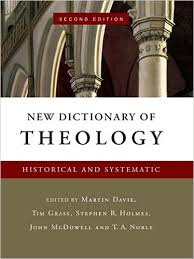
This is what an exhaustive commentary looks like. This commentary on the Minor Prophet of Zechariah is almost as large as the one on Psalms in this same New International Commentary series. I am not suggesting it is exhausting though. A judicious use of footnotes has made for a volume at once effective for scholarly pastors and academia. I can’t imagine the hours Boda must have put in here.

You would expect the Introduction to be massive in a volume so large, yet it is a manageable 45 pages. That means the bulk of the book is actual commentary on the text.

The Introduction contains a textual history as well as a competent historical background. A section called “Compositional History” overlapped with structure and was worthwhile. I couldn’t personally agree with some of his other conclusions on how the composition came together, but he still trusts the text. His section on the message of Zechariah was good as far as it went.

Again, it’s the actual commentary that will make this volume important for the next 50 years. It seems most every angle is discussed and it is almost encyclopedic. Still, as most will read it one text at a time, the depth will be appreciated. For that reason, I must give a strong recommendation.

I received this book free from the publisher. I was not required to write a positive review. The opinions I have expressed are my own. I am disclosing this in accordance with the Federal Trade Commission’s 16 CFR, Part 255.
The Message of Ezra & Haggai (BST) by Fyall

ezra

This is a helpful commentary on two books of the Bible that are not only less studied than others, but rarely seen packaged in one commentary. That is not to say that the combination doesn’t make sense; it does. As Robert Fyall explains, Ezra gives the exciting history while Haggai gives the prophetic voice.

The Introduction is a little longer for Ezra than Haggai, but that is partly because the historical setting is the same and needs no repeating. Particularly, his discussion on the structure of Ezra was fascinating. His selections for the leading themes of Ezra (God, worship of God, the people of God, Scripture and prayer) were well discussed and seemed spot on.

The shorter Introduction on Haggai still sufficiently covered similar territory. Again, the approach was well thought out.

The commentary proper was outstanding in the BST style that we have come to love and expect. In the Preface he pays homage to Derek Kidner’s fine volume on Ezra, but this is clearly a worthy companion to it. I’m sure glad to have it on my shelves when studying these two books, and I highly recommend it.

I received this book free from the publisher. I was not required to write a positive review. The opinions I have expressed are my own. I am disclosing this in accordance with the Federal Trade Commission’s 16 CFR, Part 255.
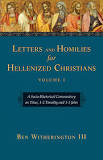
From The Pen of Pastor Paul by Daniel Hyde

paul

This new volume gives help for studying I & II Thessalonians. The style is sermonic rather than a regular commentary style. Whether reading for study purposes, or just for devotional reasons, you will likely enjoy it.

The approach may vary from one text to another, and it may not cover all that could be said, but what is said is of value. You do sense a pastor at work and that the approach was first to address his own congregation. You also pick up on his closely following the thinking of his denomination–the Reformed Church.

The book’s greatest feature is Hyde’s ability to trace Pastor Paul in the two letters. It strikes me that he may he on to something that I will want to think about in my own future studies of Thessalonians. Those sermons that highlighted the ministry were the most penetrating in this volume.

There is some repetition from one sermon to another as might happen in a preaching series, but this is a solid volume to pick up for your studies.

I received this book free from the publisher. I was not required to write a positive review. The opinions I have expressed are my own. I am disclosing this in accordance with the Federal Trade Commission’s 16 CFR, Part 255.

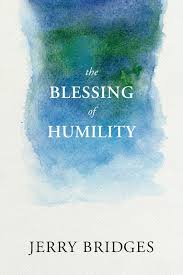
The Radical Pursuit of Rest by John Koessler

rest
This book blessed my soul. It said so much that needs to be said, yet we never hear. Along the way you get a good understanding of what the Bible tells us about rest. This book is not “get apart and rest”, or even “stop and smell the roses along the way”. No, though those type books are popular in our exhausting age, this book goes much deeper in the concept of rest. We don’t rest because we don’t even know what it is. John Koessler gives us exactly what we need to get our thinking straight.

He explains how our thinking is skewed these days and affects us as Christians and especially those in ministry. We fall into what he describes as “the productivity trap”. It has come to us from the business world. We now assume busier is better. We always want to exceed what we have done before. He says,”The church is driven by bottom line just as much as a company whose lifeblood is sales revenue.” We even to fail to see that worship is a wonderful thing and critically important, though we might feel we aren’t actually doing anything.

We get reduced to selling our brand–our particular church. We change our worship to consumerism. He says, “Visitors are treated like consumers and the church’s members are employees whose main job is to promote the brand. They do not worship; they produce. ” How incredibly perceptive is what he shares.

He used the Sabbath and Christ’s saying “I will give you rest”to explain the idea of rest. Rest is trusting God. He says, “Rest is a practice because the ‘work’ of rest is rooted in the finished work of God.”

There is so much more here. This book is exceedingly valuable. I wish all of us would read it and take it to heart.  

I received this book free from the publisher. I was not required to write a positive review. The opinions I have expressed are my own. I am disclosing this in accordance with the Federal Trade Commission’s 16 CFR, Part 255.

The Message of Joshua (BST) by Firth

joshua

It’s finally complete! Now every book of the Bible is represented in the BST series. It’s strange that Joshua would be the last to get coverage in the series, but it is an outstanding volume in any event. David Firth, the contributor of this volume, has shown in recent years his mettle as a commentator on the historical books of the Old Testament. His superb quality is upheld here.

The Introduction is unique, and yet a joy. The typical elements of an Introduction, which are of varying worth to readers, were skipped to focus on what he felt was the biggest issue in studying Joshua–the violence in Joshua. Since that violence is often parlayed into an attack on God, and a reason to completely discount Joshua, his approach has merit.

His conclusions are interesting. He argues that the violence is not as widespread as it sounded, and that the line was not as racial as imagined. Rahab and others seem to prove his point. Even his explanation that the land is owned by Jehovah as the overriding justification is helpful. This novel approach to Introduction is, in my judgement, a success.

The commentary proper exhibits those qualities you love when studying a text. Great insights and good theology abound. For example, read all he explains on the story of Rahab and see what I mean. He addresses the violence all through the text as well.

This is a fine commentary and I highly recommend it.

I received this book free from the publisher. I was not required to write a positive review. The opinions I have expressed are my own. I am disclosing this in accordance with the Federal Trade Commission’s 16 CFR, Part 255.