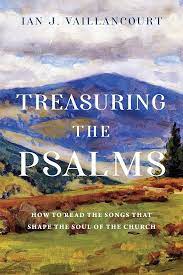
A treasure itself! Vaillancount is expert in biblical theology and the Psalms are indeed rich in that way. For some reason, I see this as a fine addendum to James Hamilton’s fine commentary on the Psalms in the EBTC series.
His Introduction whets the appetite for more and more is what we get. His chapters on reading Psalms canonically, as are what follows, are outstanding as they abound in both Structure and Theology. Throughout the text, specific psalms pop up and though he writes on a perceptible track you might not anticipate which psalm comes next. Fortunately, the scriptural index at the back of the book opens up this work to a whole additional approach. There’s good exegesis wherever he comments. You just can’t lose here.
Really, he opens up many pathways that you can begin and go even farther. When I do deep study on the Psalms, in addition to some favorite commentaries, I assure you this book will be in my “special” pile. This is the kind of book you don’t want to be without.
I received this book free from the publisher. I was not required to write a positive review. The opinions I have expressed are my own. I am disclosing this in accordance with the Federal Trade Commission’s 16 CFR, Part 255.
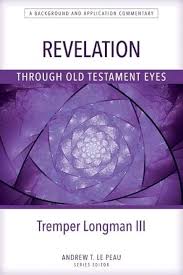
Tremper Longman in the New Testament? That was a surprise! With a little more thought I can guess why. There are many OT allusions in Revelation as well as the fact that Daniel is especially related to Revelation and Longman has written on it.
I must admit up front that I don’t share Longman’s overall prophetic position, but I expected it before I began. The final product is also what I expected.
While this work cannot serve as a main commentary choice, it is useful as an additional resource. Longman is clearly an OT expert and it shows. I often disagree with him even in his OT content, but there’s always good stuff to find as well. That ends up being true in this book too. Beyond some speculative material is solid OT insights.
The style of the work matches previous volumes in this series. Here the OT nuggets and comments on structure are far and away the best features here. No matter one’s perspective on prophecy, nuggets on structure are delightful to the Bible student.
Where I’d use this commentary is narrow (more so than others in series), but in those places it is rich.
I received this book free from the publisher. I was not required to write a positive review. The opinions I have expressed are my own. I am disclosing this in accordance with the Federal Trade Commission’s 16 CFR, Part 255.
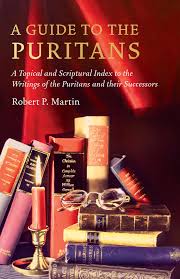
Here is a beautiful resource. It’s strikes me as both one of a kind and all you would need of its kind. The Puritans are quite a resource, but I’m in that number of those who wouldn’t know exactly where to turn to tap it. Now I have it!
The first two sections make up the bulk of the book. The first, topical index, shows what workers those Puritans were. I can hardly find a subject they didn’t cover (except some unneeded modern junk). This is a treasure trove. The second, the Scripture index, opens up the Puritans for sermon prep as well.
The ten other shorter sections are simply fun. They are for when your interest grows and you want to get to know the Puritans.
I can’t imagine the amount of labor Mr. Martin put into this resource, but we are all richer for. Tracking down just one thing that would only take a few seconds to find in this book that would have taken you hours shows you just what a treat we have here. We need this one. And then for icing on the cake, we have it in this beautiful hardback edition.
I received this book free from the publisher. I was not required to write a positive review. The opinions I have expressed are my own. I am disclosing this in accordance with the Federal Trade Commission’s 16 CFR, Part 255.
This latest entry in the Zondervan Exegetical Commentary (ZECOT) series continues to deliver the goods. Additionally, the series continues to provide us these nice volumes on individual books in the collection of Minor Prophets. The author of this one on Malachi, Dennis Tucker, has a nice collection of successful writings, though a bit more in the Psalms. He has worked on Jonah as well, though I’ve not used that one.
Immediately in the Introduction, he establishes what he feels is Malachi’s theme—“fidelity to the great King”. He gives conclusions that he well works out on things like author and date. I notice he is quite thorough in listing all the main opinions before his conclusions, which might be the concern of some. Far more important is calling balls and strikes on these plethora of scholarly opinions and that he does.
His historical analysis was succinct, but clear. When he tackled literary analysis, he especially highlighted “direct discourse (DD)” and saw it as a key to unearthing structure. He’s probably on to something there. This series has high expectations for structure, and I think he came through. it made sense, though other possibilities exist.
Somewhat related is the theological message of Malachi, and he gave us what he felt were the three most important things in that regard. Perhaps that section could have been longer, but it was still helpful. Next, he gave an outline of the style we have come to expect in this series.
The commentary was good throughout. The exegesis was sound and thorough. If you are looking for a single volume on Malachi, here’s you a great option. Many of these shorter prophetic books are packaged in commentaries, so this is a nice asset to have at hand. Perhaps I liked the volume on Nahum better, but this one can stand along side the other existing ZECOT volumes on Minor Prophets.
I received this book free from the publisher. I was not required to write a positive review. The opinions I have expressed are my own. I am disclosing this in accordance with the Federal Trade Commission’s 16 CFR, Part 255.
Here’s a nice commentary on what many would agree is one of the most challenging books of the New Testament. Thoughtfulness and tone are its two most prominent strengths. Its weaknesses are few, especially if you consider the aims of the series. I don’t see how you couldn’t consider this volume a success for faith formation.
If you read Peeler’s preface you will get a feel for her writing. She’s got quite a humble knack for self reflection. She’s tenacious in her digging for exegesis while remaining gracious to opposing viewpoints throughout. She might be a bit left of me theologically, but not nearly as much as I expected.
The Introduction was delightful. With the needed depth, it read so well. It led with probing, on-target theology. Hebrews’ place in the canon transitioned nicely to the always thorny issue of authority. While so much has been written on authorship, Peeler was surprisingly lucid in less pages than most major commentaries who rarely escape the fog. The other outstanding feature of the Introduction was her contribution to the discussion of Hebrews’ Warning Passages. From there I delved into her commentary on those passages and they were original without being strangely speculative. I’m not sure I fully agree with her line of reasoning, but that was the most new, interesting material that I’ve had to process on them in a long time.
All of the commentary was consistently good. Most of us have two or three of our favorite big exegetical commentaries as our go-to, but I’ll likely add this one to my short list.
I received this book free from the publisher. I was not required to write a positive review. The opinions I have expressed are my own. I am disclosing this in accordance with the Federal Trade Commission’s 16 CFR, Part 255.
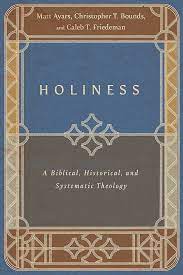
This book was not what I expected. Let’s just say that it isn’t J. C. Ryle 2.0 for sure. No, it was something else. Since I already own Ryle, though, maybe that’s a good thing. To be fair, I just didn’t read the blurbs carefully enough because it was exactly what it professed to be. It’s holiness from the Wesleyan tradition. Since Wesley’s day they’ve been joined at the hip with their teaching on holiness. To be sure, these authors have laid out a cogent case for their perspective. Agree, or like me, not, you will learn much in this passionate, yet respectful work.
There’s a bonus here as well. I love big picture biblical theology. The first chapter was incredible and could hold its own with any biblical theology works (and I’ve read a lot of them). Since the Pentateuch is so foundational to biblical theology, this chapter is key. Holiness is covered, but there’s so much more. Two more chapters finish the Old Testament.
Part Two covers the New Testament and as you probably can guess Paul’s writings are where they make the heart of their case. Here many will disagree, but at least they so clearly make their case.
Part Three takes holiness through church history. You can decide for yourself if it’s on target or skewed.
The final section traces holiness through the whole of systematic theology before turning practical in “the when and how of holiness”. I find the most sympathy with “the longer way”. Taking the whole as a call to maturity means the work is even not bereft of devotional value.
To those who follow the Wesleyan tradition, this must be a jewel. To rest of us it’s a window to look in. Perhaps we do not agree, but we must tip our hats. This is a good book.
I received this book free from the publisher. I was not required to write a positive review. The opinions I have expressed are my own. I am disclosing this in accordance with the Federal Trade Commission’s 16 CFR, Part 255.
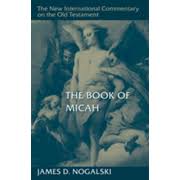
This volume picks up where his recent one on Joel, Obadiah and Jonah left off. The strengths and weaknesses are of necessity the same as he clearly worked on Micah at the same time. His Micah is on par with the best of that work (Joel).
His historical background section was my favorite of the Introduction. That time period is as fascinating as any novel could be and even covering the scholarly bases couldn’t diminish it. In unity of composition, authorship, and the text he goes scholarly to the hilt. You can imagine how that complicates conclusions. Both considering Micah among the Twelve and its relevance were better. He is quite expert on the Twelve and can plumb that line with ease. Structure, in my view, is weakly covered unless an outline is enough for you.
The commentary proper is what you’d expect, and what you’d want if the NICOT is a style you go for. Exegesis is nice. Scholarly issues deeply probed. Historical background expertly intwined. There’s some theology and, as usual, that may be a matter of taste.
If you want one major commentary, this will work fine. It’s newer and aware of what’s gone before. Theologically it’s in line with others in the series. Recommended.
I received this book free from the publisher. I was not required to write a positive review. The opinions I have expressed are my own. I am disclosing this in accordance with the Federal Trade Commission’s 16 CFR, Part 255.
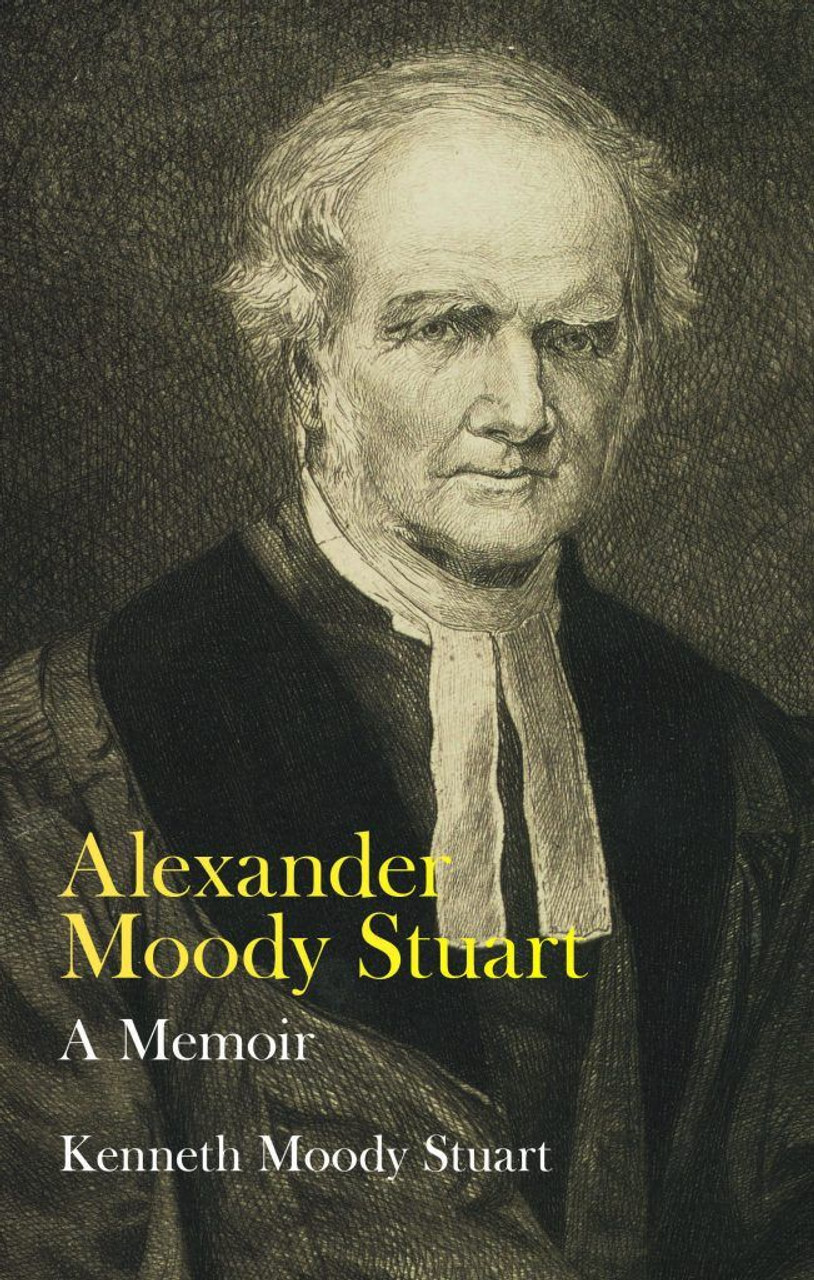
I have long loved these gorgeous Banner of Truth biographies and this one stands out. Spurgeon spoke highly of Stuart and I can see why. I’ve even used a few of his commentaries and they strike the perfect balance between being weighty and warm. This humble servant of Christ is worth knowing.
The biographer is the subject’s son. Often that is a disaster. He, however, never allowed the hyperbole to start rolling. His respect is through the roof, but this isn’t a work of hagiography. Though Stuart lived an exceptional Christian life, his weaknesses though not serious were clear to me in this work. He was gentle and I don’t think he enjoyed conflict even if he got drawn in to it. He never completely dodged anything, but he didn’t perhaps dig in his heels like some of his contemporaries did.
His early life is brief and the story really takes off in his college days. His conversion wasn’t spectacular, but incredibly interesting to read. Quickly, he jumps into serving the Lord. He begins his ministry in Edinburgh and marries. A love of missions soon takes shape. Later he becomes passionate for mission to Jewish people. Along the way, there’s thrilling exposure to revival.
You’ll cross other names as his life seemed to intersect with other awesome servants of Christ regularly. There’s devotion throughout as well as he is an encouragement toward prayer, service, impact and holiness. He is the kind of man I’d like to be.
Banner publishes or reprints one or more biographies a year. Making them part of my reading for the year has richly blessed me over several years. Count this one in that exalted company!
I received this book free from the publisher. I was not required to write a positive review. The opinions I have expressed are my own. I am disclosing this in accordance with the Federal Trade Commission’s 16 CFR, Part 255.
What volume could be more important than the one on Matthew in an NT series that aims at considering the book from an OT perspective? Matthew, as Capes explained, has been loved since its earliest days specifically for its OT connections. Additionally, Matthew particularly shines in this series’ unique design. Matthew has so many special features that pulling those out for observation is especially rich for us.
This series is not an exegetical commentary offering. Without apology, it’s a second level asset. We must, then, grade it on its aims. In that vein, it is clearly a winner. Beyond the obvious OT allusions, it is structure that best shines here. Whether macro or micro, Capes stays alert for important structure and offers real understanding to us.
Though its scholarly underpinnings are first rate, this book is engagingly written in a way that any Bible student could be enriched by it. It’s not written for scholars, but they will appreciate it. It’s more about what brings Matthew to life.
The Introduction is engagingly written. It doesn’t really answer any questions, but it tells you what they are. Probably most readers aren’t really after those questions anyway, and there are other major commentaries than can better address them.
Every chapter of Matthew gets a chapter here. Not every word or phrase is covered, but the big picture is beautifully told. I especially enjoy the type of things that get a shaded box to discuss. That’s where the treasure is in this book, so don’t miss them.
This is special series filling a real niche and this one on Matthew gets its due here. If you understand what you’re getting, you’ll love it.
I received this book free from the publisher. I was not required to write a positive review. The opinions I have expressed are my own. I am disclosing this in accordance with the Federal Trade Commission’s 16 CFR, Part 255.
Think of this book as a nice Introduction like you might find in a good commentary but presenting in a more appealing, accessible format. Its style extends past scholars only, while most of their issues are addressed, to other Bible students. The writing is easy to follow.
To my mind, the work covers much of the basics in the first few chapters. Chapter 8 on discipleship was thoroughly enjoyable and my favorite of the book. I might have discussed “salvation” differently in some ways, but he did a good job illustrating how big it is in these two books. The chapter on empire was interesting.
The design and even layout of the book is favorable. Several of the charts met a need too.
The book misses in some cases. The chapter that asks if Jesus is a feminist is a perfect example. Luke, as has long been noted, mentions women more often than other Gospels. That fact is, too, worthy of study. But why use the term “feminist”? It’s true that there has been a substantial bit of literature on feminism in the Bible, such as it was, that a comprehensive commentary might have to address, but a book to a wider audience would do better to avoid a word with so much baggage. The term means more than pro-woman and those modern notions are no where in Luke. Why write as if they were? I could argue the same way on the next chapter when he asks if Luke is a socialist. Luke speaks of the individual ethical use of money and just isn’t on the capitalist/socialist spectrum at all. It also sounds in these examples like we are taking our thoughts and judging Luke, and ultimately God, rather than the other way around.
Another problem for me is that in a work like this you can analyze Luke at the expense of the rest of the Bible. Of course, it’s good to study what he includes and excludes. But if the Spirit is the true author, then the inclusions and exclusions are better addressed theologically than with some discussion of Luke, say, just being a product of his time. Luke’s times are in play but mistakes because of it, for example, could not be.
My criticisms, to be fair, are not unique to Bird. After he traverses the landscape including some faint trails going no where, he finally concludes in a better place in most cases. I’m probably dwelling on the negatives and not sufficiently covering the far more numerous positives as well.
You’ll have to learn in this book; it’s inevitable. Luke/Acts is worthy of our learning. If your questions are exactly those scholarly questions that are hot at the moment, rather than just what you might ask usually, add a star to the rating.
I received this book free from the publisher. I was not required to write a positive review. The opinions I have expressed are my own. I am disclosing this in accordance with the Federal Trade Commission’s 16 CFR, Part 255.


 The Reagan Review