I’ve loved all the ZECOT volumes releases to date, but this latest entry by Gary Smith deserves special commendation. Perhaps he has grasped the format of the ZECOT the best I’ve seen so far. His work is good; his presentation is near perfect. I even enjoyed it more than his widely-received work on Isaiah (NAC/CSC). In that vein, I liked it more than a recent release on Ezra and Nehemiah in the NICOT series as well.
After a bibliography and translation, he dives into a strong Introduction. He begins with a clear presentation of historical background. It’s spruced up with some pictures and graphs that were particularly effective. His conclusions are conservative here as well as the following section on date and authorship. The concluding work on literary features is his best work here and, of course, matches the distinctive contribution of the ZECOT series.
The commentary proper is even better and continues the use of timely charts. Every section gives a main idea, the literary context, structure and literary form (rich), explanation of text ( what most are looking for), and canonical and theological significance (perceptive).
This is one to get!
I received this book free from the publisher. I was not required to write a positive review. The opinions I have expressed are my own. I am disclosing this in accordance with the Federal Trade Commission’s 16 CFR, Part 255.
Philippians is the latest new release in the rapidly unfolding complete revision of the time-honored Tyndale New Testament Commentary series. Brown replaces the somewhat controversial Ralph Martin volume that was itself a revision of his earlier work. Without doubt, that Martin volume took the most criticism in the series. For that reason, this is a welcome replacement.
This work, fortunately, is not going to be as controversial. I wouldn’t call this book riveting as it aims slightly more toward scholars than is typical of this series. At times, what Bible students or pastors would want takes a back seat to more scholarly interests. The author seemed quite knowledgeable, but took, perhaps, too academic an outlook for this series.
I also saw something, too, in this volume that I had not seen in any other I could remember. When I said it had an academic tone, it seemed as though she wrote for younger seminary students. She would explain what she was talking about as if it were the reader’s first encounter with the subject. For example, when discussing reconstructing the situation of the Philippians she had two full paragraphs on how to have a balanced approach in historical reconstruction. That would be helpful to a new student but perhaps others wouldn’t like it. She sounded like a professor teaching at many points.
I’m not suggesting this is a bad commentary just that it might not be for all tastes. She is an accomplished scholar and has written and edited major works. Perhaps that is more her forte than a work for Bible students and pastors or the typical TNTC user.
Still, she handled Philippians 2 far better than Martin did and has for sure superseded his work. I wouldn’t want this volume to be my only one for Philippians, but it one be fine as one of a few I’d consult.
I received this book free from the publisher. I was not required to write a positive review. The opinions I have expressed are my own. I am disclosing this in accordance with the Federal Trade Commission’s 16 CFR, Part 255.
This book replaces the thirty-year-old Charles Fensham volume that had been widely used. This new entry is much more geared to scholarly types than the more pastor-friendly earlier work. Most new NICOT volumes lean that direction, but this one seems to especially answer the detailed questions that scholars ask. I imagine scholars would rank it highly while pastors might only marshal information from it that would require them to put it together themselves. There is a place for such works, but make your expectations in that direction.
If you are after introductory issues, you’ll get over 90 detailed pages here. Some subjects will be more illuminating than others, but I can’t think of any omissions. The sections on the text and date cover many ideas with mostly conservative conclusions at until a discussion of the final compilation of the books. The discussion of setting covers some themes and structure clearly in the latest parlance. The final 2/3 of the Introduction covers historical background and is the best work here. With that information you can reconstruct the times with distinct advantage. As I understand it, themes of Second Temple Judaism are a specialty of the author. It shows. I thought it was good except when she put how Ezra and Nehemiah dealt with mixed marriages as harsher than, and perhaps a departure from, the Pentateuch. Could not the Lord for His Own purposes have led them to take a stronger stand during times of the acute stress of a seventy year captivity? Our scholarship can collapse under its own weight if we disconnect it from Whose word it is.
The commentary proper exhibits what we found in the Introduction. Expert scholarship that outranks its theology. The bibliography and copious footnotes show the author’s scholarly prowess. Application is not really in view. Take the mass of quality scholarship and make your own application . Then you will be able to squeeze out all this book has to offer.
I received this book free from the publisher. I was not required to write a positive review. The opinions I have expressed are my own. I am disclosing this in accordance with the Federal Trade Commission’s 16 CFR, Part 255.
We are far enough along now to see a consistent quality in the volumes of this RCS series even though each one is edited by a different individual. I suppose that redounds to the general editor, but I’ve not seen an inferior one yet. The design is perfectly consistent across the releases as well. Each volume in fact carries the same general introduction in case this particular volume is your first. So you see it hardly needs saying that this latest release on 2 Corinthians is good, but it is.
It’s worth noting, too, that this series is more attractive than many out there today. I’m no bookbinder but these large hardbacks look like they will hold up for years and the dust jackets are beautiful.
The best place where history meets commentary in this book is in the introduction to 2 Corinthians that Manetsch provides. It’s fascinating really. It allows you to see who wrote on 2 Corinthians in the Reformation period as well as what issues and disagreements arose. Apparently, the “presence” at the Lord’s Supper was the thorny issue between Luther and his cohorts and other Reformation personalities.
I always say that in the commentary proper there is unavoidable value judgments in this series. We would have no way of knowing what good selections he omitted, but at least we can say that he doesn’t put any duds in there. One thing I did notice, though, was more names of Reformation characters that I hadn’t heard of than usual. They were still good. Don’t worry—the usual suspects are here too.
Whether you are building a set or just interested in 2 Corinthians, you can’t go wrong with this one.
I received this book free from the publisher. I was not required to write a positive review. The opinions I have expressed are my own. I am disclosing this in accordance with the Federal Trade Commission’s 16 CFR, Part 255.
It took a few years for this latest volume to arrive, but this commentary on Matthew brings nearer to completing coverage of the New Testament for this NTL series. We can wish them well in light of all the series that never quite made it to the finish line. To be sure, this series is firmly on the critical side that collides with conservative readers like me and this volume is right in line with those expectations.
Still, I’ve often thought that consulting one from the other side of the fence has distinct benefits. Primarily those benefits come from unique observations on the text and sage theological insights. (My trusted conservative commentators, as helpful as they are, sometimes trip over each other carving out the same analysis). On that score, this series has had more hits than misses compared to other critical series. Label this volume on Matthew as a success on that specific criteria. For the record, people with more of a critical mindset will likely rate in highly across the board.
The Introduction with its discussion of sources and other such distinctively critical ideas is not to my taste, but it clearly presented. He also compares the voice of Matthew with Paul, James, and John though he imagines them in conflict at times. In a discussion of themes he suggests Christology, Scripture, and Eschatology. His synthesis of all he discussed seems off the mark to me, but offers some wry observations.
The commentary proper is as I described above where the best value is in suggestiveness and theological input. Fortunately, he isn’t so anti-miracle as many critical writers are. On several passages I checked I enjoyed what he had to say though I had to work around the critical perspective.
Mark this one down as a nice secondary resource!
I received this book free from the publisher. I was not required to write a positive review. The opinions I have expressed are my own. I am disclosing this in accordance with the Federal Trade Commission’s 16 CFR, Part 255.
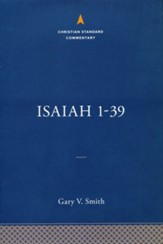
The Christian Standard Commentary (CSC) series continues its early trend of nabbing the most well-received volumes of its predecessor, the NAC series, with this release by Gary V. Smith covering Isaiah 1-39. He also did the Isaiah 40-66 volume, which some thought was even better, in the old series, so we can assume it will be soon to follow in this new series. To be sure, this volume was always ranked as one of the most competent conservative volumes in the old series and it gets updating here. As for me, I had often used it over the years.
The Introduction is thorough with particularly fine historical background. He describes what can be known about the man Isaiah, though the Bible does not present a strait forward history of him. Isaiah also does not always run chronologically, but he does a good job keeping you on track. He covers more information about the text than most will need, including showing that the Dead Sea Scrolls varied little from the Masoretic text. Since Isaiah has often been attacked by redactional critics, he does a convincing job encouraging confidence in the text including seeing clear evidence of structure in 1-39 as a whole. In fact, he works out a lot of fine information about structure in sections. He further discuss theological themes that makes sense for Isaiah.
The commentary proper bears evidence of a skilled commentator. Since there are so many sections that are hard to comprehend on first reading, he digs beautifully into the historical background as well as explaining the theology backed up with good exegesis. For these many good traits, this commentary is indispensable.
Though I would hate to be without it, I do have one problem with this commentary. I noticed it in the old edition, and though this update improves the commentary throughout, that problem remains. Just where you will most likely turn for commentary in the Book of Isaiah, such as 7:14 and 9:6 for example, is exactly where this commentary will fail you. In 7:14 that is quoted often every Christmas season, he never mentions Christ! He makes the surprising conclusion for a conservative commentary that the word often translated “virgin” means only a young woman and not necessarily a virgin. He does not seem to subscribe to the idea that many prophecies have a near and far meaning. When it comes to the near meaning, like what might be happening in Isaiah‘s day, he cannot be beat. You’ll have to go somewhere else for help with the other. In 9:6 he is unnecessarily vague about Christ though he mentions the future Messiah. Perhaps I am being hard on him because he is an acknowledged conservative scholar.
Caveats notwithstanding, I would never do important study in Isaiah without consulting this work. It is just simply too good a resource in many important ways.
I received this book free from the publisher. I was not required to write a positive review. The opinions I have expressed are my own. I am disclosing this in accordance with the Federal Trade Commission’s 16 CFR, Part 255.
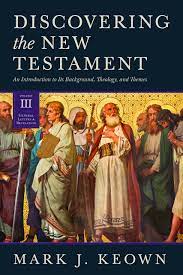
As I approached this volume, I returned to my reviews of the earlier two volumes that together with this one will comprise a major 3-volume set of New Testament introduction. I recalled how impressed I was with the two previous releases and immediately thought that the only question would be if this volume could maintain the high quality. I’ve seen multi-volume sets by one author run out of gas before the end; haven’t you? That’s not the case here and that’s all the review owners of the previous volumes will need to desire this one.
The design remains unchanged and that allows a great template for us. He gives quality help throughout. He isn’t speculative. For example, after telling us the major positions on the authorship of Hebrews, he admits we really don’t know. He is balanced. For example, when explaining the millennial positions in Revelation, he encourages us to not put a “preset grid for interpretation”, though he is sympathetic to futurist perspectives. He is consistent throughout.
At this point, it is, perhaps, more important to gear this review toward the three-volume set since I suspect that is how it will be marketed going forward. As with previous NT introductions , this one presents great background information. How, though, does this set stand out? The hint is in the subtitle where with background we find “theology and themes”. To tell the truth, that can often help pastors and Bible students even more than the background stuff. Background shows you where it came from while theology and themes tell you where it’s going. That we need to know and this work will guide us there.
Let the other such NT Introductions step aside. There’s a new top dog in town.
I received this book free from the publisher. I was not required to write a positive review. The opinions I have expressed are my own. I am disclosing this in accordance with the Federal Trade Commission’s 16 CFR, Part 255.
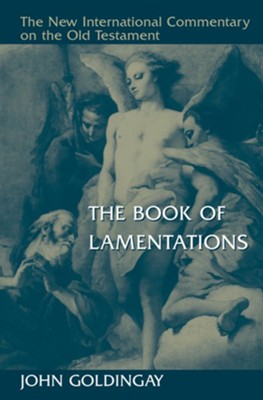
Hard on the heels of Goldingay’s recent NICOT volume on Jeremiah comes this one on Lamentations. Who better to write on Lamentations than one who just finished a major work on Jeremiah? While not a sequel, the two works are natural companions. Fortunately, he didn’t run out of steam from exhaustion with the major labor that work on Jeremiah surely required. Perhaps the genre difference in Lamentations sparked his interest as he writes with obvious vigor.
When I reviewed the earlier Jeremiah work, I felt he was more overtly conservative or at least more sympathetic to such conclusions and that made it for me his best work to date. Perhaps he wouldn’t agree at all with my perceptions, but I have them nonetheless and continue to have in this Lamentations volume. If your view of Scripture is like mine, that will make this volume much more valuable to you.
Beyond his conclusions, questions of scholarly work and investigation can never be doubted in his work. No one would ever accuse him of laziness. He is at his best in addressing questions that interest scholars. Some of those questions are more esoteric to, say, pastors or general Bible students, but I feel that he has written more profitably for such audiences without sacrificing the scholarship that is his thing. Again, more so than some other works of his. I’m other words, the work isn’t dry.
While there isn’t a section called structure in the Introduction, he covers it effectively in “the unity and interrelationship of the poems” and following. Genre works into that discussion beautifully here and is likewise explained. Since Lamentations describes the devastation of 587 B.C., the historical background is straightforward yet well presented here. He wisely comes out for the MT though it is through something of a circuitous journey. The theology and thematic sections culminating in the questions of theodicy are rich. In fact, that is where the treasures of Lamentations lay for pastors and Bible students.
The commentary proper is on target. Take for example my favorite passage in Lamentations in chapter 3 where hope rises precisely where all looked lost. Amid the scholarship, he made me pause and thank my Lord for His steadfast love (Hesed). That’s striking the right balance in an exegetical work for sure. Another good one!
I received this book free from the publisher. I was not required to write a positive review. The opinions I have expressed are my own. I am disclosing this in accordance with the Federal Trade Commission’s 16 CFR, Part 255.
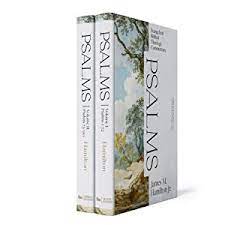
Mark down these two volumes on Psalms by James Hamilton Jr. as my new favorite in this newer Evangelical Biblical Theology Commentary (EBTC) series. Strangely enough, in this series that emphasizes theology it isn’t the theology that makes me rate it so highly (though the theology is excellent), but the overall approach to the Psalms themselves. In short, he sees an overarching structure and unity that presents a purposeful, carefully planned presentation rather than a loose collection with no more interconnection than a hymn book. You know how a hymn book works—each new edition drops a few songs while adding others with no loss other than if the changes involved your favorite song or not. There’s no overall theme to affect. Hamilton doesn’t want us to see the Psalms that way. I’m convinced he’s right.
More than the proclamation that the Psalms are a unity and interconnected, the details that Hamilton marshals and presents are profound. As you read, you catch yourself saying, of course that’s right! You might might disagree on a few details but there are too many to dodge. I’ve always felt this must be true of the Psalms and how I enjoyed reading the labor shown here to work it out.
There’s a second reason to love this commentary. It stands above the pack in an even more fundamentally important category. I’ve had the privilege to review many commentaries and have had occasional opportunity to declare that a particular commentary presents well-argued conservative conclusions. On a high level that’s true here too, but there’s more. I can’t recall ever reading such an impassioned exhibition in a major commentary series for the necessity of seeing Scripture as the inspired Word of God. Scholarship frowns too often on childlike faith and so even many scholars who possess such faith write as if they hear the eggshells breaking under their feet. They write in a subdued manner as if someone might show up and make them sit in the corner, or worse, call them out as not a REAL scholar. Hamilton didn’t take that defensive position. Let’s just say he was on offense and turned the discussion on its head so much so that it’s those other scholars who can take their place in the corner. What a breath of fresh air! He wasn’t brash, but he just brought the discussion back into the light of day. We hold a book in our hands that is a production of the Almighty. How can we believe less than what he shared here? How did scholarship lose sight of the big picture? I have the highest admiration for what I read here.
Everything else was on target in this commentary. The exegetical depth of the comments are as far as the parameters of the series allows and give real help. Why should I say more? You can already tell these two volumes are 5 star all the way to me.
I received this book free from the publisher. I was not required to write a positive review. The opinions I have expressed are my own. I am disclosing this in accordance with the Federal Trade Commission’s 16 CFR, Part 255.
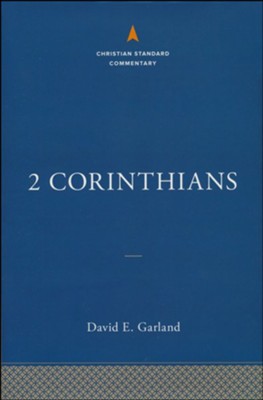
David Garland is a busy scholar. In addition to this revision of his older NAC volume on 2 Corinthians for the emerging Christian Standard Commentary (CSC) series, he has just released a new commentary on Romans for the TNTC series. In resent years he’s written well received volumes on the Gospels as well. If you think about it, it’s an elite group of scholars who write multiple commentaries. I guess that is for good reason as it’s likely success in earlier commentaries that catch the eye of series editors and make for further opportunities. Then, of course, there’s the work itself. Ever notice how many announcements for commentaries in all the major series never actually appear? Back to Garland. He’s good and he’ll keep getting these opportunities as long as he wants to do them.
I’ve used the first volume of this work to advantage, but as I read the introduction of this revision I kept thinking that Garland is really good, even sneaky good. There’s quality and clarity in his straightforward, yet incisive writing. It’s the accumulation of good things for the reader every few pages that makes it so substantial. For example, in a few pages Garland took me to Corinth. While that might not be a place you’d actually want to go, it’s a place you much go to understand the epistle. Later he will take you through a discussion of the unity of the letter. You know that yawn-inducing trek so many scholars take you that goes at best in circles. I loved it this time! He was gracious yet I envisioned a bomb going off and wacky scholarly arguments flying through the air as I read. It only took a few pages to prove how disingenuous such arguments are at best and how delusional they really are.
The commentary itself is similarly golden. I offer his discussion of 4:16-18 as proof. Read it. Now that’s commentary writing. There’s plenty more too.
If pastors, teachers, or dedicated Bible students could only have one volume on 2 Corinthians, here’s the perfect choice.
I received this book free from the publisher. I was not required to write a positive review. The opinions I have expressed are my own. I am disclosing this in accordance with the Federal Trade Commission’s 16 CFR, Part 255.