Philippians and Philemon (NTL) by Cousar

book ph ntl

This volume by Charles Cousar in the New Testament Library (NTL) series covers Philippians and Philemon. I’ve read some unfavorable reviews on this book mostly owing to its brevity. While that charge is true, I came away rating this book better than I expected. It does hold to the familiar NTL pattern, is less critical than I anticipated, and provides insight.

After a bibliography, we have an Introduction to Philippians. He begins by acknowledging the theme of joy. (How could we trust any book on Philippians that ignored the theme of joy?) He introduces us to both the city and the church at Philippi. Its history in the Roman Empire, as well as its significance, are clearly reviewed. He refers, as he has at other times, on the fondness Paul has for this congregation. When he moved to the subject of authorship and integrity of the letter, he admits that the Pauline authorship is rarely questioned. Though he mentions a few absurd prognostications about authorship, he seems comfortable with Paul. As to place and date of writing, he presents briefly the evidence for Rome, Caesarea, and Ephesus before cautiously choosing Ephesus for this commentary. He explains Paul sending this letter as a thank you to the Philippians. He discusses structure and suggests an outline. As with any of these Philippian commentaries, he discusses the opponents. I thought he provided his best observations when he discussed the message of the letter. In less than 70 pages, he provides a commentary on Philippians that is worth consulting.

I felt the Introduction to Philemon was simply too short and discussed too little. What he did discuss, though, was some of the things that you wrestle with in such an introduction. The commentary on Philemon was unacceptably brief.

While this volume may not rate as highly as some in the series, it’s by no means a throwaway volume, at least on Philippians. If you are filling out your NTL collection, there is still value here as this author does his best work in providing nuggets for the preacher.

I received this book free from the publisher. I was not required to write a positive review. The opinions I have expressed are my own. I am disclosing this in accordance with the Federal Trade Commission’s 16 CFR, Part 255.
First and Second Chronicles (Interpretation) by Tuell

book chron i

Here’s a moderately critical work that’s one of the best in the Interpretation Bible Commentary series. Steven Tuell, who has also written a succinct commentary on Ezekiel that has been well received, writes on First and Second Chronicles here. Though you might consider a work of 250 pages on both books of Chronicles a little too brief, he makes good use of every page. To my mind, the best contributions of this book are the theological reflection on and a big-picture presentation of Chronicles.

The Introduction begins by opining the diminished acceptance of Chronicles compared to other books of the Bible. He explains that to many Chronicles is little more “than a dull rewrite of Samuel and Kings”. The author works against that comman viewpoint and champions Chronicles as a unique book of the Bible that covers the broadest historical range of any book in the Bible – from Adam to the Babylonian Captivity. Though I don’t care for the label “Deuteronomistic history” as a description of Joshua through Kings, he gives good explanation of how they interact, are similar, and are different. He highlights how Chronicles uses other scriptures widely. In fact, he says, “the most distinctive feature of Chronicles is the large degree to which it reproduces other biblical texts”. He looks at Chronicles as it relates to Ezra and Nehemiah, and from there launches into an explanation of date and composition. The dating he explains is more conservative than what you might expect in a more critical series. The brief section on the theology in Chronicles is just a preview of what you will find in the commentary itself.

While this commentary might not be my first choice when I’m digging into a passage in Chronicles, I still see it as a great second choice and one that I will enjoy consulting. What I see in the commentary proper is of distinct value.

I received this book free from the publisher. I was not required to write a positive review. The opinions I have expressed are my own. I am disclosing this in accordance with the Federal Trade Commission’s 16 CFR, Part 255.
Understanding the Ecology of the Bible-An Exciting New Carta Introductory Atlas

book carta ecology.jpg

If you’ve had the privilege of reading some of these attractive introductory atlases published by Carta, you know how rewarding they can be. This latest one on the ecology of the Bible by prolific writer Paul H. Wright, who excels on works of Bible geography, history, and even a major Bible Atlas, is one of the best yet. Mr. Wright has already produced in this series of introductory atlases works that include an overview of the New Testament, one on geography, one on biblical kingdoms and empires, and one on biblical archaeology. Mastering these works by Mr. Wright will greatly expand your Bible study.

Don’t for a minute think of 48 large pages on the ecology of the Bible as an esoteric effort. So much is missed in Bible passages when you miss these details. For many of us, the natural world and ecology we live in are so different from that of the Bible that we can easily miss even the main flow of the story itself. I believe a thorough perusal of this work would be the equivalent of a college class. Fortunately, the writing is accessible and even beginners can glean so much here.

It’s thorough enough to be effective as I didn’t see any ecological or natural world item that was overlooked. The pictures were so beautiful that I would catch myself thinking, wow, I’d like to be there! The maps are all top-notch and what we’ve come to expect in any work bearing the Carta imprint. Again, I especially adored this title and I’m a fan of all these Carta introductory atlases. Look this one up!

I received this book free from the publisher. I was not required to write a positive review. The opinions I have expressed are my own. I am disclosing this in accordance with the Federal Trade Commission’s 16 CFR, Part 255.
Jeremiah and Lamentations (Reformation Commentary on Scripture)

book jer rcs

Don’t think of this as a curiosity piece. There’s real value here as previous generations have distinct contributions they can make to our understanding of the Bible. The Lord has spoken in every generation. This large, beautiful volume is the latest release in the Reformation Commentary on Scripture series. Covering Jeremiah and Lamentations, this book of 600 large pages makes many important observations that can enrich our Bible studies.

I can’t imagine the amount of research that was required by J. Jeffery Tyler to produce this volume. Without a doubt, this book also has great historical value. The trends in the Reformation become clear as a more careful return to the text of Scripture is apparent in their work. My only problem with calling this a historical work would be a possible misinterpretation that you couldn’t use it as a commentary. For my time, this volume’s expository light is its greatest asset. In addition, the Book of Jeremiah is always one of those where you would appreciate a little more help.

All of this is not to say that you will fail to enjoy the historical contribution this book makes. There is a general introduction that overviews the Reformation and explains what this commentary series is trying to accomplish. There’s also a wonderful introduction to Jeremiah and Lamentations in the Reformation. I enjoyed reading it. There were the names I was very familiar with and those I had never heard of it at all. All facets of the Reformation were fair game for this work and even the Anabaptists were brought into the commentary. Some of those unknown names reminded me that all of our heroes are not household names. Many more than we know are worth knowing. When the introduction explained the main themes that the Reformers often discussed it’s easy to see that those probably are the true themes of Jeremiah and Lamentations. Maybe new is not always better!

Every passage gets an overview and commentary from the Reformers in the commentary section. Again, it must’ve taken so much sifting to cherry pick for us readers the best of the bunch. The editor doesn’t excessively quote any one Reformer and that variety strengthens the work.

I’ve only reviewed a few of the volumes in this series so far, but I really like this one! When complete, this series will be a force to be reckoned with. In the meanwhile, don’t miss this great commentary on Jeremiah and Lamentations!

I received this book free from the publisher. I was not required to write a positive review. The opinions I have expressed are my own. I am disclosing this in accordance with the Federal Trade Commission’s 16 CFR, Part 255.
Understanding the Twelve Tribes–A New Carta Resource!

book carta 12

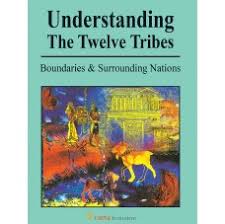
This volume is another of the outstanding, profusely illustrated resources published by Carta. At this point, they have several of these large paged (9 X 12”) in a similar design that will provide the opportunity for much pleasurable study for Bible students. This new volume by Menashe Har-El is a fascinating treatment that will open up your thinking to all kinds of new things you didn’t know. The author is a biblical geography expert who has taught and written widely. This work illustrates several biblical passages that only gets a cursory look in other volumes. The word “fascinating” is not an exaggerated description.

The subtitle “Boundaries and Surrounding Nations” articulates the value of this book. After a broad introduction, the geographical division of the land among the tribes at the time of Joshua is explained. Some boundaries were natural landmarks while others were erected with piles of stones or fences. There’s further development of the tribe of Dan because it went to the coast and interacted with the area that the Philistines came and possessed. Dan also inhabited the far north of Israel.

From there, the book surveys the boundaries and major neighbors of Israel. First, we have a fascinating look at Egypt. From there we learn about the Amorites, more details about Egypt because of the interaction with Moses and the Exodus, Dedan and Tema (modern Saudia Arabia), and the land of Edom (later called Petra).

Several other people groups and nations are mentioned, and many Scriptures are quoted. These places are too quickly skimmed over by Bible students. In truth, they impact a large swath of Scripture and this book gives incredible help to our understanding.

The book is filled with incredible Carta maps! Without doubt, Carta maps are the best in print today. They are colorful, accurate, use miles/feet for measurement, and specifically illustrate what the author is discussing. The map of ancient routes in the holy land and the one showing the boundaries of the Tribes are exceptional. Other maps effectively bring alive the boundaries of Israel. Additionally, the pictures are beautiful and outstanding throughout.

Do you love digging in your Bible studies? You will want this book!

I received this book free from the publisher. I was not required to write a positive review. The opinions I have expressed are my own. I am disclosing this in accordance with the Federal Trade Commission’s 16 CFR, Part 255.
Old Testament Wisdom Literature by Bartholomew & O’Dowd

Book OT lit

This book exceeded the expectations I had when I picked it up. Not that I imagined it wouldn’t be a good volume, but that it would just be another introduction to the poetic sections of the Old Testament. What I found instead was a look at only those poetic books that could legitimately be called wisdom literature – Job, Proverbs, and Ecclesiastes. The unique contributions of those three books, as well as wisdom in the Old Testament as a whole, the ANE background, how Jesus both carried on and fulfilled Old Testament wisdom, plus all the theological implications of wisdom, are found in this well-written book.

The book begins with an introduction that explains why the subject of Old Testament wisdom is important. Chapter 1 introduces Old Testament wisdom itself including its historical background. Chapter 2 tackles the ancient world wisdom. I often think those discussions are overblown by scholars because they always mistakenly assume the Bible draws from other sources rather than the other way around, but the scholarly review is still well done here. Chapter 3 ties wisdom into the genre of poetry in the Bible and explains a lot of technical aspects of parallelism and other devices of poetry.

When the book reaches chapter 4, in my opinion, it really blossoms. The chapter on Proverbs that reviews structure and design, and how wisdom is essential to it, makes for revealing reading. I loved it. Chapter 5 is a continuation as it looks at what the authors call “Lady Wisdom” and “Dame Folly”. These two chapters together really added something to my understanding.

Chapter 6 on Job was just as provocative. They dug in with so many wonderful thoughts that would help someone who was diving into the book of Job. Chapter 7 probes the scholarly debate over Job 28. I personally don’t see the problem that many scholars do, but it’s well explained here. Though it is likely just a matter of personal taste, I didn’t get as much out of the discussion on Ecclesiastes as I did on Proverbs and Job. I disagreed with both some presuppositions as well as some conclusions. Still, there were nuggets to find.

Chapter 10 took us to Jesus as the Wisdom of God. Wisdom as a controlling focus in the New Testament is not one I can accept to the degree that some people do, yet it’s equally true that wisdom has not vanished from the discussion when we enter the New Testament. You can do your own weighing of the subject in this chapter. The final two chapters are about theology. There’s much to gain as you read these two chapters, plus they give some guidance on how our Western eyes often miss the point.

Bartholomew and O’Dowd really pulled off the production of a good book here. It’s my new favorite introduction to Old Testament wisdom literature.

I received this book free from the publisher. I was not required to write a positive review. The opinions I have expressed are my own. I am disclosing this in accordance with the Federal Trade Commission’s 16 CFR, Part 255.
Lexham Geographic Commentary on the Gospels

book lexham comm.jpg

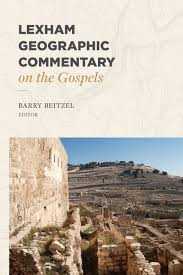
I call this book a discovery. What is uncovered is the fact of how much we need this book though I had no idea of its importance until I saw it. There’s an incredible amount of geographic information in the Gospels that affect the understanding of passages. This attractive volume will be a handy reference to answer every question about geography, questions that even major commentaries often overlook, that you will encounter as you read the Gospels.

A fine team has been assembled to put this book together. Barry Beitzel, who has already produced well-received Bible Atlas materials, is the editor and head writer in a group that includes Paul Wright, Todd Bolan, J. Carl Laney, and John Beck among others. You might call that something of a dream team.

A quick scan of the contents page will show you the Scriptures addressed in the commentary. Once you peruse these chapters you will quickly see how central geography’s role was in each one of them. In addition to the fine writing, there’s plenty of helpful maps, diagrams or illustrations, and pictures. As one who owns most every Bible Atlas in print today, I’m pleased to report that the maps and pictures are not just repeats from other works. In other words, it will truly give you an additional benefit beyond your favorite outstanding Bible Atlas. I especially appreciated some of the pictures of modern archaeological dig sites too.

The book achieves quality scholarship, copious footnotes, and real theological development of the geographic material. The first thing I thought when I picked it up was – this volume looks nice! Using it only strengthened that assessment. I suspect that this will become a greatly-loved and widely-used resource.

I received this book free from the publisher. I was not required to write a positive review. The opinions I have expressed are my own. I am disclosing this in accordance with the Federal Trade Commission’s 16 CFR, Part 255.
The Gospel of John by Frederick Dale Bruner

book john bruner.jpg

Here’s a commentary that’s just a little different. The author, Frederick Dale Bruner, who was well known for his earlier two-volume commentary on Matthew, has a writing style that is at once thoroughly academic and personally chatty. How else could I describe this commentary of over 1200 pages where Mr. Bruner seems to be having such fun? I’ve reviewed a lot of commentaries and I don’t think I’ve ever before described the author as having fun. But that is my distinct impression in this case.

The label I’ve heard (“mildly critical”) seems accurate. He follows a few critical theories that I couldn’t accept, yet in other instances he writes beautifully about the deity of Jesus Christ. His preface, again the most personal that I’ve read in a major academic commentary, almost reads like a stream of consciousness flowing happily along. You’ll read about his family and what must be an unusually large social network. He apparently loves people, and with all the interesting people that Christ will encounter in the Gospel of John, that probably makes him an ideal commentator.

There is no introduction to the Gospel of John, which is quite surprising for a major commentary. In any event, the publishers gave him all the room he wanted in the commentary itself. I don’t feel that the more academic subjects that are usually found in an introduction would be his strength anyway, as interesting theology is his forte. I’ve even read that some major reviewer’s think that he misfires occasionally on the exegetical level, but I believe that some well-done theological commentaries are excellent to use on the second pass after we’ve already used our exegetical ones. Maybe it would be fair to call him a modern, mildly critical Herman Ridderbos.

I’ll still reach for D. A. Carson, Leon Morris, and Edward Klink first on the Gospel of John, but I am genuinely happy to have Mr. Bruner on hand to draw out theological reflection and to give me something that the others will not. I found unique angles in every passage I surveyed. Eerdmans went all out with a nice hardback in a very attractive dust jacket. You should check out this lively, bubbling commentary!

I received this book free from the publisher. I was not required to write a positive review. The opinions I have expressed are my own. I am disclosing this in accordance with the Federal Trade Commission’s 16 CFR, Part 255.

Colossians (NTL) by Sumney

book col ntl

Jerry Sumney, a scholar who has written widely on various Pauline Epistles, gives us this commentary on Colossians in the New Testament Library (NTL) series. I had heard from some well-known reviewers that this volume was “thorough” in its presentation while its outlook was “moderately critical”. Now that I have this book in my hand, I find those designations perfectly accurate.

The author provides a shorter introduction to Colossians, but one that fits with several others I’ve seen in this series. The bibliography, though, was longer than some others. In the Introduction, he jumps first into authorship and date. He reviews many factors to be found in Colossians, such as Colossians being the first New Testament letter that discusses the household code. He thinks that Colossian’s theology is different than the New Testament letters that he feels are undisputed to have Paul as the author. He feels that the Holy Spirit is little mentioned while the approach to Christology goes farther than any other letter. He says that is the key to understanding the book. No doubt, he is right as Colossians teaches us about the preeminence of Christ. The author falls on the side of pseudonymity regarding Colossians but says that authorship has no determination on a New Testament letter being authoritative. Surprisingly, he dates the letter rather early.

Next, he discusses destination, followed by the false teaching present in Colossae, though that is briefer than I would have thought. He covers all he has to say on the textual history in two paragraphs. From there, he dives into theological themes including soteriology, Christology, eschatology, and spirituality.

The conclusions presented in the Introduction helps you to anticipate the direction he will go in the commentary itself. He introduces each text, prints the text, gives copious exegetical notes, and then provides detailed commentary on each verse. Again, whether you agree with every conclusion or not his work is quite thorough and written clearly.

I really can’t think of a better commentary on Colossians from the critical side. It’s up-to-date, not as extreme as some, and you can leave its pages with a clear understanding of how critical scholarship approaches Colossians today. This volume totally lives up to what we have come to expect from the NTL series.

I received this book free from the publisher. I was not required to write a positive review. The opinions I have expressed are my own. I am disclosing this in accordance with the Federal Trade Commission’s 16 CFR, Part 255.

Deuteronomy (OTL) by Nelson

book deut otl

Prolific commentator Richard Nelson has given us this volume on Deuteronomy in the Old Testament Library (OTL) series replacing the earlier work by Gerhard von Rad. Though he is without doubt from the critical side, his work here is widely considered one of the most mature from that viewpoint. In fact, I’ve seen several scholars rank it highly. Its critical analyses are much more up-to-date than the von Rad work it replaced. We have Jack Lundbom for an exhaustive, huge exegetical work and Patrick Miller with a briefer homiletic approach from the critical camp, and that leaves Nelson standing in the middle with the more typical exegetical commentary. Though I clash with the critical viewpoint in many ways, I found Nelson clear and able to provide me a solid understanding of how critical scholarship both looks at and affects the study of the Book of Deuteronomy.

After a brief bibliography, Nelson gives us 12 pages of introduction on Deuteronomy. While that is a little short, he made use of every word in some paragraphs that contained an incredible amount of information that could be mined. After a huge paragraph that opens the discussion of what Deuteronomy is, he enters into a section he calls “shapes and structures”. In this section, he pulls out many nuggets to help you approach your own study of Deuteronomy. He talks about the linguistics of the book and all kinds of structural information. He addresses the final form of the book and while admitting the structure is complex, he makes many astute comments. As you might guess, I couldn’t agree with much of what he said about the composition of the book, but he’s no more extreme than many other writings on Deuteronomy that I’ve seen. He really shined on the section called “theological themes”. I can easily agree that he has suggested many of the main themes found in Deuteronomy while giving insights and references to help.

The commentary proper is a positive representative of the OTL style. He gives the text, a lot of exegetical footnotes, some opening comments on the passage that discusses theme and structure, and then commentary on the text itself. Depending on your theological background, you might be looking for different things in this commentary than other readers. If you know what you’re looking for in an OTL volume, there’s no doubt you will find it here.

I received this book free from the publisher. I was not required to write a positive review. The opinions I have expressed are my own. I am disclosing this in accordance with the Federal Trade Commission’s 16 CFR, Part 255.