The Letters to Timothy and Titus (NICNT) by Towner

book nicnt pastorals

This book by Philip Towner is an impressive entry in the venerated New International Commentary on the New Testament (NICNT) series. Towner had already published on the Pastorals before this major work, and was known for assisting Howard Marshall on his earlier ICC work. It’s clearly a top-5 work on the Pastorals today and is the favorite of many. Even though, I couldn’t agree with his egalitarian viewpoint, I can’t deny the quality of his scholarship and the skill of writing in this work.

He provides a huge Introduction running through page 90 with a substantial bibliography preceding it. Though he’s not too keen on the label “Pastoral Epistles”, he sees value in addressing the three letters together and takes that approach in this Introduction. After addressing a few preliminary issues, he jumps into the major division in scholarly discussion on these letters–did Paul write them, or did even the same author write them ?–and he lays out the battle lines clearly. I’m more confident of the traditional viewpoints than he is, but I enjoyed his evenhanded explanations. Authorship issues bleed into historical setting and he upholds his quality discussion throughout. He covers theology, structure, and other introductory matters with great depth as well.

As you would expect in a NICNT volume, the commentary is on the English text with deeper exegetical comments in the footnotes. What you end up with is an usable volume with access to more specialized exegetical matters. The commentary itself is top-notch and enlightening for the reader. Towner used the NICNT format to good advantage and provides us with a volume well worth checking out. I recommend it!

I received this book free from the publisher. I was not required to write a positive review. The opinions I have expressed are my own. I am disclosing this in accordance with the Federal Trade Commission’s 16 CFR, Part 255.

The Book of Job (OTL) by Habel

book otl job

I’d have to rank this commentary as one of the best in the Old Testament Library (OTL) series. Whether it be on the level of theology or commentary. Norman Habel succeeds. He had written earlier on the Book of Job, but supersedes all his previous efforts here. Even better, this book is more conservative than several others in this series.

The Introduction is more in-depth (70 pages!) than several others in the series too. It rivals more exegetical works in that regard. He begins his Introduction by not disguising that he agrees with others who see Job as a literary masterpiece. He explains, too, the challenge of Job having so many unique words and idioms. He provides a lengthy explanation of the narrative plot and sees three main movements. In his discussion of integrity, setting, and date, he see the major place a critical orientation shows up–his willingness to rearrange chapters 21-28. His literary features and their significance section gives much food for thought in structural issues. He finishes his probing analysis in a message and meaning section.

The commentary proper is rich in theological insight. I look forward to having this volume at my disposal in all my future studies on the Book of Job. I would categorize it as indispensable to building a library for Bible study!

I received this book free from the publisher. I was not required to write a positive review. The opinions I have expressed are my own. I am disclosing this in accordance with the Federal Trade Commission’s 16 CFR, Part 255.

I & II Samuel (OTL) by Auld

book otl sam

Here’s one of the more substantial volumes in the well-known Old Testament Library (OTL) series. A. Graeme Auld has been turning out scholarly writings for a long time and is highly respected, particularly in critical circles. I often don’t agree with his critical conclusions, but must admit that he can make some brilliant observations and has a keen eye for what others miss.

After a bibliography, Auld jumps into an Introduction that begins by rightfully seeing I & II Samuel as the Book of David. To his mind, all the other characters are merely the supporting cast. He explains how “no other biblical books in such detail take us into the lives of their principal characters and families.” Next he delves into textual issues of Samuel. That takes him onto the slippery slope of sources and some opinions that could never be substantiated.

By page 20 we are into the commentary proper that runs all the way to page 630. This is the section where the nuggets lie in this book. Again, I couldn’t possibly agree with all his critical presuppositions and conclusions, but I appreciated his ability to point out things that I found no where else.

I love a commentary that can spur thinking even if there are things I disagree with. For that reason, I find it easy to recommend this commentary.

I received this book free from the publisher. I was not required to write a positive review. The opinions I have expressed are my own. I am disclosing this in accordance with the Federal Trade Commission’s 16 CFR, Part 255.
Mark (TNTC) by Schnabel

book tntc mark

Here’s a brand new volume in the second cycle of revisions on the beloved Tyndale New Testament Commentaries (TNTC) series. The new editor, Eckhard Schnabel, contributes this new volume. I really am not familiar with Schnabel, but have thought that whoever had the task of filling the shoes of Leon Morris really had their hands full in light of his incredible scholarship. After perusing this volume, I have great hope for a series I really respect.

There’s no doubt this volume really improves on the earlier Cole volume. Schnabel was given more space and made good use of it. I find it superior to its competitors in other similar series as well. I’ve just recently reviewed the IVPNT volume on Mark and much prefer this one.

His Introduction begins by discussing Mark’s place among the Gospels and its history of interpretation. He describes and personally holds to the priority of Mark. He reached conservative conclusions on authorship, date, and historical reliability. His section on theological emphases is well done and he ends with a clear outline.

The commentary proper makes up the bulk of the book and is not only helpful, but well written. That is a winning trait missing in many commentaries. Every passage I reviewed was never superficial nor prolix. I thought many details and good points were brought out for the reader.

For its target audience, this would have to be highly rated. I recommend it!

I received this book free from the publisher. I was not required to write a positive review. The opinions I have expressed are my own. I am disclosing this in accordance with the Federal Trade Commission’s 16 CFR, Part 255.
Deuteronomy (NAC) by Merrill

book nac deut

Eugene Merrill is a name you can trust. Without fail, his writings are clear, conservative, and helpful. This title is on one of the most important books in the OT. Jesus often quoting Deuteronomy proves that fact. Fortunately, this volume is in the economical, pastor-friendly New American Commentary (NAC) series that many pastors like me absolutely love.

Merrill begins the Introduction by explaining the meaning of the title, and then slides into date and authorship. Critics have been especially abusive to Deuteronomy, so it’s nice to have a strong case made for those of us who accept the Bible as God’s Word without reservation. He succinctly describes the historical background for us too. He analyzes structure to good effect, briefly describing the path of sometimes wobbly scholarship before bringing us back to good sense. He sees no credible evidence to question the canonicity of Deuteronomy. After providing an outline, he gives us what he calls “analysis of the contents of the book”. It is well done. He ends the Introduction with a fine overview of the theology of Deuteronomy.

The commentary itself is superb and much more trustworthy than those of many other series. Every passage I perused gave the kind of help I like to receive.

This book is an excellent addition for every pastor or teacher. I highly recommend it.

I received this book free from the publisher. I was not required to write a positive review. The opinions I have expressed are my own. I am disclosing this in accordance with the Federal Trade Commission’s 16 CFR, Part 255.
Two helpful IVPNT Commentaries

book ivpnt matt

This volume is a precursor to Craig Keener’s large socio-rhetorical commentary on Matthew’s Gospel. Over the last several years he has garnered quite a reputation as a voluminous writer of large commentaries. After that large Matthew commentary, Keener gave us a large 2-volume commentary on John and then a massive 4-volume commentary on Acts that is so big it could be made into a piece of furniture. Before all of those prolific writings, Keener tried his hand on Matthew here in the respected IVP New Testament series. This series is geared toward “solid, biblical exposition and helpful explanatory notes in … user-friendly format.”

He begins his almost 30-page Introduction with a discussion of his approach and desire that the shock value of Jesus’ statements remain. He then explains how source, form, and redaction criticisms have the study of Matthew. I’m not sure that would be as important to his target audience as he feels, but he is clear in his presentation. In different ways he discusses Matthew, his historicity, as well as the structure, authorship, provenance, and date. He is better, in my view, discussing unique features of Matthew’s Gospel.

The commentary is competent and helpful. It is more in line with the aims of the series than the Introduction. I believe it could be an asset to pastors and teachers. It’s the right length for this type of series and provides the right level of help. Worth checking out.

I received this book free from the publisher. I was not required to write a positive review. The opinions I have expressed are my own. I am disclosing this in accordance with the Federal Trade Commission’s 16 CFR, Part 255.
book luke ivpnt

Darrell Bock is clearly one of the most-respected scholars on Luke and his Gospel. It’s interesting to note that Bock first turned out a major commentary on Luke Gospel in the BECNT series before he attempted this more streamlined, expositional approach. His love of Luke’s Gospel is clear and he seems to enjoy this chance to move past the technical discussion of Luke to this more relevant approach.

He begins his Introduction of Luke by explaining Luke’s unique place among the Gospels. He skillfully discusses authorship, audience, date, and purposes and arrives at reasonable conclusions throughout. He briefly outlines Luke’s major theological themes and explains the value of preaching Luke. His is a good example of a succinct Introduction for these mid-level commentaries.

In the commentary he made the leap from his earlier exegetical commentary to this type of work. I thought he found his voice as a clear commentator on Luke quite well. In a briefer format, he was able to give meaningful help. His BECNT work is more well known, but I believe this book could help a greater swath of people. I recommend it.

I received this book free from the publisher. I was not required to write a positive review. The opinions I have expressed are my own. I am disclosing this in accordance with the Federal Trade Commission’s 16 CFR, Part 255.
 

Acts (NAC) by Polhill

book acts nac

If you’re looking for a good mixture of being pastor friendly and economical, you should look up this volume in the highly-regarded New American Commentary (NAC) series. John Polhill is comfortable in this territory as he has also given us the helpful “Paul and his Letters” with the same publisher. He’s had two decades of teaching and preaching on Acts and it shows in this book. In the first paragraph of his preface, he tells us that he aims this commentary at pastors first. He has succeeded in his objective.

After reading how he aimed first at pastors, I was surprised at the depth in the Introduction. I’ve reviewed a few major exegetical commentaries on Acts, and Polhill addressed every issue they did. He covered it well too.

He begins by showing where Acts can be found in early tradition. He surveyed all the information about authorship and date and reaches conservative conclusions. He covers sources and genre. He explains the importance of speeches in Acts. He discusses Luke as both a historian and a theologian. He provides some maps of Paul’s journeys and has a detailed outline. All told, the Introduction runs through page 76.

The commentary is truly helpful. I suspect that pastors will agree that’s its value is good. That’s my opinion for sure.

I received this book free from the publisher. I was not required to write a positive review. The opinions I have expressed are my own. I am disclosing this in accordance with the Federal Trade Commission’s 16 CFR, Part 255.
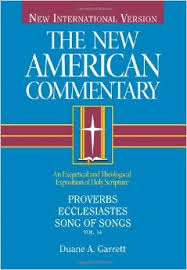
Proverbs, Ecclesiastes, and Song of Songs (NAC) by Garrett

book nac Prov

Here’s the pastor’s choice for the three challenging books of Proverbs, Ecclesiastes, and Song of Solomon. In near 450 pages respected scholar Duane Garrett gives what most want: a succinct, weighty, and helpful commentary on these books that will likely be preached from less than many others.

Garrett begins with an Introduction on Proverbs. He starts with a general discussion of Wisdom in the Ancient Near East and transitions into Israelite Wisdom. He provides a lengthy section describing all the proverb classifications scholars have come up with. That subject is more interesting to scholars than pastors, but he explains it well. He also covers the varying opinions on structure. In discussing authorship and date, he wades through the varying conclusions to reach conservative conclusions.

The commentary is good, but he spends time defining classification of every proverb. My only criticism of this book is that the commentary on Proverbs needs to be about 25% longer if a revision is ever done.

Garrett does a fine Introduction on Ecclesiastes as well. Since so few scholars believe Solomon could have written it, he has a lot to wade through to reach conservative conclusions. This was my favorite Introduction of the three. He sees an evangelistic purpose to the book.

The commentary on Ecclesiastes is well done and especially enlightening.

He turns out another careful Introduction on the Song. I can’t agree with his conclusion that it’s only a discussion of human love, but he lays out the differing viewpoints well. The other introductory issues are laid out with equal thoroughness. Garrett went on to write a large, major exegetical commentary on the Song in WBC. The commentary here is once again quite helpful.

This book is the perfect volume for these three books for pastors or teachers. I highly recommend it!

I received this book free from the publisher. I was not required to write a positive review. The opinions I have expressed are my own. I am disclosing this in accordance with the Federal Trade Commission’s 16 CFR, Part 255.
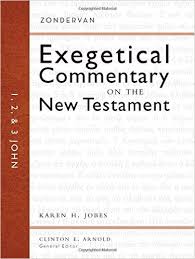
1, 2 & 3 John (ZECNT) by Jobes

book ept jn zec

Mark this down as another outstanding entry in an exceptional series. Jobes has provided a thoughtful, scholarly, and easy to read volume here in the Zondervan Exegetical Commentary (ZECNT) series. My appreciation for the layout of this series grows with every volume I peruse.

Jobes begins her Introduction to all three Epistles of John by describing their significance. She throws down the gauntlet of a strong Christology in our pluralistic world. She concludes that the writer of these letters matches the Gospel that also carries John’s name. She reasons that the author had to be John or a close associate. As with most commentaries addressing John, she writes about the gnostic issue that has obsessed scholars. She seems to feel that scholars have overthought the issue. John has written against “some serious misunderstanding and distortion of the gospel”. In discussing the similarities of John’s Gospel with his Epistles, she provides a chart that allows you to see for yourself. She surmises a conservative dating of these epistles.

Next, she provides an Introduction to 1 John. She well explains its genre and purpose. She admits its complex, or almost spiraling structure and ends with an outline. Next, she jumps into helpful commentary on the text of 1 John. She seems quite comfortable in the ZECNT format and uses it to advantage. A brief Introduction precedes the commentary of 2 & 3 John respectively as well.

This is my favorite modern exegetical commentary of John’s Epistles. If there is any better, I’ve not seen it. You will want this commentary!

I received this book free from the publisher. I was not required to write a positive review. The opinions I have expressed are my own. I am disclosing this in accordance with the Federal Trade Commission’s 16 CFR, Part 255.

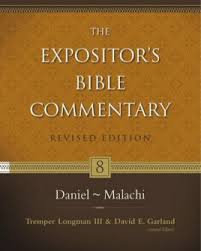
The Expositor’s Bible Commentary (Rev. Ed.)–Volume 8, Daniel-Malachi

book ebc 8

Mark me down as someone who has loved and used the earlier EBC set for years. This new set, edited by Tremper Longman and David Garland, has been one I’ve wanted to check out and this volume 8 is my first foray into the set. One thing is clear: the revision is a success. Not only is much brought up to date and improved, but the way the original series was envisioned remained. In other words, real depth with a corresponding succinctness for busy pastors.

In Daniel, Andrew Hill replaced the late Gleason Archer. There’s a much more scholarly feel and less direct eschatology. Gone is Archer’s clear premillennial position that is replaced by Hill’s survey of opinions. Still, Hill provides what I’d call an astute presentation that can run with the big dogs of exegetical commentaries. A similar thing happened in Carroll R.’s replacement of Leon Wood for Hosea.

Richard Patterson took his fine work on Joel and made it better. In Amos and Micah editor Tremper Longman took the late Thomas McComiskey’s work and updated to the extent that he is now listed as the co-author. The effort is a good one. Carl Amerding updated his work on Obadiah, Nahum, and Habakkuk to good effect. John Walton turned in a more scholarly effort on Jonah than did H. L. Ellison, though I wish he could see his way clear to see it as “journalistic history”. He still came to pretty conservative positions.

In Zephaniah, Larry Walker updated his earlier work and I really loved it. Haggai and Malachi were greatly improved by Eugene Merrill, a scholar I always enjoy. Kenneth Barker updated his work on Zechariah and kept a dispensational outlook. It was yet another success for the project.

This book has a lot going for it. A quality help on Daniel and all the Minor Prophets between two covers means that for an economical price you can build your library more quickly. This is a winner all the way!

I received this book free from the publisher. I was not required to write a positive review. The opinions I have expressed are my own. I am disclosing this in accordance with the Federal Trade Commission’s 16 CFR, Part 255.