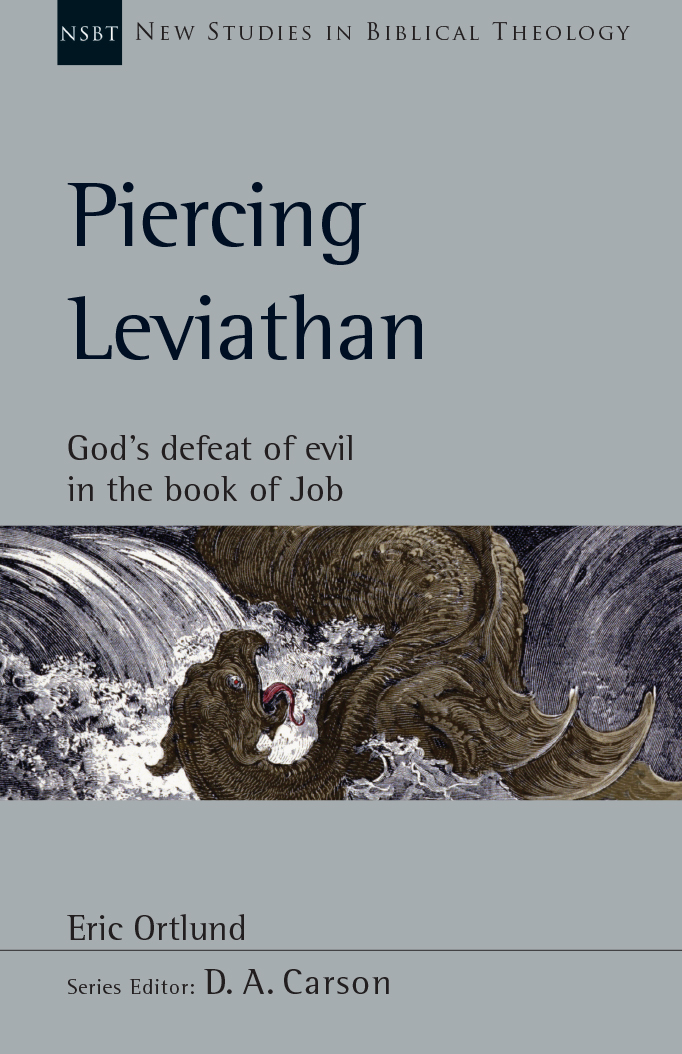
2 Corinthians (CSC) by David Garland

David Garland is a busy scholar. In addition to this revision of his older NAC volume on 2 Corinthians for the emerging Christian Standard Commentary (CSC) series, he has just released a new commentary on Romans for the TNTC series. In resent years he’s written well received volumes on the Gospels as well. If you think about it, it’s an elite group of scholars who write multiple commentaries. I guess that is for good reason as it’s likely success in earlier commentaries that catch the eye of series editors and make for further opportunities. Then, of course, there’s the work itself. Ever notice how many announcements for commentaries in all the major series never actually appear? Back to Garland. He’s good and he’ll keep getting these opportunities as long as he wants to do them.

I’ve used the first volume of this work to advantage, but as I read the introduction of this revision I kept thinking that Garland is really good, even sneaky good. There’s quality and clarity in his straightforward, yet incisive writing. It’s the accumulation of good things for the reader every few pages that makes it so substantial. For example, in a few pages Garland took me to Corinth. While that might not be a place you’d actually want to go, it’s a place you much go to understand the epistle. Later he will take you through a discussion of the unity of the letter. You know that yawn-inducing trek so many scholars take you that goes at best in circles. I loved it this time! He was gracious yet I envisioned a bomb going off and wacky scholarly arguments flying through the air as I read. It only took a few pages to prove how disingenuous such arguments are at best and how delusional they really are.

The commentary itself is similarly golden. I offer his discussion of 4:16-18 as proof. Read it. Now that’s commentary writing. There’s plenty more too.

If pastors, teachers, or dedicated Bible students could only have one volume on 2 Corinthians, here’s the perfect choice.

I received this book free from the publisher. I was not required to write a positive review. The opinions I have expressed are my own. I am disclosing this in accordance with the Federal Trade Commission’s 16 CFR, Part 255.
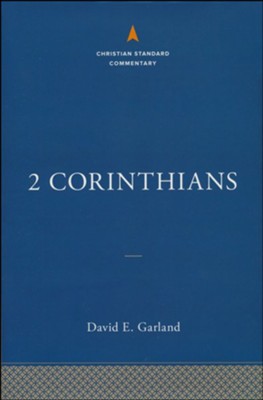
Changed into His Likeness (NSBT) by Millar

This new release in the New Studies in Biblical Theology (NSBT) stands out among the other volumes in the series that I have reviewed. There is still much scholarly research as well as a host of biblical passages exegeted that I’ve come to expect in this series, but the scope of the subject isn’t as narrow as that found in most volumes. Most surprisingly, too, there is at times what could be used devotionally to be found. Not at the expense of scholarship, but in addition to it. In that sense, it’s quite rich. Maybe this isn’t so surprising after all, as how can you study personal transformation biblically without it turning personal?

The introductory chapter examines what we mean by transformation by looking even at prevailing trends in psychology regarding it. That discussion was nothing short of fascinating and reinforced why we’d better turn to the Bible to see what it has to say on the subject. The next chapter turns to biblical anthropology regarding personal transformation and defines key terms like “heart”, “mind”, “soul “, etc. I was impressed again.

The third chapter scans the Old Testament for personal transformation. The approach mostly takes key characters and states (overstates?) his appraisal of the biblical data. The level of digging into these beloved figures was in no way shallow, even incredibly perceptive at times, but was almost depressing as he was trying to make his case that there was little personal transformation there. He moved my thinking a little but I believe a much stronger positive case could be made than his gloomy analysis. In the next chapter, as he surveys the New Testament, he goes the other way and becomes especially positive on personal transformation and perhaps overlooks a few hiccups in those characters lives. I wonder if his covenantal theology guided him overmuch. Please don’t think I’m downgrading the overall depth and quality of his work, but let’s just say that he is not one of those scholars who’s afraid to persuasively present his conclusions!

Chapter 5 was a masterpiece. He took theology as expressed by key theologians and crafted an exquisite theology of personal transformation. You would never guess in the chapter’s opening paragraphs when he tells you of three broad groups (inner life/ Augustine & Edwards, Christology/ Calvin, piety/Owen) what a profound reading journey you are about to take. Other theologians are mentioned, but the synthesis and collation of theology are where he soars. As I read, I was finding myself agreeing in many ways with all three positions. So did he. My only criticism, and a mild one at that, is that he sometimes switched from biblical theology to trying to ascertain the official Reformed position as if it never crossed his mind that anyone outside a reformed persuasion would read his work.

The book concludes by drawing out the biblical conclusions articulated by some master theologians and reflecting on key biblical passages. His conclusions all make sense to me—as a Bible student and a Christian sometimes sad my transformation hasn’t been more profound. Personal transformation, even biblically, is complicated, but maybe less so after reading this book. Without doubt, this one is a keeper!

I received this book free from the publisher. I was not required to write a positive review. The opinions I have expressed are my own. I am disclosing this in accordance with the Federal Trade Commission’s 16 CFR, Part 255.
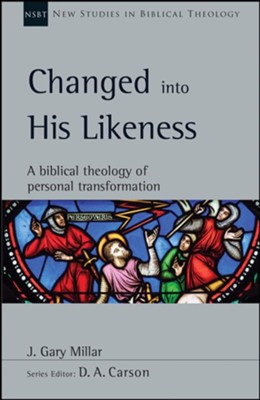
Romans (TNTC) by David Garland

This latest release in the time-tested Tyndale New Testament Commentary (TNTC) series is a substantial commentary, perhaps more so than usual, but still will be welcomed, I believe, by the target audience of the series. Romans of necessity is going to be a key volume for any NT series and so the selection of David Garland was a coup for the editors. He’s written enough well-received commentaries in several other series to show he’s up to the task. When you open the book itself, you will find that he lived up to the expectations formed by his prodigious output.

After a bibliography that rivaled more technical series, he dives into an Introduction that shined. The TNTC is going to limit authors here more than larger series, but what he delivered in the constraints upon him was impressive. He made the sentences count. His comments on audience were penetrating and filled with nuggets one could expand in profitable directions. As he proceeded, you will appreciate the conservative conclusions, the clearheadedness to weigh scholarly matters based on real importance, and a consistency to approach the text as if, you know, it was the Word of God. It held my interest to the end which is more than could be said for some commentary’s introductions.

In the commentary proper, I read sections of several passages that will tell you where the commentary will take you. There’s just something about Romans that makes the perusal of key passages more obvious to anticipate the quality of the whole. On the other hand, it might make you turn away too quickly if you are already determined you know Romans. I stayed in even after he and I got crossed up on a few passages and found quality in every case. He is clearly reformed (that statement already tells many of his conclusions, doesn’t it?), but this is no defense of the Reformation which derails many commentaries on Romans. He is in the text. He is careful with the text. He is respectful of the text and realizes, as he should, that exegeting it is the task at hand. Use him and there’s enough worthwhile content to help you form your own conclusions.

His commentary replaces the volume by renowned scholar, F. F. Bruce. As great as Bruce was, Garland has easily surpassed him. This is a must-have volume.

I received this book free from the publisher. I was not required to write a positive review. The opinions I have expressed are my own. I am disclosing this in accordance with the Federal Trade Commission’s 16 CFR, Part 255.
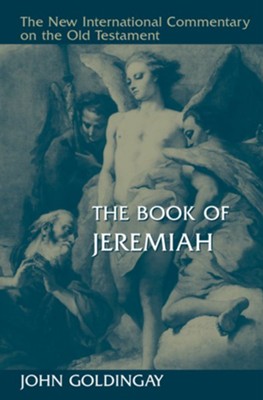
Jeremiah (NICOT) by John Goldingay

The NICOT gets a major replacement in this massive commentary on Jeremiah. The series likewise snagged a prolific scholar in John Goldingay to provide this commentary on one of the harder books of the Old Testament. One can only marvel at the output of Goldingay, and whatever you might think of him, you can find no evidence of haste in this thorough production. As I perused this volume, I repeatedly found myself thinking what intense and intimate time he has spent in Jeremiah. Both the depth and scope are impressive. I can just imagine what a conversation on Jeremiah with Goldingay would be like. I bet he could cite the most obscure passages to make his point.

Before I discuss the particulars of this commentary, I must admit that this commentary is easily, by a wide margin, my favorite work by Goldingay. For comparison’s sake, I find this work much more useful than his work on Daniel in the WBC series. The format may have helped that be so, but the work itself was better to me across the board. Sometimes Goldingay makes conclusions in his writings that seem bewildering to me for an evangelical to make, and though that occasionally shows up here, he seems to mention those things but concludes more evenly this time around.

The first part of the Introduction really shines. Here we find background information that really opens Jeremiah to our understanding. In the section on the unity of composition he thoroughly discusses five major perspectives (he calls horizons). Some are nonsense, but all are exquisitely explained. He covers authorship and date next and makes Jeremiah come alive even if one can’t agree with all he says. After canonicity and textual discussions, he dives into an enlightening presentation of Jeremiah’s theology. Don’t miss the last section called “analysis of contents”. “Wow” is the word that comes to mind there.

The commentary proper also shows a depth that impresses. What are you looking for? Background? Textual matters? Theology? Details? Big picture? It’s all to be found here. Again, you may not agree with all he says, but you will leave knowing far more than you came with on the passage. As you probably know, that can’t always be said in commentaries, even major ones. In far to many of them, the mass of details can’t be harnessed and made into anything of substance.

I’ll rate this commentary higher than I expected when I first cracked it open. It’s a big one. In size and usefulness.

I received this book free from the publisher. I was not required to write a positive review. The opinions I have expressed are my own. I am disclosing this in accordance with the Federal Trade Commission’s 16 CFR, Part 255.
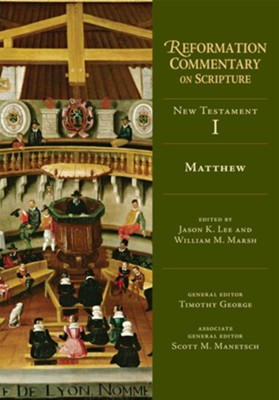
Matthew (RCS), Edited by Lee & Marsh

The RCS continues its unearthing of old treasure in this latest volume on Matthew edited by Jason K. Lee and William M. Marsh. I don’t know about you, but I see the gospel of Matthew as an ideal book of the Bible for the type of insight you can gain from this RCS series. There’s just something about Matthew’s uniqueness, his beautiful parables and miracles, and fascinating stories from the ministry of Jesus Christ that has enthralled Christians for centuries. Because of that beauty, gems of understanding from another time to help us grasp its riches and effectively interpret are especially inviting.

As has been surprisingly uniform across the volumes of this series that I have encountered, copious research has gone into pulling out the most meaningful nuggets from the Reformation era. As is always the case as well, they do not allow themselves to only quote their favorite authors, but truly give a real swath across the spectrum that puts a major historical epoch in perspective. The same general introduction and an overview of the contributors to Reformation writings is found here as in every other volume, but there is a nice historical introduction to what will be finding in Matthew. From there, you have those wonderful writings for each passage that are the most meaningful.

You are not going to agree with everything that you read here. How could you? All the writers that are quoted in it don’t even agree with each other. That is not the point. If you were wondering how this might help you in your studies, besides the obvious historical understanding, it is all these treats that are the icing on the cake you made in your exegetical work. Read it near the end of your studies and that icing will be a tasty treat.

This volume on Matthew is truly up to the mark of all the wonderful contributions that have already come down the pike in this series. I give it my full recommendation.

I received this book free from the publisher. I was not required to write a positive review. The opinions I have expressed are my own. I am disclosing this in accordance with the Federal Trade Commission’s 16 CFR, Part 255.
Colossians and Philemon (Kerux)

This is my first chance to review an entry in the newer Kerux Commentaries series. From what I can see, this series is designed for the bottom line of preaching, or in other words, seeing what is necessary to put together a message or a lesson on the passage. There are even two authors. One is the exegetical author while the other is the homiletical author. I don’t know how often it is the case, but in this instance it doesn’t appear the two authors even knew each other that well before this project. Fortunately, that didn’t seem to degrade from the work. The series states that it is “based on the text-driven Big Idea preaching model”.

This series is clearly aimed at the busy Pastor or the serious Sunday school teacher. It’s not going to waste its time on many of the more detailed aspects of a major exegetical commentary. That is no problem at all as there are those type of works available if you need them. This volume could not replace them, but it is not intended to. In other words, I believe there is a place for a series of this nature.

It also has that more eye-appealing look found in works aimed at a wider audience. Some passages are in darker shaded boxes, there are occasional helpful graphs or charts, and succinct asides with helpful information. It would be accurate to call it user-friendly.

For each passage, you begin with a one-page summary that gives an exegetical idea,a theological focus, a preaching idea, and a slightly longer section of preaching pointers. From there, the author is explaining to giving a literary structure and themes overview followed by an exposition of the text. While not overly long or extensive, it is not shallow. They often provide the Greek next to phrases they are explaining, which may not be needed for their intended audience. Still, they do a good job at getting to the heart of the passage and providing what is helpful for teaching or preaching. After they finish their exegesis, they have a section on theological focus followed by one on preaching and teaching strategies. To really aid the busy pastor or teacher, they end with a section of contemporary connections and discussion questions. If you want help with exegesis, but like to take it from there, the last section might not be as helpful. Others will love it. Its value will likely depend on you.

Overall, I find this volume to be a successful entry at reaching the stated aims of the series as I understand them. The two authors made a cohesive work and offered real help on Colossians and Philemon. There is value here.

I received this book free from the publisher. I was not required to write a positive review. The opinions I have expressed are my own. I am disclosing this in accordance with the Federal Trade Commission’s 16 CFR, Part 255.
Joshua (EBTC) by David Firth

The EBTC series has picked up speed since Lexham took it over and this latest release by David Firth is another quality commentary. The historical books of the Old Testament are clearly the forte of Mr. Firth as he has already produced a major commentary on 1 & 2 Samuel, shorter commentaries on Joshua and Esther, and a volume in the NSBT on Ruth. All were successful. In this, his second stab at Joshua, he got the chance to take a deeper dive.

The first 30 pages have a somewhat traditional introduction that you might find in any major commentary. To be honest, this was not especially the strength of this work. Sometimes he only addressed a few viewpoints and even said there wasn’t space to address them further. Perhaps that had something to do with the constraints of the series, but I am not sure. As he had done in his earlier work, he argued that the violence in Joshua is not as extensive as most think. The rest of the introductory material was somewhat pedestrian.

It was in the next section where this commentary truly flourished. Here he addressed biblical and theological themes and showed his ability to write a commentary with a theological focus. He covered faithfulness and obedience, identity of the people of God, Joshua and Jesus, land as God’s gift, leadership, power and government, rest, and the promise of God. It was in this section that you had a real introduction to what Joshua is about. I can’t imagine a better overview for the theology you’re going to encounter for the whole book.

In the commentary proper, it only got better. His skills as an exegete joined with his newly discovered trait as a theologian made for some awesome commentary. What was impressive to me was the depth of observation. In each passage he had a section entitled “context”that truly set the stage for what you were reading before he broke out into his detailed exegesis. Next, in a section entitled “bridge”, he tied all the loose ends together and brought the theology out into the brightest day. Along the way, he succeeded in delivering the goods on the stated objective of this series.

There might be a few commentaries that outdo this one in some categories, but this is the work for theology in Joshua.

I received this book free from the publisher. I was not required to write a positive review. The opinions I have expressed are my own. I am disclosing this in accordance with the Federal Trade Commission’s 16 CFR, Part 255.
Welcome, Holy Spirit by Gordon Smith

Hardly any theological subject has such diverse writings than those addressing the Holy Spirit. Pick up the first five or six books on the Holy Spirit that you come across and as you peruse them you may wonder if they are even talking about the same subject! Who the Holy Spirit is, what His importance is, how we should view Him, how we might imbibe Him into our lives, apparently, finds little agreement among Christian people. If nothing else, that suggests that there is need of thoughtful works on the Holy Spirit. Enter here Gordon T. Smith as he throws his hat into the ring.

To be honest, I had more trouble than usual in deciding how to rate this book. My trouble is that on some pages there is the most remarkable theological insight while on others I found myself asking the question, are you kidding? Though I had trouble, I think I might suggest how you can know in advance whether you will like this book or not. I’ll assume that you want good theology, so the whole thing hinges on how ecumenical you are. Are you convinced that being ecumenical is the most important thing in this day? You will love this book. If you are skeptical of being too ecumenical, then, perhaps, not so much.

I wasn’t very far into the book as I was enjoying some of his theological insights before I was thinking in the back of my mind, wow, this guy is really ecumenical. To be honest, he went fullbore in the last two chapters. Let me give an example. In the last chapter he commends the Presbyterian Church of Canada for coming up with “an extensive theological framework for engaging expressions of aboriginal spirituality including especially those that were typically of indigenous prairie belief systems.” He listed things like “the pipe ceremony, the sun dance, the powwow, the sweat lodge, the medicine wheel, and the smudge ceremony.” A little later on he made a wonderful statement that, “we must, of course, be radically Christocentric and orthodox – intentionally Trinitarian.” I love that last statement! But how could the earlier statement not be a direct contradiction to it? To be fair, he gives a detailed explanation of his reasoning. It didn’t add up to me. In my view, he went a field too far, or maybe two or three fields too far. Again, if you think being broadly ecumenical is the best way to advance the gospel in our day, you may find this riveting.

To try to give the full picture, he does write with an engaging style and comes across as likable. He doesn’t overly talk about himself, but there are a few clues that give you insight to him as a person. He grew up in a charismatic setting. He currently is part of the Christian Missionary Alliance. Along the way, he came to value liturgy too. Maybe that explains why he has more than average desire for everyone to respect each other, but I diverge with him when he says to fit their practices into orthodoxy. Respect is one thing. Syncretism is another.

Though his ecumenicalism was a glaring fault in my view that even weakened the book, I must admit still enjoying some of his theological observations. I usually read with a pencil in my hand and in the front of the book I will write the page number of special pages that really spoke to me. I just checked and I had 14 such pages notated and that is a little above average for an 180-page book. The aforementioned faults notwithstanding, this isn’t the usual fluff that clutters bookstore shelves on the Holy Spirit.

I received this book free from the publisher. I was not required to write a positive review. The opinions I have expressed are my own. I am disclosing this in accordance with the Federal Trade Commission’s 16 CFR, Part 255.
Galatians (CSC) by Timothy George

As the NAC starts morphing into the CSC series, it appears there might be a trend of the editors coaxing the authors of the best volumes of the NAC series to revise their work for the first releases in the new series. Timothy George’s work on Galatians consistently ranked high and is worthy of making the jump to the CSC. By the way, I think that is a winning strategy as it extends the life of splendid works and it gets the new series off to a quality start.

I’m the past, I’ve used the first edition by George in specific passages to advantage, but hadn’t really surveyed the whole work. I had, however, noticed it said in multiple places that George was an exceptional church historian and that he gave something that no other work on Galatians could boast of. Now that I’ve taken the time to thoroughly check it out myself, I must concur.

His speciality, I’m told, is Reformation history and you will find it meaningfully interspersed throughout. Can you imagine how that might be useful in Galatians? In any event, his historical prowess isn’t limited to to the Reformation to be sure. For example, notice how thoroughly he traces the historical development of the scholarly viewpoints about who exactly Paul’s opponents were. Or notice his excursus on Luther and Calvin on Peter and Paul. He even mentions Spurgeon standing firm in the Downgrade Controversy of how standing for the gospel being a “lonely business”. I told you it was different. But good.

His Introduction was thorough and addressed all the right questions. He laid out the North and South Galatia viewpoints clearly. As you probably know, Galatians is even more debated at several points than most Pauline Epistles are. He laid out different viewpoints and gave judicious conclusions.

His commentary is fine as well. His excursuses were meaningful. I read a major reviewer say of the earlier edition that it didn’t interact enough with current scholarship. That is not really the case, but he addresses the most influential scholarship on the matter at hand no matter the time period. I prefer that. Fascination with the latest novelty has been the Achilles heel of scholarship and robbed it and us of all it could be.

You will want to have this one!

I received this book free from the publisher. I was not required to write a positive review. The opinions I have expressed are my own. I am disclosing this in accordance with the Federal Trade Commission’s 16 CFR, Part 255.

James (Second Ed.) [PNTC] by Douglas Moo

Having used the first edition extensively years ago, I’m glad the PNTC series gave Moo the opportunity to revise and update his commentary on James. Moo himself in the preface tells us that this a substantial revision that extends the volume by 30%. That additional material does not, however, mean that he has changed his conclusions overall, but just that he took a stab at strengthening them. There’s not much I can say about this author as he is well known to most Bible students and so most readers enter this volume with some idea of what to expect. What stands out the most, perhaps, is that the majority of his work has been in the Pauline epistles and he sneaks off here to James of all biblical writers!

Though I had read the introduction of the earlier work in the past, I carefully read the introduction of this revised work. It’s exactly what I love in an introduction. The word that comes to mind is masterful. Far more important than reaching the same conclusion that I favor is the author’s ability to lay out all the major viewpoints, respectfully dive in and explain pros and cons, and then present his or her own conclusion. Again, I need an author to teach me things I don’t know and I’ll then make my on conclusions. The commentary that provides that succeeds. This one does.

As a case in point, after being thoroughly impressed with Moo’s presentation of what has been the major viewpoints of the overall theme of James, I couldn’t fully agree with his ultimate view of James and how he meshes with Paul. Still, in a masterful way he laid it out where I had the tools to make a conclusion myself. I always rate highly a commentary that does that for me. Additionally, he did it in less pages than many writers can accomplish. There’s something to be said for clarity.

Everything else is here too: bibliographic information, theology, exegesis and all from a guy who knows how to do it. In you don’t agree with his conclusions in the introduction, then his coverage of James 2 might raise an eyebrow at times. But isn’t that true of every commentary on James good or bad?

The Pillar commentary series has earned its lofty praise. Someone needs to light a fire under the authors of the remaining volumes needed to finish coverage of the New Testament, but every theological library simply must have the ones in print. Moo has only made this contribution on James better and so it will have decades of positive influence remaining.

I received this book free from the publisher. I was not required to write a positive review. The opinions I have expressed are my own. I am disclosing this in accordance with the Federal Trade Commission’s 16 CFR, Part 255.