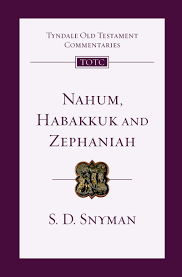
Nahum, Habakkuk, and Zephaniah (TOTC) by S. D. Snyman

S. D. Snyman has turned out a little gem in the ongoing revision of the Tyndale Old Testament Commentary (TOTC) series on the exciting books of Nahum, Habakkuk and Zephaniah. This volume along with a few other recent releases show us what is an emphasis in this round of revision in the long-running series: exegesis and theology. Previous volumes highlighted ANE background and other such details. This new emphasis is far better for us who use them. I am pleased!

This volume on three Minor Prophets who should be far better known is one of my favorites so far. I hope my love of these three prophets isn’t jacking up my review of this book, but it surely is a fine offering.

There is a general introduction to the three prophets and their writing that is brief but really gets you oriented. Each book is given introduction and commentary in turn. There are seven or eight pages of introduction, which is for this series what Goldilocks would call “just right”. I was impressed with what was accomplished within that brevity. It says as much as some larger works that can never tell the difference between the center and the tangent. When you get to the commentary you really have a basic grasp of what’s going on in the respective book. He does mention where scholars diverge and disagree, but he never allows the book to confuse that with what is most important.

The commentary is great. It doesn’t go as deep or say as much as some of the larger works, but that is not this series’ goal. Again, it is more to the point and you do know what is going on in the passage. There are many rich statements that will help you as you work through these books that you might not be especially familiar with.

Mark this volume down as an A+. I sincerely hope this series can keep this fine level of quality in the volumes that are still coming down the pike.

I received this book free from the publisher. I was not required to write a positive review. The opinions I have expressed are my own. I am disclosing this in accordance with the Federal Trade Commission’s 16 CFR, Part 255.
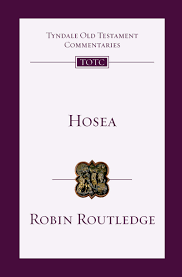
Hosea (TOTC) by Robin Routledge

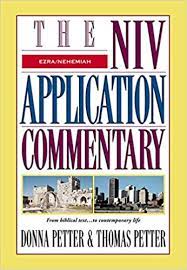
Here is yet another new volume in the rapidly unfolding complete makeover of the Tyndale Old Testament Commentary (TOTC) series. In my judgment, these more up-to-date new titles are holding their own against the famous selections that we have seen from this series in the past. To be sure, Robin Routledge delivers a home run in this take on Hosea.

The introduction begins by stating the context of Hosea. He explains historically where they are in the northern kingdom of Israel including political developments that defined the times. He develops the religious context as well, which as you would guess is essential to understanding Hosea’s ministry. Along the way, he will have considerable discussion about how Hosea’s marriage to Gomer should be viewed. It all seems wonderfully balanced.

He also explained Hosea’s place among the Minor Prophets as well as in the Old Testament at large including connections to Deuteronomy and Jeremiah. He next explained textual issues before delving into the theology and message of the book.

The commentary proper delivered the sort of thing that those who study the Bible would be looking for in this type of commentary. In every passage he set the context and gave commentary with real depth.

All the new volumes in this series that I have seen so far range from competent to very good. Mark this one down on the side of very good. I highly recommend it.

I received this book free from the publisher. I was not required to write a positive review. The opinions I have expressed are my own. I am disclosing this in accordance with the Federal Trade Commission’s 16 CFR, Part 255.
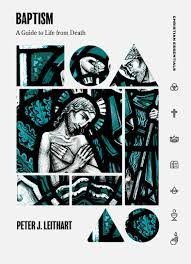
Baptism: A Guide to Life From Death by Peter Leithart

It’s hard for me to put my review in words for this book. It’s part of a Christian Essentials series where I had already been blessed by the one on the Lord’s Prayer. I was very intrigued to look into this one about baptism. In the first few pages of the book he reminds us of the challenges of this subject. Around Christianity the battle lines are drawn and people are ready to fight at the drop of a hat. Because that is true, I did not come to this book expecting to read what I would agree with down the line. No, I was happy to learn what others thought. How can the opinions of baptism be so profoundly different?

In light of that approach, I do have a much better view of how others view baptism. Perhaps it would be best to describe the approach of this book as liturgical , which is not my viewpoint. It’s only fair, then, that I put my bias on the table before I tell you what I think might be wrong with this book.

In short, it seems to me that he puts more weight on the back of baptism than it can legitimately bear. There were paragraphs where he described what I would say happened when I received Christ where he made it sound like it happened at baptism. To be fair, I think he would argue that those benefits of Christ rolled over him at baptism. I don’t think that is the case, and so his beautiful prose might lead younger believers to a conclusion that I think would not be beneficial.

But there is another question. Did I enjoy the book? I must confess that I did even with my table full of caveats. There were paragraphs when he would write something where all I could say was, wow, I had never thought of that before. What a blessing! Then the next paragraph I might think, you shouldn’t attach that to baptism! For example, he writes so many beautiful things that the Bible says about water. They are profound! Unfortunately, if it involved water, he was convinced it was about baptism. I think that’s completely over the top, but it was good to refresh my heart about many things the Bible did say even if baptism was not the subject.

I’m sure this book on baptism could be in no way more conflicted than this review! It’s the best I could do. It will be up to you, if you are intrigued or not.

I received this book free from the publisher. I was not required to write a positive review. The opinions I have expressed are my own. I am disclosing this in accordance with the Federal Trade Commission’s 16 CFR, Part 255.
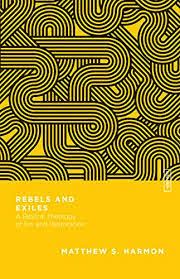
Rebels and Exiles (ESBT) by Harmon

Chalk this volume up as another smashing success in the new ESBT (Essential Studies in Biblical Theology). I love how this series takes a broader view than many similar series, yet imparts so much vital information. Matthew S. Harmon gifts us with something powerful about the doctrine of sin with a view toward redemption. After you read this book, you will agree that the concept of rebels and exiles is key in Scripture.

After making a good case in his brief introduction that “exile” is a proper rubric to study sin, he plunges into tracing that line throughout the Bible. Chapter 1 was my favorite, not because his writing deteriorated later, but because the story of Adam was like a home run out of the park to illustrate his theme. Additionally, he provided nugget after nugget that I especially enjoyed that imbibed freshness into an old story. Subsequent chapters follow the timeline of scripture seeing “exile” all along the journey. I will have to admit that it was there.

He followed through until he got to the New Creation where “exile” is finally banished. His final chapter on the practical implications of what he has written about brought theology out of the textbook and into life. I loved how he explained how we have a homesickness for a place we’ve never been!

At the end he gave some detailed suggestions for further reading as well as a thorough bibliography.

The success of this volume makes me even more excited to look at the others in the series. You have here accessible theology with real depth. What more could you ask for?

I received this book free from the publisher. I was not required to write a positive review. The opinions I have expressed are my own. I am disclosing this in accordance with the Federal Trade Commission’s 16 CFR, Part 255.
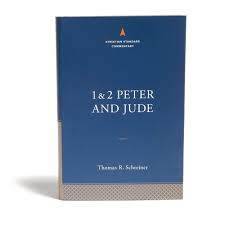
1 & 2 Peter and Jude by Schreiner (CSC)

Only recently did I notice that the NAC series, which I’ve always loved, is being revised and re-cast as the Christian Standard Commentary (CSC). This first revision is on 1 & 2 Peter and Jude and updates the popular commentary by highly-respected scholar Thomas Schreiner. I had the privilege of using the part on Jude extensively a few years ago. I’m glad this commentary is receiving this revision.

I found the case to be exactly what the author stated in his preface. He has updated and revised, he has rewritten sentences, he has surveyed more recent scholarship, but he has not changed his mind. I carefully reviewed the bibliography and several of the footnotes. If that is your need, you will want this new commentary because there seems to be significant interaction with later works. If you are a pastor or teacher, what is revised might not be your main focus. Still, this volume has always been one of the most highly-rated in the NAC and sets the bar high for this new CSC.

As for this new CSC series, these new volumes are attractive. I always liked the look of the NAC and thought it looked better than several other series on the shelf, but these new volumes are even nicer and have a crisp, smooth look. I like the dust jackets, I like the binding, I like the font of the text, I like the font of the footnotes, and I like the overall layout and look of the whole book. Some series print volumes that look like little more than an afterthought, but this volume is sharp!

The work is top-notch here, and this volume is essential on Peter and Jude!

I received this book free from the publisher. I was not required to write a positive review. The opinions I have expressed are my own. I am disclosing this in accordance with the Federal Trade Commission’s 16 CFR, Part 255.
Systematic Theology (2nd Ed.) by Wayne Grudem

This release is exciting! It’s fantastic to see this widely used systematic theology get a fresh updating to extend its life and reach even further. As someone who has used the earlier edition extensively, I am happy to report that this gets helpful revision and new paragraphs without sacrificing what we loved in the older one. It does not appear to me, either, that he has changed his opinion on many matters. He just states even better what he has been saying well in this book for 25 years.

Because there have been few changes in conclusion, or even in design, it is likely that whatever shortcomings you found in the earlier edition will continue to be found in this new release. For example, I always thought his discussions about the doctrines of Christ and the Holy Spirit could have been fuller and more prominent among the other doctrines. Don’t misunderstand me; these discussions were still good. I’m just talking about their prominence among systematic theology at large.

It is obvious that systematic theologies get graded more on the reader’s agreement than its quality of work, and so if you follow Grudem’s theology this is easily going to be your favorite one. I suggest it ought to be one of your choices no matter your theological predilections. In fact, I think the best way to use systematic theologies is to have at least three or four of varying perspectives for you to wrestle through. If you take that approach, as I always have, this simply must be one of your choices. I know it’s always been that way for me. If I’m going to study a doctrine, Grudem is going to be one of those first three people I read before I branch out. This revision only makes that more happily the case for me. I don’t always agree with him, but I always appreciate what he has to say.

This is a phenomenal, well thought out, and well communicated volume that could not fail to enrich any Bible student who used it. I know the word “indispensable” can be overused and cliché in a book review, but this is that place where it must be said.

I received this book free from the publisher. I was not required to write a positive review. The opinions I have expressed are my own. I am disclosing this in accordance with the Federal Trade Commission’s 16 CFR, Part 255.
Ephesians (NICNT) by Cohick

This volume joins two others on Colossians and Philemon by Scot McKnight to replace the influential and long-standing volume by F. F. Bruce on these three wonderful New Testament books in the venerable New International Commentary on the New Testament (NICNT) series. Don’t you suppose contributing this commentary on Ephesians would be a daunting task both for its high-altitude theology and in following in Bruce’s footsteps? Cohick mentions as much in the preface.

Did Cohick succeed? I think for the most part she did. The farther I got into the introduction the more I liked it. The conclusions are pretty conservative. As you are probably aware, if you are going to write on Ephesians these days, you must address authorship and pseudepigrapha issues. As she notes, the answer to the question of whether Ephesians is a genuine Pauline letter will profoundly affect the trajectory of a commentary. If you were like me and have no doubt about Paul’s writing of this letter, these issues are something of a pothole on the road to understanding. Nevertheless, any good commentary must discuss it in depth and she does a good job. She lays out the arguments clearly and if you are wrestling with this you would do well to read what she has to say. Textual and historical background are also sufficiently covered, as are structure and theology. The NPP gets only about three pages which is precisely what it deserves.

I found the commentary proper to be thoughtful and helpful. It was neither too slim nor too verbose. She is especially adept at laying out arguments and reasoning to conclusions. You don’t have to, of course, agree to profit from that skill she brings to bear.

I do have one caveat in my recommendation. It’s only about one small section and perhaps I would rank its importance higher than you would, but I will share and you can decide. In her preface she mentions the “inflammatory” Household Codes, not in quotes but her words. That bias seemed present in the commentary on that section. Perhaps it was just me, but I thought her fine reasoning skills were not as present here. My more conservative position is disagreed with in many commentaries I read, so I’m used to that; but this section seemed a little agenda laden to me. When I rechecked her biography, it does turn out that she has written on the subject much in the past. It wouldn’t be fair to withhold a good recommendation over this one point involving one small section of the whole book, but you can at least be aware of it and see what you think when you look at it.

After reviewing the two new volumes on Colossians and Philemon recently, I feel that she has produced a work equal to the more well-known Scot McKnight. Warmly recommended.

I received this book free from the publisher. I was not required to write a positive review. The opinions I have expressed are my own. I am disclosing this in accordance with the Federal Trade Commission’s 16 CFR, Part 255.
Daniel (EEC) by Tanner

Wow! What a great commentary! I can’t really think of a category where this commentary couldn’t be described with superlatives. It just happens to be the first commentary in the EEC series to be released with this attractive new design. There’s far more than an attractive cover here, however, as this is a first-class commentary. I know the term “instant classic” is cliché, but I’m willing to argue that is the case. If you see some lower ratings out there, ignore them. Unfairly, commentaries on the book of Daniel are often assigned a grade based on the authors prophetic opinions before the book is even opened. I don’t personally see how someone with a different background on prophecy matters would not feel duty-bound to admit what an incredible work we have here.

What I found between these covers was incredible depth, perceptive insight, clear reasoning, and good writing. The scholarship is impeccable, yet isn’t overly dense as is so often the case. I think you will agree with me before you are even halfway through the introduction. Discussions about the text, Aramaic words, and other grammatical and literary questions is all you could hope for and certainly all you would ever need. I find discussions of structure more helpful to pastors and Bible students than some of the other information in these commentaries, and what he presents here could be a clinic on how to discuss structure in a way that enlivens one’s understanding of a biblical book. He not only explains varying opinions on structure, but more importantly he gives cogent analysis of their strengths and weaknesses. You are left with an opportunity to conclude on your own.

The commentary proper is equally commendable. There is the explanation that pastors and Bible students need along with discussions of grammar in the original languages and plenteous bibliographies for scholars.

To put it in perspective, I found this commentary markedly more helpful than, say, the recent revision of Goldingay’s WBC work. That work is more critical than some like to admit while this work is not afraid to believe as it explains. Some might prefer the more straightforward NAC volume, but by design it doesn’t cover everything as this one does.

Force me to only keep one commentary on the book of Daniel, and this is the one you will see in my hands.

I received this book free from the publisher. I was not required to write a positive review. The opinions I have expressed are my own. I am disclosing this in accordance with the Federal Trade Commission’s 16 CFR, Part 255.
Hosea (ZECOT) by Jerry Hwang

Several of these earlier volumes in the ZECOT series have gravitated to the relatively shorter Minor Prophets. This volume by Jerry Hwang continues demonstrating the promise that the distinctive style of the ZECOT holds. Perhaps the series emphasis on discourse analysis shines even brighter in these Minor Prophets, though I look forward to all its volumes. Hwang grasps clearly all aspects of discourse analysis and similar scholarly tools and makes a real contribution here.

The introduction is thorough. At times the prose is stuffy, but the content is rich. I think pastors and students will be rewarded for waiting through language that might be a bit more scholarly than preferred. Still, this is not a scholars-only commentary.

The select bibliography is a bit too select, but the historical background to the prophecy as well as what the author calls “Hosea’s distinctive theology in its cultural context” is well done. The concepts discussed strike me as the best scholarship can offer the Bible student. Again, it may be heavy going it is verbiage, but you will be able to weigh the ideas that make up the theme of Hosea. The section on the contribution to Christian theology is too brief but on target. There is also a detailed outline for the book.

The commentary proper is never trite. Clearly the author took his time to produce a significant commentary. By now you are probably familiar with the ZECOT style and he is comfortable in it and puts it to good use. This commentary does not duplicate other volumes and is good as either a first or a second choice. I’m glad to have this commentary at my disposal.

I received this book free from the publisher. I was not required to write a positive review. The opinions I have expressed are my own. I am disclosing this in accordance with the Federal Trade Commission’s 16 CFR, Part 255.

Amos (NICOT) by M. Daniel Carroll R.

I’ve been hearing that this commentary was coming for many years and it’s always been said that when it arrived it would be a good one. I’ve been reviewing commentaries for several years now and have much experience in even reading about some scholarly subjects that are beyond the scope of my personal interests. One thing is clear to me, when it comes to a detailed scholarly commentary on a book of the Bible, we are in the hands of a master in this volume.

It’s not that he takes a completely different approach to the task of writing a commentary. No, all the usual subjects are found in the introduction and what is explained in the commentary proper is within the usual parameters. It’s the deftness, proficiency, and expertise that shows up in paragraph after paragraph.

The icing on the cake is the generally conservative conclusions that are given. Sometimes you have a person who is a whiz at writing a commentary yet who concludes nonsense, but you will not find that here even though some scholarly subjects are so esoteric that you wonder why scholars even trouble themselves with it.

Instead of breaking down all the things covered in the introduction as I usually do, I’m going to skip to the chase. If you are building a first-rate scholarly library you simply must have this volume. There’s really no debate. I’ll make a prediction too: this commentary will be one of the most quoted on Amos in scholarly works for at least 25 years. Pastors will want other works too, but this is THE scholarly work on Amos now that it’s been released.

I received this book free from the publisher. I was not required to write a positive review. The opinions I have expressed are my own. I am disclosing this in accordance with the Federal Trade Commission’s 16 CFR, Part 255.