The Gospel of Mark by Witherington

book mark with.jpg

Perhaps you’ve already used other works by prolific commentator Ben Witherington. If so, you’ll know what to expect—broad research, lively writing, and a socio-rhetorical emphasis. This work on Mark is up to the same level as others of his that I have used. No one understands how he gets such copious amounts of writing done, but that is not ours to know. What is apparent is that he grades out well on quality amid all that quantity.

The Introduction will prove that he’s not skimming but probing deeply all the scholarly questions. In the first sections, unsurprisingly, he addresses genre and rhetoric. Next, he wades through Mark’s sources. I find both his ideas and the overall importance of the whole question of sources off the mark, but he again is clear as a bell on explaining what he thinks. There are, however, some good points on Mark’s style that he digs out that help no matter your perspective on sources themselves. From there he slides into authorship and dates Mark from 66 to 70. I enjoyed his explanation of Mark’s social context much more. You’ll find plenty of insights there as well as the next section on structure. He gives perceptive analysis on both Mark’s Christology and the widely-debated Messianic Secret viewpoint. All in all, the Introduction is a deep dive running over 60 pages.

The commentary proper maintains his level of work. You’ll see things introduced in the Introduction fleshed out even more in the commentary. There’s real value here and the writing remains engaging throughout.

I don’t always agree with Witherington’s conclusions, but I appreciate the clarity that he presents his with. Some scholarly writing so entertains differing viewpoints that you’re not quite sure which ones the author holds. Witherington will not fail you on that count ever.

While this commentary would not be my first choice for an exegetical commentary, it’s an excellent volume to give another angle. He’s not a parrot of any other commentator and that means you will get food for thought throughout.

I received this book free from the publisher. I was not required to write a positive review. The opinions I have expressed are my own. I am disclosing this in accordance with the Federal Trade Commission’s 16 CFR, Part 255.
Love By The Book by Walter Kaiser

book lov by book

Walter Kaiser has written many helpful works over a career spanning decades. I’ve enjoyed having many of them on my shelves. You know that you will get careful and capable help from a conservative standpoint. This work strikes me as him entering an area that differs from his usual academic work. In fact, the back of the book will show its classification as “Christian Life/ Love & Marriage”. Still, he can’t deny who he is and gives us something of a brief commentary on the Song of Solomon even as he attempts to give marital help.

As for the Song, he holds to a literal, non-allegorical approach that is most prevalent these days, though he is much more subdued than many such works in the intimate details. On the other hand, he presents a three-person interpretation (Shepherd, Shulammite, and Solomon) rather than the much more common two-person view (Shepherd and Shulammite). Though I believe some aspects of the allegorical view seeing Christ and His people must be true, and though I definitely can’t find my way around the difficulties of the three-person view, I found Kaiser clear and a good resource for me to check those competing views.

As for the marriage help, he holds to the traditional view of marriage that has been held up as the biblical position for centuries. He will have none of the radical trends pervading our culture and ensnarling the church. He makes a beautiful case for a superior way that is held up in Scripture.

My copy will be found on my Song of Solomon shelf, but this work can be used effectively in the “Love and Marriage” as well. How blessed we’d be if our views of marriage were what Kaiser champions here.

I received this book free from the publisher. I was not required to write a positive review. The opinions I have expressed are my own. I am disclosing this in accordance with the Federal Trade Commission’s 16 CFR, Part 255.
Romans (NICOT) by Moo (Revised)

book rom nic

Douglas Moo’s commentary on Romans in the New International Commentary on the New Testament (NICNT) series has been the highest-rated modern, exegetical commentary on that pivotal letter over its 20-year life. It’s really not even been close. It was a no-brainer to ask Moo to revise this commentary rather than enlisting a new contributor. To those who have used this conservative commentary, the good news is that the revision doesn’t involve its solid conclusions. Think of the same home-run exegesis with up-to-date scholarly interaction. Since the conclusions remain, maybe it’s more of a scholarly dismissal of wobbly ideas that this revision’s additions accomplish.

Academic types will love the massively-expanded bibliography. It grew from 8 pages to over 120 pages! The Introduction changed little but little revision was needed. It’s something of a model introduction with great findings. The word “refreshing” comes to mind compared to much that’s printed today.

The commentary itself had places that changed little as well, but other sections had more shoring up of an already great presentation. (I actually laid the old edition beside it and compared on several passages). In the preface Moo explains what he sought to do in this revision—interact with 20 years of work and improve the writing. He succeeded. As you would guess, the New Perspective on Paul (NPP) has mushroomed over these last 20 years. Moo shows us that, perhaps, it was a wasted two decades in many ways.

It’s no bold prognostication to predict this commentary will hold the top spot for another 20 years with this revision. I’ll further predict that scholarship will be at no loss at all if it does.

I received this book free from the publisher. I was not required to write a positive review. The opinions I have expressed are my own. I am disclosing this in accordance with the Federal Trade Commission’s 16 CFR, Part 255.
The Curious Christian by Barnabas Piper

book cur chr.jpg

Ok, so this is different. I’ve reviewed many Christian books and yet never one like this one. I opened it thinking that this book would be a cute idea and closed it convinced the lack of curiosity and wonder both have misled us over the years and strangles us in the present. The author, Barnabas Piper, could be the poster child for positive curiosity for his pervasive love of it. On the first page, the dedication of the book, and throughout the whole book, it’s clear his mother instilled a lusty, vigorous sense of wonder in him. What she instilled, he has imbibed into all of life. He has even absorbed this curiosity and tested its reliability with Scripture. Before you question the biblical thread of his argument, be sure to read him first. I think you’ll be won over. I was.

Part 1 takes three chapters to explain what curiosity is, what it is not, how important it is, and what its lack might cost us—binary thinking and missed or damaged relationships. He further shows how God has filled His creation with wonder and that curiosity has an element of seeking Him. He further digs in the Bible to show the vast difference between childlikeness and childishness. He champions imagination and looks at how culture has run from curiosity.

Part 2 gives eight chapters on “curious about…?” We are told to be curious about the right things before we are reminded of boundaries. Since there are grotesque things that even Scripture tells us not to think about, curiosity is morally bound. Some might wonder if he presents those boundaries distinctly enough, but likely he supposes discernment can guide us there.

I loved his observations; for example, how to balance information and curiosity. He said, “Google is the evil empire making us all dumber, ruining education, and providing easy answers to hard questions. Instead of thinking, we type, and we’re all worse for it.” Exactly!

Several times he reminded us one of curiosity’s best friends: books. Don’t miss either his balanced explanation of open-mindedness.

This timely paperback helped me to be reminded of the value of curiosity and the riches of wonder. That’s worth much!


I received this book free from the publisher. I was not required to write a positive review. The opinions I have expressed are my own. I am disclosing this in accordance with the Federal Trade Commission’s 16 CFR, Part 255.
Moral Choices: An Introduction to Ethics (Fourth Edition)

book mor cjh

That this book reaches this 4th edition shows its influence. My guess is that’s its one of the most popular ethics textbooks from a Christian perspective available today and has been so for over twenty years. Morality is both in decline and being pushed out of our consciences by today’s amoral culture. Scott Rae brings a biblically grounded view of the major moral issues of our day in this helpful book. Rather than speaking in black and white terms alone, he helps us shine Scripture into the gray areas. While what the Bible explicitly says is strictly black and white, the ravages of sin often back us into confounding gray areas. In other words, we can use some help in sifting things that are not readily apparent.

Another feature of this book is help where the Bible is clear but culture is in rebellion. Standing against the tide requires more than glib answers. As Christians, we want to help people more than merely winning a fight, so we need more than surface-level thinking. Right and wrong and therefore morals can be logically proclaimed. We need to know how to make a difference.

After a fine introductory chapter that explains why morality is desperately needed, we have further looks at how to think of morality, what Christian ethics is, and insights into how to make ethical decisions in the subsequent chapters. The balance of the book takes individual issues and includes things like abortion, biotechnology, euthanasia, capital punishment, war, sexual ethics, and even environmental issues and border control. As you would expect, no reader is likely to agree with every argument or conclusion. I know I didn’t. But how to think about these issues is effectively presented in every case.

This fine textbook reads well, is easy to follow, and would be a boon for any reader. It’s a great title to either work through or have on hand when specific issues arise.

I received this book free from the publisher. I was not required to write a positive review. The opinions I have expressed are my own. I am disclosing this in accordance with the Federal Trade Commission’s 16 CFR, Part 255.
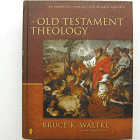
An Old Testament Theology by Waltke

book ot theo

That Bruce Waltke is revered in Old Testament scholarship is beyond dispute. His works on some OT books are the highest rated commentaries we have on them (particularly Proverbs and Micah). He’s written on most every section and genre of the OT and even contributed on Hebrew syntax. It comes as no surprise that Waltke would be chosen to deliver a comprehensive OT theology with those credentials. As he has done before, he even credits an associate who helped, in this case, Charles Yu, as a contributing author–but make no mistake—this is a Waltke work.

He gives 6 chapters of thorough explanation on what bible theology is as well as the importance of OT theology. By the time he’s done with this introduction, which compares to many a whole book on the market today, we are 170 pages deep.

Part Two covers chapters 7-28 and is labeled “Primary History”. It’s not just a chapter on every book or a combination of books of the Old Testament, yet every book that includes a historical element is covered. He lingers over the foundational Book of Genesis in covering the Cosmos, man, the Bride, the Fall, and the Noahic and Abrahamic Covenants. He follows a theological interpretation of Creation that doesn’t demand a literal creation, which is less than I would believe. Still, he was more conservative in places that I anticipated, and as works are graded these days, he would be labeled “conservative”.

Part Three covers chapters 29-35, is called “other writings” and addresses Wisdom Literature. As you probably know, that is one of Waltke’s specialties. The final 70 pages of this fine volume are made up of helpful indexes.

To my mind, this volume is one of the three most important OT Theologies on the market today. Because of the cruciality of OT Theology, and because of the three distinct approaches, I recommend having this Waltke volume along with Paul House and Eugene Merrill. If one is all you want, this book gives you the most material.

I received this book free from the publisher. I was not required to write a positive review. The opinions I have expressed are my own. I am disclosing this in accordance with the Federal Trade Commission’s 16 CFR, Part 255.
 

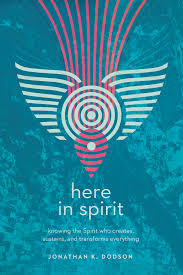
Here in Spirit by Jonathan Dodson

book here spirit

This book has a wonderful approach to the study of the Holy Spirit. Most such books run straight to controversy as if the Spirit was nothing more than an academic question or a “spirited” debate. The better ones remind us that the Spirit is a Person. This one by Jonathan Dodson goes one better by stressing that He desires relationship—a relationship that is not merely representative of the Father and the Son, but personal to Himself. The author went so far in that vein that repentance was required in his life for what was rank neglect of the Spirit on his part. Perhaps like me, you aren’t far behind him!

Dodson knows how to connect with this generation. I’m not sure the word “hip” is still in currency as I don’t have a hip bone in my body, but he knew how to pull in a great deal of popular culture. For the record, I don’t think I had ever seen even one movie he referenced, but he told enough of the plot that I could connect the dots easily. What won the day for me was his prevalent sincerity and contributive content.

He didn’t drown in tongues, or gifts, or other strange favorites, but he displayed a clear understanding that preferred to stay on task for a relationship with the Spirit. My strongest recommendation for this book is the positive conviction it brought to me. In short, I prayed differently this morning. In a book aimed at Christians at all points of our journey, what could be a better endorsement?

I received this book free from the publisher. I was not required to write a positive review. The opinions I have expressed are my own. I am disclosing this in accordance with the Federal Trade Commission’s 16 CFR, Part 255.

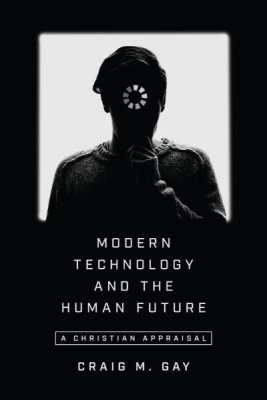
Modern Technology and the Human Future: A Christian Appraisal

book mod tech.jpg

We must have discussions like this one. A couple of decades pass and our very world has changed with smartphones and other electronic devices. It has affected Christians along with everyone else. We are finally pausing to search out the implications of this seismic shift. Several practical Christian books have probed how we might deal with a world that has changed and is not going back. (One by Tony Reinke lies on my desk). In this volume by Craig Gay, however, the broader theological implications are mined. This book is less of how you ought to alter your life in the days to come and more of what does it even mean. Both types of books are needed and I’m rooting for their success.

The author writes with balance. He neither denies his own use of the technology he writes about nor encourages its complete rejection. In fact, his analysis seems to embrace its good at least to the extent of sharing the Gospel and other wholesome features while exercising caution on the other end. Our society has changed. To what extent should a Christian change with it?

To bulk up his premise, the author surveys other paradigm-shifting technological advances from the plow to automated manufacturing. He traces how economic concerns are usually the driving force. He turns his discussion toward theology by considering “ordinary embodied human existence” with the background of the Incarnation of Christ and God’s mission for us.

The book is deep reading. If you find that kind of theological reading difficult, this book will be a challenge. Theological junkies will find it the perfect discussion of an all-encompassing subject. If you can handle academic reading, and enjoy well thought out analysis, this is the book for you.

I received this book free from the publisher. I was not required to write a positive review. The opinions I have expressed are my own. I am disclosing this in accordance with the Federal Trade Commission’s 16 CFR, Part 255.
The Christian Doctrine of Humanity (Crisp and Sanders, Editors)

book chr doc humanity.jpg

This collection of cutting-edge essays on the doctrine of humanity is the sixth installment in a series entitled “Explorations in Constructive Dogmatics”.  They proceed from the Los Angeles Theology Conference hosted by Fuller Theological Seminary. Previous entries addressed Christology, Trinitarian Theology, the Atonement, the Word of God, and the task of dogmatics. A wide-ranging group of specialists is assembled in each case and this time includes Marc Cortez, Hans Madueme, Ian McFarland, Richard Mouw, Lucy Peppiatt, and Frances Young, and total 12 contributors that look at humanity from many vantage points.

Let’s be clear. There’s no shallow wading here. Though these essays are not geared toward a popular audience, they are well written, There’s a good chance, however, that they will go deeper than you get in most volumes. If you’re game, then, this book is an important, challenging read. As I read, it struck me that many of these essays were in the realm where the doctrine of humanity bumps against the other major doctrines—Christology, Eschatology, Pneumatology, among others. Along the way, you will get a clear overview of where scholars are still debating this key doctrine. You will notice as well that current events are bearing on these theological issues as questions of how we personally identify ourselves is addressed as well, yet with a warmness toward biblical clarity and longstanding Christian belief.

All 12 essays were well done. My favorites were Marc Cortez’s look at “Nature, Grace, and the Christological Ground of Humanity”, Hans Madueme’s “From Sin to the Soul: a Dogmatic Argument for Dualism”, and  Lucy Peppiatt’s “Life in the Spirit: Christ’s and Ours”. I took something that helped me from each of them.

I imagine this will be a much-cited and influential book for some time to come as it fully succeeds in what it sets out to do.

I received this book free from the publisher. I was not required to write a positive review. The opinions I have expressed are my own. I am disclosing this in accordance with the Federal Trade Commission’s 16 CFR, Part 255.

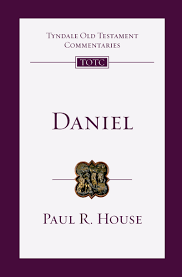
Daniel (TOTC) by Paul House

book daniel totc

The Tyndale Old Testament Commentary (TOTC) series scores again. This latest title is at least the tenth release in this current revision of the venerable series (current writers used earlier editions as young Christians in many cases!) and they are all a success—keeping the winning format and scope with more up-to-date scholarship and good writing. Snagging Paul House was a coup for the series too as he has already produced a much-used Old Testament Theology as well as coauthored an Old Testament Survey. To my mind, he worked within the established TOTC format as if it fit him like a glove.

Any commentary on Daniel bears the additional weight of the varying prophetic outlook of the reader. While that’s not an issue in many other books of the Bible, Daniel is second only to Revelation in that dynamic. Many will unfairly rate any commentary on these two books on this issue alone before they read the first paragraph. For the record, the TOTC series has always been amillennial. Though that is not my viewpoint, I’ve always found great insight in these volumes. This volume, too, delivers on many levels in my judgment even though that differentiation of perspective exists.

The Introduction gets to the point as this series demands yet delivers the goods. Some of the more perverse scholarly train wrecks on Daniel that dominate much literature is happily not the focus here. Let’s call it a clear conservative presentation. History is carefully unfolded. Literary, genre, and textual issues are all concisely unpacked. Daniel’s role in the canon is probed before theological themes are presented. Structure gets one paragraph called “Analysis” and a detailed outline.

The commentary itself is well done, again, in the TOTC style. Its best contributions are historical and theological. You will be able to trace easily the flow of the text. A few passages will have the drama of a prophetic outlook that may not match your own, but you will still learn much in the commentary.

I really like this book and am happy to have it at hand for future studies. Highly recommended.

I received this book free from the publisher. I was not required to write a positive review. The opinions I have expressed are my own. I am disclosing this in accordance with the Federal Trade Commission’s 16 CFR, Part 255.