I and II Thessalonians (NTL) by Boring

book thess ntl.jpg

Prolific writer Eugene Boring gives us this thorough commentary on I & II Thessalonians in the New Testament Library (NTL) series. A decade earlier he produced the commentary on Mark’s Gospel in this same series. That shows that he has far-ranging interests in New Testament scholarship. You will find that the same areas that he received praise for in the Mark commentary are true here. In short, he excels in historical scholarship and background information.

The book is designed with an introduction to I Thessalonians followed by commentary on it, and then an introduction to II Thessalonians followed by its commentary. I enjoyed the introduction to I Thessalonians much more than that for II Thessalonians because I just can’t agree that the second letter came from some hand other than Paul’s.

He begins the introduction by explaining what it is to read in varying contexts including the reader, the canonical context, the mediating context that reviews church tradition and academic research. He also has some insight on recent scholarship. What follows is the highlight of the introduction: his description of the historical context of I Thessalonians. That includes a look at Paul’s life, the city of Thessalonica, and the church therein. He has a few words on the genre and rhetoric of the letter. After an outline and a brief discussion of structure, he gives his theological perspectives on the book. The commentary proper is quite helpful and teems with great historical information.

The introduction to II Thessalonians is consumed with it being Deuteropauline. Though that is a common thought modern scholarship, I find the arguments particularly weak and circular. The commentary, however, is equal to that in the first letter.

Mr. Boring is one of the most respected writers in this series and I can understand why. This is a fine commentary.

I received this map free from the publisher. I was not required to write a positive review. The opinions I have expressed are my own. I am disclosing this in accordance with the Federal Trade Commission’s 16 CFR, Part 255.
Understanding Biblical Kingdoms & Empires

book under bib kingdoms.jpg

These Carta introductory atlases are a lot of fun. This title introduces and compares the biblical kingdoms and empires that framed the Old and New Testaments. It’s written by Paul H. Wright who has produced a major atlas and other of these introductory atlases. I’ve found all his works accessible, helpful, and well-written. This title is no exception.

After briefly describing the world of the Bible on a physical map, he describes the origin of the people of Israel as well as the earlier kingdoms around them that influenced their history. From there, he gives a good overview of the rising kingdom of Egypt as well as their famous interaction with Israel. After that interaction, Egypt, as you well know, greatly declined and Israel went from a tribal nation to a monarchy. The heights of her glory were the empires of David and Solomon. This is all well described. Next, we have the Assyrian Empire (after this point Israel always had to deal with the dominant world power to some degree) and Israel’s divided kingdom. You will learn about the Assyrian Empire, the Babylonian Empire, the Persian Empire, and Israel’s trials during these periods. Perhaps lesser-known to some Bible students, you will then learn of the Greek Empire of Alexander the Great, the Ptolemaic and Seleucid Empires as well as the Hasmonean Kingdom. The balance of this book of 40 attractive pages introduces us to the Roman Empire that brings us into the New Testament.

The work is the expected Carta experience. Beautiful photographs, timely illustrations, and the best maps in the business. When you factor in the essential nature of understanding the kingdoms that affected Israel during the Old Testament, this book meets a real need and I highly recommend it!

I received this map free from the publisher. I was not required to write a positive review. The opinions I have expressed are my own. I am disclosing this in accordance with the Federal Trade Commission’s 16 CFR, Part 255.
First and Second Samuel: Interpretation Bible Commentary

book i sam.jpg

I’ve thought for some time that the value of the Interpretation Bible Commentary series is in its theological reflection. It’s a critical series, but I often find the theology valuable enough to check out even though I don’t agree with the criticism nor the methodology that’s used. Walter Brueggemann is perhaps the best writer in the series for pulling out these theological gems that no one else thinks of. People all across the theological spectrum are impressed by his creative writing.

The introduction given is hardly an introduction for the books of Samuel at all. In only a few words, he describes the period of the books of Samuel as one of major social change. Going from a tribal system to a monarchy would indeed be quite a transition. He sees three factors in that social change that we can easily agree with. From there, in a few more pages, he provides more introduction to his approach than to the overall books of Samuel themselves. This is not a standard academic introduction.

While he may have had little interest in the introduction, he poured all his efforts into the commentary itself. Again, there are critical perspectives you may not agree with, but there are nuggets all around for those who are looking. Every passage will likely have them. These nuggets will be both theologically profound and exquisitely stated. This commentary is worth looking up.

I received this map free from the publisher. I was not required to write a positive review. The opinions I have expressed are my own. I am disclosing this in accordance with the Federal Trade Commission’s 16 CFR, Part 255.
The Bible Unfiltered by Michael Heiser

book bible unfiltered.jpg

This book is unique. There are 60 short chapters that cover many topics. What makes the book stand out on the shelves is that the topics it covers are often those you won’t find many other places. His title suggests his point – we place too many filters on our Bible before we even open it to study. The subtitle “approaching Scripture on its own terms” is a call to fresh study with real attempts to remove those filters.

The 60 chapters are divided into three parts. Part one addresses the broad issues involved in interpreting the Bible responsibly. It’s in this section that he attempts to prove to you that you do, in fact, have unhelpful filters on your Bible. Parts two and three cover the Old and New Testaments respectively. These two sections are different than the first one in that they are not really looking at broad hermeneutical mistakes made in either Testament, but rather specific points where we drop the ball.

If I had a criticism of this book, it would spring from the same place where its celebrated uniqueness comes from. At times, it seems Mr. Heiser interprets on the edges. Too much time on the edges is dangerous for some Bible students because they lose the big picture. To get around this criticism, you must accept this book for what it is: a provocative attempt to force you to see if you are reading from the Scriptures rather than into them.

Several of the topics covered were fascinating. A few I simply could not agree with based on the scriptural evidence. A case in point would be chapter 12 where he claims that all our Genesis commentaries are eight-track tapes. I’m sorry, but what one scholar wrote about in 2010 does not instantly become the gold standard for all Christians, even on an obscure topic like the one in that chapter.

You have got to appreciate what this book is trying to do. We often neither search the Scriptures diligently enough nor think deeply enough. This book will push us to do better and that’s its value. Along the way, you will likely gain some new insights on scriptural subjects you have thought about in some time.

I received this book free from the publisher. I was not required to write a positive review. The opinions I have expressed are my own. I am disclosing this in accordance with the Federal Trade Commission’s 16 CFR, Part 255.
Understanding the Holy Temple of the Old Testament

book holy temple ot

Leen Ritmeyer is my favorite modern writer on the Tabernacle in Israel’s earlier history and the Temple from Solomon’s Temple all the way to Herod’s Temple. His earlier major work, The Quest, is the gold standard on the Temple from either a historical or an archaeological perspective. Now Carta gives us one of their fine introductory atlases (They have a whole series of these helpful books) on the Holy Temple of the Old Testament. For this colorful, attractive work Mr. Ritmeyer is joined by his capable wife, Kathleen, to produce this helpful book that you will find incredibly enlightening.

The book begins with an introduction that reminds us that holiness is a key element in thinking about the Tabernacle. That’s followed by a section called the Genesis Sanctuary as the authors describe what they call the Proto-Tabernacle. That’s an interesting perspective that I hadn’t thought of. Next, we have some information on Melchizedek and Abraham, followed by great information on the Tabernacle. Every major component is explained and profusely illustrated. There’s even a section on the journeys of the Tabernacle and how that was done.

Solomon’s Temple is carefully explained, as well as the differences we find in its description between Kings and Chronicles. There are some great explanations of the rock at the top of Mount Moriah and its relation to the current Dome of the Rock. They will explain Hezekiah’s Temple as well as Ezekiel’s Temple and the Temple Scroll. Next, we will learn about the Post-exilic Temple, the Hellenistic Temple Mount, and the Hasmonean Temple Mount.

This book is the perfect way to learn a clear overview of the Tabernacle and Temple in 48 large pages. The word that comes to my mind for this book is “ideal”. You will want to look up its companion volume, Understanding the Holy Temple Jesus Knew, which is also an outstanding asset.

As with any Carta resource, there are outstanding pictures and maps. What stands out especially in this book is the diagrams of the Temple as well as pictures of reconstructed models. This book is well done!

I received this map free from the publisher. I was not required to write a positive review. The opinions I have expressed are my own. I am disclosing this in accordance with the Federal Trade Commission’s 16 CFR, Part 255.
The Lost Sermons of Spurgeon: Volume 3

bppl spur 3.jpg

I love these lost sermons of Spurgeon more as every new volume is released. Here we are blessed to receive volume 3 of what will be an incredible 10-volume set for both Spurgeon fans and any who love gospel preaching. The design and setup match the previous two volumes, but I notice the sermon notes are becoming fuller as Spurgeon must’ve started keeping more careful notes.

With this volume, I became even more impressed with the editor, Christian T. George. It’s almost as if he went through these notebooks with a magnifying glass and nothing escaped his eye. He made sure we had everything he observed. Be sure to glance through the notes that follow each sermon. I even noticed that he traced down some of the sermon illustrations to volumes in Spurgeon’s library! I guess our beloved Metropolitan Tabernacle sermons will seem somewhat inferior after this set is finished. I, for one, appreciate the attention to detail that Mr. George brings to this project. B & H gave this production worthy packaging to make something truly beautiful.

Another observation: Spurgeon started hitting his stride in producing sermons that we would expect from him in this volume. As was his custom throughout his ministry, he is all over the Bible. It would be hard to argue that anyone was Spurgeon’s equal when it comes to textual preaching. The man could wring the Gospel out of almost any text! This book needs no recommendation from me – obviously its pure gold!

I received this book free from the publisher. I was not required to write a positive review. The opinions I have expressed are my own. I am disclosing this in accordance with the Federal Trade Commission’s 16 CFR, Part 255.

Understanding the Maccabean Revolt: An Introductory Atlas

book mac revolt.jpg

If you are like me, the silent years between the Old and New Testaments is a place of weakness as a Bible student. There were turbulent events that changed many things about the political world situation that ended the Old Testament to the Roman control firmly in place when the New Testament began. Part of that important transition had to do with the Maccabean revolt. This beautiful introductory atlas by Carta that matches the style of several attractive introductory atlases now in print by them is the perfect place to correct the deficiency of your biblical knowledge.

The work of three highly-respected scholars was effectively molded together to give us a vivid overview. Michael Avi-Yonah who has prolifically written on Bible history and archaeology is the original contributor. Two other scholars from Israel, Shmuel Safrai and Ze’ev Safrai, combined to finish and update this useful work.

In this book, you will learn about the Seleucid Empire, the factors that led to the Maccabean revolt, key battles over the century of the Maccabean revolt, key players, and the effects on Jerusalem. The text reads well. The pictures are beautiful and effectively illustrate the material. In fact, you will find yourself staring at them and feeling you are there.

And as always with these Carta titles, there are the wonderful maps. The preeminent mapmaker of our day really outdid themselves in this work. The number of maps in a work of 40 oversized pages is incredible. It’s as if there’s a map to introduce every movement the text tells you about. The scale and amount of information on every map are perfect. The visual representation of battles was especially effective. I’ve seen whole Bible atlases that had less quality maps to cover all biblical history than this one has for only one century of Israel’s history. I’ve reviewed almost every Bible Atlas on the market today, and nobody comes close to touching what Carta provides on the Maccabean revolt. I’ve loved all the introductory atlases by Carta but be sure not to think that this is the one you can pass by because it’s too obscure. No, you will never regret having this introductory Atlas at your disposal to explain a vital component of Israel’s history.

I received this book free from the publisher. I was not required to write a positive review. The opinions I have expressed are my own. I am disclosing this in accordance with the Federal Trade Commission’s 16 CFR, Part 255.
The Lord Is Good by Christopher R. J. Holmes

book lord good

This book by Christopher R. J. Holmes challenged me. For sure I enjoyed it, and I learned great things, but this is no lazy summer afternoon reading. You can decide for yourself, but I need books like this. I need to be pushed past the fluff that prevails in Christianity today. I can’t say I agreed with every single word he said or every conclusion he drew, but I felt a connection with Mr. Holmes because I felt on every page that he sincerely believed that the Lord is good!

Don’t let the subtitle “seeking the God of the Psalter” lead you to believe that this is some sort of commentary on the Book of Psalms. Truth be told, had the printer accidentally left off the subtitle, I would probably have only thought that he quoted Psalms more than other books of the Bible. This observation is no criticism, however, because this is a profound theological work. Still, you will likely see a few verses in the Psalms far differently after reading this book.

As I read this book, I thought at times that the author could easily go to the field of philosophy and succeed. Still, his biblical observations were rich. At other times, I thought he had something of a love affair with Thomas Aquinas and was at least a member of the fan club of Augustine and Barth. For me, what he drew from each of them and put together was closer to what I would think than any one of the three individually. Mr. Holmes deserves credit because it would be a gross misrepresentation to say that he merely regurgitated what others had said. These three theologians have put such a strong stamp on what Christianity believes on the subject of the goodness of God that it would be impossible not to greatly interact with them in a book like this one.

There are nine chapters in this book that cover the subjects of simplicity, you are good (that doesn’t mean what you first think), goodness and the Trinity, you do good, the good Creator, goodness and evil, teach me your statutes, goodness and Jesus Christ, and perfection. I could only read one chapter, or sometimes only half a chapter, at a time. There was too much to take in! Every chapter was great, but my personal favorite was the one on goodness and evil. That one really helped some light bulbs come on for me.

I’ve learned that this book is part of IVP’s series entitled Studies in Christian Doctrine and Scripture. Though this is by far the most interesting subject to me of those released, if this series can turn out more works like this one it will be a dandy.

We all have our systematic theologies on our shelves, but this is the type of theological work that needs to find its place beside them. The Lord’s attribute of being good is brought alive here and I’m a richer person for it.

I received this book free from the publisher. I was not required to write a positive review. The opinions I have expressed are my own. I am disclosing this in accordance with the Federal Trade Commission’s 16 CFR, Part 255.
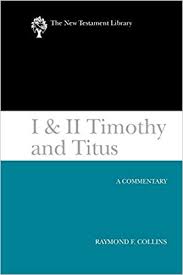
Leviticus (OTL) by Gerstenberger

book lev otl

Erhard Gerstenberger replaces Noth in the Old Testament Library (OTL) series with this volume. It strikes me differently than many other volumes in this series. Whereas many volumes in the series make a greater theological contribution than an exegetical one, this one gives us little theology around its exegesis. The whole series is known as a critical one yet in this volume it seems more pronounced to me. Known as a form critic, the author talks much about sources. Those discussions seem nebulous and unprovable to my mind and give the text a devastating uncertainty. How deeply you fall into the critical viewpoint will determine how high you rate this volume. If you’re more conservative like me, you may not find the theological compensations that some others in the series provide.

The Introduction begins by describing difficulties in reading the Bible. The aforementioned subject of sources arises immediately. He describes the audience as “a colorless someone” and does not demonstrate a passion for the book of the Bible that he commentates on that is found in the best commentaries. He discusses authorship, subsequent influence of cultic law, and structure. He takes the critical line across the board.

In the commentary proper, he does provide a lot of exegesis (the best trait of the book) and a lot of detail about the ceremonial things that are foreign to our thinking. He would bring up things like feminist concerns that put him at odds with the text.

In a nutshell, critical scholars will likely rate this book highly, those doing exegesis will appreciate some details, and more conservative readers will likely not enjoy this book as much as several others in the series. In fairness, it could be that the Book of Leviticus doesn’t lend itself to the same kind of theological treatment several others in this series provide.

I received this book free from the publisher. I was not required to write a positive review. The opinions I have expressed are my own. I am disclosing this in accordance with the Federal Trade Commission’s 16 CFR, Part 255.

Determined to Believe? by Lennox

book determined

This book is one of the most thoughtful, balanced, and needed volumes that I have seen a long time in the always turbulent Calvinist/Arminian debate. He takes us back before these later labels to the more correct label of theological determinism and helps us wrestle with the sometimes tricky concepts of the sovereignty of God and human freedom. In tone and in content this book is a tour de force that refuses to accept the theological constraints that have been foisted upon us and takes us back to the Bible itself.

Both in the brief prologue and the introduction on what this book is about, we immediately notice something that is rare in this debate –civility. There’s no way he can agree with everyone, but he is altogether kind to those with whom he cannot. Occasionally, I almost wondered if he’s spilled too much ink in a cautious attempt to be respectful. Still, that may be what this subject demanded.

He had me by just a few pages into chapter 1. His discussion of the nature and limitations of freedom brought the subject into clear focus as he explains the difference between the liberty of spontaneity and the liberty of indifference. He introduces terms like determinist, indeterminacy, compatibilists, and incompatiblists. He makes an indisputable case that there can be no morality without freedom, nor love without free will. He gives a great discussion of how there are both atheists and Christians who hold to determinism. Chapter 2 dives into various kinds of determinism including physical determinism and theistic determinism. The logic employed is flawless and unanswerable. Chapter 3 develops some of the earlier thoughts to discuss the moral problem with determinism. As you will see, there is a major moral problem with it. Chapter 4 with its interesting title of “weapons of mass distraction” talks about the plethora of labels that have overtaken this debate. He turns us to Scripture and shows us what the apostle Paul said about following men or labels and how perhaps this debate stumbles out of the gate in the approach to it that so many of us take.

Chapter 5 begins part two that now feels comfortable to address God’s sovereignty and human responsibility head on. Again, he writes with clarity and does not allow himself to be bound by the clichés that have robbed the debate of its vitality. In chapter 6 he turns to the biblical vocabulary and instead of turning to a theological book goes straight to the Bible to discuss and define foreknowledge, predestination, and election. Part three begins with a chapter on human capacity and its limits and it is where we are now able to discuss some of the common arguments given, including some of the letters of TULIP. The next chapter looks at the human condition and digs into God’s righteousness and justification by faith. Chapter 9 tackles what the Bible says about being drawn by the Father and coming to Jesus Christ. Chapter 10 asks hard questions about the common explanations given for regeneration. Chapter 11 cycles to the gospel and human moral responsibility. The balance of the book looks directly at some of the key Scriptures that serve as the battleground of this issue: Romans 9 – 11 (5 chapters), several passages on assurance (1 chapter), several passages on endurance (1 chapter), and passages in Hebrews (2 chapters). The book ends with a very brief epilogue and questions for reflection.

I don’t see how you’d want to dig into this subject without availing yourself of this incredible book. I give it the highest recommendation!

I received this book free from the publisher. I was not required to write a positive review. The opinions I have expressed are my own. I am disclosing this in accordance with the Federal Trade Commission’s 16 CFR, Part 255.