Christ Exalted Sermons of Jonathan Edwards–A Review

book edwards sermons

Hurrah for more Jonathan Edwards sermons! Hendrickson Publishers already graced us with Revival Sermons of Jonathan Edwards a few months ago and now they have unearthed some other jewels for us. I’m a pastor who believes in having a healthy dose of sermons in my library, and have could we have a real sermonic library without some Edwards?

There’s no doubt that his sermons are uniquely his own. I can’t think of anyone who would organize a sermon quite like he would. He sees no problem in being long. His style usually involves beginning with some doctrine on the subject and then branching out into pointed, applicable material to take the Scripture home to the hearer’s hearts. I wouldn’t recommend that any of us preach a sermon put together as his are, but his logical mind and scriptural acumen are helpful to us all. Read him more for personal, theological, and doctrinal reflection rather than a prototype for preaching today.

These sermons, as the title implies, exalt Jesus Christ. The first sermon tackles a fine text most likely only rarely preached–Isaiah 32:2. If the title “Safety, Fullness, and Sweet Refreshment in Christ” sounds odd, I assure you he found all three in Christ for us. I love his preaching on one of my favorite texts in Revelation 5:5-6 and drawing out the excellency of Christ. He brings alive so much of Christ’s character in it. In the sermon “Jesus Christ the Same Yesterday, Today, and Forever” he not only exposes how Christ transcends time, but lays out how that fact should impact our lives.

The next sermon “Christ Exalted” explains how He is exalted in His work of redemption. It’s a treat to have the sermon he preached at David Brainerd’s funeral from 2 Corinthians 5:8. He makes clear our assurance of going directly into the presence of Christ at death. There are some post-sermon comments added as well. Preachers will find encouragement from his “Christ, the Example of Ministers” from John 13:15-16. The last sermon, “Christ’s Agony” takes us to Gethsemane in Luke 22:44. I disagree on a few points, but there is much to ponder.

Edwards’ sermon had the hand of God on them when he preached them and it’s a privilege for us to revel in these proven sermons. This book is a nice, durable, attractive paperback and I recommend it.

I received this book free from the publisher. I was not required to write a positive review. The opinions I have expressed are my own. I am disclosing this in accordance with the Federal Trade Commission’s 16 CFR, Part 255.
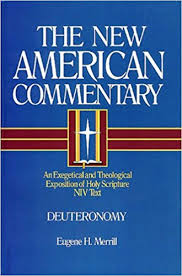
Deuteronomy (NAC) by Merrill

book nac deut

Eugene Merrill is a name you can trust. Without fail, his writings are clear, conservative, and helpful. This title is on one of the most important books in the OT. Jesus often quoting Deuteronomy proves that fact. Fortunately, this volume is in the economical, pastor-friendly New American Commentary (NAC) series that many pastors like me absolutely love.

Merrill begins the Introduction by explaining the meaning of the title, and then slides into date and authorship. Critics have been especially abusive to Deuteronomy, so it’s nice to have a strong case made for those of us who accept the Bible as God’s Word without reservation. He succinctly describes the historical background for us too. He analyzes structure to good effect, briefly describing the path of sometimes wobbly scholarship before bringing us back to good sense. He sees no credible evidence to question the canonicity of Deuteronomy. After providing an outline, he gives us what he calls “analysis of the contents of the book”. It is well done. He ends the Introduction with a fine overview of the theology of Deuteronomy.

The commentary itself is superb and much more trustworthy than those of many other series. Every passage I perused gave the kind of help I like to receive.

This book is an excellent addition for every pastor or teacher. I highly recommend it.

I received this book free from the publisher. I was not required to write a positive review. The opinions I have expressed are my own. I am disclosing this in accordance with the Federal Trade Commission’s 16 CFR, Part 255.
Two helpful IVPNT Commentaries

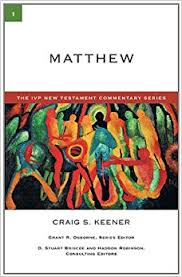
book ivpnt matt

This volume is a precursor to Craig Keener’s large socio-rhetorical commentary on Matthew’s Gospel. Over the last several years he has garnered quite a reputation as a voluminous writer of large commentaries. After that large Matthew commentary, Keener gave us a large 2-volume commentary on John and then a massive 4-volume commentary on Acts that is so big it could be made into a piece of furniture. Before all of those prolific writings, Keener tried his hand on Matthew here in the respected IVP New Testament series. This series is geared toward “solid, biblical exposition and helpful explanatory notes in … user-friendly format.”

He begins his almost 30-page Introduction with a discussion of his approach and desire that the shock value of Jesus’ statements remain. He then explains how source, form, and redaction criticisms have the study of Matthew. I’m not sure that would be as important to his target audience as he feels, but he is clear in his presentation. In different ways he discusses Matthew, his historicity, as well as the structure, authorship, provenance, and date. He is better, in my view, discussing unique features of Matthew’s Gospel.

The commentary is competent and helpful. It is more in line with the aims of the series than the Introduction. I believe it could be an asset to pastors and teachers. It’s the right length for this type of series and provides the right level of help. Worth checking out.

I received this book free from the publisher. I was not required to write a positive review. The opinions I have expressed are my own. I am disclosing this in accordance with the Federal Trade Commission’s 16 CFR, Part 255.
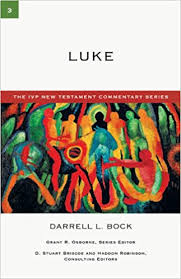
book luke ivpnt

Darrell Bock is clearly one of the most-respected scholars on Luke and his Gospel. It’s interesting to note that Bock first turned out a major commentary on Luke Gospel in the BECNT series before he attempted this more streamlined, expositional approach. His love of Luke’s Gospel is clear and he seems to enjoy this chance to move past the technical discussion of Luke to this more relevant approach.

He begins his Introduction of Luke by explaining Luke’s unique place among the Gospels. He skillfully discusses authorship, audience, date, and purposes and arrives at reasonable conclusions throughout. He briefly outlines Luke’s major theological themes and explains the value of preaching Luke. His is a good example of a succinct Introduction for these mid-level commentaries.

In the commentary he made the leap from his earlier exegetical commentary to this type of work. I thought he found his voice as a clear commentator on Luke quite well. In a briefer format, he was able to give meaningful help. His BECNT work is more well known, but I believe this book could help a greater swath of people. I recommend it.

I received this book free from the publisher. I was not required to write a positive review. The opinions I have expressed are my own. I am disclosing this in accordance with the Federal Trade Commission’s 16 CFR, Part 255.

 

Carta’s Interesting New Releases!

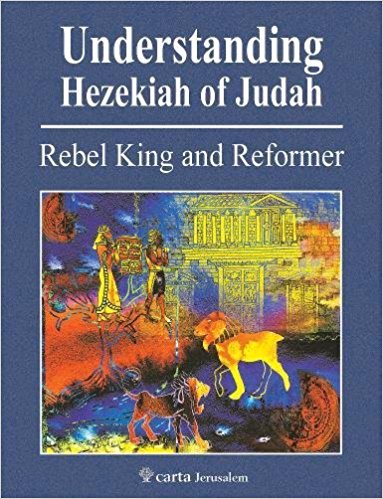
book hezekiah

Here’s 3 of Carta’s 2017 releases plus a catalog title that was the first of these attractive large, educational, handy (40 pages each) volumes:

1. Understanding Hezekiah of Judah 

Hezekiah is a worthy focus of study for Old Testament students. Not only is he the greatest king after David, but he is the last great hurrah of Judah. His reforms ran the deepest, his faith was the most clearly on display, and it was all against the backdrop of the turbulent times he lived. This book brings it all alive!

Mordechai Cogan, a respected Jewish scholar wrote this volume. You may remember his name from writing major commentaries on 1 & 2 Kings in the Anchor Bible Commentary series. I may not agree with every historical conclusion he makes, but his passion for his subject is clear on every page.

You are going to love the gorgeous photos, fine graphic illustrations, and, of course, those wonderful Carta maps. He explains how Hezekiah eliminated rural altars and brought all worship back to the Temple in Jerusalem. (When Cogan speaks of the “Israelite cult” he is referring to their uniqueness in the religious world of their times).

Archaeological data and Assyrian accounts are brought in to enliven the story. What you end up with is a fascinating portrait of Hezekiah and his times that any Bible reader would have to enjoy!

I received this book free from the publisher. I was not required to write a positive review. The opinions I have expressed are my own. I am disclosing this in accordance with the Federal Trade Commission’s 16 CFR, Part 255.
book samaritans

2. Understanding the Israelite-Samaritans

Fascinating! I can think of no other word to describe this book. Benjamin Tsedaka, who is an Elder in the Samaritan community in Israel, is writing as one who lives his subject. As the subtitle suggests, the portrait drawn takes us from biblical to modern times. Frankly, both ancient and modern times are fascinating.

Tracing back to the Northern Kingdom days of the Divided Kingdom Era, and being prominent in some episodes of Jesus’ ministry as well as one of His most famous parables, the Samaritans are a worthy subject of study for Bible students today.

The book begins with a general history, then gives a review of their area, and even tells where settlements of their people were. In section 4, we get a careful explanation of who the Samaritans are and who they are not. We are told of their Scriptures, the Samaritan Pentateuch, which are the only Scriptures they recognize, and the difference with the Masoretic text. Then we learn their prayers, their customs, and their way of life.

A book written by someone who believes in what they write always reads the best and that is the case here. With the incredible subject, you have the Carta maps and photos, which are the best out there! There’s nothing in print quite like this book!

I received this book free from the publisher. I was not required to write a positive review. The opinions I have expressed are my own. I am disclosing this in accordance with the Federal Trade Commission’s 16 CFR, Part 255.
book temple jesus

3. Understanding the Holy Temple Jesus Knew

Leen and Kathleen Ritmeyer are Temple Mount experts. More than scholars, they have been involved in all major excavations in Jerusalem for the last 40 years. They are uniquely qualified to tackle the subject of this fine book. In fact, Carta has already published their larger work, “The Quest: Revealing the Temple Mount in Jerusalem“.

Now they give us a volume that fits in with the attractive series of 9×12 glossy, 40-page books that Carta has been turning out over the last few years. The incredible Carta maps are used throughout, as are exceptional pictures and illustrations. I love the reconstruction drawing of Jerusalem in Jesus’ day on page 6!

This is a worthy subject as several New Testament events of Jesus’ ministry took place in or around the Temple. The first half of the book explains the Temple itself as we understand it from the Bible and archaeology. A fine, succinct overview is given.

The second half of the book more specifically discusses Jesus there. What the reader gains is a vivid picture of key Gospel events!

This is another Carta winner! No Bible reader could fail to glean from this beautiful book. I highly recommend it!

I received this book free from the publisher. I was not required to write a positive review. The opinions I have expressed are my own. I am disclosing this in accordance with the Federal Trade Commission’s 16 CFR, Part 255.
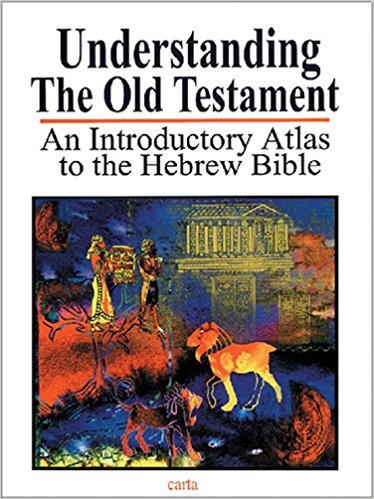
book ot atlas

4. Understanding the Old Testament: An Introductory Atlas to the Hebrew Bible

Here’s the first of the gorgeous Carta glossy 40-page volumes for Bible students. Baruch Sarel wrote this little jewel filled with incredible Carta maps, pictures, and illustrations. The maps alone make the book worthwhile, but there’s so much more.

There’s an overview of each book of the OT, a description of the Ancient Near East, another of all the peoples and lands that impacted OT history, and an explanation of the patriarchs and matriarchs of the OT. From there, the story of the OT is told historically with text and well-chosen maps. The kings of Israel and Judah are described, as are the corresponding prophets.

I don’t see how a better overview of the OT could be fit in 40 pages. This would be perfect for Bible or Sunday School classes as well as personal study. Chalk this up as another highly-recommended volume!

I received this book free from the publisher. I was not required to write a positive review. The opinions I have expressed are my own. I am disclosing this in accordance with the Federal Trade Commission’s 16 CFR, Part 255.
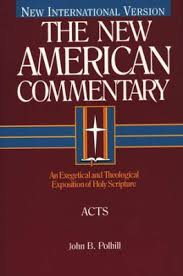
Acts (NAC) by Polhill

book acts nac

If you’re looking for a good mixture of being pastor friendly and economical, you should look up this volume in the highly-regarded New American Commentary (NAC) series. John Polhill is comfortable in this territory as he has also given us the helpful “Paul and his Letters” with the same publisher. He’s had two decades of teaching and preaching on Acts and it shows in this book. In the first paragraph of his preface, he tells us that he aims this commentary at pastors first. He has succeeded in his objective.

After reading how he aimed first at pastors, I was surprised at the depth in the Introduction. I’ve reviewed a few major exegetical commentaries on Acts, and Polhill addressed every issue they did. He covered it well too.

He begins by showing where Acts can be found in early tradition. He surveyed all the information about authorship and date and reaches conservative conclusions. He covers sources and genre. He explains the importance of speeches in Acts. He discusses Luke as both a historian and a theologian. He provides some maps of Paul’s journeys and has a detailed outline. All told, the Introduction runs through page 76.

The commentary is truly helpful. I suspect that pastors will agree that’s its value is good. That’s my opinion for sure.

I received this book free from the publisher. I was not required to write a positive review. The opinions I have expressed are my own. I am disclosing this in accordance with the Federal Trade Commission’s 16 CFR, Part 255.
Proverbs, Ecclesiastes, and Song of Songs (NAC) by Garrett

book nac Prov

Here’s the pastor’s choice for the three challenging books of Proverbs, Ecclesiastes, and Song of Solomon. In near 450 pages respected scholar Duane Garrett gives what most want: a succinct, weighty, and helpful commentary on these books that will likely be preached from less than many others.

Garrett begins with an Introduction on Proverbs. He starts with a general discussion of Wisdom in the Ancient Near East and transitions into Israelite Wisdom. He provides a lengthy section describing all the proverb classifications scholars have come up with. That subject is more interesting to scholars than pastors, but he explains it well. He also covers the varying opinions on structure. In discussing authorship and date, he wades through the varying conclusions to reach conservative conclusions.

The commentary is good, but he spends time defining classification of every proverb. My only criticism of this book is that the commentary on Proverbs needs to be about 25% longer if a revision is ever done.

Garrett does a fine Introduction on Ecclesiastes as well. Since so few scholars believe Solomon could have written it, he has a lot to wade through to reach conservative conclusions. This was my favorite Introduction of the three. He sees an evangelistic purpose to the book.

The commentary on Ecclesiastes is well done and especially enlightening.

He turns out another careful Introduction on the Song. I can’t agree with his conclusion that it’s only a discussion of human love, but he lays out the differing viewpoints well. The other introductory issues are laid out with equal thoroughness. Garrett went on to write a large, major exegetical commentary on the Song in WBC. The commentary here is once again quite helpful.

This book is the perfect volume for these three books for pastors or teachers. I highly recommend it!

I received this book free from the publisher. I was not required to write a positive review. The opinions I have expressed are my own. I am disclosing this in accordance with the Federal Trade Commission’s 16 CFR, Part 255.
1, 2 & 3 John (ZECNT) by Jobes

book ept jn zec

Mark this down as another outstanding entry in an exceptional series. Jobes has provided a thoughtful, scholarly, and easy to read volume here in the Zondervan Exegetical Commentary (ZECNT) series. My appreciation for the layout of this series grows with every volume I peruse.

Jobes begins her Introduction to all three Epistles of John by describing their significance. She throws down the gauntlet of a strong Christology in our pluralistic world. She concludes that the writer of these letters matches the Gospel that also carries John’s name. She reasons that the author had to be John or a close associate. As with most commentaries addressing John, she writes about the gnostic issue that has obsessed scholars. She seems to feel that scholars have overthought the issue. John has written against “some serious misunderstanding and distortion of the gospel”. In discussing the similarities of John’s Gospel with his Epistles, she provides a chart that allows you to see for yourself. She surmises a conservative dating of these epistles.

Next, she provides an Introduction to 1 John. She well explains its genre and purpose. She admits its complex, or almost spiraling structure and ends with an outline. Next, she jumps into helpful commentary on the text of 1 John. She seems quite comfortable in the ZECNT format and uses it to advantage. A brief Introduction precedes the commentary of 2 & 3 John respectively as well.

This is my favorite modern exegetical commentary of John’s Epistles. If there is any better, I’ve not seen it. You will want this commentary!

I received this book free from the publisher. I was not required to write a positive review. The opinions I have expressed are my own. I am disclosing this in accordance with the Federal Trade Commission’s 16 CFR, Part 255.
The Expositor’s Bible Commentary (Rev. Ed.)–Volume 8, Daniel-Malachi

book ebc 8

Mark me down as someone who has loved and used the earlier EBC set for years. This new set, edited by Tremper Longman and David Garland, has been one I’ve wanted to check out and this volume 8 is my first foray into the set. One thing is clear: the revision is a success. Not only is much brought up to date and improved, but the way the original series was envisioned remained. In other words, real depth with a corresponding succinctness for busy pastors.

In Daniel, Andrew Hill replaced the late Gleason Archer. There’s a much more scholarly feel and less direct eschatology. Gone is Archer’s clear premillennial position that is replaced by Hill’s survey of opinions. Still, Hill provides what I’d call an astute presentation that can run with the big dogs of exegetical commentaries. A similar thing happened in Carroll R.’s replacement of Leon Wood for Hosea.

Richard Patterson took his fine work on Joel and made it better. In Amos and Micah editor Tremper Longman took the late Thomas McComiskey’s work and updated to the extent that he is now listed as the co-author. The effort is a good one. Carl Amerding updated his work on Obadiah, Nahum, and Habakkuk to good effect. John Walton turned in a more scholarly effort on Jonah than did H. L. Ellison, though I wish he could see his way clear to see it as “journalistic history”. He still came to pretty conservative positions.

In Zephaniah, Larry Walker updated his earlier work and I really loved it. Haggai and Malachi were greatly improved by Eugene Merrill, a scholar I always enjoy. Kenneth Barker updated his work on Zechariah and kept a dispensational outlook. It was yet another success for the project.

This book has a lot going for it. A quality help on Daniel and all the Minor Prophets between two covers means that for an economical price you can build your library more quickly. This is a winner all the way!

I received this book free from the publisher. I was not required to write a positive review. The opinions I have expressed are my own. I am disclosing this in accordance with the Federal Trade Commission’s 16 CFR, Part 255.
James (NICNT) by Scot McKnight

book james nicnt

Scot McKnight gives us this replacement volume in the venerable New International Commentary (NICNT) series. That series was aimed at pastors originally, but has since expanded its scope for scholarly types. Pastors can glean deeply from it, but it covers all the issues. Still like the earlier volumes is the fact that it has no untranslated Greek. A funny aside is how a major volume in another series by Eerdmans (James by Moo in the Pillar series) is written by McKnight’s dear friend. Both are well worth having.

In McKnight’s Introduction to James he shows a keen appreciation for the complexities of the letter even while confessing that some of those complexities were foisted on James by scholars. His charge of some scholars being “obsessed” with certain strange developments of study is undoubtably true.  His discussion of “James in the Story” is at once interesting and clear. He does a fine job in explaining how James gets tangled with Paul, even though it may be more of our starting point than a true divergence. Still, I can’t agree with all his Paul-James controversy points.

His discussion of who James was carefully laid out the possibilities and reached conservative conclusions after wading deeply. His dating of James was early. His portrayal of themes in James was helpful and the section on structure was excellent as it shared so many opinions of other influential scholars before he arrived at his own.

The commentary section focuses to advantage on the text. I enjoyed it. Again, it might sound scholarly, but it will add to your understanding of this letter that perplexes many. You should check it out!

I received this book free from the publisher. I was not required to write a positive review. The opinions I have expressed are my own. I am disclosing this in accordance with the Federal Trade Commission’s 16 CFR, Part 255.

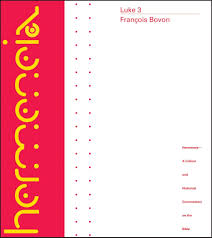
Luke 3 (Hermeneia) by Bovon

book lk 3

Many multi-volume commentaries lose steam by the final volume. In this case, Francois Bovon carries a consistently high standard of quality to the end of this three-volume set in the Hermeneia series. Known in the commentary world for its great theological reflection, this final commentary continues its wow factor all across its pages.

This volume covers Luke 19:28-24:53. That means that he will pick up the story Jesus’ entry into Jerusalem and then follow Luke through the Resurrection of Jesus Christ. As with the other volumes, each passage begins with a bibliography, his translation, an analysis that includes structure and textual issues, commentary, and an excellent history of interpretation. Sometimes his comments on structure are interesting, but I usually disagree with him on most of his textual opinions and historical evaluations.

Though you will find things you may disagree with completely, there’s all kinds of interesting things throughout the story of the Crucifixion and the Resurrection. As that is the crux of the Bible itself, you will love having those insights that make you stop and say, wow, I’ve never thought about before.

You probably wouldn’t consider purchasing this final volume on Luke’s gospel, unless you intended to buy the whole set. It’s a plunge I recommend you take. Particularly, if you’re building a major exegetical commentary library. In fact, I don’t see how you can say you had that type of library unless these three attractive volumes sat on your shelves.

I received this book free from the publisher. I was not required to write a positive review. The opinions I have expressed are my own. I am disclosing this in accordance with the Federal Trade Commission’s 16 CFR, Part 255.