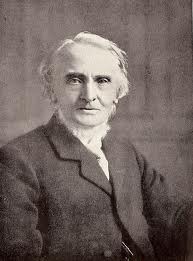
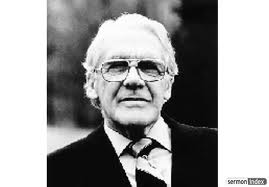
G. Campbell Morgan (Great Preachers Series)

(Here’s part of a series that has already included Charles Spurgeon and Alexander MacLaren ).

He was the envy of the preachers of his day. The great F.B. Meyer once confessed as much! Morgan joins Moody and Spurgeon in never having any Bible college training. He was discovered by Moody and many feel the Lord sent him to teach the Bible to the massive amount of converts that came from the great revivals of that time period.

You might have had your doubts about him earlier on as after preaching a trial sermon to enter the ministry as an ordained Methodist preacher, he bombed out. A dejected Morgan wired his Dad to tell of his failure. His wise father wired back: “Rejected on earth–accepted in Heaven.” That was a close call to losing a mighty preacher that over time just became something hard for the Methodists to live down! He rose to fame just after Spurgeon and others of that golden age of preaching passed off the scene. Still, he was of their ilk.

Though he didn’t have formal training, he decided that to be the preacher he should be he should master the English Bible. Of course in his studies he referred to language works, but the task that lay heavy on his heart was opening up the Bible in the English language. His laser focus reaped huge dividends as he opened up God’s Word for the masses. Like the other great masters his work ethic in the Word would shock most of us who preach the Word today. He didn’t just look for a sermon to fill his given slots, he was compelled to get at what the Lord was saying. Likely, this is the exact point where his success and our failure meet.

His great strength was synthesis–how the thing before us fits the larger context of God’s Revelation to us. Frankly, he would see obvious things that everyone else would miss. I don’t mean forced points designed to make the speaker appear exceptionally intellectual and brilliant, but things that upon reading we can’t imagine why we hadn’t already noticed it.

He was a man on the go. Some have criticized him for a “nomad ministry.” Perhaps he won’t go down as one of the greatest pastors ever, but the harshest critic would be hard pressed to deny his amazing and God-blessed preaching skills.  He could literally mesmerize an audience with nothing but the Bible. Strangely, he almost never used an illustration. We don’t have to ditch illustrations like him, but that might suggest that the Bible carries more punch on its own than most think. He was at his best in the Gospels, preached less on doctrine and more on Bible stories and passages. He, like a few others, shows us the latent power of expository preaching. If only we could catch a little of what he had.

There’s a few biographies on him like the one by Harries. Jill Morgan’s “A Man of the Word” gives us the best impressions of his method. Don Wagner’s “The Expository Method of G. Campbell Morgan” teaches well as does Morgan’s own “Preaching”. He is at his best in the volumes on each Gospel, Acts, the Corinthian letters, and Jeremiah. The best of his sermons to read are in the 5 combined volumes, or 10 volume set called “The Westminister Pulpit.” Any of his books are worth having. In a word, I’d call G. Campbell Morgan spellbinding!

Guest Blogger Mark Fowler-The Value of a Good Book

Mark and Stephanie Fowler

I’m thrilled to have my friend Mark Fowler contribute a guest blog for us. He has worked for many years at Temple Baptist Church and Crown College in Powell, Tennessee and has now become the pastor of Pleasant Beach Baptist Church in Elizabethton, Tennessee. I am excited to see all that the Lord will do with his life in the days ahead.
  
What would you pay to attend Charles Spurgeon’s college in the height of its existence? How far would you travel to sit in the woods and listen to the birds with Vance Hanver? Would you like to pray with Andrew Murray or listen to Alexander McClaren preach? What would a seminar on money or time management cost? Would you like to talk to a dear saint of God who has gone through a great trial and found God faithful?

What would you give to sit in the study with the great theologians and be at their desk as they gather their thoughts on a Bible passage? And what would you give to spend a day with Moses or with Christ and the disciples? What Christian would not like to sit with Moody and Sankey in their great crusades?

Would you like to travel to Africa with Livingston or to India with Carey? Is there anything we can learn from those who study our culture and provide statistics and analysis? Is there any value in the great minds of our day? Can we be taught to be more effective in ministry?

Price would not be an issue for an opportunity to live a simpler life and spend time meditating with the Puritans. Imagine the great expense of traveling the sawdust trail with Billy Sunday or following Edwards and Whitfield through the Great Awakening.

Some would say this is not possible. I can not afford a trip to London, China, or the Holy Land. For a few dollars and a little of my time I have attended their colleges, listened to them preach and pray, and borrowed nuggets of wisdom in areas of life that they have mastered.

I just had a great weekend alone in the woods with Vance Havner enjoying God’s creation. I enrolled in Spurgeon’s college for less than forty dollars and spent the weekend with Havner for just five. I think I will spend the day listening to Spurgeon lecture, or McClaren preach, or Murray pray. This list could go on and you may choose different names and experiences. At times I can almost smell the leather and old books in their studies or see the dust from the earth on the aged missionaries faces. In my heart I hear to the revival singing of days gone by.

We choose who we travel with and who we learn from by the books we buy and read. There is immeasurable value in a good book. We can enter their world for a little while. Who will you travel with next?

Alexander MacLaren (Great Preachers Series)

Everyone has his or her favorite, and here is mine–Alexander MacLaren. He is another of the great Victorian Age preachers. He pastored for many years, most notably in Manchester, England and died in 1910. He was no where near the pastor Spurgeon was, and perhaps Spurgeon outranked him in a simple Gospel message, but otherwise he is without peer. When it comes to preaching what the Bible actually says, which I hope you would agree is the actual job of the preacher, MacLaren stands at the head of the class among preachers in the English language.
Alexander Maclaren
Looking at his awesome sermons you will find them pretty evenly divided between textual and expository and always with faithfulness to the text. The text never suggests some subject to him where he feels the need to imbibe us with his soapbox opinions. It’s just the Bible. You always feel a “Thus saith the Lord” when reading him. That is not to say they lack creativity. In fact, they overflow with imagination. His artistry, though, always stayed within the confines of what the text said. You might say his preaching was the perfect marriage of the science of exegeting the passage and the art of preaching it.
His colleagues readily admitted that he was a master craftsman. W. Robertson Nicoll, a prolific editor of his day, said: “A man who reads one of MacLaren’s sermons must either take his outline or take another text”. He further said, “MacLaren touched every text with a silver hammer and it broke up into three natural and memorable divisions.”
We might learn from MacLaren. When asked the secret of his success, he would reply in a word: work. Not that he denied the divine enabling by the Holy Spirit, he just admitted that it is work to dig out sermons. A lack of hard work in preparing a message likely means you don’t have much of a sermon. He so believed this that he always wore work boots to his study. To read his sermons is to believe he lived what he advised. He never followed fads in preaching, or concerned himself with a message for the times, as he felt the Bible carried a message for the ages. When speaking of power in preaching he said personal godliness was the first and greatest criteria. He put preaching at the top of his ministry. He saw it as the answer to every conceivable issue we might face in the ministry. You might say that is taking it too far, but could you admit our emphasis on the power of preaching is lacking today? As one writer described it, MacLaren’s motto of ministry could be summed as “This one thing I do.” This could be a powerful corrective to  the trends of our day of pastors often working on the most trivial things while the greatest thing lies languishing under the weight of their busy schedules.
He shared a trait with most of those I would put in my greatest preacher category–an unusual personality. I don’t know why but they all have the most distinct peculiarities. Those who would try to interview him would be bewildered by its end and would likely learn nothing. He leaned heavily on his wife and would agonize over his sermons and often think them pitiful failures even when others were greatly blessed by them. Still, his sermons were phenomenal. David Larsen in his delightful The Company of the Preachers tells of one of his most memorable sermons. It was entitled “Mahanaim: Two Camps” on Genesis 32. Here’s the outline:
I. The angels of God meet us on the dusty road of common life
II. The angels of God meet us punctually at the hour of need
III. The angels of God come in the shape we need.
Look at the text–it’s there. I don’t know about you, but I call that an outline.
His messages collected in a set called Expositions of Holy Scripture (in either 11 or 17 volumes) contain the full set of his sermons. His sermons were originally given in various volumes, but this collection conveniently gathers them all in scriptural order. He also wrote great commentaries on Psalms and Colossians printed in The Expositor’s Bible and the helpful The Life of David Reflected in the Psalms. His sermons are as moving in print as they must have been when he delivered them.
For further study you could look for Life of Alexander MacLaren by David Williamson and Dr. McLaren of Manchester by E. T. McLaren (there is debate about the spelling of his last name). Warren Wiersbe’s Walking With The Giants, Ernest Jeffs’ Princes Of The Modern Pulpit, and W. Robertson Nicoll’s Princes of The Church all contain a great chapter on MacLaren.
To let you know how much I admire this man. Three years ago (2009) when my wife became paralyzed while carrying a child and we realized he would be our last one, I talked her into letting me name him. His first name would be Elisha for one of my favorite Bible characters. His middle name? You guessed it. MacLaren. Here’s a namesake for the man who in my opinion is the greatest preacher you could ever read.
Jimmy and Elisha Reagan

Favorite Preachers To Read

great preachers
“Who’s your favorite authors to read ?” came the question across the table from Pastor Scott Hooks. That question took me off guard, strangely enough, for as much as I love to read, to think about all the books I have read or used, it was hard to reduce that to 2 or 3 names. After an awkward pause, I started naming 5 or 6 names. Guess who they all were? Preachers. Men who had not set out to be authors, but whose sermons made it into print.
Books of sermons should be part of every good family or ministry library. For any Christian they have great devotional value. The only downside to it is that you may decide that some of us pastors really don’t know how to preach. For we pastors, reading the best sermons challenges us, shows us what preaching ought to be, and encourages us to work harder. The only downside for us would be that instead of being inspired, we would  just steal them. To present another’s work as our own is an incredible dishonesty shocking to find in someone speaking for Jesus Christ.
Think of the impact the sermons of Jesus had. Even though the Bible likely only records parts of His sermons (We know this because at times He would spend the whole day teaching and preaching), they are so powerful. The parts of Paul’s preaching that we have also make sermon series for us. It wasn’t, however, till after the invention of the printing press that lots of sermons made it into print. Not all of them were great, but some are treasures for all time. It was in the 1800s, in my opinion, that we had the golden age of preaching. Praise the Lord, we can read them today.
I want to blog about them individually. I want to tell of Spurgeon, MacLaren, and a few others that you perhaps haven’t heard as much about. I may do other book reviews and still have guest blogs coming, but I want to start a series of blogs about preachers and their written sermons that have enriched my life and ministry and makes me want to reach to greater heights in the grand work the Lord has called me to do.
Preachers in the series so far:
More to come…

Guest Blogger-Kyle Shearin-“The Life of St. Paul” by James Stalker

I am glad to have as guest blogger my friend, Kyle Shearin. We first met when he and his wife brought a summer singing group from Crown College through our area. He is a sharp, dedicated young man. He teaches at Crown College and is actively involved at Temple Baptist Church. I remember once talking to him as he shared how burdened he was for the Singles Ministry he was leading at Temple Baptist Church. Ironically, it was in that same ministry I met my wife 13 years ago. I gave him the choice of blogging on any book of his choice. His reading has been heavily leaning toward the Apostle Paul of late. He read several on that subject and it turns out an old one was his favorite. Thanks Kyle. Here’s what he had to say….

Many are the books that arebeneficial on the life of the Apostle Paul but few are the books that areconsidered “Classics” on the life of Paul. Stalker’s book is not the mostthorough you will find on the topic but it is among the most respected.
Somebooks on Paul leave you thinking that he was not only the “Apostle Paul” butalso the “Savior Paul”. The author walks you through the soaring ministry ofPaul as well as the stumbling ministry of Paul.
Highlight of the Book
Stalker’schapter on the missionary journeys of Paul is second to none. The chronology ofevents brought to life will have you walking the streets with Paul and seeingGod made strong through weakness.
Chapter Titles
His Place in History
His Unconscious Preparationfor His Work
His Conversion
His Gospel
The Work Awaiting the Worker
His Missionary Travels
His Writings and HisCharacter
Picture of a Pauline Church
His Great Controversy
The End (Paul’s End)
Author:
      James Stalker was born in Scotland in1848. He graduated from Edinburgh University and New College and served formany years as a pastor in the Free Church in Scotland. His most renowned bookis the “Life of Christ”.
Title– The Life of St. Paul
ISNB – 0-310-44181-1
Est. price – $16.00

The Complete Biblical Library

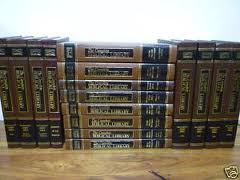
complete biblical librarySometimes diligent searching through used books pays off. I came into the possession of a set of books that I never thought I would have for a fraction of what they normally sell for. I got the complete set of the volumes that make up the Hebrew and Greek dictionaries of The Complete Biblical Library. They are beautiful hardback volumes of faux leather with gold gilt lettering  .There are 22 volumes of the Old Testament portion (blue volumes). Volumes 1-15 cover the books of the Old Testament while Volumes 16-22 (the part I got) is a detailed Hebrew Dictionary with its own numbering system. There is a Hebrew spelling, a phonetic spelling, a listing of the part of speech, a simple definition, a listing of cognates and synonyms, a concordance of every Old Testament usage, and then more careful explanation such as you might find in a theological dictionary. This is followed by word or page number references to several other works including Strong’s.The New Testament ( brown volumes) is similarly set up. There are 16 volumes with volumes 1-9 covering the books of the NT and Volume 10 being a Harmony of the Gospels while Volumes 10-17 (the part I got) being a Greek Dictionary and the last volume a Greek Grammar with helpful indexes for the dictionary. That last volume has an index to give Strong’s numbers to correspond with their numbers. For some reason the index for Hebrew words is here instead of in the OT set. My only complaint is that the indexes would be more helpful the other way around. I use Strong’s numbering system and wish I could look down a list of Strong’s numbers to find this set’s corresponding number. I hope I don’t have to make my own!

For some reason these books published by World Library Press in Springfield, Missouri are out of print and hard to get. The idea behind this series as brought out by editor Thoralf Gilbrant is to give as in-depth a study aid as is available in the better scholarly works but set up in a way that a Bible student who doesn’t read Hebrew or Greek can use to full advantage. I personally think that is as ideal an approach to further Bible study as I have heard. The Bible is made up of words and as pastors, or Bible students, we must know exactly as possible what they mean. To know less is to shoot in the dark. I look forward to using this set the rest of my life. I’m going to rearrange a shelf so they are reachable from my desk.

I don’t have any insight on the volumes covering the books of each testament as I don’t have them. I’d love to, but in that lightning rarely strikes in the same place twice, I doubt I will. In any event, you are reading from one grateful-to-the-Lord guy for what the Lord dropped in my life this week.

Feed My Sheep

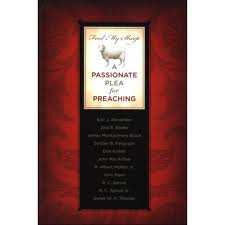
Feed My Sheep: A Passionate Plea For Preaching published by Reformation Trust Publishing, which you can find at Ligonier.org, has 11 chapters by various authors calling us back to the prime importance of preaching. Feed My SheepAlbert Mohler first discusses the primacy of preaching citing history and Scripture (e.g. Col 1: 25-29) to build his case. He shows us that preaching is not one of a pastor’s important duties, but , in fact, it is the key one. We do live in an age where pastors are expected to do everything and some pastors prefer almost any administrative duty to the hard work of sermon preparation. Perhaps over time we become rather slick, but too superficial to do our people any good.  I loved his analysis about “product envy” for preachers. Other professions can look at how many items sold or made but results in the task of preaching are not so easy to calculate. The lack of quantifiable results may derail us from expounding the Word of God which carries the help those we minister to really needs.James Boice tackles the “foolishness of preaching”.  He argues that preaching is God’s wise way to show that the world’s wisdom is foolishness. He also speaks of how many Bible characters preached, and how preaching leads to conversions and church growth. Ultimately, this works because the Lord works through His Word.Derek Thomas writes on “Expository Preaching.” Really this is the type of preaching referred to in the whole book. Using the history of several great preachers, defining the terms of preaching carefully, he writes as an academician. His description of failed preaching types is really good.

Joel Beeke writes on experimental preaching, or getting beyond explanation to application as all good preaching should.  R.C. Sproul discusses teaching in preaching. Since we live in a generation that prefers light preaching this is a challenge to help our people learn the Word of God. R.C. Sproul Jr. has a brilliant chapter on “Preaching To The Mind”‘.

Sinclear Ferguson writes with good effect on “Preaching To The Heart.” His chapter is practical. Don Kistler gives us “Preaching With Authority”. He discusses how Jesus spoke with authority, an authority so obvious all noticed. He relates how Paul wrote about it, for example, Titus 2:15. He reminds us of what an awesome call we have in our call to preach. Eric Alexander writes on “Evangelistic Preaching”. Some might find it lacking.

John Piper speaks on “Preaching To Suffering People.” Perhaps this is an example of how productive a use this call to dedicated preaching can provide.  John MacArthur writes the closing chapter as a plea to take the contents of this book and go and do what a shepherd should do.

The book is an encouragement. It runs against the tide of modern-day preaching and is what we need. You may have noticed that every writer tightly holds to reformed theology, and though I definitely do not, we must graciously admit that reformed writers are simply giving us the best writings on preaching today. This book is a clear example of that fact. I want to be the preacher the Lord wants me to be. Don’t you?

I received this book free from the publisher. I was not required to write a positive review. The opinions I have expressed are my own.

Leonard Ravenhill

leonard ravenhill
Sometimes you need an author that will jolt you out of your spiritual lethargy. Leonard Ravenhill will never fail you at such a time. I’m thinking now of 2 of my favorite Ravenhill titles: Why Revival Tarries and Sodom Had No Bible. In Why Revival Tarries there are 20 chapters with a page of fantastic quotes at the beginning of each chapter. Imagine being a preacher as I am and being hit with:One does not need to be spiritual to preach, that is, to make and deliver sermons of homiletical perfection and exegetical exactitude…Preaching of the type mentioned affects men: prayer affects God. Preaching affects time; prayer affects eternity.


That is paragraph two of chapter one–See what I mean!  Or how about this:

No man is greater than his prayer life. The pastor who is not praying is playing; the people who are not praying are straying.


Yes he is eminently quotable, likes a rhyme, yet is never corny. I could provide many other great quotes, but I am far too slow a typist to reproduce the entire book here. It is still in print and can be picked up at christianbook.com for $8.99. The answer to the question of why revival tarries has much, I came to see, to do with me.

Sodom Had No Bible is, I suppose, a book of his sermons. The thought of the title sermon is that Sodom was judged, but she had no Bible. What does that obviously mean for us today? He draws a picture that we fiddle as Rome (America) burns. “Riveting” is my review in a word. It’s in print with Christian Life Books for $11.99, or used for around $4 on places like addall.com