Ministry Mantras by Briggs and Hyatt

book-mantras

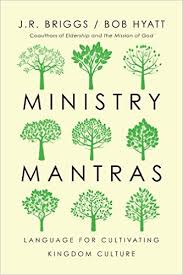
J.R. Briggs and Bob Hyatt present a discussion and encouragement for ministry that uses key statements as the angle to get us to have clear focus on ministry. While it might strike you as only slogans that appeal to our distracted generation, or even clichés that sound cute, the book does manage to push us in ministry.

Some of the mantras were just a reminder of what we should know, but others were quite profound. The one “Leadership is purposefully choosing whom you will disappoint”, especially when it was demonstrated that Jesus practised this in His ministry, is an example.

The mantras are categorized as either leadership, vision, motivation,ministry, pastoral care, leadership development, opportunities, success, spirituality, expectations, community, formation, conflict, outreach, and stewardship, though there is clearly overlap. Some you have heard, but many you have not.

Only occasionally did they give the impression that if your ministry doesn’t look like theirs it’s substandard. Overall, I enjoyed reading this volume. To my mind, you could either read this straight through as a regular book like I did, or you might read one mantra a day to spread out the challenge. Either way, it is a solid effort.

I received this book free from the publisher. I was not required to write a positive review. The opinions I have expressed are my own. I am disclosing this in accordance with the Federal Trade Commission’s 16 CFR, Part 255.

Inductive Bible Study by Fuhr and Kostenberger

book-inductive

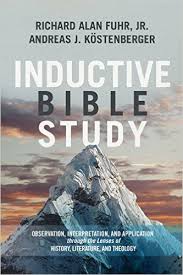
This book is ideal for pastors, teachers, or students to get a grasp of studying the Bible either for personal study or sermon preparation. Though it covers some of the classroom jargon, it is written on an accessible level to help any of us. The well-respected authors rightfully admit there is both science and art at play in digging out the real meaning of Scripture. Then they proceed to help us learn the science side while confessing what the science side cannot provide. To my mind, they are highly successful in what they set out to do.

Inductive Bible study is simply hermeneutics with an evidence-based approach rather than a deductive, or assumption-based, approach. With so many bad habits out there, this is critically needed information. If you grab a handful of these type books, you’ll see that the authors often create their own design and, at times, terminology to present the rules of Bible interpretation. Some use a spiral, etc., but the author’s approach here is one of the best I’ve seen to practically understand the concepts.

They present the inductive approach as observation, interpretation, and application. The chart on page 45 shows the 5 steps of observation and each step gets a chapter. All are well done and the one on “determining literary units” provided a special and often-overlooked balance. Interpretation has 5 steps as well and application has three.  The chapter on determining word meanings should be read by everyone. Be sure to read to the end as I really appreciated how they concluded the subject. The charts throughout the book were outstanding as well.

This book is likely the best one out there for pastors and students today.

I received this book free from the publisher. I was not required to write a positive review. The opinions I have expressed are my own. I am disclosing this in accordance with the Federal Trade Commission’s 16 CFR, Part 255.

How To Find Economical Used Books

books-used

On occasion people ask me questions about books and I imagine the biggest book question anyone could have is how to find books on the cheap.Whether you just want to buy someone you love a few books for a gift, or whether you are trying to build a first-rate library yourself, it’s imperative to find the best deals as the current retail, and even some used book prices, are exorbitant.

The first step is making a list of the books you most want. If you focus on just one book at a time you will pay more–far more. From a list you can next buy the book that is at the best bargain now. You never know what book you’ll be buying next, but you’ll likely get them all over time and at a great discount. I’ve waited years for some volumes. Maybe you are setting a budget for a certain period of time and you will work in that constraint, but you can still build the best library for the best price that way. My wife and I give ourselves around $20 a week for play money, and since there is absolutely nothing I want in the world other than books, I usually buy from my current list the first of every week based on the best bargain I find.

As we discuss the tools to find these books, just remember the best sites may change over time. There was a time not that long ago I bought the most books from eBay, but that has changed to Amazon as many used sellers list there now. It’s also best, though, to double-check alternate sources before you click “buy” on your favorite site as the price may have dropped too.

Things To Do To Buy Cheap Books: 

  1. Camelcamelcamel.com

This is a site that monitors Amazon. You make a list by searching out the books you want and putting in the price at which you want a notification. There’s also data on what it has sold for in the past on Amazon. If the current price is substantially higher than the listed “lowest price ever”, then likely you should wait a while. Apparently, sellers set prices based on other Amazon sellers. If one seller puts in an absurd price, then several other sellers may do so for a while. It will come back down. Just wait.

2. Addall.com

This is another site that checks many other sites for the cheapest price. It has superior search options and you will likely find the best price. The downside is that you can save your lists by the “memo” options, but it erases every time you clean cookies or other big technical stuff on your computer.  There’s no notifications either.

3. Ebay.com

Ebay has changed over the years and there are now far more “buy it now” listings with a set price than actual auctions. Still, bargains can sometimes be had, and you will get notifications for items in your watch list.


There are a few other sites out there like abebooks.com, alibris.com or half.com, but I rarely find the best bargains there. Still, they’re worth checking if you need one specific book only, though addall.com monitors some of them too. Don’t forget to check library sales (even from theological libraries) or thrift stores for a good deal on a more common title.

A Word On Which Book To Buy

Sometimes you can find an inexpensive paperback edition of a book often found in nicer hardback editions. Here it’s best to think about what uses you plan for the book. Will you refer to it often for years to come? In that case, a few extra dollars for a better edition will be worth it.

Best wishes on building your theological library or trying to find that desired volume for a loved one!


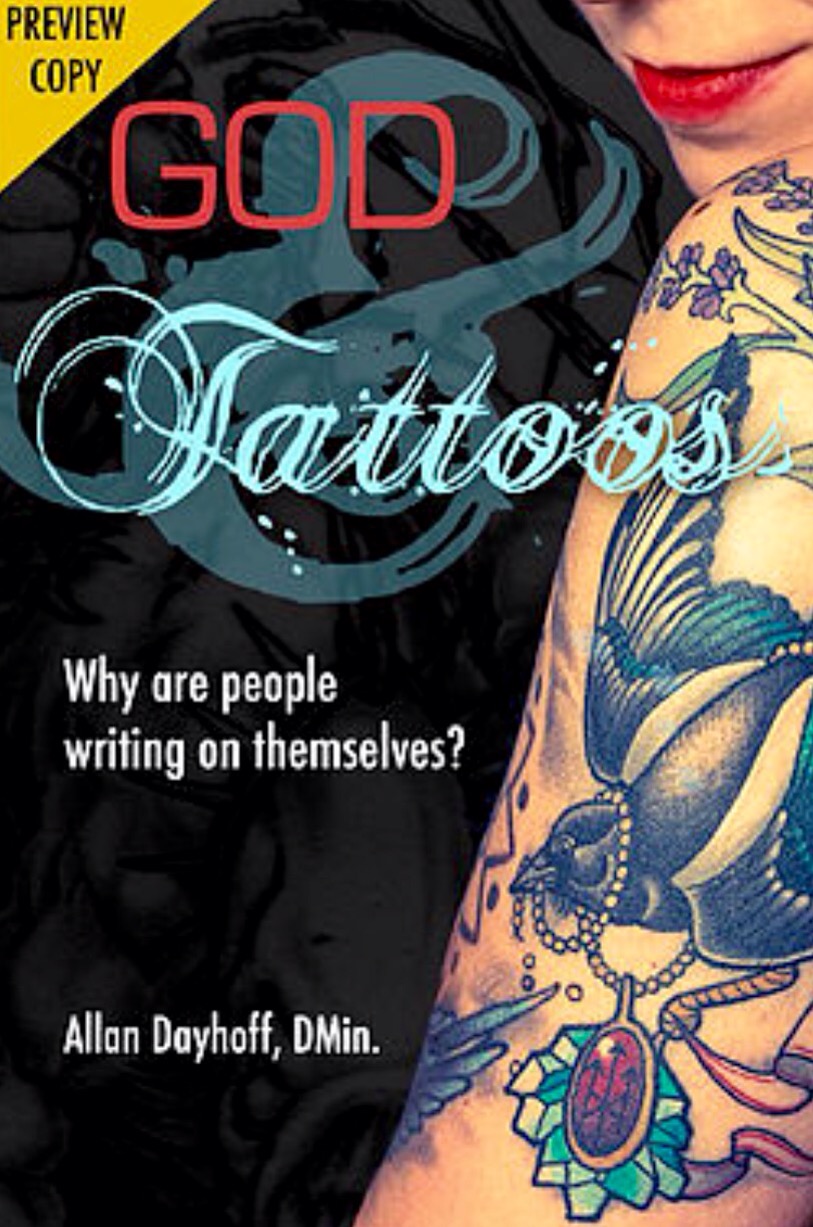
God and Tattoos by Allan Dayhoff

Have you ever read a book that was both provocative and somewhat outside your comfort zone, but still opened your eyes? This book by Allan Dayhoff was such a book for me. Tattoos to my mind were gross, ugly, and wrong. While I still am not a fan of tattoos at all, this book chided me for never considering what is going on in the souls of those with tattoos. Why are tattoos exploding in our day? More importantly, what should a Christian see in this trend of people writing on themselves? 

The author did what it never occurred to me to do: ask people why they have tattoos. He asked them what their particular tattoos meant and that opened up a massive flow of information from which some conclusions could be drawn.

He found that some are doing it because it is the “it” thing to do in our generation. In other words, for some it is merely a jump on the cultural trend bandwagon. I suspected this one, but sadly never thought about the other reasons involved. It’s in those other reasons that this book is eye opening. 

It seems as though people are needing empathy and to have meaning. In that they do not have those needs mets, Dayhoff explains that their souls are crying out these needs and writing them on their own skin. People are finding this new way to say who they are. Often, the story on their skins is one of deep pain. Other insights abound.

I met the author and while I could not do all his methods, I saw that he was sincere in sharing his faith. I must warn you too that in some cases he directly quotes his interviewees and that means some really bad language. That arose, no matter what we feel about it, from his approach to write a book that would teach Christians and could be used with non-Christians at the same time. 

It’s probably not a book for everyone, but I found it instructive and fascinating.

I received this book free from the publisher. I was not required to write a positive review. The opinions I have expressed are my own. I am disclosing this in accordance with the Federal Trade Commission’s 16 CFR, Part 255.

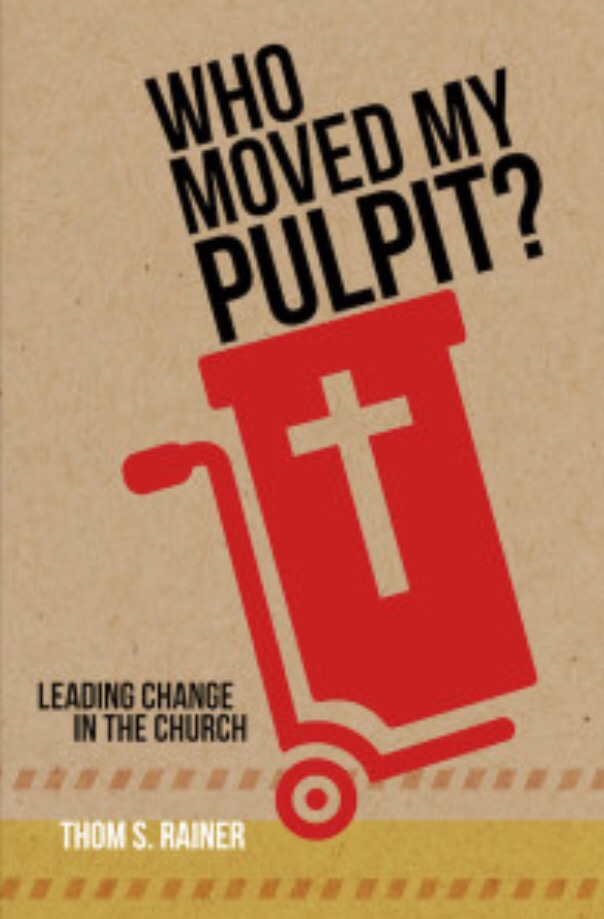
Who Moved My Pulpit? By Thom Rainer

The subtitle “Leading Change In The Church” says it all. Rainer is the premier expert on church change as he has exclusively given his life over to helping with local church issues. It’s the same size as his popular “I Am a Church Member”, but this time he aims specifically at those who are actively trying to change churches from a dying model.

Don’t confuse this book with those telling you to change to a specific new model. He only reminds us of our stated mission of reaching people and assumes pastors will seek the Lord about the specific changes needed to bring that out. He focuses on dealing with the inevitable resistance that will be found in most established churches to change.

He reminds us that no matter how needed change may be, change can be badly mismanaged and doomed to failure. The bulk of the book is 8 elements of implementing change. These elements have been beaten out on the anvil of hard experience and seem incredibly wise.

Rainer is a man easy to appreciate. There is a humility and real concern that pervades his writings. He instructs without a heavy hand and seems to be genuinely rooting for you on these pages.

As a pastor, I found real instruction in this volume. It’s another winner from Rainer’s pen.

I received this book free from the publisher. I was not required to write a positive review. The opinions I have expressed are my own. I am disclosing this in accordance with the Federal Trade Commission’s 16 CFR, Part 255.

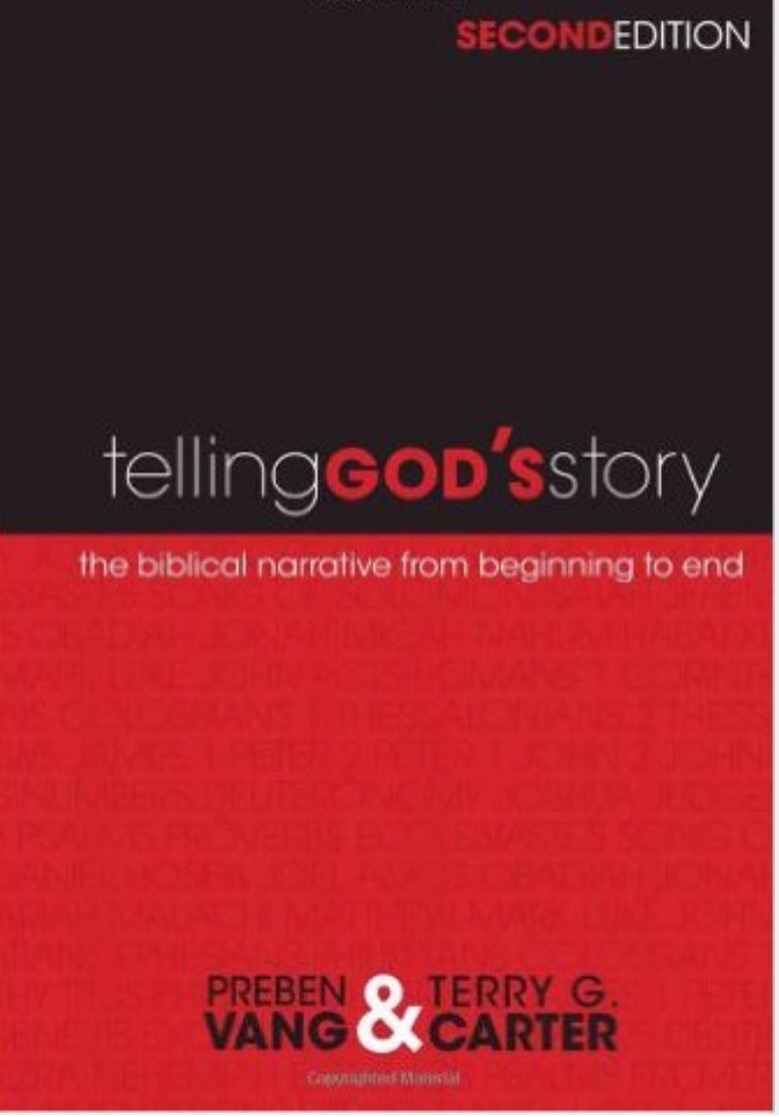
Telling God’s Story by Preben Vang and Terry Carter (2nd Edition)

Here is an attractive, helpful book that will be a great boon to students of the Scriptures. While you will find some similar material to an introductory-level Survey of the Old and New Testaments, this book has the unique approach among such works of making us see the Bible as one story. Since so many lose sight of the unity of the Bible, this approach is especially valuable.

Authors Preben Vang and Terry Carter, both professors who teach this material, evaluated exactly how the first edition had succeeded and failed in presenting the Biblical narrative and strengthened this Second Edition with that evaluation.

This book’s value is even more enhanced by the great maps, fine charts, and overall visually appealing design of the book. My teenage son walked by, picked up the book, and said it looked so interesting that he wanted to read it.  I can hardly think of a more ringing endorsement of the book’s worth.

The writing is good as is the deftness in choosing what material is best suited to teach the narrative of the Bible. My recommendation would be to secure this volume in addition to a more traditional survey. You won’t be disappointed. 

I received this book free from the publisher. I was not required to write a positive review. The opinions I have expressed are my own. I am disclosing this in accordance with the Federal Trade Commission’s 16 CFR, Part 255.

Praying For Your Pastor by Eddie Byun

book praying

As a pastor, I would love people to read this book and take its recommendations to heart. Mr. Byun is not exaggerating what is going on among pastors in our generation, though it likely will seem that way to readers. To a pastor this will seem like a condensed book of things we need to take seriously, but the target audience is to those we pastor. The subtitle (“How your prayer support is their life support”) suggests exactly what he stayed on subject about throughout. 

As a pastor himself he understands the pitfalls, the glass house our families endure, and the physical and spiritual challenges we face. He strengthens his case with timely statistics in a variety of places in his book and they are in many cases shocking. Though some of his suggestions confess we pastor’s own frailties and failures, I feel he has perfectly found the things we most need prayers for.

He suffered some indignities at the hands of some in his last pastorate, but only occasionally fell into self-justification mode. He situation did actually illustrate his point. He accepts the idea of female pastors, which the more conservative of us cannot agree with, but it did not affect the overall tenor of this fine book. 

Concise enough to encourage wide readership, this volume strikes at a real need. My prayer is that it will accomplish its goals.

I received this book free from the publisher. I was not required to write a positive review. The opinions I have expressed are my own. I am disclosing this in accordance with the Federal Trade Commission’s 16 CFR, Part 255.

The Fourth of July and the Church

Fourth July

A subject that I had not giving a lot of thought to is the appropriateness of celebrating America’s Independence in a worship service of the local church. Perhaps it is so common I had never had occasion to consider it, but a thoughtful article by Thomas Kidd on The Gospel Coalition (article here) gave me pause to consider it.

He carefully traced the history of the churches of Early America having a celebration on the Fourth of July unless it fell on Sunday, but not in the regular worship services until later years. Kidd felt it blurred some important lines and made suggestions on how to handle the situation. You can read the article yourself to form your own opinions.

After some thought, I believe the issue is what it actually means to you. Do you love America right or wrong? By love I mean that she retains superiority no matter what? Is God indebted to our nation? Do you love your God far more than your nation? When conflict arises, who is to blame–the Lord or the good old USA?

When I spoke of America to our congregation and when sang the patriotic hymns, I specifically meant:

1. I love the country the Lord allowed me to be born in.

I suspect people from other countries would feel the same way about their homeland. I’m not claiming superiority, just that the land of your nativity naturally will always be a warm spot in your heart– a spot that a Christian will be thankful for.

2. I love the Christian heritage of my country.

I love it so much that I praise my God for it and the blessings that we still derive from it to this day. We were once a truly Christian nation and the precious possession of freedom sprang directly from it. As we lose these freedoms and run from our Godly heritage, I, of course, lament the losses, but I praise the Lord even more. I feel like the hearts of our congregation was united on that point. I have to believe the Lord would be pleased that our thanksgiving on that matter would be directed back to Him.

On the other hand, our love of country and patriotism does not blind our eyes to its sins. To balance our perspective, we further believe:

1I hate the sin that is destroying my country.

Without hesitation, we proclaim where our country is fighting God and heading to judgment. When an issue comes up, we never cover it for our nation. The Lord is right and our nation is wrong. Period.

2. I feel compelled to pray for my country.

God is just and our country has no free pass on its wickedness. That means we prayed for our country–Lord forgive our sins, Lord turn our nation back, Lord send revival. As I prayed, I believe the people had the appropriate attitude of heart. At other points of the service, I noticed men leading in prayer returning to that same theme.

We are blessed too that our patriotic hymns turn us back to the Lord acknowledging His help and mercy in our lives. I see no conflict in singing those songs to the glory of my God.

We had a patriotic element in our service, but the last song we sang was wholly about worshiping the Lord. Our sermon was totally about yielding to God in our personal lives because He and His Word are the ultimate authority.

All in all, I am in favor of an appropriate patriotic element in our July 4th services as long as everything is in its place–our Lord is supreme and our nation is not. God bless America!


Evangelism Handbook by Alvin Reid

evangelism

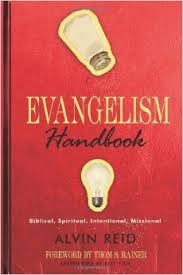
I think I have found what I will use as my premier resource for evangelism in church and personal ministry. This volume by Alvin Reid is at once a passionate call for evangelism and a practical guide to several aspects of it. A Foreward by Thom Rainer and an Afterword by Roy Fish tells you type of book this one is going to be. It did not disappoint.

I loved Part 1 that was nine chapters on why evangelism is so essentially Biblical. It was so well done and accurate. It had the flavor and fervor of the old writers of evangelism, yet it was fully up-to-date.

Part 2 was five chapters on a subject that is missing in many modern works on evangelism–spiritual resourses. Some works present evangelism in such a mechanical way that methods, they suggest, guarantee results. Reid explains the role of the Spirit and the need of real spirituality on our parts. He also explained the nedd of and use of a personal testimony.

The rest of the book is good counsel on how to carry out evangelism and how to be missional. There may have been a sentence or a quote here and there that I disagreed with, but this book is nothing short of a home run!

I received this book free from the publisher. I was not required to write a positive review. The opinions I have expressed are my own. I am disclosing this in accordance with the Federal Trade Commission’s 16 CFR, Part 255.


Biblical Counseling And The Church by Kellemen, Editor

counseling

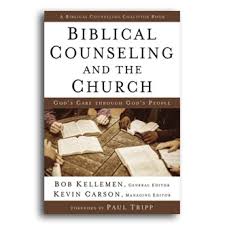
This attractive book is likely all you will ever need on the subject of counseling and the Church. Notice I didn’t say on counseling, as this volume zeros in on how churches might carry out counseling ministry. It will not replace volumes on how to actually do counseling itself, though it evens offers many insights in that area too.

Part 1 was my personal favorite, and outstanding in every way. Chapter one looked at how churches, pastor and people, should see counseling as part of what we do. The superb chapter 2 called on pastors to see that their role to shepherd required that they counsel in addition to preaching.  Drawing that conclusion from passages like I Peter 5:1-4, Ezekiel 34, and John 10 made that conclusion unanswerable. The next chapter tied in culture’s impact. We had a chapter on uniting the public and private aspects of giving the Word among others. The section on church discipline was well done too.

The balance of the book talked about how to implement counseling into the ministry of the church. Though I finished some chapters thinking that wouldn’t work in our church, the book strove to speak to churches of all sizes. It think it did a fine job in that regard.

The book was well written, had a high view of Scripture, was passionate about its subject, and clear in its suggestions. I recommend it.

I received this book free from the publisher. I was not required to write a positive review. The opinions I have expressed are my own. I am disclosing this in accordance with the Federal Trade Commission’s 16 CFR, Part 255.