Regrets

Regrets. Failure accumulates as the years roll by and what grows with it? Regrets. You know, those things no one knows. Or even worse, those things that someone well knows. Those things for which we grab the eraser only to find you didn’t write it with pencil but the strongest ink.  How are you and I to deal with regrets?

Paul had regrets. You can sense at various places in the Epistles that they had the potential to haunt him were it not for the fact that he had learned some things about dealing with them. Take for example, Philippians 3. He begins the chapter rejoicing and speaks with passion about a life of serving Jesus Christ. By verse 10 he reduces the focus of his life to the simple idea of intimately knowing Jesus Christ. As he continued it was mingled with reflection. As said before, things that he didn’t really like to think about rushed again into his mind like a wave races across the sand on the seashore.

In verse 12, though a great man, he let us in on the cold hard facts of his existence. He had not “already attained”, which is like saying he hadn’t fully arrived. Nor was he “already perfect”, which is not so much perfection as it is to be complete in his maturity. He was saying, “I’m not finished yet. I’m still a work in progress.”

Then he said “But I follow after”. Compare that to “press forward” in verse 14 since it is the same idea.  In verse 13 he confesses he doesn’t understand everything, but he has one thing down pat. It turns out to be the secret to getting beyond regret.

It’s rather simple:

1. Forget. The blood of Jesus Christ cleanses us from all sin including the very guilt of it that so fuels our regrets.

2. Press on. The meaning is not stroll on down the road, but a vigorous and speedy travel. Reach forth for those things that are higher, higher than the living you did in forming your regrets. It’s the “high calling of God in Christ Jesus.”

As you press on and reach up remember that the One Who called you to this higher call is the One Who best knows, even in vivid color and detail, the things you did that made for regrets. If He knows and calls you still to live for Him, why can’t you go on past regrets today? Let’s take Paul’s secret and use the transforming power of Jesus Christ!
Unashamed To Bear His Name by R.T. Kendall–Book Review

 
unashamed to bear his nameWe have here a tale of two books–it was the best of times and it was the worst of times! The first book is quite a read as it highlights the very scriptural idea that Christians are called upon to bear reproach for the Name. That Name is the name that moves the heart of every believer–Jesus. A Christian should expect and gladly bear any shame the world hurls at us for that Name.  He defines using the words “stigma” and “scandal.”

He well explains that it is a privilege to bear this stigma as well as highlights the foolishness of being consumed with what others say. This is not so difficult a cross to bear. Why would followers of Jesus care what His enemies say?

Then he weaves his theses into the Gospel itself. Or perhaps we could say the practical side of bearing shame for Christ is upholding the truths of His Gospel. To say a positive word for Christ may get you in trouble, but saying that we are sinners in need of Christ will really get you in trouble. Mr. Kendall did a piece of work in defending this.

He further showed how Bible characters across the Scriptures suffered this reproach, and many of them did it gladly and reaped obvious benefits.  He follows this with defining what is bearing shame and is not bearing shame. The question is broached by what would he be willing to go to the stake for. That will put it in perspective quickly. I agree that Christ and the salvation He provides pretty much exhausts the list. Finally he vividly shows that needing vindication here in this life is a fault. His quoting of the song “Nobody Knows the Trouble I’ve Seen” tells the whole tale. Read it–you’ll see.

Now there’s the second book. He disintegrates into comparing his getting entangled in charismatic doctrine as this same idea. I could in no way see the connection. When his friends turned against that direction in his ministry, he feels like he is bearing shame for the doctrine of the Spirit. The book is still a worthy read though you may not need to read it to the end. You won’t need me to tell you when the book changes completely.

I received this book free from the publisher. I was not required to write a positive review. the opinions I have expressed are my own. I am disclosing this in accordance with the Federal Trade Commission’s 16 CFR, Part 255.

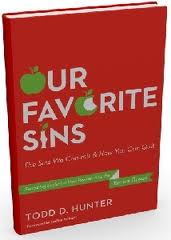
Our Favorite Sins by Todd Hunter–Book Review

our favorite sins

The subtitle “The Sins We Commit & How You Can Quit” tells us both what we do not want to talk about as well as what we have all given thought to often. It’s uncomfortable to think about the sins that we not only commit, but actually fail in regularly. Fortunately, since Mr. Hunter stirs up such subjects for us to face, he goes on to tackle what we should do to overcome these temptations that follow us all through our lives.

In launching into his subject, Mr. Hunter admits the battle that we all face with temptation. He never hides the fact that the battle has been as fierce in his own life as he knows it is for we readers.  Quickly he establishes that our wrong desires, springing from pride, are deep inside us and are the ultimate problem  in the sins we commit. He makes an understandable and strong case here. I was convinced.

He explains how well we rationalize our sins. His description is really uncanny as I know I have rationalized the way he describes.  Then he describes the all too common situation of living years as a Christian and never quite getting victory. In that many of my failures are similar to what they were years ago, I too well know what he means. Add to that the fact that temptation is here to stay, and we are discussing one of the biggest issues of the Christian life.

In probing this issue for us he recognizes that what tempts me probably is not what tempts you. Based on those deep “disordered desires”  He ties it together in a clear way the process of desire, rationalization, and then failure. We become creatures who live to feed our desires. We feel helpless and only fail more. He analyzes survey respondents on how they handled temptation and shows that if we even try at all, our pathetic responses are doomed from the beginning.

Then he takes us on an expose of the most common temptations of our times. There’s worry, procrastinating, over-indulgence, social media addiction  (Let’s look out as I write on here as you read on here), and laziness. In chapters 9 and 10 he takes these common temptations and brings us back to his premise that our desires must be re-ordered though the power of Christ. It’s helpful stuff.

He has 2 chapters on Sacraments and the Lectionary that I found of little use. He’s an Anglican who uses these things though you would never know it outside these 2 chapters.

This is a great read that highlights the need of a transformational approach rather than the pitiful failing attempts we have used for years. This book can help us.

I received this book free from the publisher. I was not required to write a positive review. The opinions I have expressed are my own. I am disclosing this in accordance with the Federal Trade Commission’s 16 CFR, Part 255 . 

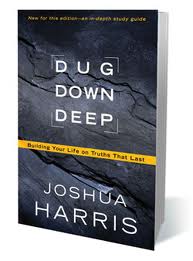
Dug Down Deep by Joshua Harris

dug down deepHow would you like to read a book on systematic theology that you could enjoy, learn from, and constantly forget that you were reading a book on theology? In this volume that is exactly what you will get. There’s real depth here but it’s sprung on you subtly. The cumulative amount of doctrine taken in will surprise you by book’s end. In our day when Christians would rather face an IRS audit than read a book on systematic theology, this book has great potential. In fact, I don’t think large theology books are read by anyone outside the categories of pastor or scholar, and probably few pastors have read such a work in years. This book will allow you to think of the great subjects again.
Mr. Harris can write. There’s no question about that. When he uses the example of rumspringa from the Amish world in chapter one to lure us in, I was caught a third of the way in. We realize the gap between what we say we believe and what we do is often helplessly far apart. This could be because we have never really grasped what the Bible is saying to us as we have imagined we have. Another hint: Jesus Christ is part of the answer no matter what the question is. I loved how he used his story and the earlier story of his father to tell this story. That’s how he pulls it off. The story is captivating and doctrine woven through it. When you finish the story, you think, wow, that was interesting. Then as you think about it, you find yourself wrestling with the greatest doctrines.

He begins with the doctrine of the Bible as a foundation to decide our beliefs. He reads well and is never superficial. From there he makes us face the doctrine of Christ. Next he carefully draws a realistic picture of the depths of the tragedy of sin in us. How our age needs this discussion! We forget how badly we need Jesus because we haven’t fully comprehended the mess we are in.

In chapter 7 the chapter is as good as its catchy title: “How Jesus Saved Gregg Eugene Harris”. I think you will find it quite similar to the story of how Jesus saved you. There’s no overt Calvinism in the chapter though you suspect he believes that regeneration precedes your putting faith in Christ. Still, the chapter was thought-provoking. In his chapter on the Holy Spirit I was absolutely shocked that he, to some degree, looked favorably on speaking in tongues. Had the few sentences that spoke of that   been deleted, you would find an exceptionally balanced presentation of the doctrine of the Spirit.

The book works on every level. He even addresses common misunderstanding that are driving the Christian world and how they don’t quite mesh with God’s Word. As a pastor, I found the book personally rewarding. It was review, it was more perspective, and it seemed to suggest dozens of sermon ideas. Beyond that, I recommend Christians every where read this book and mine its treasures.

I received this book free from the publisher. I was not required to write a positive review. The opinions I have expressed are my own. I am disclosing this in accordance with the Federal Trade Commission’s 16 CFR, Part 255 .

Handling Criticism– A Blog I Read

I find myself reading more blogs. I’ve read some good things from people I know nothing about. In a 2 minute mental break from studying, I find reading a blog post refreshing. Plus, in a few paragraphs I might think about something that I wouldn’t have time reading a whole book on.
Here’s one worthy of sharing:  http://www.dashhouse.com/blog/2012/2/1/tim-keller-on-responding-to-critiques.html Again, I know nothing about the person writing this blog. I don’t know about you, but that doesn’t worry me at all. We need to be careful about what I once heard called “academic inbreeding,” and anyway, discernment should not be that hard to come by for the Bible student who loves Jesus Christ.
In the link above he discusses a sermon he heard about handling critiques leveled against you. It’s rather convicting. We would all like to throw it out if it weren’t so blatantly scriptural. I wonder what difference this biblical approach to something we all find distasteful would make. Likely, we’d have a profound impact on our churches, ministries, and, of course, our personal lives.

Forgiveness by Harold Vaughan and T.P. Johnston

Here’s a great book on a timely subject. It can’t quite live up to its subtitle “How To Get Along With Everybody All The Time!”, but then again, no book could. It does, however, thoroughly and convincingly cover  Biblical teaching on the subject. Forgiveness, or the lack thereof, is one of the biggest problems today in my observation. Perhaps because its so easy to not forgive, so common, and such a habit. It is a “respectable” sin in that someone even in the best Christian circles would take much more flack for allowing a cuss word to slip, or be caught smoking, and so on, than being filled to the brim with unforgiveness. Yet if we viewed the matter in terms of what the Lord spoke the most about needing our greatest emphasis, unforgiveness would vault to the top of the list of sins we’d better take care of today.
The subject matter divides into 3 sections: a) granting forgiveness, b) seeking forgiveness, and c) enjoying forgiveness. The book begins tackling the question “Why should I forgive?” and its arguments are unanswerable.
The key argument is that being at odds with others puts me at odds with Jesus Christ. If you consider yourself a dedicated Christian, or at least desire to be one, that is catastrophic! Then there’s a thorough explanation of what forgiveness actually is. It quickly dispenses with the bizarre idea that someone must ask me for my forgiveness before I can grant it. Jesus declaring from the agonies of His cross, “Father forgive them…”, forever settles that question.
Think of this statement: “Unforgiveness is a two-way street. If you decide to put someone in debtor’s prison, God will do the same to you!” If more people could see this truth, it would finally explain for them why their lives are so joyless despite possessing Christ’s forgiveness. What we think is trials and problems weighing our lives down may need an entirely different diagnosis. Chapter 4 expertly takes us through the process of what unforgiveness does in our lives. It is a journey through bitterness, wrath, anger, clamour, evil speaking, and finally, malice. I wonder if this destination makes us a much more grotesque sight than the one who originally did us wrong.
The whole book gives wise counsel and is thoroughly based on Scripture. You can look at these and other materials at christlifemin.org where other books and downloadable sermons are available. I highly recommend this book, especially if you know in your heart you need it.

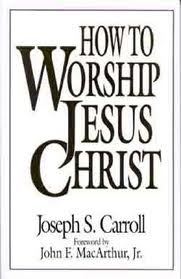
How To Worship Jesus Christ by Joseph Carroll

worshipRecently Ryan Brown, Jamin Boyer, and I had the privilege to visit Dr. Tim Jayne’s new office. It’s beautiful, roomy, and as ideal as any preacher could imagine. We talked, had a great visit, and as Dr. Jayne is known to do, he gave us each a book. In addition to teaching college students the Bible, he is well known as one who encourages preachers to read fine books. I appreciate that emphasis in his ministry. There is an obvious passion in him that I share on that subject.While there he recommended a book that he wishes every pastor would read–“How To Worship Jesus Christ”. He has given scores of this book away over the years. Strangely, I already had the book and it was laying in a pile of books that I intended to read soon. Somehow, it was never the book I selected. I think I got it in a box of books I picked up at a library sale.Since he told us that many pastors he has introduced the book to read it every year, I read it right away. The book fully lived up to its reputation. He was a missionary for many years and the contents of this book were worked out in those days of service. His influences command respect. He called Hudson Taylor “the father of modern faith missions” (emphasis mine). A. W. Tozer, who never fails to challenge me, was clearly his greatest influence.

He effectively made the case for what our private time is all about. He says, “My quiet time then became something for Him, not something for me.” The great need, he says, is to worship Christ until He becomes real to you. That grows into it being about Him, not even the people to whom you minister. Perhaps preachers talking of that concept today learned it here. In any case, I have never heard it better said.

He quotes Phil 3:8 “…that I may win Christ” and spoke of intimate fellowship with Christ being the key. He explains that people who must always be pushed to do things like witnessing or supporting missions have a serious problem. Then he continues: “What was Paul always doing? He is consistently bringing you to Christ and leaving you with Christ.” To my mind, that is profound. Nuggets that really challenge you continue to the end of the book.

The book is still in print by Moody (My copy is older). Amazon.com and others have inexpensive used copies while a new copy can be gotten from CBD for $8.19 (Christianbook.com)

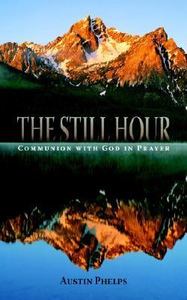
The Still Hour by Austin Phelps

still hour
Here’s a book on prayer from the 1800s. I read once sometime ago that Peter Masters recommended the book and said it was “once enormously popular.” My copy includes a quote from Spurgeon saying the author “seems to truly and completely know the power of prayer.” It seems this book fell off the map for decades. Used copies can be found and Solid Ground Christian Books has a beautiful paperback volume in print now for an economical price. Check solid-ground-books.com. I have at least 20 volumes on prayer in my library and nothing quite moved me like this one. As a young Christian John R. Rice’s Prayer: Asking and Receiving  helped me as did R. A. Torrey’s volume on prayer. Mrs. Rosalind Goforth’s volume on How I know God Answers Prayer is not to be missed as well.

“The Still Hour” is a book, though, I wonder how I missed all these years. Read it at your own risk. I was greatly convicted and concluded I didn’t pray at all.

Listen to these chapter titles to get an idea of what you will encounter in this volume:

Absence of God in Prayer
Unhallowed Prayer
Romance in Prayer
Idolatry in Prayer

and many more. It’s only 136 pages, but a phenomenal read.