Gospel Fluency by Jeff Vanderstelt

book-gf

Mr. Vanderstelt is on to something. We are not fluent with the Gospel. As he strives hard to point out, a lack of gospel fluency is far worse than a little broken English. The stakes are so much higher. Getting the directions wrong to a tourist site because of ineffective language is of so much less consequence than getting wrong the directions to God because we don’t know how to talk about the Gospel.

This book is written for broad appeal among Christians. In other words, the net is cast all the way to the edge where the newest Christian lives, and yet is still meant to reach longtime Christians on the other side. Though that means some pages might seem to be on an elementary level, all Christians can be challenged.

The book is in five main parts. The first part explains what gospel fluency is and how so much of our attempts to speak to others lacks the Gospel. In a nutshell, if we don’t give them Jesus, we don’t give them the Gospel. I loved how he explained that even as Christians we like to speak the gospel to ourselves and really deal often with unbelief. He says a few shocking things like: “I have met too many people who love their Bibles yet have no genuine relationship with Jesus Christ”.

The second section is about the Gospel itself. In three chapters, he reminds us of what the Gospel is and how powerful it really is. Some of that is basic as many of his readers may not even have a fundamental understanding of the Gospel, but anyone will enjoy when he illustrates how wonderful it is. Part three covers the Gospel in me in three chapters. Don’t miss the chapter “Fruit to Root” as it had outstanding insights.

Parts four and five covered in six chapters attempts to take what we have learned and make it practical. His discussion of the importance of listening is a great reminder.

The book is easy to read. The only fault I found with it, and it is only a personal preference on my part, is that he illustrates too often with discussions that he had with people where he gave them great answers. While that strikes me as a little too self-promoting, we might remember that, in his defense, he might feel the need for us to know that he practices what he preaches.

The book is a success in the sense that it makes me remember that I need to put the Gospel so much more into my conversations with people. I pray the Lord will help me to do much better.

I received this book free from the publisher. I was not required to write a positive review. The opinions I have expressed are my own. I am disclosing this in accordance with the Federal Trade Commission’s 16 CFR, Part 255.

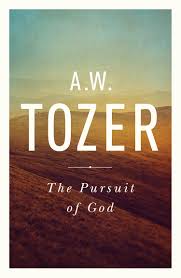
The Pursuit of God by Tozer–A Spiritual Classic

book-pursuit

This book holds a rightful place on the list of the greatest Christian books of all time. Of the many outstanding books that A. W. Tozer wrote, “The Pursuit of God” is his most popular. If you have ever looked for this title in used bookstores, you probably found it terribly worn. That ragged condition would be from both use and from the inferior binding that I have noticed in many old editions. Moody has thankfully provided us here with an edition that is both economical and of a quality made to last.

This edition has a short article called “Tozer’s Legacy” that tells us a little bit about the man and that he wrote this volume on his knees. You can tell as you read. He sees that our souls are thirsty for God and many Christians have settled for something of such lesser value.

His first chapter on following hard after God sets the tone. For example, he said, “everything is made to center upon the initial act of ‘accepting’ Christ (a term, incidentally, which is not found in the Bible) and we are not expected thereafter to crave any further revelation of God to our souls.” He will, as you imagine, prove that our need is more of the Lord.

In other chapters, he shows issues like being consumed with “things” rather than the Lord. He talks about removing the veil that we might see the Lord. He gives clues to apprehending God when he explains “O taste and see”.  He often draws on the incredible attributes of God, something else he is famous for writing about, to show, for example, what His presence and voice means. He talks about how this leads to rest and how this becomes what he calls “a sacrament of living”.

In short, this is a veritable masterpiece. Every Christian should read this book in his or her life.

I received this book free from the publisher. I was not required to write a positive review. The opinions I have expressed are my own. I am disclosing this in accordance with the Federal Trade Commission’s 16 CFR, Part 255.

The Attributes of God: Volume 2 by Tozer

book attributes.jpg

When you have Tozer on the Attributes of God you have Tozer at his best. Perhaps you have read his “Knowledge of the Holy” and found it one of the most amazing books you have ever read as I have. This volume, along with the corresponding volume 1, cover the same territory but with a more conversational and devotional approach. It is profound and worth reading even if you have read “Knowledge of the Holy.”

After an Introduction that talks about God’s Character in general, Tozer presents ten of the attributes in ten in-depth chapters. These attributes cover God’s self-existence, transcendence, eternalness, omnipotence, immutability, omniscience, wisdom, sovereignty, faithfulness, and love. There’s not a clunker in the bunch as I found meaning, warmth, and enlightenment in every chapter. You always get the feeling that you were reading a man who knew the Lord in the way you wanted to.

This edition by Moody has over 100 pages of a study guide by David Fessenden that really help readers dig into this volume. Mr. Fessenden is clearly well versed in Tozer’s writings and often quotes his other volumes to illumine the text here.

I highly recommend this volume. It is a true must-have volume!

I received this book free from the publisher. I was not required to write a positive review. The opinions I have expressed are my own. I am disclosing this in accordance with the Federal Trade Commission’s 16 CFR, Part 255.

God’s Pursuit of Man by A. W. Tozer

A. W. Tozer turned out an incredible amount of probing, moving, and spiritual writings. His classics “The Pursuit of God” and ” The Knowledge of the Holy” are two of the most important Christian books that we possess today–Something like a 12 on a scale of 1-10. This volume is only slightly below those venerable books. Not agreeing exactly with the Calvinist or the non-Calvinist, he never demonstrates the fear of man and writes what he got from intimate communion with his Lord.

To my mind, he writes mostly on what salvation is, what it is not, why we often have a superficial view of it. The second half of the book he moves on to the Third Person of the Trinity–the Holy Spirit. I heard echoes of his theological masterpiece, “The Knowledge of the Holy.” Actually, this book is intended to fill in some of the gaps, as well as be a counterpart to “The Pursuit of God.”

I can’t really think of a downside to the book and was personally moved by it. Some might think they find a few strands of legalism in it, but please notice there is nothing of the Pharisee’s heart from his pen. This book is a winner all the way.

I received this book free from the publisher. I was not required to write a positive review. The opinions I have expressed are my own. I am disclosing this in accordance with the Federal Trade Commission’s 16 CFR, Part 255.

God and Tattoos by Allan Dayhoff

Have you ever read a book that was both provocative and somewhat outside your comfort zone, but still opened your eyes? This book by Allan Dayhoff was such a book for me. Tattoos to my mind were gross, ugly, and wrong. While I still am not a fan of tattoos at all, this book chided me for never considering what is going on in the souls of those with tattoos. Why are tattoos exploding in our day? More importantly, what should a Christian see in this trend of people writing on themselves? 

The author did what it never occurred to me to do: ask people why they have tattoos. He asked them what their particular tattoos meant and that opened up a massive flow of information from which some conclusions could be drawn.

He found that some are doing it because it is the “it” thing to do in our generation. In other words, for some it is merely a jump on the cultural trend bandwagon. I suspected this one, but sadly never thought about the other reasons involved. It’s in those other reasons that this book is eye opening. 

It seems as though people are needing empathy and to have meaning. In that they do not have those needs mets, Dayhoff explains that their souls are crying out these needs and writing them on their own skin. People are finding this new way to say who they are. Often, the story on their skins is one of deep pain. Other insights abound.

I met the author and while I could not do all his methods, I saw that he was sincere in sharing his faith. I must warn you too that in some cases he directly quotes his interviewees and that means some really bad language. That arose, no matter what we feel about it, from his approach to write a book that would teach Christians and could be used with non-Christians at the same time. 

It’s probably not a book for everyone, but I found it instructive and fascinating.

I received this book free from the publisher. I was not required to write a positive review. The opinions I have expressed are my own. I am disclosing this in accordance with the Federal Trade Commission’s 16 CFR, Part 255.

Prayer by A. W. Tozer

book-tozer

We all know that A.W. Tozer is a powerful, provoking, and spiritual writer par excellence. Since he died in 1963, we aren’t getting any new titles, yet W. L. Seaver has complied Tozer’s thoughts on prayer from across all his writings and given them too us here. While it can’t compare to his original writings, this volume accomplishes something worthwhile, and , frankly,  more powerful than I anticipated. 

You’ll be hooked in chapter one when he blows up our emergency-only praying. Praying is meant to be a whole-life experience as he well explains. If we would expand our prayer life to every area including the most mundane then we would not have these big blocks of our lives totally out of touch with our Lord. 

Especially moving were chapters on praying without condition, on wrestling in prayer (he removes much confusion here), and truth has two wings. While those were my favorites, or most personally challenging to me, there isn’t a dud in the book.

Seaver gives a small review after each of Tozer’s writings that is well done.  If you want to use it with a study guide as well, the section “reflect and apply” is there for you. Some of the later chapters even come from previously unpublished sermons.

You wouldn’t have thought a compilation volume could pull off being a major work on prayer, but I think it can worthily take its place on your shelves by the great classic volumes. It’s really that good!

I received this book free from the publisher. I was not required to write a positive review. The opinions I have expressed are my own. I am disclosing this in accordance with the Federal Trade Commission’s 16 CFR, Part 255.

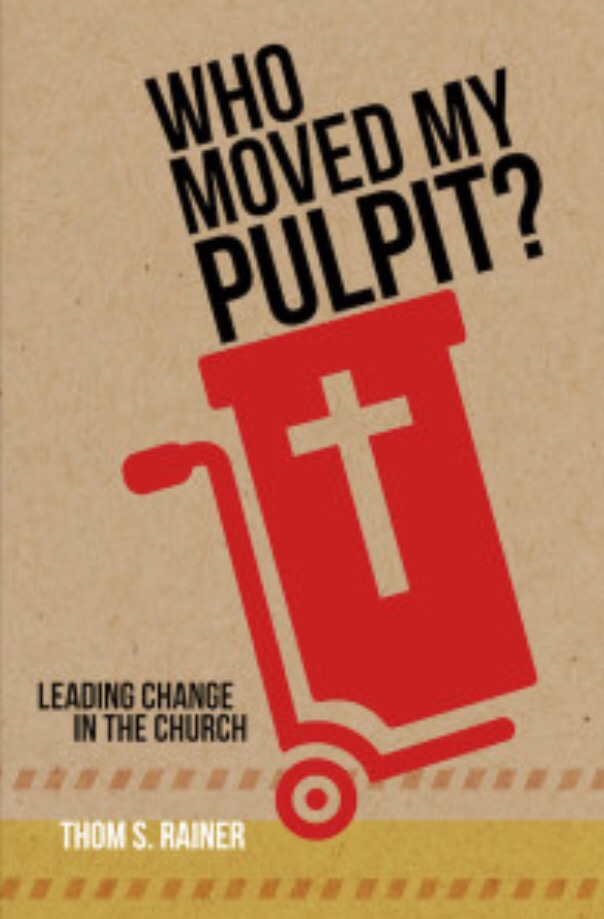
Who Moved My Pulpit? By Thom Rainer

The subtitle “Leading Change In The Church” says it all. Rainer is the premier expert on church change as he has exclusively given his life over to helping with local church issues. It’s the same size as his popular “I Am a Church Member”, but this time he aims specifically at those who are actively trying to change churches from a dying model.

Don’t confuse this book with those telling you to change to a specific new model. He only reminds us of our stated mission of reaching people and assumes pastors will seek the Lord about the specific changes needed to bring that out. He focuses on dealing with the inevitable resistance that will be found in most established churches to change.

He reminds us that no matter how needed change may be, change can be badly mismanaged and doomed to failure. The bulk of the book is 8 elements of implementing change. These elements have been beaten out on the anvil of hard experience and seem incredibly wise.

Rainer is a man easy to appreciate. There is a humility and real concern that pervades his writings. He instructs without a heavy hand and seems to be genuinely rooting for you on these pages.

As a pastor, I found real instruction in this volume. It’s another winner from Rainer’s pen.

I received this book free from the publisher. I was not required to write a positive review. The opinions I have expressed are my own. I am disclosing this in accordance with the Federal Trade Commission’s 16 CFR, Part 255.

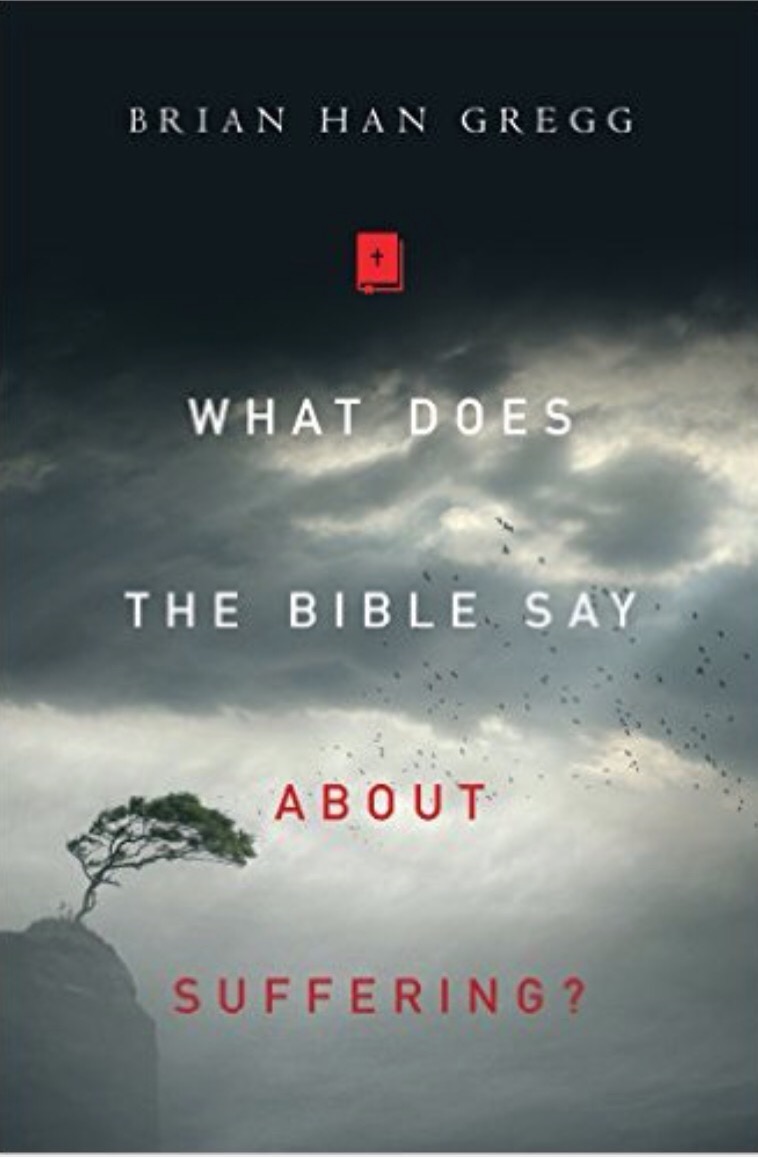
What Does The Bible Say About Suffering by Brian Han Gregg

Suffering is one of the most difficult theological concepts to get a handle on. Not only in a world that finds it easy to get angry at God, but even among Christians the pain of suffering leads to many struggles. Mr. Gregg enters this tender territory to try and corral what the Bible says about suffering.

While he focuses on the complexity, or even the mystery of suffering, he reminds us that no simple answers will be found. He seems dedicated to teaching others to not oversimplify to some sort of formula. While you can see what he is trying to say, I was even more amazed at how he extracts from the pages of Scripture all the components of suffering that is revealed to us. He does an extraordinary job at finding in the text what we actually can know about suffering.

I found this volume highly stimulating to meditate on suffering. I’ll remember his warning about oversimplifying, but I’ll also use this book as a starting place when I wrestle with this age-old subject. I warmly recommend this book.

I received this book free from the publisher. I was not required to write a positive review. The opinions I have expressed are my own. I am disclosing this in accordance with the Federal Trade Commission’s 16 CFR, Part 255.

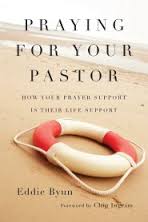
Praying For Your Pastor by Eddie Byun

book praying

As a pastor, I would love people to read this book and take its recommendations to heart. Mr. Byun is not exaggerating what is going on among pastors in our generation, though it likely will seem that way to readers. To a pastor this will seem like a condensed book of things we need to take seriously, but the target audience is to those we pastor. The subtitle (“How your prayer support is their life support”) suggests exactly what he stayed on subject about throughout. 

As a pastor himself he understands the pitfalls, the glass house our families endure, and the physical and spiritual challenges we face. He strengthens his case with timely statistics in a variety of places in his book and they are in many cases shocking. Though some of his suggestions confess we pastor’s own frailties and failures, I feel he has perfectly found the things we most need prayers for.

He suffered some indignities at the hands of some in his last pastorate, but only occasionally fell into self-justification mode. He situation did actually illustrate his point. He accepts the idea of female pastors, which the more conservative of us cannot agree with, but it did not affect the overall tenor of this fine book. 

Concise enough to encourage wide readership, this volume strikes at a real need. My prayer is that it will accomplish its goals.

I received this book free from the publisher. I was not required to write a positive review. The opinions I have expressed are my own. I am disclosing this in accordance with the Federal Trade Commission’s 16 CFR, Part 255.

The Truth About Being Always Positive

a smile

We’re told to always be positive. We’re to take it so far that we should never say anything negative. Some not only say it’s the right thing to do, but also the Christian thing to do. But we must ask: is that true?

If your options are: 1) be joyful and look for the positive, or 2) be grumpy and find the bad in every good, then your choice is clear. No one likes the person who sees the dark cloud beyond every rainbow, or the person who finds pain in every pleasure, or the person compelled to never suffer alone yet who seems to always suffers much. Still, does that mean nothing negative should ever be thought or said? Is there a better point of balance on this subject?

An article entitled “The Harm of Swarm” by Christine Rosen got me thinking. She was writing about “smarm.” That word (either as a noun or a verb) has to do with “behaving in an ingratiating way in order to gain favor.” Swarm was never a familiar word to me as in my childhood we preferred the phrase “laying it on thick.” Still, we’ve all seen it. Likely, some salesperson we’ve met along the way first comes to mind.

In our day it extends far beyond sales. Some websites have said only positive things can be shared, and even some review sites now only accept positive reviews. Social media naturally lends itself to this approach too. I’m glad my wife only shares on Facebook some nice thing I’ve done instead of those days she is convinced I’m a moron who needs to take a long walk off a short plank. Of course, no good could ever come from hurting those we love and live in close proximity to and a positive Facebook presence makes complete sense.

You might be surprised at the research the article I referenced shared about people reading their Facebook news feed. Studies have shown that many people are discouraged or even depressed by reading their mostly positive Facebook news feed ( they may even “hide” the few negative friends on their list). Why does that flow of positive not have a positive emotional impact on many people?

Because it’s not real! (I believe you could enjoy Facebook if you kept your head on straight here). You see all those perfect pictures and posts, those lovely couple posts, or those awesome children pictures, and you compare that to your own imperfect life and somehow you feel worse.

That article goes on to show how it corrupts us politically and filters through society, but I was thinking of how it affects our Christian lives.

We are fragile people for sure. Too much negativity aimed straight at us will soon put us over the edge. I know that I won’t find you helpful or caring no matter your intentions if you bombard me with all that’s wrong with me. I assume I’m not too unique in that regard. On the other hand, even the Bible suggests that their are times for “the wounds of a friend.” Thoughtful prayer, careful word choices, and checked motives are essential to pull this off for good. Many of us well understand the balance in this instance.

The danger of allowing yourself only to live in a world of positive spin, however, is that you more and more leave reality. Then those efforts to rid yourself of unpleasant fear backfires because there is nothing quite as scary as the unknown. It’s just in this case that it’s an unknown of your own creation.

For example, we have had much horrible news in regards to the morals of our land recently and any thinking Christian knows what that means before the Lord. Some even limit what they allow themselves to hear about it because the prospect of persecution or God’s judgment is just too horrifying to contemplate. But is that the best way to manage the fear?

Think of these two options and decide which is really best: 1) Don’t read articles or watch stories of these latest cultural disasters at all to avoid thinking about it–it’s bad, you know, so I don’t want to think about it, or 2) gather information of what happened including the long-term spiritual ramifications and then from the perspective of reality (not excessive pessimism but true present realities) seek out the positive realities–God still reigns and Christianity often thrives in horrid times– and form a spiritual plan for yourself and your loved ones. Is this question not the ultimate no-brainer for a Christian?

This is not to deny that there might be an occasional day that I don’t need to think about the bad news. Maybe I just need to listen to birds sing and watch the children play for a day or two to bring the necessary balance back to my heart and mind. That approach, though, does not have me hiding in non-reality to fix a fear that will only grow in an environment of an unreal world. Truth is always your best choice.

Again, we are not talking about the negative person who spins events until there’s a goblin behind every bush and a conspiracy in every news item. We are talking about an honest look. We are talking about being real. You not only need to be a real person, but you need to face a real world. Perhaps our timing isn’t great in our country as we are clearly at that unpleasant moment of our history that is a jolt downward.

Still, this honest look will not hurt me. It will prepare me. The cost of carelessness with my Lord just got much greater. With that knowledge I can find the comfort that His grace is always the superior of the darkest times. And that is far better comfort than the cult of always being positive.