Win Them…To What? (IBTR #38)

Have you heard someone talk about how dearly they love souls and discuss their efforts to win folks? Well, that would have to be a good thing. Have you ever, though, thought that something was off? That the action, though intense, did not match a heart of love for the souls of others? It is possible in every corner of the Christian world that people may not be loved for themselves, or even really for Christ. It is within the Independent Baptist world, where some of the greatest soulwinning efforts have taken place, that I want to ask: win them…to what?

While it is impossible to know someone’s heart, it is at least possible to discuss what makes someone feel used. If the Gospel is a gift, and it certainly is, then being used is the most unnatural thing to ever show up if we share it with someone else.

Then why do we compete? Why, for example, as we have seen at times, would one bus route compete against another? Why would churches compete and the numbers reached get written up? Why would a soulwinner and his “string of fish” get publicized? And worst of all, why would the pastor with the most baptisms, or the biggest day, get fame in our papers?

Some have argued that these contests have actually produced great results. But a deeper question demands to be asked: if fame on whatever level, from national down to church level, is a naturally intoxicating result, then what is the real value of a soul in our hearts?

You say, well as long as they get saved what difference does it make. If they ever get to thinking that was your goal, and that they were a mere notch on your gun to bellow about on the street, it might make a great deal of difference. Their walk with God might be damaged along with all its residual blessings.

Sometimes it gets worse. Pastors can lose sight of the goal, as well as mar the work of the ministry. If that glorious calling to the ministry degenerates into building a personal kingdom, then souls are little more than pawns in a twisted game.

Some of the most hurt people, and a little put off with Christianity at that, come from the ranks of those who one day woke up and felt they were being used. Win them–seeing a soul saved is truly one of the greatest things in the world. Just be careful and ask…win them…to what?

Find all articles in the series here.

20140722-001805-1085228.jpg

Academic Inbreeding (IBTR #37)

academic inbreeding


Who can you read? Who can you learn from?

Have you ever had someone tell you who you may not read or learn from? Several groups within Christianity might have some strong suggestions, but as being an Independent Baptist myself, I have seen this attitude up close and personal. Some, as an imagined agent akin to the KGB, would like to scour your library for you.

Some say you can’t read from this group or that. For example, I have heard some say you can’t read after a Calvinist. So a John Piper would be out of the question according to them. Although I am not a Calvinist myself, I have been incredibly enriched by several Calvinistic writings. Some go even farther and say you should only read after Baptists. Others narrow it even farther to only those they fully agree with among Baptists. I once read a man brag that he only had books by John R. Rice and Jack Hyles in his library. Are these constraints valid?

First of all, it reminds me of a joke we used to tell in my college days at the University of Tennessee. Alabama was our most hated rival and we used to say “Did you hear about the fire in Alabama’s library last night? …yes, both books were lost.” Such pressure to not have unapproved authors makes for rather small libraries.

It is not the size of our libraries, however, that is the problem. Rather it is the breadth of our knowledge. Back in those same college days I heard several PhD students talk about where they would like to teach. They told me that they could not get their degree where they actually wanted to teach. When I asked why they explained that that was considered academic inbreeding. Bringing in professors from various business schools gave a greater breadth and made for a better all-around business school. You can see the logic.

You don’t want ideas to always come from the same small pool. Over time the good will be warped, the style be a caricature, and everyone will be a bizarre clone of each other. In such settings the abnormal becomes indistinguishable from the normal, and finally becomes the norm. That may describe the stranger anomalies in our Independent Baptist world better than anything else.

Because reading opens up our minds to clearer thinking, it often leads to those abnormalities finally being seen as what they are and changes take place. Those still caught up in it see the changes as dangerous and ungodly and so criticize. This is how book banning is born. Isn’t it repulsive when you see Muslims, Communists, or Nazis practice it? I say it is just as bad when we do it.

Every book must be weighed by the Bible. No thinking reader ever imagines that every line must be accepted as true, but it must be tested, sifted, and refined, the good extracted while the bad is tossed on the trash heap.

Academic inbreeding has as bad of deformed children as any other inbreeding, only the stakes are spiritual.

Find all articles in the series here.

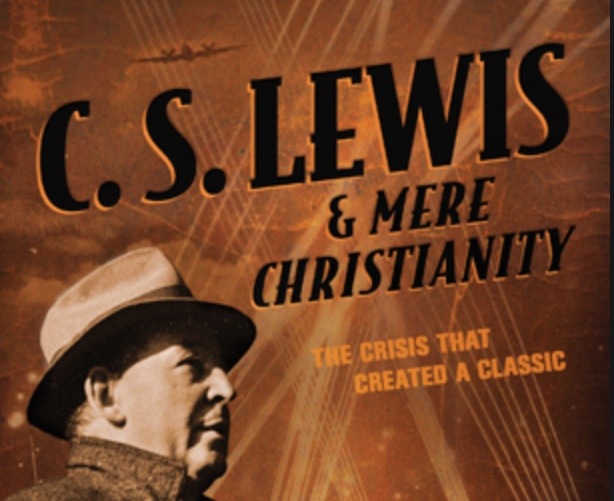
C. S. Lewis & Mere Christianity: The Crisis That Created A Classic by Paul McCusker

Have you, as I have, been blessed by the classic Mere Christianity? Probably the greatest apologetic book I know of, and certainly grist for the mill for your deepest thoughts, the story of the series of events that precipitated this volume is fascinating.

Can you imagine what this book proposal must have looked like laying on the publisher’s desk? A book not about the whole of C. S. Lewis’s life, but just the the particular years when this classic was birthed, as well as the horrors of war in the blitz on London. The background of the BBC is heavily worked into the story too. Believe it or not, this improbable volume works.

In short, Lewis gave several sets of talks on the BBC during the worst of the war in England that captured the attention of listeners at a time when religious broadcasting as a whole fell on bad times. In no time at all, Lewis had more correspondence than he could handle. Here were writings (broadcasts) that went beyond the trivial or any of the hokum that was simply insufficient in the carnage of war. It resonated in a time of great need.

Beyond the confluence of factors that made Mere Christianity so influential, this volume works on the level of biography as well. There is the war, its agonies, and impact on lives that is well described. Then there is C.S. Lewis the man: his industrious output, his tenderness, his family issues, and his humility. You like him better, even if, as me, he has a few beliefs you could not follow.

This book is a pleasant, worthwhile read!

em>I received this book free from the publisher. I was not required to write a positive review. The opinions I have expressed are my own. I am disclosing this in accordance with the Federal Trade Commission’s 16 CFR, Part 255.

20140705-194824-71304560.jpg

Crucifying Our Straw Men (IBTR # 35)

We line them up like mannequins in a store window when it suits our purposes, and then promptly turn on them. What do I speak of? That old standby in arguments gone awry–straw men. They show up wherever arguments are made, they find prolific life in Christian circles, and we in the Independent Baptist world have dolled up several in their Sunday best.

One of the most horrid that retains life after many years when the shirt is still but stuffed with straw is the tale that John MacArthur believes the Blood of Christ is of no effect. I can’t tell you how many times I have had it quoted as fact, though I never once was provided with documentation. I did come across a few dubious articles where a few obscure quotes went a long way, but no proof. Then I stumbled over an article written by MacArthur himself where he reiterated his belief on the subject. After reading that response you realize he was crucified by some before the evidence was even considered.

The point is not the value of MacArthur’s teaching, or the lack thereof (you can make your own opinion there). No, the issue is that some could concoct such a story and get such great numbers of people to believe it and requote it. It is sad that such a farce could have him labeled a heretic and so many not even care enough to see if it were true. I actually know of several such straw man arguments that have been widely accepted.

Why do some offer these type of arguments? Some may be thoughtlessly repeating what they have heard. But if you go back to the originators of such arguments, you must figure deeper motives; such as:

1. Inability to handle the legitimate argument.

When you have no good answer for your opponent’s good answer, and admitting defeat will never be a possibility for you, then coming up with some ugly charge to divert attention from your weak arguments is always a temptation.

2. A desire to tear down another voice so that only yours remains.

If a radio teacher like MacArthur is enjoyed by some you preach to, could it be that tearing him down means you can have all the love to yourself? I fear this is often the issue.

We can’t stop others from offering straw men arguments, but we are in control of our responses.

Remember this about straw man arguments:

1. They are insulting.

As one article said, “To be successful, a straw man argument requires that the audience be ignorant or uninformed of the original argument.” So they only work if we are ignorant! We, then, should be more thoughtful about accepting arguments without checking the facts. We have all done it before, but don’t you feel embarrassed when you figure it out?

2. They can not spread without our help.

Were we to be more careful, these type of arguments would not thrive. In fact, it would throw the embarrassment back where it belongs–on the backs of the perpetrators of straw man arguments.

Let’s stop crucifying those blindsided in a straw man attack. Instead let’s stop being gullible and value accuracy as a matter of integrity. Were we to do so, the real issues could be profitably discussed.

Find all articles in the series here.
20140701-005438-3278790.jpg

Cannibalization In The Independent Baptist World (IBTR #34)

If it weren’t hard enough to reach people with the Gospel message in our day, we often do the most exasperating things to complicate it. While I suppose every Christian group could conceivably falter here, I must relate what I have seen among Independent Baptists time and again. Worse than zeal without knowledge, it is zeal without understanding or integrity. We see it in both churches and colleges. Before I define or analyze, please allow me to simply describe cases of it.

Perhaps you have seen the interaction between two Independent Baptist churches in the same area. It is not always a mutual admiration society! In some cases, one church will actively attempt to lure members away from the other. Sometimes more energy is expended here than going after unchurched folks. Trumped up charges of the other church being more liberal is often thrown out, though differences in a few standards is the only noticeable difference. If you overheard either of them presenting the Gospel, it would really sound the same. Many feel this is perfectly legitimate.

Sometimes the same type of shenanigans appear in soliciting students to Bible college. In some cases it is not actually the college staff doing it, but some rouge supporters. Of course colleges must pursue young folks to come, but the issue is when we do it at the expense of other similar colleges. I have seen some colleges at its meetings allow other colleges to have a booth set up, and that is commendable, but that is not always the case.

Again, there are cases where the school is labeled so liberal that dishonesty is in play. It is ridiculous to paint something so similar as something so different. Every Bible college in the Independent Baptist world has more in common with each other than any other school outside of it. Majors or classes offered are a fair point of discussion, but to attack on minor issues is again a smokescreen for petty marketing. I once heard of a college staff member tell a pastor that he should come to their conference instead of another because it was the real deal. The other one wasn’t according to the staff member. In these type cases, urban legends of faults, like they aren’t really for soulwinning, etc., are passed around like bread. Sadly, it is rather moldy.

We so often lose sight of the big picture. What is our goal? Is it not to carry out the Great Commission and disciple believers and form local churches? My question is simple–are we pursuing the goal when we proselytize others who believe as we do? I think we all know the answer to that question.

It goes back to a concept I heard in business school years ago–the cannibalization of sales. It is bad business to come up with a product that steals from a current product in order to be successful. That is why the Coca-cola Company after creating the product Coca-Cola would not create and market another similar product, though they would create and market Diet Coke or Sprite. You might create Mello Yellow to compete with Mountain Dew, but after making Sprite you wouldn’t create and market another lemon-lime drink. See how it works?

We are giving the Gospel. You could argue that, in crude terms, we are marketing the Independent Baptist brand. In bottom-line language, we add nothing when we take from other Independent Baptist churches or schools. The only way that could be so were if our church or school were all that is important. I pray we are not so jaded as to think that! It is the Name of Jesus that is the big picture; there are so many that do not know Him that it is trivial at best, and criminal at worst, to give our lives to just repositioning what He already has. May God help us get on the right track and put a stop to this cannibalization within our ranks.

Find all articles in the series here.

20140623-222455-80695141.jpg

Would Jesus Like It? (IBTR #32)


jesus and woman at wellIt is the ultimate question. Do we ever ask it? The things we emphasize, the way we act, the things that have come to define us– here we should ask it. To Independent Baptists or any group within Christianity it is the necessary, but overlooked, question. Would Jesus like it?

His name is thrown around carelessly, even among contradictory opinions. We are not at the loss here that some feel because He came and lived among us and we have four Gospel records telling us how He acted in a multitude of situations. Great caution is needed. Our dogmatism may be suspect in light of what Jesus has actually said and done. The most religious of that day, the Pharisees, often found themselves on the wrong side of the issue when the dust settled and God the Son went on record. Are many of us in our actions doing the same thing? Does our spirituality suffer the same fate when subjected to the only real test–would Jesus like it?

Let’s put the question to the areas where it is seldom asked:

1. Would Jesus Like Our Emphasis On Standards And Preferences?
Was it ever His emphasis? Read the Gospels again and in the area of personal sin He greatly favored discussing sins of the spirit. Pride, hatred, a lack of love– these ever were discussed by Him. That is not to say He didn’t discuss the sins of the flesh. To a lesser degree He did. But how often did He discuss standards and preferences? Read and read and read and you just won’t find it. (Before you ask, you will fare little better in the Epistles either).

As you read you will find that it was actually the Pharisees that pushed standards and preferences. They had different ones then. Hand washing rituals, Sabbath standards, rules for who you could eat with–they had the highest standards imaginable. And guess what? Jesus made it clear He did not like it. Why would we think it would be different today?

2. Would Jesus Like It When We Shun Others

Let’s be clear–He never practiced it! I challenge you to find one case where He did. Everyone else shunned a woman at a well who finally just gave up and went to draw water when no one else was there. Then Jesus came by. Before you argue that He only took witnessing opportunities, find me one case where He shunned an erring believer. Not only did He never shun Judas who He always knew was a devil, but He never shunned Peter after his denial and complete backsliding. Jesus sought him out and then found him naked. Did any of that stop Him? Did He refuse to eat with Him? Who was that actually prepared breakfast? I think you know.

3. Would Jesus Like It When We Take His Word Out Of Context To Prove Our Point?

Jesus would often retort with “you do err not knowing the Scriptures.” You see it was not that they didn’t quote Scripture. The Pharisees quoted plenty of it in defense of their positions. The problem was that Jesus did not like how they misused it. He showed that He insists that we take His Word only in the context He has given it.

4. Would Jesus Like It When We Sacrifice Soul Liberty On The Altar Of Following The Party Line?

Like we see too often in our day, the Pharisees held complete conformance to their convoluted positions as essential. Jesus didn’t even pass their test! Actually from a whole different perspective, the Sadducees did too. Jesus constantly ignored their cries. He openly ignored them too. Jesus was perfectly transparent. If it was wrong He did not do it. If it was not wrong, He never spent one moment worrying about how the Pharisees would take it. I imagine if Jesus had a Facebook account He would gladly have shared pictures of eating with ceremonial unwashed hands, or sharing a meal with an unrepentant person. (I do not make that statement to slam anyone, just to encourage you to be free).

We could say more, but I pray you get the point. Have we so lost our way that we have forgotten the only One whose opinion counts? So let’s start asking: Would Jesus like it?


Find all Articles in the series here.


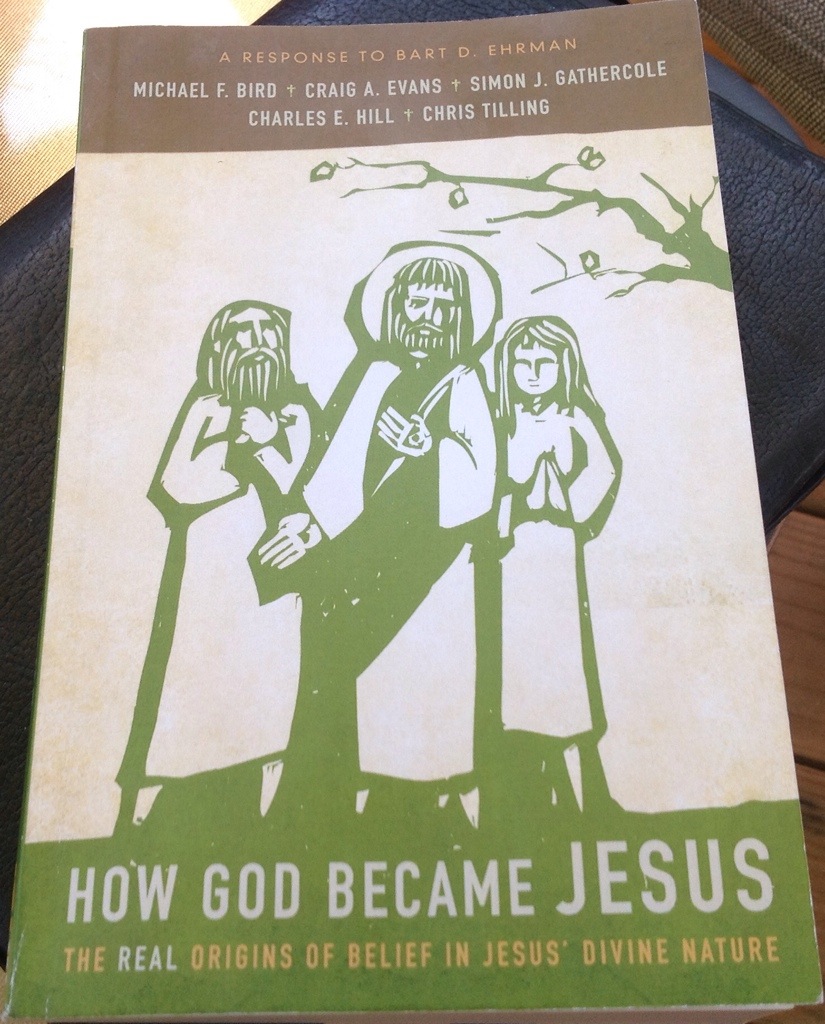
How Jesus Became God– Answering Bart Ehrman

It is hard to believe. That one rouge scholar could elicit such press is at least hard for me to believe. Still, that is the case and many are quoting Ehrman as if he actually spoke with authority. He speaks as if he has that unquestioning authority and some are at a loss at how to refute him, especially to someone who blindly accepts him. Enter this volume, subtitled “The Real Origins Of Belief In Jesus’ Divine Nature”, and published by Zondervan, that is written by five scholars. Michael Bird, Craig Evans, Simon J. Gathercole, Charles E. Hill, Chris Tilling contribute.

Ehrman’s positions are explained carefully and fairly before they are answered. The authors each hold the belief that Jesus is God in the full sense of the word.

They prove that Ehrman is guilty of “parallelomania” is describing what early Christians believed. That is, he finds something in one document and then demands it means the same in another. That is both arbitrary and illogical and alone refutes a big portion of Erhman’s work.

They also showed his interpretive categories were faulty. For example, he randomly picks Galatians 4:14 as his key, attaches a far fetched meaning, and then reads it into every Christological passage. That is reckless.

Ehrman wants us to believe that our current views on the deity of Christ developed slowly over time, but that is simply not the case. It sprang directly from Jesus’ personal followers.

The writers write as scholars and make a few concessions that I could not. Still, this is a real help at a time of need.

I received this book free from the publisher. I was not required to write a positive review. The opinions I have expressed are my own. I am disclosing this in accordance with the Federal Trade Commission’s 16 CFR, Part 255.

20140616-111333-40413410.jpg

Tradition Versus Truth (IBTR #31)

How many times have you heard someone boast that they were battling for the truth? How many times have you and I seen ourselves as great contenders for the faith? Though I have seen it in several groups, it would be hard to deny that it is oft-repeated around the Independent Baptist world. Is it as true as we imagine?

No doubt when you proclaim the Gospel with caution and clarity you are defending a much-attacked truth. I can think of no place more than the Gospel where error is thrown like mud against the wall to see what will stick. If you are a Baptist, you may spend a great deal of time clarifying Baptist distinctives that you believe to be thoroughly Bible based. Even though Christians may disagree, for example, on something like Baptism, at least there are a multitude of Scriptures that can be brought to bear on the subject. Surely there would be some justification on making a stand on a subject prolifically mentioned in the Bible!

What about, however, when we go beyond the foundational truths of Scripture? Or what is often mentioned in the Bible? Have you ever, as I have, heard standards, preferences, or worship styles mentioned with equal fervor? Is this defending truth?

I maintain that it is not truth at all, but tradition. I won’t even claim that there isn’t some place for tradition, but that is not the place to divide the sheep and the goats, or cull out the heretics.

I fear that we have even lost our way. We hardly even recognize a biblical criteria to determine core truths. We make a clod of dirt and a mountain of equal value. I have long since lost count of all the articles I have seen on some subject held up as of paramount importance biblically, and even be filled with endless scripture citations, that was merely someone’s preference. The strange thing about these articles is that if you actually check the references,they are not speaking of the subject at hand in any material way. One of the favorites is to call the discussed subject a critical doctrine and quote II Timothy 3:16 on “profitable for doctrine” when it is actually about the Word of God, not the pet topic under discussion.

The saddest thing is that type of teaching is either: a) deceptive, or what I believe to be much more likely, b) naive. The writer does not even realize just how ludicrous that line of reasoning is!

But that is the problem with tradition– to force it you must use strong handed methods. You must be ugly to propagate it with those who no longer want it. What else could you do?

Truth is altogether different. It only needs proclaimed. Unlike tradition, it loses nothing if some let it go. Tradition dies if we can’t prop it up, but truth is ever marching on.

Strangely, we are the group most often lambasting tradition in others while we are blinded to it in ourselves. Vestal garments aren’t the only traditions out there!

Let’s, then, learn the difference between tradition and truth as clearly as we would distinguish the temporal and the eternal. If we don’t, we may waste our lives fighting for the wrong things.

Find all articles in the series here.

20140602-211507-76507351.jpg

Formation of the Bible By Lee Martin McDonald

In light of the barrage of attacking media on the Bible these days, canonicity is suddenly a hot topic. Sadly, most Christians do not really know how to discuss the topic of how our canon of Scripture came about, or more importantly, how it can be trusted. So we need volumes to educate us such as we have in this volume published by Hendrickson.

We have to either remove the rustiness that has developed or come up to speed as the world is asking the tough questions. The book can distinctly help us. This subject is complex and so subject to easy potshots! You will need a basic knowledge if, say, someone starts reading Bart Ehrman and says your Bible is hopelessly an untrustworthy text of antiquity and dares you to answer. Mr. McDonald is a scholar who gives us an introduction, a starting place, that assumes we may not the story of the our canon.

Though it comes as a surprise to some there were pseudepigraphal and apocryphal books that rose up to compete with the cannon that became what we know as authoritative Scripture just as the critics say. What is not true is the level of acceptance. This volume weaves through how that worked out.

The key value in this book is the way unfamiliar things are defined and explained. Both in the text and in an outstanding glossary of terms one can learn the language of canonicity. He gives full charts on all the books that you may hear of as “lost” too.

I do not reach every conclusion he does, but my only real fault with this book is that it does not hold up as a work of apologetics nearly as well as it as simply an educational one. On occasions he raised more questions than he answered, or at least answered powerfully. I believe an even stronger case can be made. Still, this book will be handy to have on the shelf.
I received this book free from the publisher. I was not required to write a positive review. The opinions I have expressed are my own. I am disclosing this in accordance with the Federal Trade Commission’s 16 CFR, Part 255.

BONUS REVIEW:

Another book I just read that you may enjoy along these lines is Behind The Bible: A Primer on Textual Criticism by Jeffrey D. Johnson.

In around a short power-packed 100 pages the issue of how we can trust the text of Scripture is given. I don’t personally agree with which family of texts he says is best, but he is calm in his handling of these issues. You really get a feel for how the process has worked and how scholars have approached it in different time periods. I recommend it.


20140506-221506.jpg

Are YOU Part of the Fringe Or The Mainstream? (Independent Baptist Truth Revolution #25)

tough decisionsI suppose you could talk theoretically all day about the battles between the fringe and the mainstream in the Independent Baptist world, or of any group for that matter. It doesn’t mean anything until you decide if YOU are in the fringe or the mainstream yourself. Likely, you, as everyone else, sees yourself in the mainstream. Some group most unlike you is, to your mind, the fringe. We can’t all be the mainstream, though, can we?

After last week’s article, I was surprised to see how many thought the Independent Baptist world itself was swallowed up in the fringe. Do you suppose it would be fair to evaluate yourself in light of how the majority of God’s people would view you instead of how you view yourself? I fully realize that lining up with a majority in no way makes you right, but what about if we are speaking of those who love the Lord, have Him as a huge part of their lives, and generally show the fruit of the Spirit in their lives? Then we could answer the bigger questions.

Are we following Christ or man? Are we part of the problem or the solution? Are we right after all, or incredibly wrong? Are we advocating the Christian life represented in Scripture , or something that came to being over the years independent of the Bible? Yes, these are the bigger questions. So, in interest of the significance of the bigger questions, here are some questions for those who would accept the label Independent Baptist to ask yourself to determine if YOU are part of the fringe or the mainstream:

1. Do you suppose (a) that only those who think exactly like you to the smallest details could be right with God or true to the Bible, or (b) that though you are settled in what you believe, you realize that others could love the Lord as much as you without agreeing in every detail?

2. Do you believe (a) that the Lord Himself is an Independent Baptist, or (b) that while you feel most comfortable lining up with Independent Baptists in our times, you realize the Lord is bigger than such designations?

3. Do you believe (a) that some controversial standards (dress, movies, etc.) are essential to being a dedicated Christian, or (b) while you have you own position for what you feel honors the Lord in your life, you realize all dedicated Christians will not reach the same conclusion on these matters?

4. Do you believe (a) that only a worship service and music that you are accustomed to could be the real thing, or (b) though you know exactly what kind of worship service and music you are comfortable with, you don’t believe that only could please the Lord?

5. Do you believe (a) that compliance to standards are the best gauge to determine the authenticity of a believer’s spiritual growth, or (b) that love of God, His Word, and love of others are far more accurate?

6. Do you believe (a) that we should separate from believers who do not live by the same standards we do, or (b) that we should only separate where the Bible specifically mentions separation?

7. Do you believe (a) that the “old-time religion” is our current practices that trace from the 20th Century, or (b) that the “old paths” are the timeless, foundational truths believed since Bible times?

8. Do you believe (a) that rip-roaring preaching on issues is the preaching the Lord loves and blesses, or (b) that  a careful, passionate exposition of passages in God’s Word pleases the Lord because it is His Word we need?

9. Do you believe (a) that pastors must be obeyed in all matters, or (b) that the Lord must be obeyed in all matters and pastors are a gift from Him who can only be followed to the extent they follow Him?

10. Do you believe (a) that we must work hard to please the Lord, or (b) that we are “accepted in the beloved” and there is nothing you could do to make the Lord love you more or less, and you serve Him simply out of love?

Really, the point is the fringe says doing exactly what we say is the critical issue while the mainstream would never dare rob you of your soul liberty, which is a Baptist distinctive that some paid for with their very lives. The question is easy. Too many A’s on this list and you may have the answer you don’t want to the question–are YOU part of the fringe or mainstream?


Find all articles in the series here.