A Night To Be Much Observed

“It is a night to be much observed unto the LORD for bringing them out from the land of Egypt: this is that night of the LORD to be observed of all the children of Israel in their generations.Exodus 12:42


Do you look back to some special, unforgettable moment in your life? A moment that defined you and forever changed your life? For me, it was 33 years ago when I accepted Jesus Christ as my personal Savior. In this passage, the nation of Israel had such a time, a time when she in fact became the nation of Israel. It was “a night to be much observed.”


Preparing For This Night

Much will go into preparing for this night. On this thought consider facing a plague. This story begins in Exodus 11. We come there to an ongoing battle between Pharaoh and God Himself. The Lord has been represented by Moses, and nine plagues have already been poured out on Egypt. One plague remains and its story begins here. This tenth plague will be the one that finally breaks Pharaoh’s back and causes him to let Israel go. This plague will be so effective, in fact, that the Egyptians will beg the children of Israel to leave. In its aftermath, the Egyptians will proclaim, “we be all dead men.”


This final plague involves the death of all the firstborns in Egypt. I’m a firstborn myself, and I imagine any firstborn would find this story especially interesting. In reading this story, we probably ask ourselves just what is the significance of the firstborn. If you have children, think about what your firstborn means to you. It means that your family will continue. My grandfather had eight daughters and two sons. The older son had all daughters and my dad, his other son, had one daughter and me. I remember my grandfather telling me that he was depending on me to preserve the family name. When my first son was born, I thought of my grandfather and the importance he attached to carrying on the family name. To Egypt all the firstborn sons represent the furtherance of them as a people.


In her pride, Egypt assumes that her firstborn sons means she will continue forever. When Pharaoh had the male babies of Israel killed, we see that apparently Egypt did not think Israel would continue but rather be obliterated under Egypt’s hand. This last plague will remedy that thinking. When the “night to be much observed” is over Egypt will never think that again. At midnight on the night the Lord chooses, everyone irrespective of station in life will lose their firstborn. This plague will reach from Pharaoh’s palace to the poorest home in Egypt. In this unusual plague even the animals will lose their first born. Every home will give up a cry of terror at its loss. It will be like nothing they have ever seen. To imagine this scene, remember what it was like in your home when you learned of the death of a dear loved one. Now expand that scene to every house, on every street, and all across the land!


What is really happening is that the Lord is bringing out Israel and no one will stop Him. Exodus 11: 7 says, “But against any of the children of Israel shall not a dog move his tongue, against man or beast.” When the Lord makes His move, not even the dogs of Egypt will have the nerve to bark. Verse 7 continues to show the reason why: “that ye may know how that the LORD doth put a difference between the Egyptians and Israel.” After this night, Egypt will learn that there is a difference between God’s people and His enemies.


Also notice needing a lamb. Even to the Israelites this plague is going to be interesting. Israel faced the first three plagues with Egypt – the river turning to blood, the frogs, and the lice. It wasn’t until the fourth plague, the plague of flies, that God differentiated between Israel and Egypt. From the fourth plague until the ninth, Israel was completely spared. Israel didn’t have to do anything to keep the flies from bothering them, or for any of the others until the tenth plague. But with this last plague, the Lord will require that they do something to avoid it. They will need a lamb. There is such significance in this act that Moses will carefully get the instructions to all the people of Israel. This night will be so special that they will observe it every year.


For this special night not just any lamb will do. It must be a one year old male lamb with no blemishes. You couldn’t just buy the first lamb you saw. You couldn’t purchase a three-legged lamb to save money. No, there could be no imperfections. Perhaps you would see a beautiful lamb and notice a small black spot somewhere on its body. It wouldn’t work. Perhaps the lamb would be a magnificent specimen with a shiny coat and good size, but have a slight problem with one hoof. The deal would be off. For the lamb to have no imperfections was essential. Whatever it took, you had to get yourself a lamb. There were provisions for the especially poor like a couple of families sharing one lamb, but there had to be a lamb for you. This is not something that only Moses had to do, or something that he could do for everyone, but every home must make its own preparations. In this case he couldn’t say, “just watch me as I do this,” but he had to instruct each home in how to have its own lamb. And it had to be a lamb that the Lord would accept, a lamb without blemish.


The instructions were even more explicit. Each home must kill its lamb at the same time. Then they were asked to do what must have seemed so shocking. They were to collect the blood of the lamb in a basin. Before they cooked the lamb for the special meal that they were to have, they were to take the blood they collected to their door. Then they were to take a hyssop, which is a bushy stalk with leaves and small flowers, and rub the blood on the side posts and upper post of the door. If you had a weak stomach, you might not like this job. The father of the home would keep dipping the hyssop in the blood and slapping it on the door posts to make sure it was thoroughly covered in the blood.


After following those grotesque instructions, they were to take the lamb and roast it that very night. They were to eat unleavened bread and bitter herbs with it. None of the lamb was to remain by morning. If necessary, they were to burn it to comply with this instruction. Then the Lord tells them the point of these instructions. On this special night He will pass through the land and look at every door to see if the blood has been applied to it. Where He sees the blood on the door, He will pass over that home and spare it this bitter plague. Obviously, where there is no blood on the door, He will not pass over but will come inside. If He comes inside, the firstborn will die!


Facing This Night


It’s amazing what facing this night will entail. On this thought consider waiting as a family. Moses begins explaining to the elders what the Lord would expect in each home. The story is told in Exodus 12:21-28:


21 Then Moses called for all the elders of Israel, and said unto them, Draw out and take you a lamb according to your families, and kill the passover. 22 And ye shall take a bunch of hyssop, and dip it in the blood that is in the bason, and strike the lintel and the two side posts with the blood that is in the bason; and none of you shall go out at the door of his house until the morning. 23 For the LORD will pass through to smite the Egyptians; and when he seeth the blood upon the lintel, and on the two side posts, the LORD will pass over the door, and will not suffer the destroyer to come in unto your houses to smite you. 24 And ye shall observe this thing for an ordinance to thee and to thy sons for ever. 25 And it shall come to pass, when ye be come to the land which the LORD will give you, according as he hath promised, that ye shall keep this service. 26 And it shall come to pass, when your children shall say unto you, What mean ye by this service? 27 That ye shall say, It is the sacrifice of the LORD’S passover, who passed over the houses of the children of Israel in Egypt, when he smote the Egyptians, and delivered our houses. And the people bowed the head and worshipped. 28 And the children of Israel went away, and did as the LORD had commanded Moses and Aaron, so did they.


Imagine the father of each household explaining to his family what is taking place. He explains that the family must get a lamb to be ready for this incredible night that is coming soon. The Lord instructed that each family must have its lamb four days. So the family gets the lamb, a lamb with no blemishes, and keeps it those four days. We can be assured that they brought this lamb into their home and took wonderful care of it. The stakes were too high to risk losing the lamb. If the children in this home are like most children, they would play with this lamb and become quite fond of it. Four days time would be more than enough time for the children to make a pet of the lamb, and we can easily imagine that in their innocence they beg their father to not go through with killing their new lamb.


In addition to the children begging to keep the lamb, the father notices the nervous expression on his wife’s face. As she glances at her firstborn son, she probably asks her husband, “Honey, are you sure you got those instructions down right?” As the father scans the room, he sees also his fidgeting firstborn son sitting in the corner. That boy’s heart skips a beat with every bleating of that lamb. He probably says, “Dad, I hope we are doing this correctly.” There is an awkwardness pervading the entire room as all, even some of the other children, are thinking what life would be like without their older brother.


To ease the tension and because it was his duty to explain the significance of this night, the father spends much time in describing that this night will forever have great meaning. “We will think often,” he will explain, “of this night and even celebrate it once each year.” In other words, he attempts to explain, this night will define our lives. This night always will be for an Israelite “a night to be much observed.”


At last, the time came to kill the lamb. The father carefully follows the instructions. He would kill the lamb, collect its blood in a basin, take a hyssop, and sling the blood upon the door posts. What a bloody mess there would be as he took such care to make sure that he had plenty of blood on that door frame. The children were probably horrified as they watched their father work. They had never seen him do anything like this! To reassure them, he no doubt explained that the Lord required this and further talked about what it meant as best he could. If they were like my children, they would naturally ask “why” through the whole process. He probably said, as he had one eye on his firstborn son, “If the Lord requires blood on our door, then we are going to put blood on our door.” He would not stop until he had the blood on those doorposts as thick as he knew how to get it. I’m sure that when he closed the door that blood even trickled down the inside because he had put so much on the outside. He will have the blood on his door when the Lord brings that last plague down his street.


With the bloody work now done, they will cook the lamb and prepare the meal as instructed. After the meal they must wait until midnight. Had you lived in those days of hard work, you would never sit up until midnight. But no one sleeps this night. They just wait. If their faith wavers at all, they probably continue glancing at the firstborn son. The room grows quiet as all are lost in their thoughts about what midnight will bring.


Finally, midnight comes. They have no clocks that keep exact time, but they know that it is midnight by the faint screams they hear in the distance. Let’s suppose that this family lives in the first house as you enter the land of Goshen, which is the area of Egypt set aside for the Israelites. Those screams are in the direction the farthest Egyptian homes that can be heard from their house. As they listen, they notice that the screams grow louder and approaches nearer. They can sense that because of the screams He is passing one house at a time but coming in their direction. As the plague comes closer they can make out what some are saying in those screams. Then they hear someone distinctly yell, “My son is dead.” The children, who are already in their parent’s lap, snuggle in as close as is humanly possible. As they stare at their door, they are now so glad that their father had put the blood so heavily on the door posts and that blood could even now be seen dripping down the inside of the door.


Now notice trusting in the blood. Earlier in the night they had probably wondered why the Lord had asked for such a gross act. They probably wondered why He didn’t do something more beautiful, or something more religious. They wished they could have had more exciting instructions rather than these events that were making for such a terrifying night. But in spite of their earlier thoughts, they were sure glad to have that blood on the door now. In fact, no one dared go outside, but all stayed hid behind that blood.


After a few more excruciating moments, the screams got so close that all in this home knew that the Lord was almost to Goshen. You could almost count off the distance until you knew that the Lord was now passing your door. With all eyes bouncing from the firstborn son to the door and back, a smile began to form. What begins as a faint smile, grows into an explosion of emotion! Can you imagine all the laughing and happy tears? All embrace the firstborn son with the hardest hugs he had ever experienced. For this night, “a night to be much observed,” you would have expected something festive, not something so solemn. But when you think that older brother still lives, it was quite festive after all. As the emotion died down, all surely marveled at how the blood had worked.


It had been a shocking night, as Exodus 12:29-30 relates:


29 ¶ And it came to pass, that at midnight the LORD smote all the firstborn in the land of Egypt, from the firstborn of Pharaoh that sat on his throne unto the firstborn of the captive that was in the dungeon; and all the firstborn of cattle. 30 And Pharaoh rose up in the night, he, and all his servants, and all the Egyptians; and there was a great cry in Egypt; for there was not a house where there was not one dead.


No, there was not a house among the Egyptians where one had not died, but the blood had been sufficient for this modest Israelite home.


Learning From This Night


If we could take to learning from this night, we could gain eternal results. On that thought consider accepting the Lamb. This night the Lord had, among other things, been teaching. Those lessons were that it would always be true that a Lamb was needed, that a substitute was necessary, and that the innocent must die for the guilty. Here in a beautiful Old Testament picture we see what the New Testament carefully explains – that Jesus Christ is the Lamb of God. I Corinthians 5:7 says, “Purge out therefore the old leaven, that ye may be a new lump, as ye are unleavened. For even Christ our passover is sacrificed for us:” Yes, what took place this night was gory, but Jesus Christ was sacrificed. His blood was shed. He was for you and me what the little lamb was to that little Israelite family.


Jesus Christ, just as that lamb, was “without blemish.” He was perfect and had no sin. Even Pilate, who cared only about what was expedient for his political career, had to admit, “I find no fault in him.” The requirements for the lamb demanded that he be a male and Jesus Christ the Son of God was made a man. The lamb was to be “of the first year” and Jesus Christ, though the eternal God, was in the prime of His earthly life at 33 years of age. Exodus 12:6 says, “ . . . and the whole assembly of the congregation of Israel shall kill it in the evening.” Part of the suffering of Jesus Christ was His crucifixion before the gaping eyes of a cruel mob. And never forget that as a sinner your fingerprints are all over His bloody, broken body. It was your sin and mine that brought him out of Heaven to the tortures of Calvary. Further, all the lambs had to be killed at the same time. Jesus Christ died at just the right time for Romans 5:6 says, “ . . . in due time Christ died for the ungodly.” Amazingly, Jesus Christ died on the cross at the very moment the Passover lambs were being slain.


The instructions also required that the lamb be “roasted with fire.” This is a picture of Jesus’ incredible suffering. With the extreme loss of blood, thirst, and bones out of joint, Jesus went to the farthest reaches of suffering. After the lamb was roasted with fire, it was to be eaten “with bitter herbs.” This is a picture of Jesus’ deep sorrow. Jesus Christ knew sorrow. John 1:11 reads, “He came unto its own, and his own received him not.” In fact, the very ones He came to die for were screaming, “Crucify him!” Another key instruction was that none of the lamb was to remain by morning. That the meal had to be eaten at one time illustrates that salvation is both a one-time and a once-for-all-time transaction in Christ. It is not a process but an instantaneous new birth. You don’t get a little bit saved today and a little bit more tomorrow; no, in an instant you “pass from death unto life.”


Now notice applying the blood. Folks, we already have the perfect lamb. We need not keep searching since the lamb without blemish has already been provided, the blood has already been shed, and it stands ready to be applied. You need not worry yourself about finding a better lamb. None could be found. So the question, then, is not about the acceptability of the Lamb but is really will you accept the Lamb already lovingly provided. Will you take the blood of the Lamb and apply it to the door of your heart?


Sin leads to death. So death is coming down your street. Don’t you hear it coming? Go to any funeral home and see its work. Death will make its way past the door of your heart. You know you have heard the distant screams and that it gets closer to you every day. In the Bible death is more than just dying. It is spiritual death that entails eternal separation from God in a place called Hell. The only way this spiritual death will pass over you will be if it finds the blood of Jesus Christ applied to the door of your heart. Can’t you see that when death came down the street only one thing made any difference? The Blood! Did you notice that the house made no difference? It made no difference if the windows were washed or if the lawn was mowed or if there was a new paint job. There was no consideration for whom your family was. Pharaoh’s firstborn son was just as dead as the son of the lowliest home in Egypt. Only the door was looked at. Only the blood mattered. And so it is with you and me. It makes no difference what your background is, or your religion, or anything else, but only the blood of Jesus Christ. Remember Romans 5:8-9:


8 But God commendeth his love toward us, in that, while we were yet sinners, Christ died for us. 9 Much more then, being now justified by his blood, we shall be saved from wrath through him.


See this great lesson of Scripture – Hebrews 9:22 “without shedding of blood is no remission.” This flies in the face of everything the prideful heart of man holds dear. Yet the eternal happiness of every man depends on it. The simple truth is that for every man, great or unknown, the Lord will look at the heart to see if the blood is there. Can’t we see that it is either the blood or the screams? In this case the screams are of one sinking into Hell! Have the blood of the perfect Lamb of God applied to your heart today by trusting Jesus Christ as your personal Savior.


What was a night of terror for some was a night of deliverance for others. -You do not have to seek the terror; it’s already on its way. But you can have the deliverance. If you already have this salvation, then remember that this must be our clear message to perishing souls.


This special night was one that the delivered understood, and a night that they forever thank the Lord for. It was a night worth being ready for. It was a night worth remembering. It was “a night to be much observed.”


 

20130822-131851.jpg

House Church?

Over the last few years we have seen a trend of more people having what they call a “house church”. I’m not referring to what is referred to in Romans 16:5:

Likewise greet the church that is in their house. Salute my well-beloved Epaenetus, who is the firstfruits of Achaia unto Christ.

In that case they had church in the only place they could meet and it happened to be a house.

No, I’m talking about this idea that I can’t find any church pure enough for me and mine, so my house is my church. That would have its perks—scheduling family and church activities would be rather easy when the only schedule I would have to consult is my own. If I didn’t finish preparing my message and it is only my family, how easy would it be to watch “The Andy Griffith Show”. (Perhaps some episodes of that show would be better than some of the messages I’ve preached, but that is beside the point).

What is lost in this discussion is the idea of corporate worship. The Lord did not intend that everything in your life in regards to Him be in private. That’s a modern invention. Here’s a Scripture that might have escaped your notice. Deuteronomy 12: 17-18 says

Thou mayest not eat within thy gates the tithe of thy corn, or of thy wine, or of thy oil, or the firstlings of thy herds or of thy flock, nor any of thy vows which thou vowest, nor thy freewill offerings, or heave offering of thine hand: But thou must eat them before the Lord thy God in the place which the Lord thy God shall choose, thou, and thy son, and thy daughter, and thy manservant, and thy maidservant, and the Levite that is within thy gates: and thou shalt rejoice before the Lord thy God in all that thou puttest thine hands unto.

The phrase “within thy gates” means at your house. There are some activities that should take place at God’s House. No amount of verbal acrobatics will nullify what the Lord says.

This is nothing more than a repackaging of the old I’ll-have-church-in-nature routine. You know, I worshipped the Lord Sunday morning at the fishing hole. How does that work? Is there some spiritual way to hold the pole or bait the hook? I think of the Lord when out in nature too, but does that replace His call to corporate worship?

This all springs from a misunderstanding of all the Lord had in mind when He gave us the local church. Part of the idea was that there should be other Christians in it besides me and my family. Hopefully my family is already encouraging me and surely they are praying for me. I need more prayers, more encouragement, more of the Word than I can have at my house alone. Then there is giving and reaching out and the local church is what the Lord has designed for this very thing.

It’s not about that building, but we need that body of people in our lives. We need a local church.

20130729-111633.jpg

A Forgotten Regulation

It’s one we don’t think about. I imagine you haven’t heard a sermon on it in a long time, if ever. It first came up in Deuteronomy and was re-emphasized a few times in the New Testament. More importantly, it has incredible potential to keep you and me out of deep messes. We can hardly imagine why it is important at all, but it got enough mileage in Scripture to show us the Lord thought it a worthy concept.

What is this mysterious and forgotten regulation? The requirement that we have two or three witnesses to establish the validity of a word or matter (Deut. 19:15) is the one that needs to make a comeback in our generation. Think of how we establish a matter. We accept a whisper, we seize a rumor, and the worse the report the sooner we believe it. We so believe it that we feel it such an established fact that we have the right to tell it far and wide. Such is the genesis of broken friendships, wounded hearts, assassinated reputations, and of course, a sin itself. This doesn’t even cover the fact that it is blatantly unchristian and repeatedly forbidden.

The Lord knew what He was doing when He gave us this regulation. He knew conflict would arise among us and He knew we might not always play fair. So He took precautions for us. It protects us from both directions. On the one hand, it’s so easy for someone to make up a charge in a moment of vindictiveness, or at least so exaggerate the situation that it no longer resembles what actually happened. If there’s a requirement of two or three witnesses, unless they conspire together, it will rule that out. At the very least, it will greatly lower the chances of a false accusation getting through. This makes a great principle obvious. Don’t form opinions by the word of one person, even if a good one, because you never know what complications in life may color his or her judgment. Also, we should check our own conclusions by those of others because it’s so cheap and easy to form a harsh opinion. You can check and see if others you respect have the same opinion.

Secondly, this can lead us through church troubles. Such crises usually denigrate into who can garner the most support as if it were but a popularity contest. But, praise the Lord, we don’t have to settle matters that way. I look for two or three witnesses, and if they are not available, I turn it over to God. Isn’t this what Matthew 18:15-20 is all about? Then personalities are irrelevant and we have a clear path through the mess.

There’s something to this two-or-three-witnesses thing. Do you suppose it has something to with why we are sent out two-by-two to witness of our Lord?

There is a lot of junk in this sin-cursed world. Perhaps, though, there wouldn’t be quite as much if we would but remember a carefully-defined, yet mostly-forgotten, regulation our Lord gave us long ago.

I first posted this on Partners For The Gospel

20130726-173459.jpg

The Two Main Paths of Temptation – Idolatry and Legalism

Temptation

The written record we have makes it clear. Our life experiences confirm it in every instance. We are swept from God’s way at any given point from one of two streams of thinking. We either are bewitched into idolatry by our desires or we are escorted into legalism by our pride.

I realize sins themselves can be categorized into sins of the flesh or of the spirit, but I refer to where these sins come from. Whether idolatry or legalism, sins of the flesh and of the spirit easily emerge. Before this discussion becomes academic exercise for Christian readers, I, too, want to add that the subject is not any more geared to unbelievers than it is to believers. In that the flesh remains, idolatry and legalism find fertile ground to thrive in any of us. (Since I have swan in the putrid waters of idolatry and of legalism, as well as committed a wide variety of sins of the flesh and of the spirit, I find myself unusually qualified to speak).

If you think about it, you find the story of the Old Testament as it traces Israel from its infancy to the threshold of its Messiah tells this very thing. For centuries Israel fell into idolatry at every turn. Whether she ran after the false gods of Canaan, or wanted a king over the King of Kings, she was never far from idolatry till she watched herself ruined and carried away into the Babylonian Captivity.

After she endured that painful captivity she shook off idolatry once and for all, but replaced it with a more subtle type of sin—legalism. The key difference in the two is that when you fall into idolatry you tend to know it. You and the Lord are not on good terms and it is as obvious to you as anyone. On the other hand, when you are drowning in legalism, you  are usually the last to know it. You and the Lord are still not on good terms, but you are convinced He sits on the throne giving you regular rounds of applause.

To understand sin, you must begin with God. It is not only that sin is an affront to God, but that every sin is personally against Him. Every sin we commit is then connected to Him in the sense that it springs from what we think about Him. That thought horrifies me as much as anyone, but it is true.

In idolatry I want something other than Him. Any one of a thousand things will do; it just can’t be Him. I want to distance myself from Him, from His way cramping my style. Like the idol of stone, the quieter the better. I will be God for a while.

In legalism, I don’t necessarily want Him because I am so sure I already have Him. I get to thinking I have earned God and that blinds me in the ugliest ways. I make myself pleasing to Him and that builds up a reserve that covers an indiscretion here and there, even if that indiscretion is actually horrendous. In a way not so obvious, I will be God for a while.

I am sure the Pharisee of Jesus’ day was embarrassed by the idolatry of his fathers while he lived in his legalism. Well, it was embarrassing. Still, there were plenty of Pharisees in the crowd ready to stone the woman taken in adultery when Jesus stopped it.

The point is not that legalism is that much worse than idolatry. When Israel was in idolatry, however, she did bring reproach on His Name; and when she was in legalism, she nailed Him to a cross. Still, both are bad and I do no favors to attack one at the expense of the other.

That is, though, the heart of the problem. We are usually blind to one or the other. If I am in idolatry, I can spot the ugly pride inherent in legalism a mile away. If I am in legalism, I can find the reprobates all around me so easily. The issue becomes which road temptation will travel to get to me. As you can see, it will either be the road of idolatry or of legalism, and it will depend on what I think of the Lord at the time. Looking down one road or the other, temptation will sneak up on me from the other direction. I guess that explains how I have been blindsided so many times!

The Day of the Resurrection

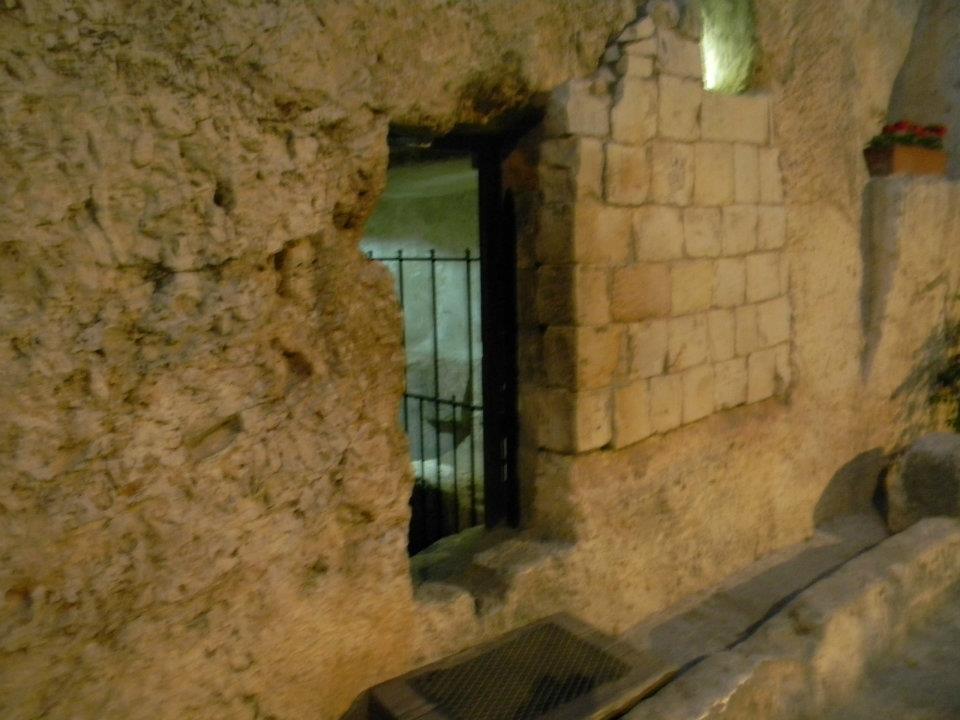
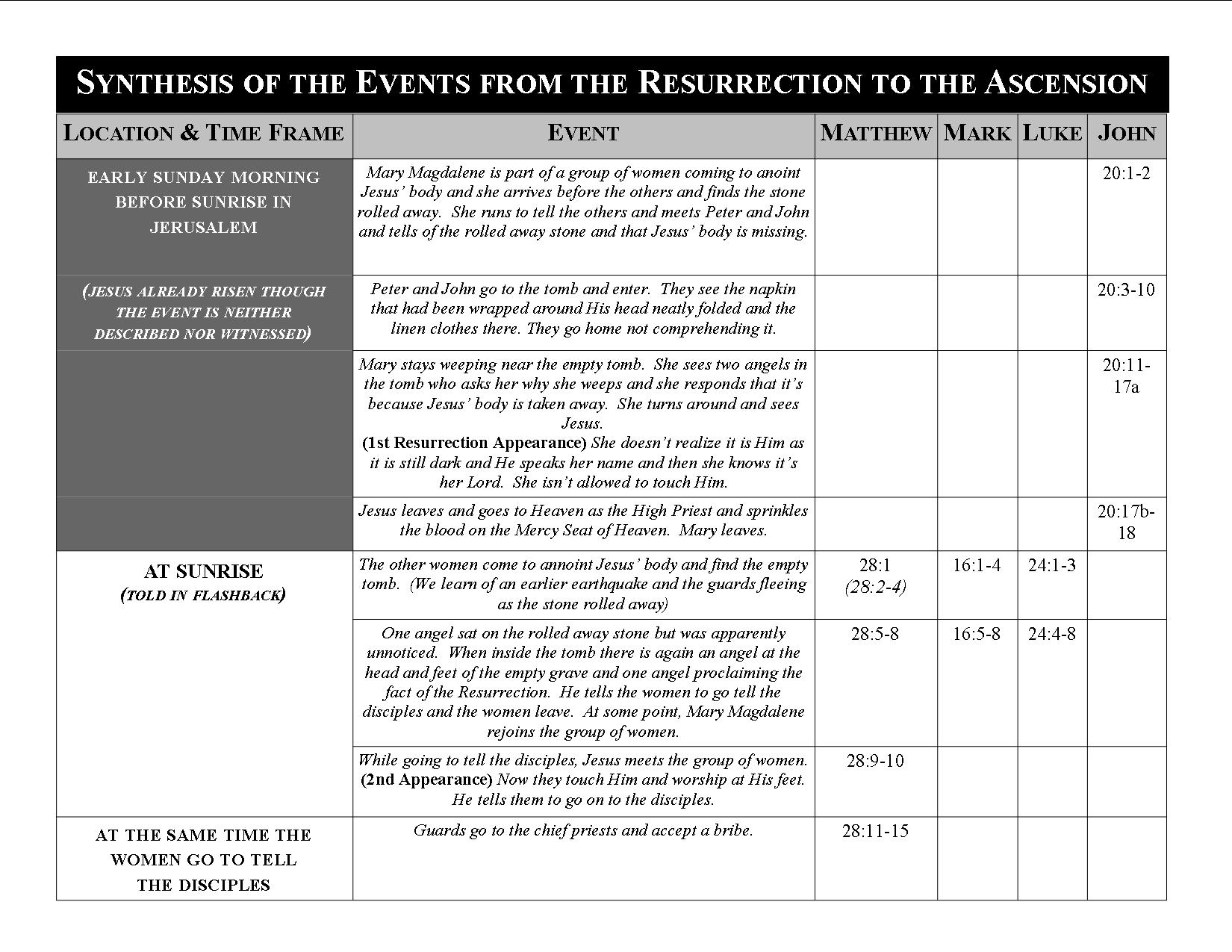
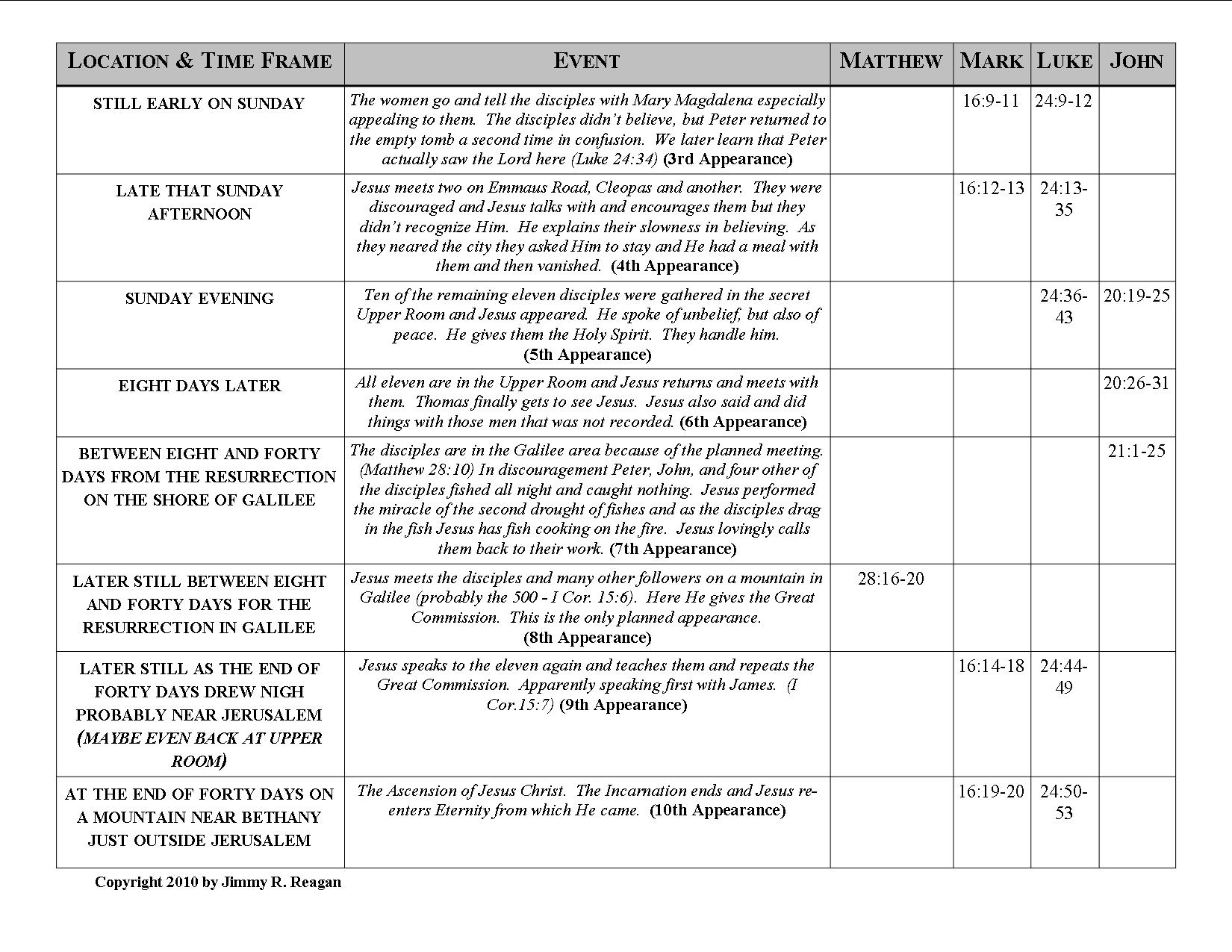
The Empty TombResurrection Sunday. Easter time. Is it just a big Sunday? One with a larger attendance and more work? Is it a day for family and a big Sunday meal? What is it, really, to you?

(Be sure to check out the chart below you can print out for study).

The Place where He lay!

The Place where He lay!

I don’t always dwell on it like I should, but everything I am, every dream I have, every hope of the future, every possible happiness that I could hope to have in time and eternity, all ride on 3 days about 2,000 years ago. Those days define me. No other thing even comes close. There was a choice I made, but the 3 days had to happen for me to have a choice and they are the pivot of all.
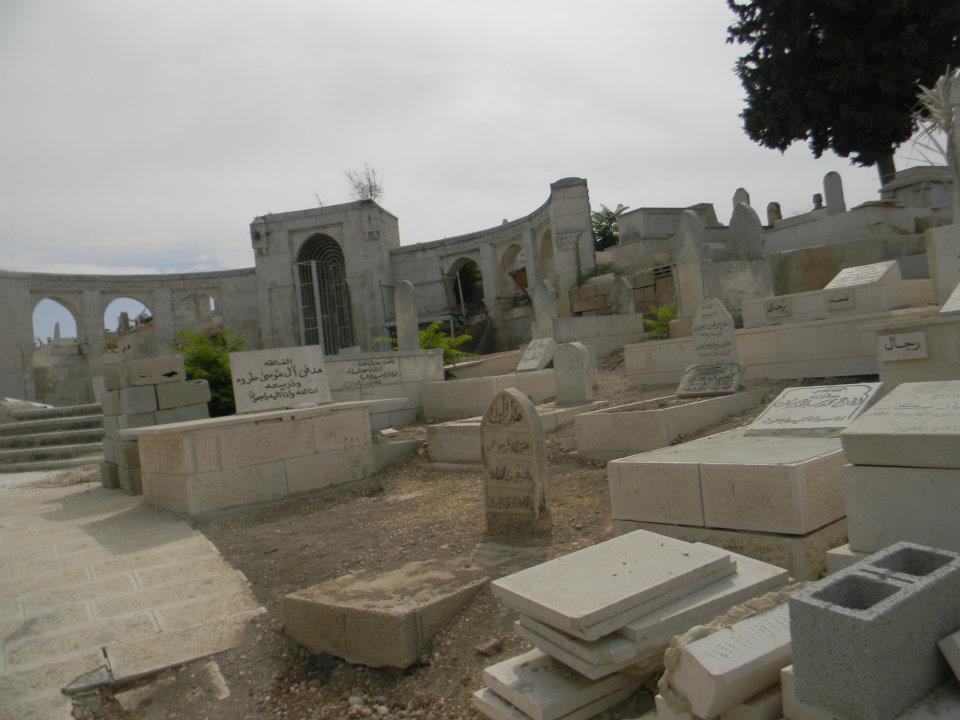
View of Mt. Calvary

View of Mt. Calvary

It is so pivotal, in fact, that it too defines human history. Before Calvary the world clamored, at least in the depths of their souls, in anticipation of this event where God transcended the corruption of sin we brought into His creation and which devastated you and me. After Calvary, we look back either in need of it or in wonder of it.
I managed to sneak up on Calvary early one morning while the caretaker was away and saw this scene!

I managed to sneak up on Calvary early one morning while the caretaker was away and saw this scene!

Jesus, my Savior, battled sin and death on a tortuous cross, was laid low in the cold tomb of death, and walked out on death with the keys of victory jangling in His nail-pierced hands on that Resurrection morning.
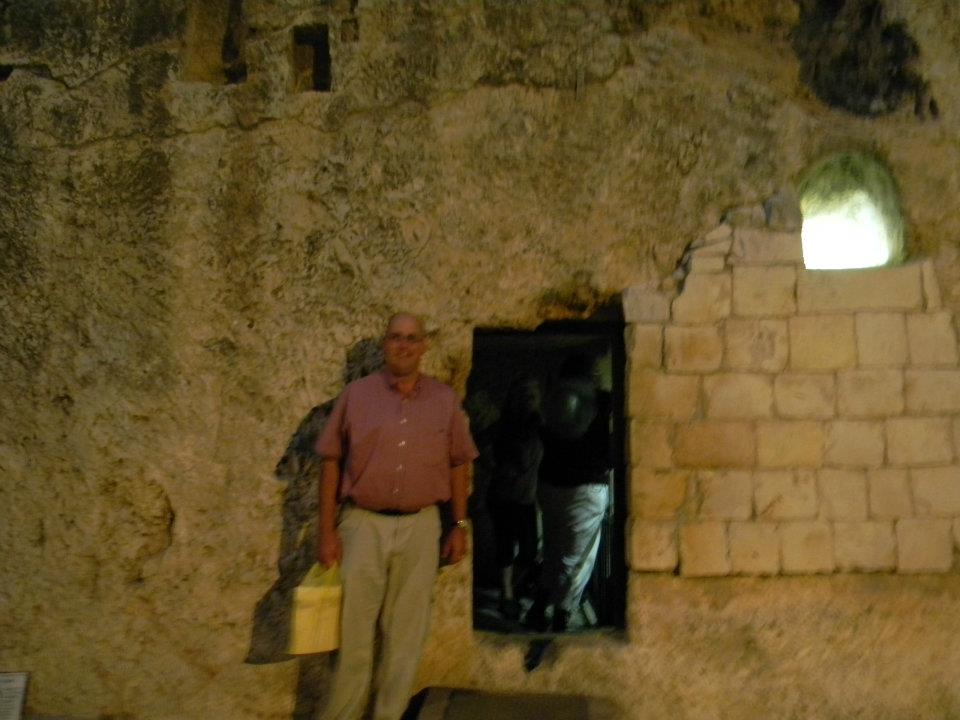
I went back at evening. The Empty Tomb is something I never want to forget!

I went back at evening. The Empty Tomb is something I never want to forget!

I don’t know where your mind or mine is this day, but the three days ending on Easter mean everything.
—————————————————————————————————
Related  post:
_____________________________________________________________
Here’s a chart to help you study the events of the Resurrection:
Click on above link to see the chart below in better detail or to print out from a .pdf file to study.
synthese of resurrection to the ascension (1)

________________________________________

If you enjoy this chart, it and several others from the Gospels have been collected in my new book “Following Jesus Through the Gospels”. Click HERE for more information.

______________________________________

Books On The Study Of Eschatology (The Doctrine of Last Things)

eschatologyIt’s not hard to get folks to study the doctrine of eschatology. What other Bible subjects are so many whole conferences discussing? What is amazing, too, is the outlandish number of books written on the subject. A blog post far too long to write would be “Worthless Books On Prophecy.” Very few subjects have so many volumes go from the bestseller list to the discount bin so quickly either.

This is one place that one must admit his or her bias right up front. I follow the pretribulational premillennialism point of view. That is not to say that there isn’t many wonderful believers who have differing viewpoints while dearly loving my Savior just as I do. Still, my studies of God’s Word has led me to a position.

One thing is clear: Jesus is coming again! This is the non-negotiable point of prophecy. We can debate some points, but we shall see Him face to face. No amount of ridiculous date-setting or bizarre speculations will change that fact! Let’s make sure we see this as a life-changing doctrine, not a mere academic exercise for esoteric knowledge.

Here are some of the books I find to be the most helpful:

1. Things To Come by J. Dwight Pentecost

A widely used bestseller! Most every premillennialist has a copy. This volume is often used as a textbook and many pastors I know make it their first choice. A clearly laid-out volume that can help anyone understand the premillennial position.

2. Dispensationalism by Charles Ryrie

Whether your dispensationalism would go as far as his or not, this volume is indispensable to grasp this point of view. He is fair to opposing viewpoints and is the best representative of classic dispensationalism.

3. Progressive Dispensationalism by Darrell Bock

There has been a change in the dispensational world by some and this volume is a great reference to understand it. I agree with some of this thinking found here. Read this to be up-to-date.

4. The Coming Kingdom of Christ by John R. Rice

A sentimental volume to me as I read it years ago as a young Christian. He is one of the best at highlighting the imminent return of Christ. Much original and helpful material is presented in this volume.

5. What Does The Future Hold? by C. Marvin Pate

I read this recently as a refresher before I taught a class on prophecy. It is the perfect overview volume no matter your perspective. He is careful in his explanations. His own eclectic view means he is in no one’s camp, but he really helps you understand the various viewpoints. I highly recommend this volume.

Other volumes to consider:

You might find The Nations, Israel, and the Church in Prophecy by John Walvoord helpful as well as his The Rapture Question, his The Blessed Hope and the Tribulation, and his The Millennial Kingdom (yes he wrote widely on the subject). The Meaning of the Millennium: Four Views edited by Robert Clouse is good for comparing views.

Jesus Is Coming by W.E.B. was a great challenge to me as a young Christian. It had a great influence on many later volumes. The Basis of the Premillennial Faith by Ryrie is ideal for the younger Christian as is First The Rapture by J. F. Strombeck.

To round out your library you will want the 3-volume set The Theocratic Kingdom by George Peters (look for the Kregel edition). I’m glad to have Biblical Eschatology by Ironside and Ottman in a beautiful Klock & Klock edition.

Don’t forget to consult your favorite systematic theology volume. I used several and especially enjoyed Norm Geisler’s Systematic Theology as it was very well done. I’m not even getting into the many commentaries on Revelation as that is a discussion for another day.

Perhaps there are some volumes you would have expected I include here and while they are on my shelves, I don’t recommend volumes that pretend to see what can’t be seen, that tends to focus on signs rather than the Savior, or that  tends toward ultra-dispensationalism.

Some are afraid of the study of prophecy, but a Christian shouldn’t feel that way. I like to say that if you are a believer prophecy is taking us somewhere and it is somewhere good–the presence of Jesus Christ!

Related Posts:

Books on the Study of Bibliology

Books on How to Study the Bible

What Happens When Your Pastor Becomes Your God


Like a pope
Today Jack Schaap gets his prison sentence for his crime against a minor from his own congregation. For some, the question is, when will this nightmare go away?  For innocent church members and Hyles-Anderson college graduates, I wish it could go away quickly. I’m glad First Baptist of Hammond has a new pastor with a sterling reputation and that they have tried to work their way through a near impossible situation.

On the other hand, it is not going away for the victim, nor her family, anytime soon. Let’s pray for healing as we know they face a long, hard road. (Please no one write me stating that she was a loose girl–she was 17 and the expectation for godliness is surely far stronger on the side of a 54-year-old pastor!) I didn’t want to speak of details that would be hearsay before, but this is now a documented (Chicago Tribune News Item) story and I know some good people are asking fair and honest questions.

This week court documents were released in response to Mr. Schaap petitioning the court for a lighter sentence. They shed light (or something!) on the sordid mess. Apparently, the prosecutors were appalled by his request for leniency in that it was based on health problems and stress of ministry. In disgust, according to their statements, they decided to share more of the details with the world. As much as I am against what Mr. Schaap did, my purpose in writing is not so much in taking him to task (the courts are on to him, his church fired him, and he will someday face the same God I will face for my own sins).

When you read some of the details, you start asking, how could this happen? One theme stands out as a key to the whole mess–what the victim and her family had been taught about how they must view their pastor. We can all be tempted to sin, but beyond that, I submit this particular sin could not have happened had the victim and her family had the proper view of their pastor. Of course, “there but for the grace of God go I”, but such an environment of thought was doomed from the start. I’m not blaming the victims, nor even want to focus on Mr. Schaap’s fall, but what is clearly unbiblical teaching.

Pastors are but men with all the faults and foibles that go with it. To ask people to believe something else than this is to ask them to believe outside the bounds of reason. We have an office called pastor designed by God that is worth magnifying, but that must never spill over into magnifying the frail, sinful lives of we who hold the office. We must be held to the same standard from the same Book that every Christian should be held to.

Some have gone so far to teach that a pastor cannot be questioned. No Baptist I know has ever claimed infallibility, but just how far removed is that from the papal system of the Catholic Church that we all soundly criticize? To accept what someone says without analyzing it is to say it cannot be wrong. Of course, I am not talking about a critical or disagreeable spirit, but a carte blanche power over my life is an extremely dangerous gift to give to someone other than Jesus Christ.

The victim states that she asked some time after the illicit affair began if this was wrong. She says Mr. Schaap explained that it was fine and that God had given her to him. That defies reason and is so contradictory to the Bible that only a person deep into allowing a pastor to fill the role of God in his or her life could fall for it. In the victim’s defense, she had been taught this way of thinking and was convinced it was a sin against God to question it.

Apparently, there was a small handful of people who knew Mr. Schaap was taking this young girl to a cabin alone. Again, there are so many red flags in that for any rational person that it would make the whole landscape a sea of red. But he said he was doing “spiritual” work and so those involved were afraid to say the obvious “you have got to be kidding.” Even the parents expressed remorse that they fell for this ridiculous mindset that pastors can do no wrong.

Power corrupts and great power greatly corrupts is a truism that affects us all. I wouldn’t even trust myself with absolute power and I am sure I wouldn’t trust you with it–even if you were a pastor!

I so love being a pastor. It is such an awesome life work, a real calling that is hard to put in words, but that doesn’t make me more spiritual than you by default. It is my hope that over time I will gain the respect of those I pastor, but it is not automatic and I am wrong if I demand that it is. Perhaps we should so respect the office of pastor that we would not allow some of these more awful things to happen in it.

I’ll be frank again–someone could have helped Mr. Schaap had they only said something like “That is not acceptable and I love you, the souls you shepherd, our church, and our Lord too much to let you do this.” I’m not picking on anyone. Hindsight is 20/20 and as one of my college professors told me once, “it’s so easy to pontificate and say, ‘you fools'”, but I am going to call you to foresight. I am going to call on us all to say “never again.”

Remember it is our Lord who expressly said for us to have no gods before Him. To make myself God as some pastors have done is a direct attack on the Lord and a robbery of His glory. At the same time, to let a pastor in my life be elevated to a position only the Lord should have is idolatry. Think of it–idolatry! Nothing but ruin could follow such a horrible decision in my life. Survey the damage of what we are thinking about today. It’s hard enough to be a godly man and pastor, and so we are not qualified to be the Almighty! Before we try to dismiss this sorry affair from our minds, let’s make sure we learn the devastation that happens when you make your pastor your God.

Related Posts:

The Tsunami of Jack Schaap (Written when the story first broke last summer)

The Backflow of the Schaap Tsunami ( A followup to the first article)

Does It Take A Village To Raise A Child?

village to raise a childWell, does it? Surely you remember the hullabaloo that Hillary Clinton raised when she told us that “It takes a village to raise a child ” in the 1990s? Christians rightfully protested because we knew that she meant only that government had preference over parents in decisions regarding the lives of children. That is absurd in the extreme.

On the other hand, think of that village again. Do any of us really raise our children alone? Would we really want to? We predominantly raise them, but not exclusively. On further examination, that was the Lord’s plan all along. A book I’m reading (and will review very soon) really got me thinking.

The Lord always intended that we live in community with each other. Adam was unfulfilled alone and needed community. That has always been the plan really. Jesus lived that way when He showed us what life on Earth was supposed to look like. To top it off, the Lord gave us the local church. Wouldn’t you call that a community lifestyle? Read Acts 4 again if you just can’t remember.

There was a time when community was key to our lives in America. It wasn’t too long ago (if you must know, I’m 42) that I was a boy growing up in Happy Hollow down in the Smoky Mountains and knew every single one of the hundred or so people living in that little community. I couldn’t have done anything too bad because any one of them would have called my parents and told them.  I suspect  that is actually a very good thing. I wouldn’t have wanted to be embarrassed in front of all of them! Sadly, in most communities that is not what it once was.

The question is, do we still have that sense of community in our churches? That surely is one of the reasons the Lord designed it the way He did. It should be true that all there are on my side and want to see me raise my children for the Lord. They probably will have my back and let me know if my children get out of hand. It should work that way.

I realize that you may know of a few super-critical church members that ever wait to lambaste your children. Just remember that they are wrong and that doesn’t make the design wrong. Plus you may know some who you could never explain that, perhaps, something about their children needs to be brought to their attention. They are the type who as we were standing around glowing embers would be offended by you suggesting that their child burning the church to the ground was not exactly a good deed! Still, a community designed around the unity we have in Christ is what it is meant to be.

If parenting weren’t hard enough, many forgo this wonderful help. The issue really goes far beyond parenting. You and I need community too. We need encouragement and accountability. We have built into us this need of others. Were this not true, we Christians would be even more pathetic than we are at reaching the world for Christ.

We need the village to share our journeys, to lift each other up, to carry each other when we are weak, and to take away the nagging loneliness that is all around us. Be yourself, but embrace the village–most especially that community called the local church.

Are You Stuck In The Old Testament?

Many of us do it. We live an Old Testament existence in a world of New Testament promises. I guess Law will always appeal to our flesh more than Grace. So we go along mistaking the physical lesson of the Old Testament for the spiritual truth of the New Testament.

Recently, there it was in my Bible reading. In Joshua 5 there was a lesson I found thrilling. Here were the Children of Israel freshly arrived in the Promised Land, and after the drama of the Jordan crossing, the Lord’s first order of business was the practice of circumcision. They had carried it out years before in Egypt, but over the years of wandering they had neglected it.

Well, we are supposed to look at OT stories with NT light, right? The circumcision that the Lord is really after is circumcision of heart. So many times we neglect it and it is urgent that we put it in practice again. Just think of the pain of carrying out that call to circumcision! I understand that “sharp knives” of Joshua’s day were flint stones. I don’t want to be too graphic, but I would dread it! Any surgery with stones instead of modern day knives would terrify me.  So, I suppose even at the cost of discomfort we must do the work the Lord seeks in our hearts. In verse 9 we were even told that “This day have I rolled away the reproach of Egypt from off you.” He never said it until the events of this chapter. This we need and in verses 13-15 the Lord came. Pretty exciting stuff, huh?

These lessons get by us too easily. We’d rather pull out the stones of flint than do real heart surgery. We’ll inflict the pain of body and leave our souls at ease.

We become consumed with the object lessons. We prefer the tangible, outward things over the spiritual, inward things. Since this lacks spiritual power, we turn on each other and watch for the pool of blood and listen for the screams.  We are always ready to point out everyone’s failure as if circumcision could tell us all of our hearts. Our conclusions miss the point and hurt others, as well as ourselves. Need I remind you that Jesus has come through in the interim between Joshua and us?

Perhaps we find the pain exhilarating. Perhaps we enjoy it more if we see others suffering with us. I don’t know. We inspect the circumcision, so to speak, while the Lord says you are seeing the object itself as the lesson and missing the point. But we can see the circumcision and we can prove we did it. We can never prove what is in our hearts. We settle for what we can impress others with while being indifferent to what might please the Lord. We live the Old Testament as if the Lord had no greater revelation in the New Testament to share. Pretty ridiculous, wouldn’t you agree?

If I saw the point I’d pray for my heart and yours. I’d listen carefully as the Lord spoke to me and encourage you to do the same. But I’d leave the stones of flint to your own consideration and ask you to keep them away from me. Live the Old Testament if you please and I’ll keep my mouth shut. As for me, though, I’m rather fond of the New Testament.

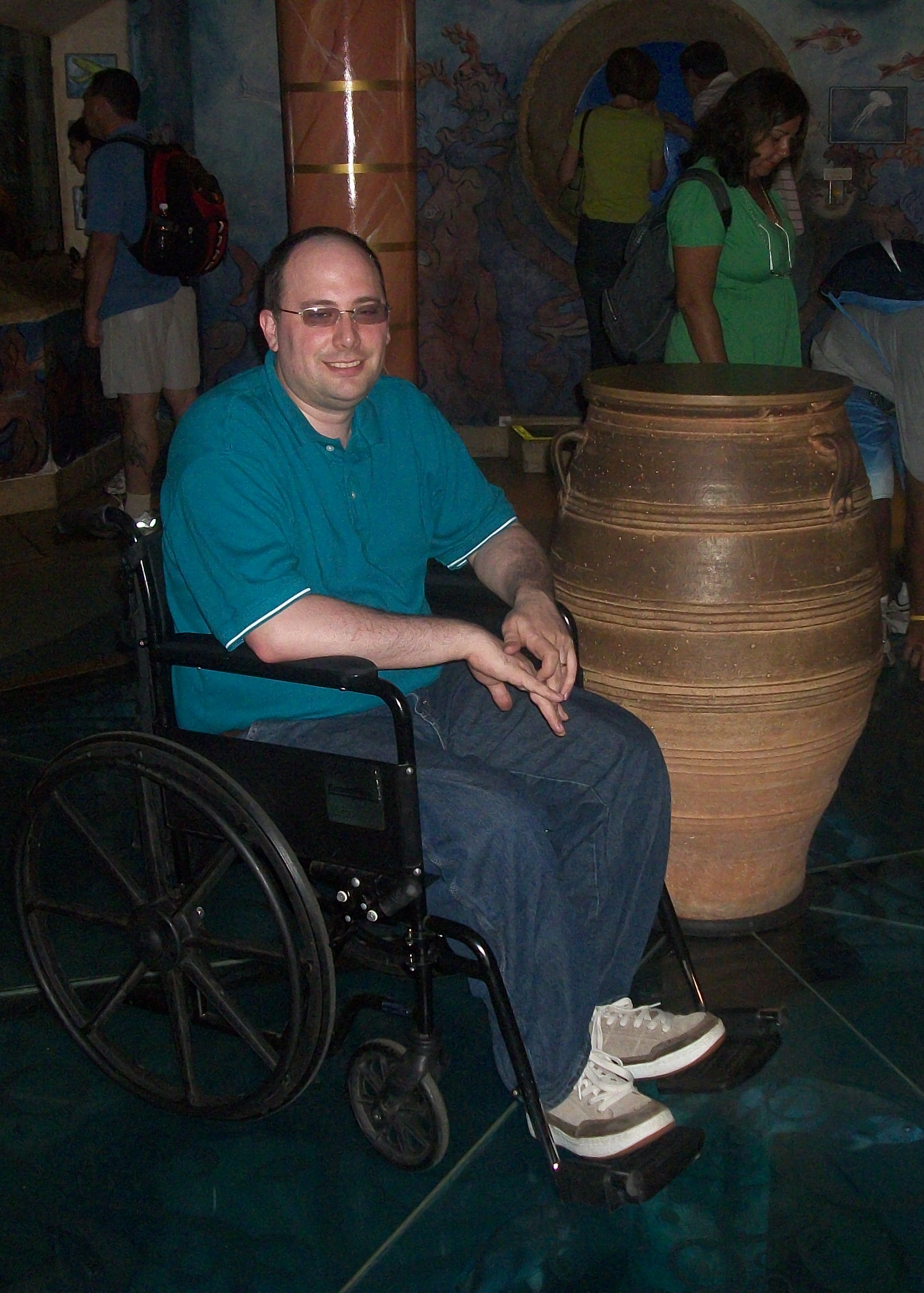
The Master’s Hand–Guest Blogger David Wagner

david pic (2)

What Happened to Me When I Yielded Myself to the Masters Hand

By David Wagner

[I am so glad to have David guest blog for Reagan Review. Here is a man who was a pastor and now lives a very challenging disability. His perspective is helpful as we think about disability and the church. Here is his moving story…]

I am a special person, and it is not because I am disabled. I am special because God chose me to be His son. In accepting His Sonship I also accepted His will for my life. To be honest I would not have chosen the life I now live if I had been given the opportunity. God in His amazing wisdom took a simple pastor of mountain people, and transformed him into a tool meet for the Masters use.

I began serving God in 9th grade working on the buses of Shawnee Baptist Church. For seven years I visited and picked up intercity kids for Church. In my final year of Bible College I was approached to take over New Hope Baptist Church in Kentucky. Over the next seven years God would build me to be a Pastor that He wanted me to be. There were many times when food and diapers were the earnest prayer request. God however was teaching me to be dependent on him.

At the end of those seven years I began to show signs of a disorder that my mom had called Dystonia. Preaching and teaching 4+ times a week and working a full time job began to take its toll. God was moving my heart back home to Beth Haven Baptist Church in Michigan. As long as I was able I wrote the S.S. material for the Elementary classes, and taught the College-age class. My form of Dystonia causes violent muscle movement for 45 minutes to 4 hours. The men of the church were gracious and helped me out of the service when that happened.

Soon the attacks became every service. I talked to my doctor, and found out that they would only get worse. I asked my Pastor to come over, and talk with me. I had to quit it all. I even had to quit going to church. I am blessed to have a Pastor with God’s heart. He understood and encouraged me to live my Christian life from home.

A life of disability is a life of losing things. I lost my job. I lost my ability to drive. I lost mobility. I became dependent on others for many things. For some people, watching me live in pain was too much, and I lost their company. Losing things for me is the hardest part of disability.

The one thing I had not lost was that fact that I was still His son. I also was still a pastor, and God had work for me to do. God had a gift for me. His gift was disability. I would live the life of someone with chronic illness, and He would give me an insight to be a blessing to others who had chronic illness. I have been blessed to publish a book, preach in several states, and talk to people that I would have never had opportunity without disability.

I am not saying you can not be a help to people with chronic illness unless you have it. What God did for me was give me the gift of disability, and the heart to help others. This is my ministry. One of the early lessons that God taught me comes from 2 Corinthians 12:9,10:  “And he said unto me, My grace is sufficient for thee: for my strength is made perfect in weakness. Most gladly therefore will I rather glory in my infirmities, that the power of Christ may rest upon me. Therefore I take pleasure in infirmities, in reproaches, in necessities, in persecutions, in distresses for Christ’s sake: for when I am weak, then am I strong.”

It did not happen overnight, but I began to learn a valuable truth. The grace of God becomes more evident in our lives as we need it. The more we realize that we are weak and He is strong; the more His grace fills our lives. When we come to the place when we realize that the infirmities in our lives are truly His gifts His power can rest upon us. So we are strongest as a Christian when we realize that, (Philippians 4:13) “I can do all things through Christ which strengtheneth me.” We can only accomplish His will with His strength.

God has firmly let me know that it is not in His will to heal me. My prayer is not for healing, but to be used for His glory. For only by Him using me will my life have value. You may not be experiencing chronic illness. My wife likes to tell people, “Our struggles are obvious, and yours may not be. However God uses different trials to make us who he wants us to be.”

So I close with this. Only by yielding to the Master’s hand will your life have eternal value. The trials of today are but for a moment. How we deal with our trials will have eternal significance.

Forever, In His Service.

David Wagner

(David is a regular contributor on Partners For Gospel. Look for his articles there).