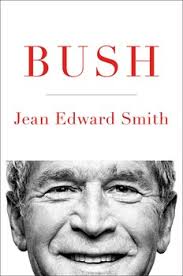
Bush by Jean Edward Smith (Presidential Bio Series)

bush

Here’s the first stab at a definitive biography of George W. Bush by a major biographer. I don’t think it will hold that title long if another famous biographer tries his hand, but it is first in that sense. It’s hard for me to classify this biography. On the one hand, the skilled hand of Mr. Smith is ever present, yet he makes blunders as well. I could hardly put the book down, yet I disagreed often and picked up on clear bias.

There is plenty of research, no character discussed is ever wooden, and you learn much about Mr. Bush’s personality. Still, Smith paints in broad strokes. He equates Bush’s distinct Christianity with a lack of sophistication, his penchant for “deciding” as reckless and brash, and his outlook, particularly on Iraq, a general naivety that continually led him astray.

Smith failed to see that perhaps that Christianity gave him a moral grounding that is often tragically missing in Washington. Right or wrong, he really meant well. His “deciding” was surely better than indecisiveness in horrific events. ( 911, Katrina, the Great Recession–Bush wasn’t a lucky man).When Smith outlined what Bush should have done, he at times looked like the naive one when he seemed to feel that his ideas would have flawlessly followed the script. No matter the plan, the players in Iraq and surrounding areas were the equivalent to having a tiger by the tail. We all learned that together.

When he suggests that Bush overreacted to 911, he doesn’t connect the dots to what he told us in this book–we all wanted to go fight somebody! The Democrats were ready too. A few started disagreeing when Iraq was brought up, but very few at the beginning.Even in this harsh assessment too, there is no doubt that Bush believed there were weapons of mass destruction. If you sincerely believed that to be true, what else could you have done? He writes as if 20/20 hindsight was at Bush’s disposal beforehand.

There’s criticism of his managing of his staff. What president didn’t have staff issues, or been guilty of listening too much to the most agreeable staff members. That’s the human element that always complicates management.

Bush had some failures for sure. Like most of us, often our greatest strengths and greatest weaknesses come from the same component of our personality. It was likely true for Bush too. Amazingly, he quotes Bush admitting, to some degree, many of the very things Smith perhaps overemphasizes. I actually grew to appreciate Bush in places I had not before, especially in things like his handling of the mortgage crisis. We teetered on the edge of a crisis to rival the Great Depression and it called for measures that we might most of the time strongly disagree with. It’s almost 8 years later and Bush clearly got that one right.

As for the book, Smith tells us he thinks Bush is a horrible disaster in the first paragraph. (Was the editor asleep?) Forget building a case and convincing the audience over the course of the book. That crazy method put him on trial as much as Bush page by page.

So is this a great book? I closed it at the end more confident that Bush was a genuinely good man who gave it his all. I was further convinced that Bush would be a guy quite enjoyable to spend a day with. He’d defend his overall approach as it was a matter of principle to him, yet he would readily admit his mistakes, and he’d be a gracious host whether you agreed with him or not. I found that refreshing here in July 2016 as this book hits the shelves and we are in more danger than in Bush’s days and miss his magnanimous ways.

So I reached those conclusions and grew in appreciation of Bush while this book I couldn’t put down tried to convince me that he was a failure. Does that make it a five-star wonder or a one-star dud? I have no idea. I’ll be gracious like George W. Bush and give it 4 stars.

I received this book free from the publisher. I was not required to write a positive review. The opinions I have expressed are my own. I am disclosing this in accordance with the Federal Trade Commission’s 16 CFR, Part 255.
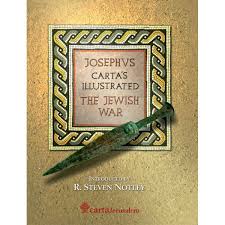
Josephus–Carta’s Illustrated The Jewish War

book carta

Carta Jerusalem keeps finding ways to put their treasured maps into the hands of Bible students. This book is especially creative in that regard. Most of us are very familiar with Josephus and here we have the popular translation by William Whiston of Josephus’ The Jewish War.  What makes this classic new and vibrant is the Carta maps profusely interspersed at appropriate places in the text. 

An added jewel in an introduction by noted New Testament scholar R. Steven Notley that really helps us get hold of the life, writings, and importance of Josephus.

Pictures of places add even more as does a users’ guide for The Carta Bible Atlas and The Sacred Bridge, which are the best in the field and are loved by many of us.

This is a publishing event and a real asset to have!

I received this book free from the publisher. I was not required to write a positive review. The opinions I have expressed are my own. I am disclosing this in accordance with the Federal Trade Commission’s 16 CFR, Part 255.
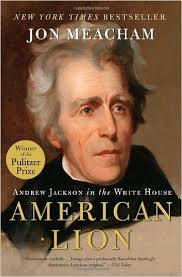
Andrew Jackson by Jon Meacham (Presidential Bio Series)

andrew

“American Lion” could hardly be more accurate. Jackson had personality and to spare. He strikes me as the first populist President, and was far more loved by the people than his colleagues in Washington. Meacham brought him to life in this Pulitzer-winning volume, making me feel I know Jackson so much better.

Perhaps Jackson is the quintessential enigma. A man who could be tender at one moment and a raging torrent the next, Jackson is hard to fully explain. He was involved in much violence in his life. He was happy to duel no matter how small the disagreement, yet he was an accomplished general. He was bitter over what people said of his Rachel, yet he appears not to be innocent of adultery in the matter. He fought hard over issues he believed in, yet got totally sidetracked in his first term over the Eaton mess.

This dichotomy shows up in the big picture of his presidency too. He accomplished many of the things he sought to do, yet it included his horrible treatment of Indians. He could be shamefully petty, yet marvelously bold. He weathered nullification and held the Union together against some strong opponents in the South, yet he had slaves.

The most fascinating thing about him was his Christianity. He had the questionable marriage, an outrageous temper, and a penchant for violence, yet he said some of the strongest Christian statements I’ve seen from a President. He had a better record of church attendance than most too. Note the statement recorded on page 343 by Meacham about Jesus his Savior “who died upon the cross for me”.

Meacham succeeds in presenting Jackson. Critics point out that his focus on Jackson’s presidential days left the other parts of his life too bare. He got a little carried away on the Eatons to the point that he may have exaggerated their importance in Jackson’s first term. Still, he gave us Jackson the man, and I for one, was glad to read it.


Other Presidential biographies

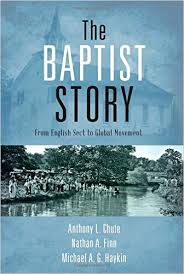
The Baptist Story–A Great New Book

baptist story

Here we have an up-to-date Baptist History textbook. They are harder to come by than you might imagine and this one boasts careful historical analysis, nice pictures, and good writing–the very things so often missing in a text book. Respected scholars Anthony L. Chute, Nathan A. Finn, ans Michael A. G. Haykin join forces to deliver the definitive textbook on Baptists for this generation.

Successionists, or Landmarkers, will be disappointed as Baptists are traced to the 1600s as an English sect. Though there are some similarities to Anabapists and other groups, they followed the evidence and cannot a historically verifiable succession. Even if you are a follower of Landmark thought, you will still find a wonderful historical record from the 17th Century to today.

Though you find a love for all things Baptists here, there is no hiding our less seemly features. We have had a penchant for arguing over the years and that is respectfully handled. Since the Southern Baptists have grown to be the biggest of the Baptist world, they get the most coverage. Still, a fair handling of how other Baptists groups emerged, what issues divided, and how it worked out over time is given. Independent Baptists are treated fairly and the issues why they left the Convention are accurately reported.

This is a fine resource and I highly recommend it.

I received this book free from the publisher. I was not required to write a positive review. The opinions I have expressed are my own. I am disclosing this in accordance with the Federal Trade Commission’s 16 CFR, Part 255.
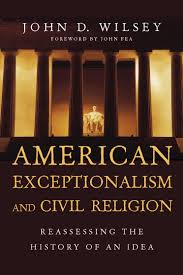
American Exceptionalism and Civil Religion by Wilsey

american ex

Have you ever read about a subject that you have known for a long time that you needed to have deeply thought about, but had not? That is the experience I have had in this unique volume. I am a Christian and consider myself first and foremost a follower of Jesus Christ. At the same time, I am one of those old-fashioned patriotic types who can get a lump in my throat in a whole variety of patriotic settings. Mr. Wilsey forced me to reconcile some things where I had never done so before.

He clearly had a Bible first and patriotism second attitude of which I agree. I even saw the traces of that same patriotic background in his life. I could show you several sentences and paragraphs in this volume, and even some historical assessments where I could not agree, but he gave me the tools to evaluate this issue. My final conclusions were not far from his when I finished.

He distinguishes throughout the book a helpful “open exceptionalism” and a “closed exceptionalism” that conflicts with Christianity. His categories may not always divide as neatly as they do in his mind, but his point is well made.

I intend to use what I learned in this volume going forward. It’s scholarly and helpful throughout.  I know of no other book quite like it and I highly recommend it.

I received this book free from the publisher. I was not required to write a positive review. The opinions I have expressed are my own. I am disclosing this in accordance with the Federal Trade Commission’s 16 CFR, Part 255.
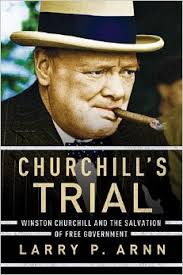
Churchill’s Trial by Larry Arnn

churchill

Here is a book designed to take history and teach today vital lessons. Winston Churchill and his nuanced life is the fodder for those lessons. Larry Arnn, one of the most informed scholars on Churchill, writes from the reservoir of his deep understanding of Churchill.

The book is divided in three parts: war, empire, and peace. The idea is to take what Churchill said, and to a lesser extent, did, and apply it to free government. That approach entails Churchill facing Nazism, communism, and finally socialism in his own country. Arnn views Churchill as statesmen and guide for us in these troubling days for freedom.

Churchill truly was a once-in-a-generation statesman. What he has to say is so worth listening to, is unique and enjoyable, and so Arnn often lets Churchill do the talking. Arnn succeeds in making the case for free government through the lens of Churchill’s life. He believes that Churchill was a success because we would be much worse off were it not for the contribution he made. My miss is that we a statesman like Churchill today who could as effectively make the case–it’s sorely needed.
I received this book free from the publisher. I was not required to write a positive review. The opinions I have expressed are my own. I am disclosing this in accordance with the Federal Trade Commission’s 16 CFR, Part 255.
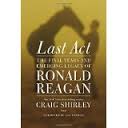
Last Act: The Final Years And Emerging Legacy of Ronald Reagan by Shirley

reaganlastact

What a book! If you admire Ronald Reagan, you will find this book fascinating. If you, as I did, watched for every story about him after he announced his Alzheimer’s and watched every part of his funeral with several tears along the way, this book will fill in all those questions you probably had.

Craig Shirley writes the story in a way that is gripping. When I began reading his method of jumping between the first days of President Reagan leaving office and the days just before he died, I thought it would undermine the book, but it simply did not.

So many insights into the fine character and honest makeup that defined Reagan are here. Actually, I must warn you–you will have waves of deeply missing him again as you read. You will more deeply opine the lack of people like him today too. I believe you will see that Mrs. Reagan is far better than the witch the media unfairly made her to be as well.

Those who served under him, for the most part, adored him. He forced no cynicism on those who served him as many do. Even burly Secret Service men were reduced to heavy tears when he died. Even after Alzheimer’s did its ugly work on him, he was still the man who wanted to stop and help a who man had a flat.

For the most incredible contrast, a story of Nixon ignoring his ailing wife one day and Clinton making a pass at one of Reagan’s young interns and making himself a nuisance by relentlessly begging to speak at Reagan’s funeral were told. Thanks Nancy for holding a firm “no” on that point!

There’s so much more. I love this book. I can’t think of anyone who has lived in my lifetime for whom I would want this kind of information, but Ronald Reagan was for me just such a man. This book is a treasure for those who love the Gipper and would be a great help to those who don’t, but should.

I received this book free from the publisher. I was not required to write a positive review. The opinions I have expressed are my own. I am disclosing this in accordance with the Federal Trade Commission’s 16 CFR, Part 255.
Other Presidential Biographies

John Quincy Adams by Unger (Presidential Bio Series)

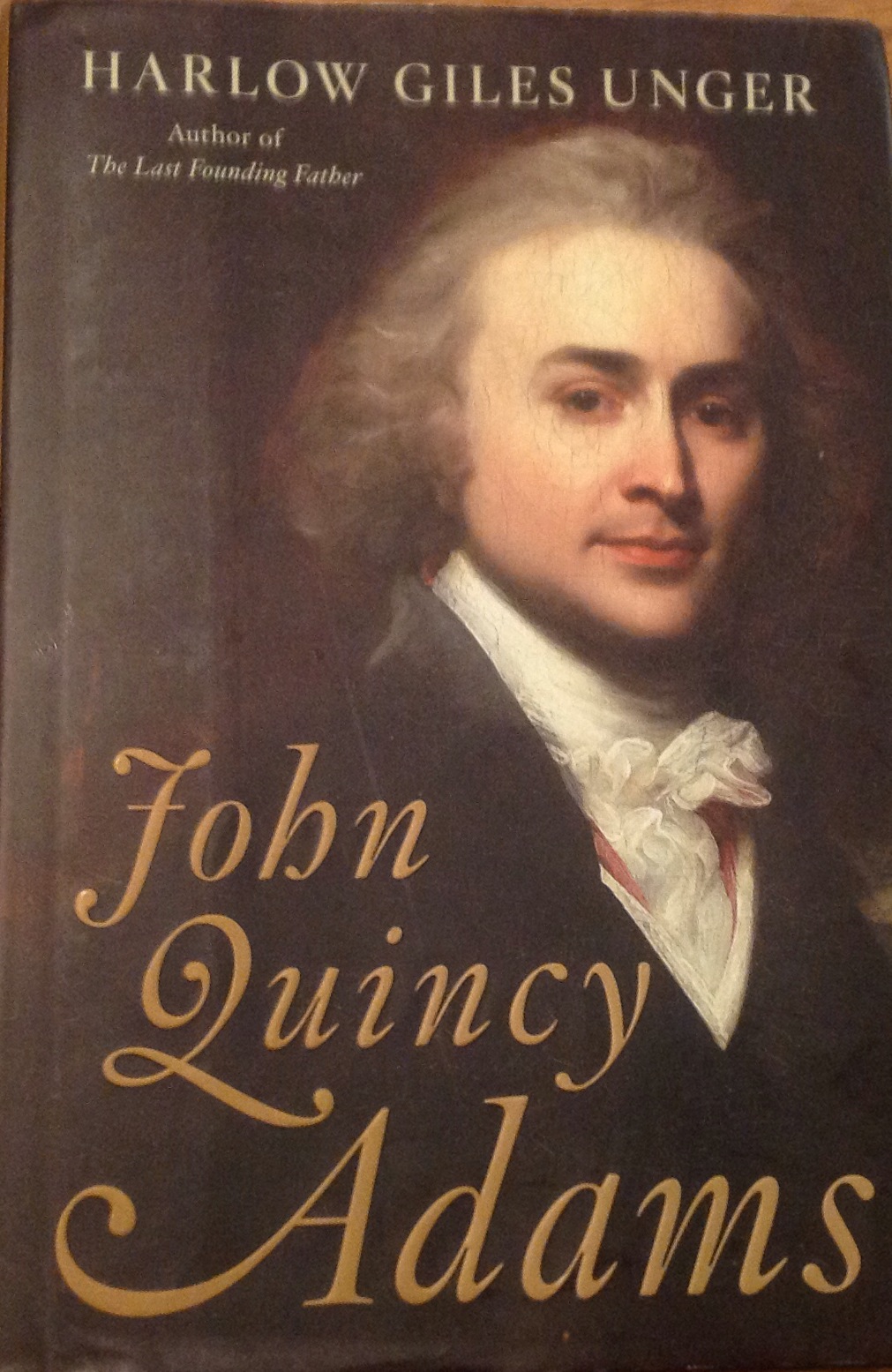
Harlow Giles Unger gives us another enjoyable presidential biography. This time it is on the underrated John Quincy Adams. Perhaps JQA gets overshadowed by his famous father, or perhaps it is because his actual term in office was a dud, but his long public career is in some ways unparalleled in our nation’s history. His life, without question, makes for sterling biography. He met George Washington and Abraham Lincoln!

Unger wells presents his early days and educational opportunities as well as getting to go on diplomatic missions with his father. His experiences were incredible and before long he was on his own diplomatic missions. 

His family life was interesting. He had a close relationship with his parents. He married a British lady and though he seemed fond of her, their marriage suffered deeply on several occasions. His leaving her at times while on political conquests surely contributed greatly to his problems. As a parent, he suffered both the deaths of some of his children, he watched others turn out as alcoholics. He knew something of suffering. Ha was, without a doubt, a believing Christian.

After a successful time as Monroe’s Secretary of State, he finally ran for President. He actually lost the popular vote to Andrew Jackson and was voted in finally by the House of Representatives. He took on several enemies at that time and he was never able to do anything as President. He was quite a discouraged man in those days and was an unpleasant and grumpy man.

Then he hit his stride. For years he became a Representative from Massachusetts where he saw himself representing the whole country. And represent he did! Many Southerners hated him but his skill in legislative procedure and constitutional law made him THE force to be reckoned with. He was the greatest champion of abolition from the founding of the nation till the eve of the Civil War. He knew before he died that the Civil War would come and, to his mind it was probably needed.

Unger draws a fine portrait of this man who lived his life on principle. How refreshing to read in these days. I learned that JQA was one of the really great ones in our nation’s history even if his term as President was largely forgettable.

Presidential biographies in the series.


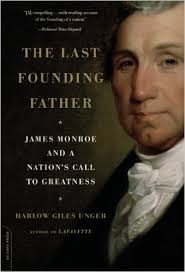
The Last Founding Father (James Monroe) (Presidential Bio Series)

james monroe

Harlow Giles Unger gives us a lively easy-to-read volume on President James Monroe here. His subtitle “James Monroe and a Nation’s Call To Greatness” shows his belief that Monroe’s presidency was great times for our nation. That Monroe was our last Founding Father is open to debate and may depend on how you define it. Had Mr. Monroe died before 1800, I doubt he would have been thought a Founder.

In any event, he was the first Revolutionary War veteran since Washington, and for that matter, the last. A young man in Washington’s army, and one with close experiences with Lafayette, he was even seriously wounded in the line of duty.  He loved Washington but came under the spell of Jefferson and became one of his protegees. To be fair, he was protegee number two after Madison.

He had the same Virginia background as three of his four predecessors, including money problems, the typical troubles of one trying to be somebody in Virginia, and being a slave owner. Like them too he had some troubled family members. The difference was that he was not really born into this life and aspired to it, including the slavery. He left nothing for us to know his religious beliefs.

He career as Virginia’s governor and his time in France was productive. He showed initiative and had to make decisions in those days where communication across the Atlantic was so slow. Unger well highlighted his many accomplishments.

The flaws of the book were usually to do with getting carried away praising Monroe. He paints an inaccurate picture of James Madison being incompetent and Monroe carrying him the last two years of his presidency. Besides Monroe he seemed to praise only Washington and even suggested Monroe was another Washington in many ways. A biography where the biographer comes to really respect his subject is often a good read, but this one got carried away.

On the plus side, I left this volume feeling I had underestimated Monroe. He actually was one of the good ones. His time in office was greatly prosperous and he greatly aided the expansion of our country. His end in poverty and ill health was sad.

There must be a better biography of Monroe somewhere, but it would likely have to work hard to be as entertaining as this one. Here is a pleasant read.

Find other review in the series here.

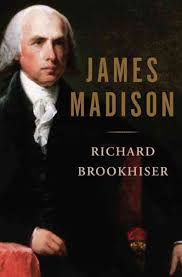
James Madison by Richard Brookhiser (Presidential Bio Series)

madison

Prolific writer Richard Brookhiser tackles President James Madison in this short biography. Though the writing skills I have come to respect in Brookhiser are present, this volume is not quite as good as the others of his that I have read. As a biography, I did not think it was as good as David Stewart’s “Madison’s Gift” either.

The book begins with a riveting retelling of the British marching on Washington during his time as President. Then, it backed up and took the story chronologically. When you finally got back to that point of his life’s story, you could never figure out what device the author had in mind by opening the book with it. I thought of it as a missed opportunity.

Still, the prose is agreeable and the reading easy in this volume. While the biography is not standout, his premise that Madison brought us the partisan politics that since has defined us was much more successful. Some think he overstated his case, and surely Jefferson had a role, but he was an essential element as Brookhiser proves.

This is not my first choice for Madison, but still a fine read.

Find all others in this presidential series here.