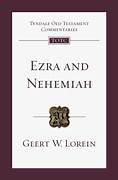
The TOTC series gives us a new work on Ezra and Nehemiah here. Geert Lorein is a unique choice for this volume as he previously wrote a commentary on these books in Dutch. While bringing us Dutch theologians used to be a thing, it’s been a while since I noticed one show up as a new commentary. Clearly, Lorein is up to the task.
Perhaps the oddest thing about the commentary is how the author switches back and forth from writing to a brand new Bible student to that then of a seasoned student. It doesn’t sink the book, but it is noticeable.
The Introduction is full for this series and concludes pretty conservatively. He digs quickly into the historical background. (It’s comical how much he didn’t like the publisher asking him to use miles rather than kilometers!). There are even occasional maps and charts that are quite helpful. He well describes the context like with, say, Xerxes. Additionally, he describes the relationship of Ezra and Nehemiah as most scholars today treat them as one work. There’s more information on the shape of the text than readers of this series would desire, but it’s here if you want it. His discussion of theology is good as far as it goes.
In this series it’s the commentary proper that most are after and it’s good. There’s around 180 pages of text for that task and so pastors can get some real help studying the passages. Getting context, comment and meaning on each section is a good design. Like Goldilocks of old the commentary section is pitched just right. For that reason, I can warmly recommend it.
I received this book free from the publisher. I was not required to write a positive review. The opinions I have expressed are my own. I am disclosing this in accordance with the Federal Trade Commission’s 16 CFR, Part 255.
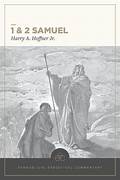
Hoffner continues his outstanding work begun in the volume on 1 Samuel with another mammoth 1000-page volume here. The same outstanding features and thoroughness can be found here too. For that matter, the entire Introduction is repeated here. That is handy because you wouldn’t have to walk to the shelf for the other volume for those introductory matters.
In addition to all I said in my review on the other volume, let me add a word about the depth of exegetical work given here. Of course it provides all any pastor would need on that score, but it will likely satisfy the most in-depth scholarly work at the academy as well. If you read Hebrew, you have it here. If you don’t, you can almost always follow the argument well.
Some might say the theology isn’t to the level of some volumes, but look carefully at the “commentary” section for each passage. Not only is it incredibly full, but there is theology embedded in that section if you are looking for it. You will find then that it’s pretty good too.
I’ve wanted this volume for years, so I applaud its release. Give this one a try. You’ll be glad you did!
I received this book free from the publisher. I was not required to write a positive review. The opinions I have expressed are my own. I am disclosing this in accordance with the Federal Trade Commission’s 16 CFR, Part 255.
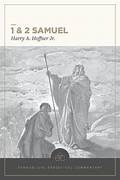
I’m so grateful this commentary finally made it to a physical copy. Though it’s been available digitally for a decade, there are those weirdos like me who must hold it in our hands. Perhaps there are several of us because this book does not hold the elevated place it should. It is a magnificent commentary. Cliche or not, it is a game changer.
What will startle you right off the bat is just how massive it is. Unlike some other large works, there is no filler material that I can see. It is all a treasure trove of learning to help you make sense of the books of Samuel.
Perhaps it invites comparison to the brand new sparkling commentary by Oswalt on the books of Kings released the same day. I would describe Oswalt’s work as a book that is fantastic with the forest view while there are a sufficient number of trees. I would call this work outstanding with all of its trees, but still with the sufficient forest view. I simply can’t remember a better single day of releases in the realm of commentaries ever.
The Introduction runs 120 pages but there’s a huge bibliography and detailed outline that make up the last third of it. Still, with 80 pages of text every typical introductory issue is addressed. Highlights include a well-done review of all the characters in the book. That will be a tremendous help to pastors and teachers. He’s a good writer too as I found no tedium in reading the Introduction and he is friendly to conservative views as he addresses every current in the river of scholarship on Samuel. Academic types will be impressed as well. Pastors can skip just a few sections and will still have everything they need.
The commentary proper is also excellent. It is very full. It is in this part that his other talent comes to light. Hoffner has such historical breadth and writes a commentary that probably not a lot of other people could.
I will say again that this is a huge commentary, but I will also say that it is worth the space it will take up on your shelf. I cannot think of another commentary on Samuel that compares to it. When Lexham took the necessary steps to bring this volume to us, they did us all a big favor. 
I received this book free from the publisher. I was not required to write a positive review. The opinions I have expressed are my own. I am disclosing this in accordance with the Federal Trade Commission’s 16 CFR, Part 255.
Having already reviewed the volume on 1 Kings and giving it the highest possible rating, I can say that I’m just as enamored with this continuation in 2 Kings. As you know, the Books of Kings were one work in the Hebrew Scriptures anyway, but the thrilling story of Elijah and Elisha is interrupted by the break in between 1& 2 Kings. So one of the two just won’t do. Still, if for some reason you need 2 Kings only the publisher has reprinted the magnificent Introduction here as well as all the excursuses from the other volume. I can’t remember seeing that done before, but it’s a great idea.
It’s the God’s-eye view that makes the Introduction so stellar. Additionally, the pivotal history of the period of the Kings has never been better described than here. It actually reaches the level of exciting.
Oswalt took his time with this work, so there’s no drop off before we reach the end of 2 Kings. That same masterful, conservative work permeates every page. The EEC now has several top level commentaries and this one is as good as any of them.
I received this book free from the publisher. I was not required to write a positive review. The opinions I have expressed are my own. I am disclosing this in accordance with the Federal Trade Commission’s 16 CFR, Part 255.
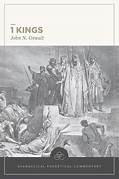
Now the Books of Kings have a great commentary. Never has Kings been served as well as most other OT books. Especially that is the case with good conservative commentaries. We’ve had the NAC volume and not much else. Now this volume goes straight from the printing press to pride of place with a bullet.
The Introduction is a masterpiece. I’ve reviewed several commentaries and I’d say it’s barely one out of thirty that so unravels the idea of the book as Oswalt did. The trees are fine here, but the forest is exquisite. There’s no section on structure per se, but the biblical theology is so apropos that you get the best that a discussion of structure could ever provide. I love it not because I agree with it, though I do, but because it’s so masterfully explained. You can feel the excitement and only love Kings better.
The commentary is obviously the work of a master. Can you believe all the time that’s passed since his beloved Isaiah came out? There’s no rust; just excellent exegesis. If you forced me to list a negative feature, maybe a few of the passages are a bit too brief, but it’s not enough to lower it’s high rating.
I love Kings. The Elijah/Elisha section is spectacular. Oswalt doesn’t miss that section’s prominence in the design of Kings either.
For me, this one is a treat. It’s no gamble to say you’ll think the same thing.
I received this book free from the publisher. I was not required to write a positive review. The opinions I have expressed are my own. I am disclosing this in accordance with the Federal Trade Commission’s 16 CFR, Part 255.
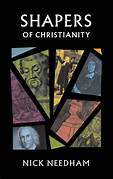
What an interesting little book! I love books that take several faith heroes and in a chapter try to pique our interest. Mr. Needham aced that assignment. How or why he picked these twelve men is beyond me. I think he tried to pick from various epochs of church history, but beyond that I have no idea. I guess he picked mostly theologians, but then he threw in John Wesley who is remembered more for piety and revival. He even alternated the well known with the not so well known. The unusual setup notwithstanding, this book was a joy to read.
Mr. Needham is well equipped to write this book since he has produced the much larger “2000 Years of Christ’s Power”. I have not seen that work, but judging by this book, it must be a good one.
One little icing on the cake that I noticed is that he often surveyed their writings. That was especially helpful when covering someone not known to you. The only problem is that it might add many listings to your buy list.
While he judged every biographical subject by their adherence to Reformation thinking, he did dip outside those actual boundaries. That made for some of the most interesting chapters in the book. Theophylact (completely unknown to me) was one of the most engaging in this volume. It was so good that it made you wonder, why have I never heard of this guy?
He had some of the usual suspects as well. There was Jonathan Edwards, B. B. Warfield, and J. Gresham Machen among others.
He did really well in a short space of showing why these men are compelling to know, and to know more about. This book will not take you long to read, but mark it down in the pleasant category. 
I received this book free from the publisher. I was not required to write a positive review. The opinions I have expressed are my own. I am disclosing this in accordance with the Federal Trade Commission’s 16 CFR, Part 255.
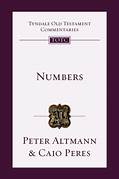
Here’s the latest in the popular TOTC series. This 380-page commentary is quite hefty for this series. Joint authors are not as common either, but it did the volume no harm. The Preface tells which author wrote which part, but it was seamless enough to make you forget that there are two writers at work. Some concessions are made to higher critical theories, but no more than some earlier volumes in this series. The authors no matter your level of agreement were excellent writers and could hold your attention well.
The Introduction was thoroughly interesting even if I disagreed with whole paragraphs. The section on “from impurity to holiness” was easily the most captivating. It made more sense than some larger works on the subject. Some of the most far fetched ideas were its explanation of ritual practices as “embodied experiences” or those of the Offerings. Its discussions of the Christian application of the book were unique. I’m not saying they were off, only that they on their on track.
A question you have to discuss in every commentary on this book is how you take the numbers given. In other words, are they literal? Here the authors say no. They do not say they are in error, but only that they are hyperbolic.
The commentary is well done along the lines of this series. As usual, it’s mid-level in depth while providing an economical option that will be enough for most Bible students. For others with larger libraries it’s a fine secondary resource.
I received this book free from the publisher. I was not required to write a positive review. The opinions I have expressed are my own. I am disclosing this in accordance with the Federal Trade Commission’s 16 CFR, Part 255.
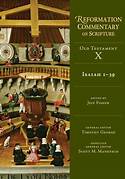
This is one of the best volumes I’ve seen in this series. Jeff Fisher did a great job editing. Choices in this type volume are of necessity almost arbitrary, but he chooses well. Isaiah, called by some the gospel of the OT, probably helped. Isaiah 1-39 is not as popular as the rest of the book because of its somber tone, but there are many great passages here that would be right up the alley of the Reformers.
Fisher also wrote an excellent Introduction. I loved his chart of all the major commentaries on Isaiah from those days, which made you aware of what he had to work with right off the bat. Besides Calvin and a few others the list is from those unknown to me. That doesn’t hurt the book, but all the usual suspects aren’t there. Even more helpful is his discussion of these commentator’s key themes. Don’t miss that section for sure.
The selections are what you’d expect compared to previous volumes in the series. There are jewels abounding with just a few where you ask, so what?
To borrow Spurgeon’s language, this volume isn’t the main dish but it a fine condiment to spice it up.
I received this book free from the publisher. I was not required to write a positive review. The opinions I have expressed are my own. I am disclosing this in accordance with the Federal Trade Commission’s 16 CFR, Part 255.
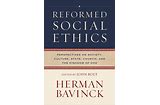
The Herman Bavinck body of work keeps growing! As every new title drops, our stores become fuller. To my mind, he’s one of the real master intellectuals out there. If he’s written on a subject, it was be a crime not to consult it if that’s the subject you’re working through.
You have surely heard of his Reformed Dogmatics. There are scholars who are devoting their career, like editor John Bolt here, to uncovering and freshly translating his work. I’ve only recently heard of a new set called Reformed Ethics and it looks like many are considering this work on Social Ethics as part of that set. Still, it’s unique enough to have this separate title.
We must commend the editors for taking mere notes, filling them out with careful honesty to make sure they’re authentic Bavinck, and even pulling in his other writings to fill the gaps. Your ideas must be valuable to get a group of editors to invest that kind of time to bring them to light.
The first section talks society. It approaches issues that dominate on some level political debate today. Its gift is its utterly dispassionate portrayal of politics as if what God said is all that matters. His argument that Jesus is not a social reformer, that is, He doesn’t work directly through larger social structures, is profound.
Next, he addresses art and scholarship. The section on art is less interesting to me, but others will appreciate it. Scholarship would do well to fall in line with him today.
When he next turns to the state, we find something desperately lacking today. He speaks calmly about issues that should be informed biblically rather than with our flavor of politics. The caldron of public debate today is so toxic that this book seems as if it comes from a distant time. The views explained, however, have more of a timeless quality. He is so judicious in his comments, yet so true to principle.
The next section on “the church” is stated to be different that his ecclesiology one in his Reformed Dogmatics. Here it’s more missions and its social impact. Perhaps we could say he’s arguing for the gospel over a mere social gospel.
When he approaches humanity and the kingdom of God, he defines the Kingdom as the highest good. Your views of prophecy might lead you away from him, but there are nuggets here for any viewpoint.
This completes what will likely be the last set of books by Bavinck to come out. His name is sufficient to suggest you will want it.
I received this book free from the publisher. I was not required to write a positive review. The opinions I have expressed are my own. I am disclosing this in accordance with the Federal Trade Commission’s 16 CFR, Part 255.
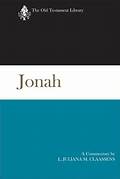
Though I’m a conservative Bible student, I have long given a look at a more critical commentary to have a better overall view. The OTL and NLT are most likely the ones I choose (sometimes the Interpretation series). I know going in that I’m not going to agree on most background or historical issues and am prepared for it. Often there’s some theological thoughts worth feeding into a more orthodox view and I’m glad to have them. With my specific expectations made clear, I have often given a good rating to such works; that is, it provided what I was looking for in the volume. Let me stay upfront, I’m really struggling to give that good recommendation to this volume.
What’s the problem? It’s the entire premise of the commentary itself. The author takes favorite subjects of our day and squeezes them into the text and then passes them off as this is what we ought to think about in arriving at an interpretation. The problem is that in so doing the author has squeezed the very life itself out of the text. For example, she loves to talk about a postcolonial interpretation. That is such a loaded term whose meaning really comes from politics, not Christianity. (I would not want this in a commentary even it more closely resembled my own views). Had she only suggested that the wounds Jonah or Israel felt from Assyria impacted them in many ways, I could at least entertain it. In fact, I’m sure the geopolitics of that era had profound effects. But it seemed to me, that she meant it in a way that it retained all of its 2025 political implications. I’m sorry, but I don’t think 2025 defines the book of Jonah. Believe it or not, the postcolonial viewpoint was the least controversial one of those she chose to be the prism to view Jonah through.
From that muddied rubric, she weaved the overall theme that this is a trauma-informed book. I’m sure Jonah would have found many things that happened in this little book as very traumatic, but this book is not about rubbing his brow and helping him through his trauma. This book was about showing him where he was wrong, and from that vantage point working through the things that he was finding painful, even if he shouldn’t have found them so. Again, had the author only offered that as an application after arriving at an interpretation, I could’ve bought into it. Life brings trauma, and sometimes I bring trauma into my own life, but the Lord will help me work through it and it most likely will involve showing me where I am wrong.
In the introduction, when she really goes big picture, notice how she writes about the divine paradox. There is something of a paradox when we think about theodicy, but I wonder if the biggest paradox is the corner that she herself has backed this little book into through a novel approach that obscures far more than it brings to light. 
There’s even a problem on the scholarship side. Look at the bibliography. It is an echo chamber. She only brought those fringe works in which turned her writing into a self-fulfilling prophecy. If scholarship at large were consulted, I don’t think the top five or ten works that would be voted for even appeared.
The author can write from whichever perspective she chooses, but when it is this far out, it is quite over-the-top to tell the rest of us that that’s the way it should be viewed by everyone. That would be better offered in her memoirs than in a major, reputable series like the OTL. I think if we could bring Jonah back, he wouldn’t understand what this commentary is even talking about.
My bias is clear in this review, but I think as someone who has found value in other volumes in this series, it’s fair to say that there is something more going on here than simply being a more critical offering. 
I received this book free from the publisher. I was not required to write a positive review. The opinions I have expressed are my own. I am disclosing this in accordance with the Federal Trade Commission’s 16 CFR, Part 255.

 The Reagan Review