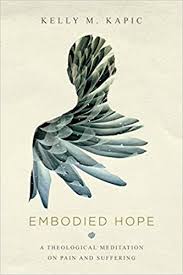
Embodied Hope by Kelly Kapic

book e hope

Kelly Kapic dives deep into the theology of suffering in this fine volume. There’s nothing of glib, overly-generalized platitudes, or fluff to be found in its pages. There’s no attempt to dissect suffering in a dry academic way either. No, this book probes what the Bible actually teaches on the subject of suffering that interacts with all our lives in some way.

Though there is starting to be a sizable body of work on suffering in print today, this work can qualify as a theological work. That is not to say, however, that it lacks heart at all. In fact, the author was probably the perfect candidate to pen this book. On the one hand, he is a trained theologian, while on the other hand, his wife has faced incredible suffering. Having already survived cancer, she has also lived with connective tissue disease as well as Erythromelalgia, or “man on fire” syndrome. As you can imagine, the author struck the right balance between heart and head as he wrote here.

The book itself is divided into three main parts. In part one, he examines the struggle itself. He admits that we can have hard thoughts about God in times of profound suffering. Along the way, he explains how important lament is to suffering despite people’s preference for the stiff upper lip. In describing our questions that come with pain, he exposed our tendency to jump back and forth between self-praise and self-condemnation. Of course, neither are the sole answer. He also explained how we should be mindful of our mortality and how that might be tied up in the things we learn in suffering.

In part two, he tackles what he calls “the strangeness of God”. With skill, he takes us to Jesus Christ and His cross. In the final section, he makes worthwhile practical conclusions. I was enlightened as I read.

This book has already been recommended by several people who have our ear on the subject of suffering. For example, Joni Eareckson Tada, who herself has written much on pain, says she loves this book.

Whether to put on your theological shelves, or to help you wrestle in life’s dark moments, I recommend this book as a winning effort.

I received this book free from the publisher. I was not required to write a positive review. The opinions I have expressed are my own. I am disclosing this in accordance with the Federal Trade Commission’s 16 CFR, Part 255.
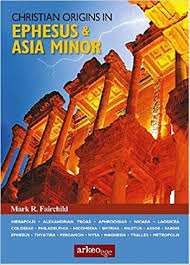
Christian Origins in Ephesus & Asia Minor by Fairchild

book ephesus

This is the book that I will be taking with me if I am ever privileged to tour Turkey and all the Bible sites there involving Paul or the Seven Churches of the Revelation. Since I have done some solo touring in Israel, I know what I’m looking for in a book that I would want to carry with me every day of the trip, and this is that kind of book. This second edition is an attractive hardback that would still easily fit in a backpack for travels. In the meanwhile, this book will also serve as an outstanding Bible study resource.

The book begins with some vivid maps of First Century Asia Minor, followed by maps of Paul’s First and Second Missionary Journeys. In fact, the maps were created by Tutku Tours. After a brief introduction, chapter 1 introduces us to Ephesus. After background information and Bible history are shared, we get wonderful pictures and a tour guide to the archaeological site. In fact, the map on pages 10 and 11 are the same sort of map you would get if you were touring the site. If you use the map, and then the text, pictures, and descriptions given, you could easily plan your trip. The armchair traveler would feel as if he or she were there too. The paper and visual quality are similar to the small books you often find at tourist sites, though much more true to Bible history.

Chapters 2 and 3 spread out from Ephesus to places like Miletus, Priene, Colossae, Hierapolois, Troas, and Assos. The quality of text, pictures, and tour guide information maintains its high level. Chapter 4 looks at Peter and John’s ministry in Asia Minor while chapter 5 turns its attention to the Seven Churches of Revelation. Finally, chapter 6 continues this history for the years after the New Testament period.

After a brief conclusion, the book ends with a helpful glossary as there are many terms the reader might not be familiar with, timelines for archaeological periods, and historical ones as well. The author even attaches a lengthy bibliography for important commentaries on the New Testament as well as historical and archaeological resources on all the sites studied in the volume.

I’m really impressed with this book and recommended for either Bible touring or Bible study. You’ll be a winner either way!

I received this book free from the publisher. I was not required to write a positive review. The opinions I have expressed are my own. I am disclosing this in accordance with the Federal Trade Commission’s 16 CFR, Part 255.
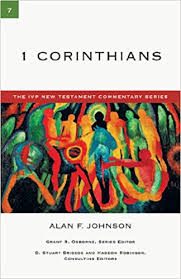
1 Corinthians (IVPNT) by Johnson

book 1 cor

After reviewing several volumes in the IVP New Testament Commentary series, I find this volume on First Corinthians as one of the best it has to offer. Alan Johnson writes with such heart. Scholarly endeavors never obscured the simple believer in Mr. Johnson. That is not to say that this volume lacks in scholarship, but that it doesn’t lose sight of what’s most important.

In the author’s preface, Mr. Johnson says, “my life has been transformed by the words of Paul in this ancient letter.” He sees First Corinthians as Paul working “through his theology of the cross as lifestyle”.

In the Introduction, Mr. Johnson begins by setting Corinth in its first-century setting. He feels that setting is essential to grasping what First Corinthians is attempting to say. Further, he feels that too much emphasis on Greek culture overlooks the Roman character of Corinth. When Mr. Johnson spoke of the market-service economy in Corinth as well as the impact of tourism on the culture, he brought up points that are not well stated in several other works. He briefly describes the religious environment and social status inconsistencies in Corinth too.

From there, he tackles the subject of Paul, who he states is the author. He tries to fit in Corinth with Paul’s overall chronology. He sees Paul’s purpose for First Corinthians as:” status seeking, self-promotion, a competitive drive for adulation and success, even use of the Christian church as a means of self-promotion and advancement”. He briefly overviews scholarly viewpoints on the integrity of First Corinthians, followed by discussion of rhetoric, major theological themes, and contemporary relevance.

After an outline, he jumps into the commentary itself. It is well done! In my judgment, he always struck the right balance that you are looking for in one of these mid-length commentaries. He got to the heart of the issue quickly without being superficial. I see this commentary as an excellent addition to the library of any pastor or Bible student. I don’t think you’ll be disappointed.

I received this book free from the publisher. I was not required to write a positive review. The opinions I have expressed are my own. I am disclosing this in accordance with the Federal Trade Commission’s 16 CFR, Part 255.
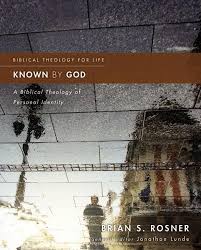
Known By God by Rosner

book known

What I begin noticing when reading this book is how little I had thought of its subject before, how few books I had ever seen on the subject, and how at a loss I would have been to talk meaningfully about it. Brian Rosner has stepped into the lacuna to explain some theology that’s comforting to know but rarely discussed. In fact, the book is part of a series by Zondervan called “Biblical Theology For Life”. Mr. Rosner has at once written with theological and exegetical depth as well as with personal anecdotes and practical explanation to make this a helpful, accessible work.

While we spend so much time thinking about our knowing God, Mr. Rosner explains how important it is to be known by God and how that fulfills something deep inside of us that allows us to secure a personal identity.

He has one chapter where he, in his words, identifies the angst in us and how this subject speaks to it. Chapters 2 through 10 explain how believers in Christ have an identity where we are known by God as His children and that’s tied to Jesus Christ. He does a great job explaining from both the Old and New Testaments this concept as well as differentiating between being made in the image of God and being known by God. He explains all the elements that make up our personal identity while further showing how they come up short in explaining the Christian’s position.

The third section made up of chapters 11 through 15 seek to explain the relevance of this theology to our lives. Those chapters cover significance, humility, comfort, direction, and being known by God. To my mind, the chapter on significance was especially apropos to the fruitless struggle so many have finding significance.

I’m not aware of all the literature out there on the subject, but I’m convinced having this book on the shelf could answer any possible question on it that might arise. It’s also an area where some of the systematic theologies might come up short. The book is well done, has a few charts, and nice quotes on several pages that really add something to the discussion. Mr. Rosner has co-written a major exegetical commentary on First Corinthians, but proves himself adept here with a completely different kind of work. I judge it a success.

I received this book free from the publisher. I was not required to write a positive review. The opinions I have expressed are my own. I am disclosing this in accordance with the Federal Trade Commission’s 16 CFR, Part 255.
Romans (BTCP) by Peterson

book romans btcp

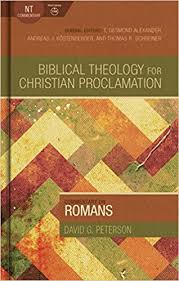
The young Biblical Theology for Christian Proclamation (BTCP) series continues its impressive start with this fine volume on Romans by scholar David Peterson. When I saw that Mr. Peterson was scheduled to produce this commentary on Romans, I fully anticipated an excellent volume because of his track record in producing a top-flight commentary on the Book of Acts in the Pillar New Testament Commentary series. Though this series may not go as deep on the exegetical level, it creates its own niche by carefully probing biblical theology with competent exegetical work behind it. Mr. Peterson has proven himself adept at both types of commentary. In other words, he has succeeded with this BTCP volume on the Book of Romans.

The learning that Mr. Peterson brings to the table is clear in the Introduction he writes on the Book of Romans for this volume. Although this series required that he summarize more on introductory matters, the research behind what he says is obvious. He begins by discussing the character of Romans and dives immediately into the epistolary framework of the book. This approach requires deeply probing what Paul was doing at this point of his ministry. The next section is on structure and argument. He agrees with those who see four main divisions in the argument Paul presents. He finally arrives at a new approach that he presents in four literary factors: alternation, refrain, progression/digression, and recursion. Next, he tackles purpose and puts Jews and Roman Christianity in its proper context along with Paul’s mission. He ends with a discussion of continuing relevance for the Book of Romans and an outline of the book.

There’s another introductory chapter that discusses biblical and theological themes found in the Book of Romans. This chapter effectively draws out in accordance with the aims of this series what will be developed throughout the commentary itself. In my view, there’s much to glean in this section to greatly enrich one’s understanding of Romans.

The commentary itself begins with the text, a discussion of context, another of structure, followed by verse by verse commentary. That is followed by a section entitled “bridge” that ties the discussion together and makes some helpful conclusions.

All the volumes in this series so far have been of high quality, and snagging Mr. Peterson for the Romans volume is something of a coup for the editors. It raises the stature of this series. This volume will be appreciated by pastors and I recommend it.

I received this book free from the publisher. I was not required to write a positive review. The opinions I have expressed are my own. I am disclosing this in accordance with the Federal Trade Commission’s 16 CFR, Part 255.
Spiritual Leadership by J. Oswald Sanders (Books on the Ministry #19)

book spiritual leadership

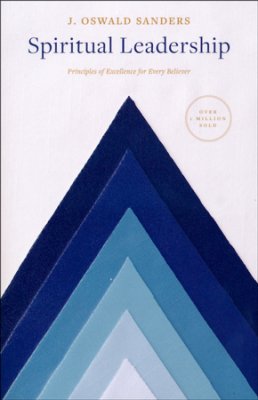
There’s good books and there’s books you simply must have. While every Christian can glean so much spiritual help from this fine book, it would almost be a crime for a pastor to not own and carefully read this book by J. Oswald Sanders. Originally written in the late 1960s, this million-seller finds a new life in this stunning paperback edition by Moody. I’m not sure how to describe the material the cover was made from, but it’s the best paperback cover I’ve ever seen.

I don’t think this classic became so popular through a savvy marketing campaign, but simply by the fact that it is so captivating. It covers leadership as the title suggests, and though there is some overlap with the modern subject of leadership that floods the book market, you also see that spiritual leadership is worlds apart from modern leadership. The book is true to the Bible, and you will find yourself saying over and over again “that’s so true”, even if what you just read nailed your hide to the wall.

The book begins by explaining how ambition fits into the picture and goes on to opine the lack of leaders today. As you would imagine, by chapter 3 you read of Jesus Christ’s master principle – the principle that leadership is servanthood. Later chapters will discuss how to become a leader even if you are not naturally one, insights that you can gain from Paul and Peter’s leadership, as well as essential qualities of leadership.

Later in the book we are told that spiritual leadership requires spirit-filled people. We are admonished how we can never be a leader in God’s work without being a leader in prayer. There’s suggestions on how to make use of time and how to incorporate the highly valuable act of reading.

Later chapters become even more soul-searching. There’s discussion of improving leadership, the cost of leadership, the responsibilities of leadership, the test of leadership, and the art of delegation. We are told of the necessity of replacing and reproducing leaders as well. Finally, in the most probing pages of the book, he reviews the perils of leadership. We should read that section repeatedly! He ends with a short chapter on Nehemiah, followed up by a short conclusion chapter.

Make this book one of the first five or six you buy if you are going into the ministry and read it carefully. It’s one of the great ones and its manifold impact on many Christian leaders over the last 50 years is its greatest recommendation.

I received this book free from the publisher. I was not required to write a positive review. The opinions I have expressed are my own. I am disclosing this in accordance with the Federal Trade Commission’s 16 CFR, Part 255.

Esther (NIVAC) by Jobes

book esther jobes

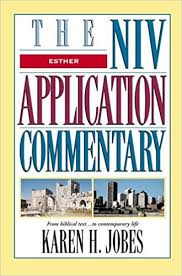
The NIVAC commentary series has successfully found a niche as a resource to pick up after you’ve studied the major exegetical commentaries and now need to think about application and contemporary significance. This commentary on Esther by Karen Jobes fulfills the aims of the series effectively.

In the Introduction the author begins with a somewhat subversive illustration to turn our minds toward the subject of the Book of Esther, but becomes much more helpful when she discusses the Book of Esther itself. The style is more succinct, and even breezy, than in some other series, yet the main points are still well covered. The historical background, as well as authorship and date, are all well covered before the author asked the question: is Esther reliable history? I appreciated, especially after having read as many commentaries on Esther as I have, her saying that the objections raised against the historicity of Esther are not “beyond explanation”. She approaches genre in a section about ancient storytelling and argues that Esther has great value whether it’s historically accurate or not. I’m a firm believer in the historicity of Esther, but love seeing her say that the relationship between biblical narrative and history “consciously rests on the concept that God has in fact worked in history through events that really happened”.

Her love of Esther’s story becomes clear in the section on literary structure. Again, this section is not as lengthy as in some of the larger commentaries, but the bases are still well covered. The same could be said of the section on the theology of Esther. Even more in line with the design of this series is the final section on contemporary significance. You will gain some helpful insights.

After a bibliography, she jumps right into the commentary itself. As with every volume in this series, it is divided into original meaning, bridging contexts, and contemporary significance. That design can’t help but have some repetition, but the author did a good job with it. I rate this volume as a success and a worthy addition to your library.

I received this book free from the publisher. I was not required to write a positive review. The opinions I have expressed are my own. I am disclosing this in accordance with the Federal Trade Commission’s 16 CFR, Part 255.

Esther (EEC) by Tomasino

book eec esther

This commentary on Esther is my first foray into the Evangelical Exegetical Commentary (EEC) series. I don’t, therefore, know how this volume compares to others in the series, but I can assure you that this volume by Anthony Tomasino is outstanding. It’s my understanding that this series is produced by Logos Bible Software in digital form for readers. For guys like me who simply must have a hard copy in their hands and can’t quite put up with digital volumes of anything, I’m glad Lexham was produced to release these volumes in print. The good news, then, is that this fine commentary is now available to tech savvy readers and dinosaurs like me.

The Introduction to Esther runs to 130 pages! Don’t let that scare you away. All the pages are put to good use and the layout is such that you can easily skip areas that are not of particular interest to you. After opening with proof that this story has incredible relevance by the repeated attempts at Jewish extermination across the years, he gives a thoughtful synopsis and historical background to Esther and her times. He covers textual issues, sources, date and provenance from every angle. While I could not agree with all the author sees in sources and redaction, this commentary falls firmly into the conservative category. He further explains canonicity. All scholars obsess over genre and historicity when it comes to Esther. I appreciate that when he lists the historical difficulties that most every Esther commentary mentions, he at least doesn’t deny that they could have happened.

If the aforementioned subjects are not that important to you, please pick up reading again on page 70 with the purpose of the book of Esther. Purim, resistance, and all kinds of other literary features are discussed. The characterization is fully developed and well done. I underlined many sentences in the section on motifs, and for the record, I’ve never seen that better done. That takes him through structure and then he dives into theology. When he is finished, it’s clear that he is written the best Introduction in a commentary on the book of Esther that we have today.

The commentary proper includes his own translation, textual notes, commentary biblical theology comments, application and devotional implications, and a selected bibliography. Though it is a scholarly heavyweight, pastors can jump right in and enjoy this commentary thoroughly. At least, I know I did. Mark this down as holding the number one position in major exegetical commentaries on the book of Esther. I highly recommend it!

I received this book free from the publisher. I was not required to write a positive review. The opinions I have expressed are my own. I am disclosing this in accordance with the Federal Trade Commission’s 16 CFR, Part 255.

The Expositor’s Bible Commentary (Rev. Ed.)-Volume 4: Chronicles-Job

book ebc 4

Volume 4 of the Expositor’s Bible Commentary EBC) series continues the winning record this revision has had of the popular, much beloved original EBC series. In the revised set, volume 4 covers from Chronicles to Job. In this case, we have two new authors (on Chronicles and Esther) creating completely new works along with two authors (on Ezra and Nehemiah and Job) doing a revision.

The new work on Chronicles was handled by Frederick Mabie. By all accounts this is a thorough, conservative improvement over the older series. He provides a succinct, interesting Introduction to First and Second Chronicles. In addition to great text, he provides a few charts and graphs that greatly enhance the work. He deviates from the usual synoptic approach to Chronicles with Samuel and Kings. That makes this a stronger commentary on the Chronicles itself. I’m particularly glad to have this work.

Edwin Yamauchi revises his work on Ezra and Nehemiah. Immediately I noticed substantial updating in the Introduction in some places. He’s clearly an expert in history and packs an incredible amount of great information into the Introduction. The maps were much improved as well. This is a helpful commentary including textual notes after each commentary.

Elaine Phillips writes on Esther. Not only is this a substantial improvement over the older set, it superior to many other commentaries on Esther available today. For one reason she’s not so skeptical of Esther’s history! She admits the problems, but doesn’t find them insurmountable. The Introduction is brief, but good. I consider this a real asset.

Tremper Longman revised Elmer Smick’s well-received commentary on Job with the goal of updating the scholarship but keeping Smick’s conclusions intact. Since this commentary was well received in the past I think this was an outstanding way to handle Job in this series. There’s conservative conclusions, a fine chart on page 682, followed by good explanation on parallelism. There is good description of the characters and language before we get into the commentary. Again, it’s very helpful.

This would be a great volume for pastors, especially if you consider its great value in covering from Chronicles through Job for a fair price. Don’t miss this one!


I received this book free from the publisher. I was not required to write a positive review. The opinions I have expressed are my own. I am disclosing this in accordance with the Federal Trade Commission’s 16 CFR, Part 255.

John (TNTC) (Revised) by Kruse

book john tyn

Colin Kruse has revised his popular commentary in the beloved Tyndale New Testament Commentary (TNTC) series to extend its life for another generation. It was one of the last releases in the older set and has proven to be one of the most popular. I’ve never seen anything but positive reviews for the older edition. While we could not call this a major revision, the series editors were wise to secure Mr. Kruse for this revised edition. Aimed at pastors and Bible students, this book strikes a great balance between scholarly information and helpful exegesis and exposition.

This volume continues to have a major Introduction for a mid-level series. Some sections are little revised while others have additional paragraphs that brings the discussion up-to-date. The author’s love of the Gospel of John is clearly displayed from the earliest pages. He begins by explaining the significance of John’s Gospel followed by an overview, a brief discussion of distinctive features, and a scenario for both the Gospel of John and the Epistles of John. Next, he briefly addresses sources.

He explains John’s purpose as well as the likely readership. He’s very favorable to the Apostle John being the author and examines both external and internal evidence. He summarizes reasons found in the scholarly world for the frequent rejection of John’s authorship before concluding with his comfort in seeing John as the author. From there he goes into the date and place of writing and speaks favorably of the historical reliability of John’s Gospel.

One of the most enhanced sections is entitled “recent trends in the interpretation of the gospel of John”. As before, he discusses it as a Gospel of signs, a two-level drama, and explains the narrative criticism scholars see in John. He adds, though, discussion of structural exegesis, reader-response approaches, feminist approaches, and postcolonial approaches. There’s a great section on the theology of the Gospel of John covering all the important elements that are even found in larger exegetical works. He ends the Introduction with a brief discussion of the structure of the Gospel of John.

The commentary itself is also unchanged in places while others receive substantial upgrading. I don’t know how you couldn’t rank it as one of the very best of the mid-level commentaries on the Gospel of John. Factor in its economical price, and this is a volume pastors and Bible students must consider.


I received this book free from the publisher. I was not required to write a positive review. The opinions I have expressed are my own. I am disclosing this in accordance with the Federal Trade Commission’s 16 CFR, Part 255.