Romans (Pillar) by Kruse

book romans pillar

This book is one of the finest scholarly commentaries that balances its discussion to maintain great value for pastors available today. In replacing Leon Morris’s volume in the vaunted Pillar New Testament Commentary series, which was a favorite for many of us, this volume had better be good. Even with that pressure, this book lived up to expectations. It’s thoroughly conservative, carefully written, readable, and persuasive. Somehow it covers all the bases and does so succinctly in only 600 pages for the incredibly profound Book of Romans.

The Introduction is superb. It makes complex subjects understandable. It begins with historical background that puts Rome, Roman Christians, and Paul in appropriate context. He well explains the purpose of Romans and what scholars have thought on the subject. He gives conservative conclusions on authorship, date, and the integrity of the text.

He gave a thoughtful summary on the New Perspective of Paul that is as good as I’ve seen. He writes respectfully and yet can’t hide the utter weakness of that viewpoint. From there, he transitions to a fine discussion of theological themes. He sees Father, Son, and Spirit pervading Romans and concludes that “the gospel of God comprehensively conceived” is the heart of Romans.

The commentary itself has punch. I couldn’t agree with all his classic reformed viewpoints, but his tone, scholarly scope, and accessibility is a joy. As an added bonus, you will find numerous weighty “Additional Note” sections.

This book is a top commentary on the vital Book of Romans available today. Put it in the must-have category.

I received this book free from the publisher. I was not required to write a positive review. The opinions I have expressed are my own. I am disclosing this in accordance with the Federal Trade Commission’s 16 CFR, Part 255.
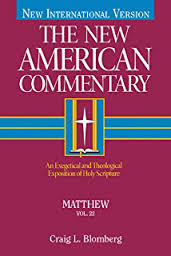
Matthew (NAC) by Blomberg

book matthew nac

This book has gained a high reputation in the economical, pastor-friendly New American Commentary (NAC) series. Craig Blomberg has earned expert status in the scholarly world on the Gospels. Don’t miss his Preface where he tells what he thinks about commentaries series in general, and why the NAC is worthwhile.

Blomberg says his focus could be labeled “a cautious evangelical redaction criticism”. I love “cautious” and “evangelical”, but must admit my least favorite paragraphs were those explaining his views on “redaction criticism”. Scholars often miss that pastors find that the least helpful type of thing that scholarship provides. Some of us are convinced it’s not even accurate. Still, don’t let that turn you away from this commentary. It nevertheless contains the things pastors are looking for, and they are well done at that.

The Introduction does a great job sharing various viewpoints about structure. He works his way to his own conclusion that sees value in a couple of opinions out there (Kingsbury and Bacon particularly). He wisely sees structure as a springboard to theology and gives us several pages that gets to the heart of Matthew. Again, his section on sources doesn’t do much for me, but I appreciated his conservative conclusions on date, authorship, and historicity.

The commentary proper never fails to provide help. The quality remains constant throughout. There might be points I’d disagree with, but every passage was of high quality.

Though this commentary would be considered mid-length (many people’s preference), and pastor/teacher friendly (even more people’s preference), it still can run with the big boys in the exegetical commentary field. I recommend it!

I received this book free from the publisher. I was not required to write a positive review. The opinions I have expressed are my own. I am disclosing this in accordance with the Federal Trade Commission’s 16 CFR, Part 255.

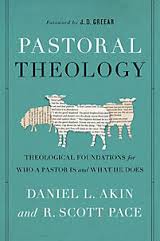
Pastoral Theology by Akin and Pace

book pastoral theology

Daniel Akin and R. Scott Pace team to provide us with an outstanding volume on pastoral theology. Its design is what sets it apart from others in the field. It aims at more than the “what” by focusing on the “why”. That doesn’t mean that the book isn’t practical, but that it draws its practicality by providing the reader with a stronger desire to take pastoral work seriously.

The book begins with more theological foundation and builds to pastoral ministry. Section One has three chapters covering theological, Christological, and pneumatological doctrine and the relationship for the pastor and God’s character, champion, and Companion.

Section Two covers anthropology, ecclesiology, and missiology. This guides us even more to ministry. From there, the book blossoms into a passionate plea for preaching and pastoral ministry. Every page was full of nuggets. I don’t see how any preacher couldn’t be deeply challenged, guided, and encouraged. The chapter on balancing our families in ministry is worth the price of the book.

This book succeeds on both the level of theology and ministry. I can’t imagine a better book for pastoral theology. Let’s read it and remind ourselves why our ministry is so critically important and how scriptural the ministry is!

I received this book free from the publisher. I was not required to write a positive review. The opinions I have expressed are my own. I am disclosing this in accordance with the Federal Trade Commission’s 16 CFR, Part 255.

The Twice-Told Tale by Bendavid

book twice told

Carta Jerusalem continues its trend of providing unique, interesting, and helpful titles of the type that you just can’t find anywhere else. This title by Abba Bendavid makes sense of a part of the Bible that many have trouble with and usually just overlook– the Books of Chronicles. Probably you have struggled through the multiple genealogies that begin Chronicles and the chapters that seem to repeat Kings. This book is a tool that will really enliven your studies of Chronicles and help you see why it is not a pointless repetition.

This English edition of a work originally written in Hebrew is edited and ably introduced by scholar Mordechai Cogan, who is known for his work on Kings. He explains the design of the book and how to glean the most from it. He further explains why the KJV with its more literal translation method is a good one for this project.

The book provides a collation of parallel texts to see how Chronicles compares with other texts. Those parallels are, as you would expect, with Kings, but also with other texts going back to Genesis. Its design is primarily that you can do your own study and draw your own conclusions.

This volume lives up to its press and is an outstanding asset for all students of the Old Testament. I highly recommend it!

I received this book free from the publisher. I was not required to write a positive review. The opinions I have expressed are my own. I am disclosing this in accordance with the Federal Trade Commission’s 16 CFR, Part 255.

Luke 2 (Hermeneia) by Bovon

book luke 2

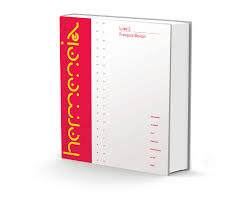
Francois Bovon continues the high standard of commentary that he began in the first volume of this three-volume set in the Hermeneia series. The level of scholarship and probing theological reflection remains at its commendable level. This volume is huge as it is actually one combined volume of what was two volumes in the original German and French. The translation is so well done you would never know it was originally in another language.

This volume covers Luke 9:51-19:27. That section is known as the Travel Narrative and is Luke’s most unique section. Bovon continues with the same format as we found in volume 1. In each section of commentary, he begins with a bibliography and translation. From there, he provides a section he calls “analysis” that discusses sources. That is, to my mind, the least valuable section and his certainty when he discusses sources is somewhat grating.  Next, he moves into commentary verse-by-verse of a most outstanding quality. A final section of the history of interpretation really moves this commentary into a special category.

Maybe the best way I can illustrate why this book is such a jewel is to refer you to some great passages of Luke that are favorites of many of us. In the section on The Good Samaritan, Bovon goes through the story seeing details others miss as well as their theological significance. Both in his own analysis and his discussion of the history of interpretation he allows for the allegorical interpretation of Christ being the Good Samaritan. Most modern exegetical commentaries run right by that possibility.

Then there’s his discussion of the Parable of the Prodical Son, which he wisely calls the Parable of Two Sons. He explains inheritance in those days as well as I’ve seen. He shares so many theological nuggets that most miss. It was truly an exciting section to read. There are many other such passages in this commentary.

This commentary is truly special and unique, and I highly recommend it.

I received this book free from the publisher. I was not required to write a positive review. The opinions I have expressed are my own. I am disclosing this in accordance with the Federal Trade Commission’s 16 CFR, Part 255.
Daniel (NAC) by Stephen Miller

book daniel nac

Are you looking for a quality exegetical work on Daniel that holds to a premillennial or dispensational viewpoint? This fine volume in the pastor-friendly New American Commentary (NAC) series has no real rival for you then. If you see it ranked average, it is usually downgraded for its prophetic outlook, not for the quality of its scholarship. That bias will erase if you read it for yourself. In fact, several amillennial reviewers reluctantly admit that the scholarship is superb. Yes, I’m very high on this book.

The Introduction is conservative, helpful, and warm. He begins with the prophet Daniel and the authorship and date of the book. He explains how the radical theories are very recent and the conservative conclusion on Daniel and its date has long been believed and for good reason. He’s helpful on historical setting and genre as well.

Commentaries on Daniel tend to be good on either the thrilling historical stories or the prophecy, but not both. Mark this one down as excelling on each one. It offered real help and insight in both categories.

This series is always your best bet for a premillennial outlook. (Check out the equally magnificent volume on Revelation in the series). Miller has given the volume that many of us have been looking for on Daniel!

I received this book free from the publisher. I was not required to write a positive review. The opinions I have expressed are my own. I am disclosing this in accordance with the Federal Trade Commission’s 16 CFR, Part 255.

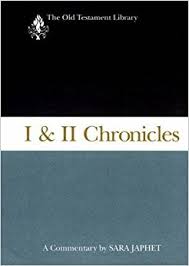
I & II Chronicles (OTL) by Japhet

book chron otl

Japhet’s volume is the most massive exegetical commentary on I and II Chronicles that I am aware of. It’s actually fatter (1077 pages) than most volumes in the Old Testament Library (OTL) that I’ve seen as well. In addition to its size, I’ve only seen great praise from the entire scholarly world for this highly-respected book. It’s fair to call it an influential volume.

I’d agree with those who would call it “conservatively critical”. In truth, it’s going to appeal to the more scholarly types (that’s another thing that sets this book in a different vein than some others in the series). Still, it’s quite readable.

The Introduction tracks its own course. It jumps in at the name and place in the cannon. She concludes that Chronicles is “one work, composed essentially by a single author, with a very distinct and peculiar literary method.” She looks in depth at the structure of the books. She goes far on sources, but much of it is just about which books of the Bible influenced the Chronicler. She has some conclusions I could never agree with, but there is careful explanation throughout. She summarizes the theology as a constant appeal to the past.

In the vast commentary we find helpful philology and exegetical detail. There’s more work on theology here than in the Introduction, which is a plus to most users. There’s more reference to sources than I like to see, but there’s plenty of helpful history. It’s hard to find anything missing across the pages of the commentary proper. Students will appreciate it.

This book is likely the book to have on Chronicles on the heavy exegesis side of the spectrum. I recommend it.

I received this book free from the publisher. I was not required to write a positive review. The opinions I have expressed are my own. I am disclosing this in accordance with the Federal Trade Commission’s 16 CFR, Part 255.
The Counselor by A. W. Tozer

book tozer coun

Here’s another Tozer title that elicits soul searching. Moody Publishers now prints several of his titles and this one is slightly longer than some of the others I have seen. As you can imagine, this is another volume on the Holy Spirit. That was always a favorite subject for Tozer and he doesn’t disappoint here.  He reminds us of the Person of the Holy Spirit and entices us to be filled with the Spirit. If you are a Tozer reader, that will come as no surprise. Though he returned to this theme again and again in his writings, this one is the best I’ve seen from him on the subject so far.

He begins by explaining the Holy Spirit comes only when Jesus Christ is glorified. That entire chapter was outstanding and a great springboard for the book. He is in no way trite when he argues that the Holy Spirit doesn’t come through the intellect. In chapter 3 he comes at our churches. He says, “The Holy Spirit can be absent and the pastor goes on turning the crank, and nobody finds it out for years and years.” Ouch!

He is very sensible in what can be replicated from Pentecost and what cannot. He believes that the filling of the Spirit always arrives in an instant. In chapter 6 he turns the spotlight on we readers and how to evaluate. In the next chapter he explains spiritual gifts followed by the probing chapter on what we really need. The last chapter is a plea to be holy and not block the fullness of the Spirit.

Add this title to the string of pearls known as Tozer’s writings. It’s another winner.

I received this book free from the publisher. I was not required to write a positive review. The opinions I have expressed are my own. I am disclosing this in accordance with the Federal Trade Commission’s 16 CFR, Part 255.
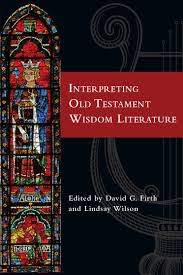
Interpreting Old Testament Wisdom Literature–A Book Review

book ot wisdom

Here’s a scholarly book designed to really get at what OT wisdom literature is and what scholarship has thought it to be. Edited by David Firth and Lindsay Wilson, this book highlights the work of eleven scholars on the oft-debated issues of wisdom literature.

Part 1 is one chapter by Craig Bartholomew that introduces where the study of OT wisdom is today. That provides a fine overview, including some of the more bizarre things out there.

Part 2 gives chapters on the four main wisdom books of Proverbs, Job, Ecclesiastes, and the Song by Ernest Lucas, Lindsay Wilson, Katherine Dell, and Rosalind Clarke respectively. All of the chapters were worthwhile providing the reader learning each time.

Part 3 branches out on themes including seeing Ruth as Wisdom literature, retribution, wisdom, the connection of wisdom and biblical theology, voicing, and a really profound discussion of divine absence.   Gregory Goswell, Lennart Bostrom, David Firth, Christopher Ansberry (he was a really good writer), Simon Stocks, and Brittany Melton provided these chapters.

The book was a solid effort. If you like this type of book, I suggest you check out “Five Festal Garments” by Barry Webb from the same publisher as well. I predict you will see this volume quoted often in future scholarly works. It would be a worthy addition to your library.

I received this book free from the publisher. I was not required to write a positive review. The opinions I have expressed are my own. I am disclosing this in accordance with the Federal Trade Commission’s 16 CFR, Part 255.

Luke 1 (Hermeneia) by Bovon

book luke bovon

This commentary is one where I’ve heard so many tidbits of praise that I have long wanted to see what all the hoopla was about. With this review I’ve had my opportunity to look over this commentary from the Hermeneia series that I’ve had little interaction with. Since the series is geared more to scholars while my needs are that of a pastor, perhaps that was to be expected. Having now looked at this first volume of the three-volume set, I’m ready to admit that it is as special as its press clippings say.

Even though I have some caveats to my glowing review, I’m so glad to have it at my disposal. I must confess that the Introduction is rather brief, and misses what most introductions of an exegetical commentary discuss. That reason, I’ve heard, is because Bovon has written a full volume on introductory matters of Luke’s Gospel and feels no need of repetition. Further, I have no sympathy with his conclusions about sources, dating, or the historical integrity of what Luke’s Gospel says. Why with such caveats do I offer such a high ranking?

He is savvy with exegetical or philological insights. Even better, his theological help is profound. In the passages I reviewed, after I read past matters I couldn’t agree with, I’d find sparkling nuggets that enabled whole new lines of thought. I don’t know about you, but that’s what I’m looking for in a commentary. He’d often pull in incredibly interesting references from other parts of Scripture. I find that kind of help stimulating.

Aimed at scholars or not, I still recommend this book as a fine resource for pastors!

I received this book free from the publisher. I was not required to write a positive review. The opinions I have expressed are my own. I am disclosing this in accordance with the Federal Trade Commission’s 16 CFR, Part 255.