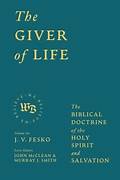
The Giver of Life (WB) by J.V. Fesko

This second volume in the We Believe (WB) holds up the high expectations established by the first one on Christology. Most major Christian publishers have a series of this sort covering various doctrines that together form a systematic theology and this one so far is standing out in a crowded field.

This volume gets two of the key topics of such systematic theologies—salvation and the Holy Spirit. I judge it far more passionate on the subject of salvation than that of the Spirit. My guess is that the author gets consumed with the Spirit carrying out the application of salvation and that swallows the discussion at large. The discussion on the Trinity and, for example, the gifts, almost seemed tacked on to get to the heart of what he really wanted to talk about—salvation.

On other quick caveat is that this book is overtly reformed. I could almost jokingly say that it is more reformed than it is Christian, but not everyone might appreciate my humor.

With that out of the way, that passion he has that I spoke of is quite beneficial and enjoyable in studying salvation in all its glorious beauty. Mr. Fesko comes across as a captivating teacher. You of necessity will learn. Isn’t that the target we’re aiming for in this type of series? You will often love what he’s saying too, and when you occasionally disagree, you’ll at least have the consolation that he’s having a good time.

I have a system of jotting brief notes and page numbers in the front cover of books where what’s being written really resonates with me. I have 17 such notations in this one of things that really rang the bell for me. In case you’re wondering, that means this one ranks high for me. I’ll consult it again too—that’s another dead giveaway for me that we have a winner here. I wouldn’t make him your only guide, but this author is a teacher at whose feet you should spend some time.

I received this book free from the publisher. I was not required to write a positive review. The opinions I have expressed are my own. I am disclosing this in accordance with the Federal Trade Commission’s 16 CFR, Part 255.
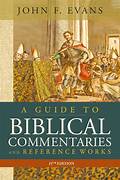
A Guide to Biblical Commentaries (11th Ed.) by John Evans

Here’s a book I love and use regularly, at least I have for over a decade with previous editions. So I deliciously devoured this new edition when it arrived. I have personally reviewed several of the new entries here that have been published since the last release, but I really value his assessments.

He’s the best in the field for these kinds of recommendations and it isn’t even close. And, yes, I’ve seen all the others. His presentation is the most logically organized and his evaluations, though a bit complex, can be followed to advantage if you read his explanation a time or two.

His work is what Spurgeon’s was long ago and Cyril Barber’s works were a generation ago. Strangely enough, he denigrates Barber for being too dispensational. Methinks a few reformed/covenantal theology titles got extra stars for that alone here just as Barber flipped it before. And let’s don’t even discuss what Spurgeon said of Plymouth Brethren writers. But it’s no problem in any of them. Find their bias and adjust accordingly. The bias is real enough that not holding Mr. Evans’ theology may get more negative comments than, say, a very critical or liberal volume. I’ll never understand that, but the world has passed me by in many ways anyway . Still, I wouldn’t even think of not having and using this book.

He tries to write for pastors, but he’s just as interested, and maybe more, for the scholarly volumes. Pastors, don’t worry about that as you’ll know inherently how to adjust. If you compensate for the few biases, you will I think find evaluations easy to line up with. At least I did. You might occasionally disagree. For me, he’s far too harsh on the EEC on the Epistles of John (Gary Derickson). He drowned on the differing theology and overlooked the impeccable exegesis. But that is mostly rare.

This can really help you plan and build a library. Even if like me you have a fair number of the books reviewed, you’ll see something you’ve just got to have. I’ve just got to grab Morales on Numbers after reading here. Grab this book, read it, and let the fun begin.

I received this book free from the publisher. I was not required to write a positive review. The opinions I have expressed are my own. I am disclosing this in accordance with the Federal Trade Commission’s 16 CFR, Part 255.
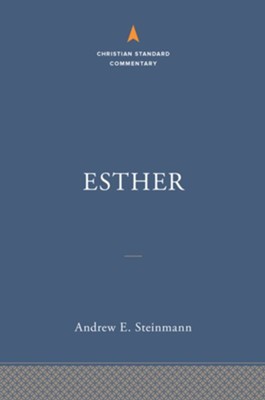
Esther (CSC) by Andrew Steinmann

Esther gets its own volume now as the NAC morphs into the CSC. The old volume was combined with Ezra-Nehemiah, and though serviceable, this one improves the commentary on Esther. Andrew Steinmann has produced quite a body of work by this point and is getting a good reputation. He is pleasantly reliable in his approach to the text.

Esther is a challenge for some scholars and the result is that plenty of commentaries have been written on this lovely book that have the equivalent value of a mechanical pencil without lead. Here the pencil is stocked and writes again.

Steinmann marshals fine material and helpfully presents it even in areas that are often dull. In my estimation, he is better presenting the trees than the forest. To be sure, he beautifully presents the trees, picks the right trees to present, and leads us to being proficient spiritual arborists. I’m not saying he never presents the big picture, it just doesn’t seem he carries it over with the right oomph. In fairness, he discusses things like reversals and things that God is doing and so he doesn’t miss it. Fortunately, he gives you every thing you need so that if you are paying attention at all, you will arrive at the big picture on your own.

In the introduction, he covers everything well except structure. An outline is all he offers on that score.

The commentary is sufficiently detailed and is exactly what most people will need. If you need a massive exegetical commentary, check out the superb EEC volume on Esther. If you just need something for teaching and preaching or personal study, you will likely highly value this work. It would in my opinion substantially outrank the similarly styled TOTC volume on Esther.

I feel this commentary might be exactly what many are looking for.

I received this book free from the publisher. I was not required to write a positive review. The opinions I have expressed are my own. I am disclosing this in accordance with the Federal Trade Commission’s 16 CFR, Part 255

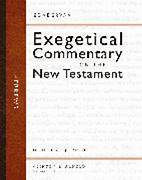
Proverbs (ZECOT) by Christopher Ansberry

I’ve often not been satisfied with the newer exegetical commentaries on Proverbs. My complaints run from brevity on individual verses or even saying nothing meaningful to drowning in scholarly issues and still saying very little. To be sure, I cracked this book open with expectations. Were they met? You bet they were.

It took a few pages to figure out how much I liked it. The Introduction started slowly. Maybe he buried the lead for a bit. At length, I realized that he was giving me the pieces before he weaved them together. What I ended with was an articulate presentation of what’s really going on in the Book of Proverbs. Along the way, he obliterated the common criticism that Proverbs is either moralistic at best or boringly cliche at worst.

The discourse analysis that is the hallmark of this series was tangibly good. The scholarly minutiae was handled well without bogging down the periscopes. The exegesis was rich and the theology thoughtfully given.

And here’s the best thing: no verses are passed over or given a cursory, bland sentence or two. You can go to that specific verse and get real help. That’s what I was wanting and I got it.

I received this book free from the publisher. I was not required to write a positive review. The opinions I have expressed are my own. I am disclosing this in accordance with the Federal Trade Commission’s 16 CFR, Part 255.
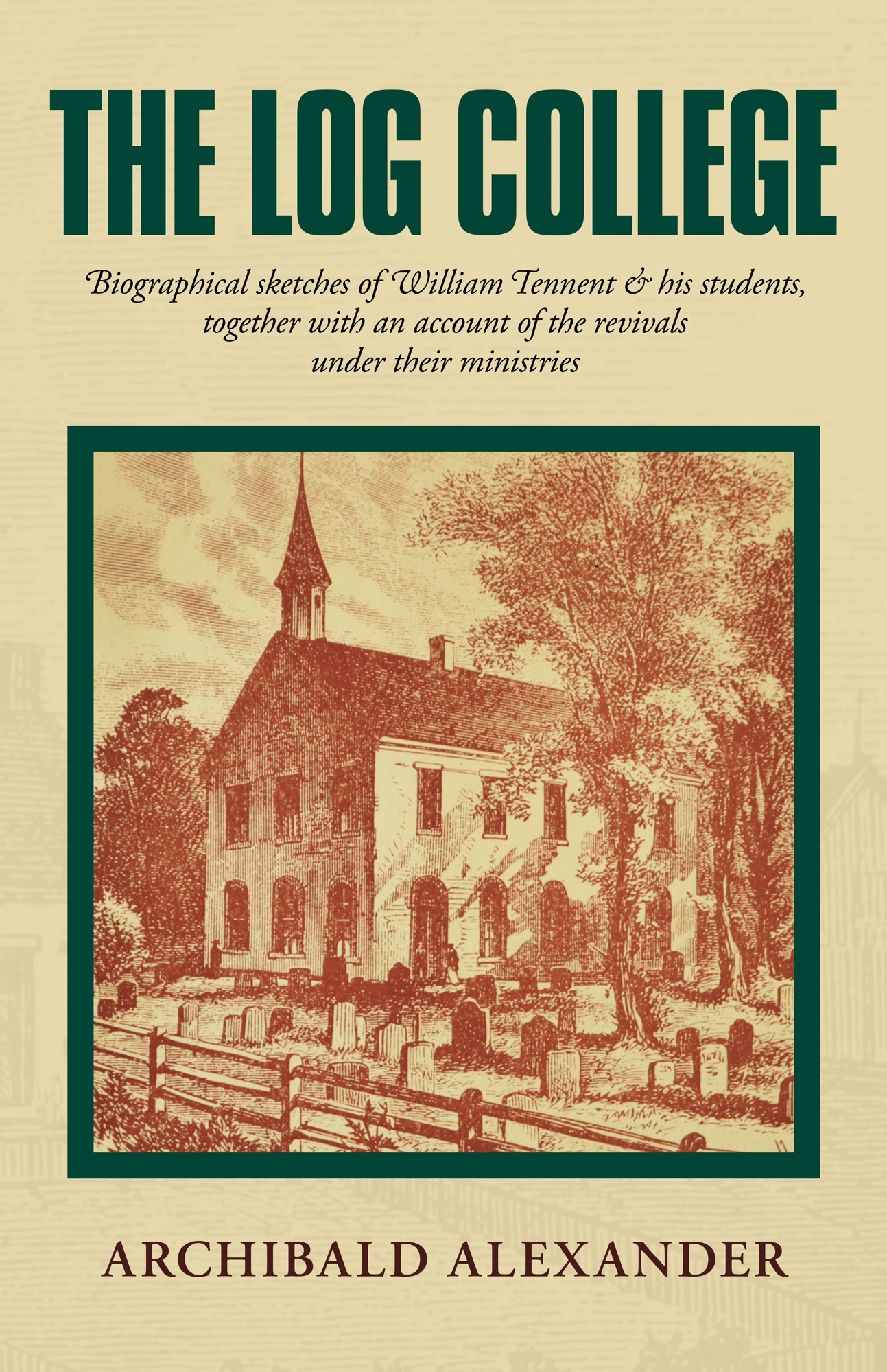
The Log College by Archibald Alexander

This Banner of Truth biography is to some degree different than their usual offerings. In this case, it’s more sketches of a variety of men who were all unheralded heroes who all had associations with a school colloquially known as the Log College. This school did not have the reputation of more famous ones, but in lacked nothing in effectiveness. In fact, the school was quite looked down on, but not for cause. The training it offered was rigorous, and more importantly, the ministry of its graduates impressive. In a word, revival describes its legacy.

After a short chapter on the Log College overall, we get 5 chapters on William and Gilbert Tennent. They were founders of the school with vision and persistence. Next, we learn about the College of New Jersey and the New Jersey and the New London School which sprang from the Log College. From here, we get more sketches of outstanding early graduates who were able servants of Christ with a near constant air of revival permeating from their ministries.

When the life of John Tennent was given, he seemed eerily similar to David Brainerd to me. He had a short life and thought so poorly of himself, yet did a tremendous work for the Lord. Next up is William Tennent, Jr. His story was at once thrilling and colorful. You’ve just got to read that section on the time that he was thought to be dead, but was not. I don’t want to give out any spoilers, but you will not want to miss that one. And there were several other totally unusual features of his life all the while he was an able servant of Jesus Christ.

From here, there are seven shorter sketches of impactful men. The consistent quality of their ministries is what stands out. Probably unknown outside this volume, these men clearly hold renown in Heaven.

This book encourages on many levels. Some of the greatest servants of Christ are little known and near forgotten. Apparently, it is the Lord that got the glory for their lives and that is how it should be. This book is a corrective for our media-driven and marketing age that has invaded the Church. We can make an impact outside of those cheap methods. This book is worth your time.

I received this book free from the publisher. I was not required to write a positive review. The opinions I have expressed are my own. I am disclosing this in accordance with the Federal Trade Commission’s 16 CFR, Part 255.
The Letters to the Colossians and to Philemon (PNTC) [Second Edition] by Douglas Moo

This is the kind of commentary that demands a second edition. Had the editors replaced it as is often the case in these major ongoing series they would have had a lot of explaining to do. This commentary went straight to the upper echelon sixteen years ago when it came out and Mr. Moo is still in his prime in commentary writing. Cliché yes, but nonetheless accurate, it was a “no-brainer” that this new edition arrived. It will not lose its lease in that upper echelon for at least a couple decades from now for sure either.

It’s specifically a blessing as well that he writes on Colossians. Many scholars today like to mug Paul and take Colossians away from him. In this work they were caught in the act and hauled to jail. Since Moo handles those critics with gentleness perhaps its surprising I’d use such a violent analogy; but then again his respectful tone does not make him any less lethal, so maybe it’s not surprising after all. Read the Introduction and you will see. When he ends the authorship section with “But Paul must be seen as the real author”, he’s in no way being condescending. His masterful analysis leaves him with nothing else possible to say.

Describing the false teaching addressed in Colossians is equally adept. His eleven points are balanced, biblical, and fog clearing. Scholars must have something against Colossians because they went quite rogue in this area as well. His theological overview was just right too. Perhaps only structure comes up short (as is usual with him) as it gets not one sentence beyond the outline.

Philemon is probably less a battleground than Colossians and ironically Moo is less certain about the big picture of the letter, though he slightly favors the traditional viewpoint. Still, he writes skillfully and mixes all the ingredients perfectly so you can make your own cake. To me, his work on Philemon is of immense value as well.

Moo needs no recommendation from me as an exegete. He has already attained something of legendary status. I can say, though, that that reputation is fully on display in this commentary. If you are studying Colossians and Philemon, avoid this commentary at your own peril.

I received this book free from the publisher. I was not required to write a positive review. The opinions I have expressed are my own. I am disclosing this in accordance with the Federal Trade Commission’s 16 CFR, Part 255.
Lexham Geographic Commentary on the Pentateuch

Having enjoyed the earlier two volumes of this series covering the New Testament, I was pleasantly surprised to come across this volume. I guess now I’ll expect the rest of the OT to be covered. On the surface, we might suspect that the Pentateuch would be the area most in need of geographical assistance. Father back in time and having generations trample over its environs, there is simply less certainty. Enter, then, this volume.

This volume is a massive undertaking. In some ways it seems like a Bible encyclopedia while at other points it’s more of an atlas. Despite the title, it’s not a commentary per se. What you get is a thorough article on any geographical subject that greatly impacts our understanding of the text. Some are quite scholarly (like ones explaining from a “socio-spatial” perspective!) but they are often still fun. I loved the one arguing, for example, for the traditional site for Sinai. Though I found it less plausible, it was worthwhile to have an article arguing for an alternate site. Not all articles are explicitly geographical like, for instance, ones on burial practices. Still, it’s all good stuff.

Sometimes even theology was addressed and usually effectively when it appeared. Perhaps my only complaint mimics mine of the earlier volumes: some maps strain the eyes to read. Charts, though, are usually fine.

I can’t help but love a book like this one. Even if every article isn’t your thing, you are bound to find several that are simply fascinating. No other volume I know brings these loose ends so tastefully together. What you have is an asset not duplicated anywhere else. That’s saying a lot these days.

I received this book free from the publisher. I was not required to write a positive review. The opinions I have expressed are my own. I am disclosing this in accordance with the Federal Trade Commission’s 16 CFR, Part 255.
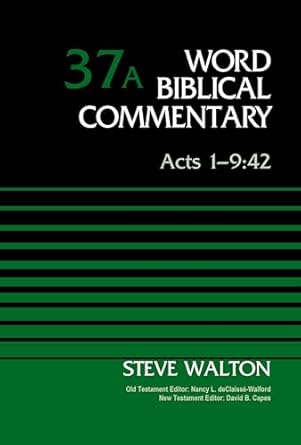
Acts 1-9:42 (WBC) by Steve Walton

Well, we have waited for this one a long time. I think I first heard it was coming 15 years ago. Perhaps I noticed because it was anticipated to be an excellent commentary on Acts. I heard that the exegesis that Walton would likely produce were why the expectations were so high. Though it has grown into a three-volume set, and though this is only the first volume, I can see what all the hullabaloo was about.

There is an anomaly—the Introduction for Acts as a whole is not in this first volume. There is a bit about textual issues, but the rest of those things normally addressed in an Introduction will come in the third volume. At first I thought maybe he just wanted more time to write it, but he states that at the end is where those issues should be handled. He is in the minority there and I cannot concur. That also makes the staggered release of the volumes a bit unfortunate. I’m not complaining as most all major publishers of Christian academic works do the same thing. I suspect budgetary concerns are in play. It’s not that serious a problem in any event and the three volumes are going to be fantastic when they are all here.

But volume 1 is here now and the prognosticators were correct: the exegesis is expert level. The Introduction of sorts is worth reading as it explains his approach. In short, he wants a commentary on the text rather than on previous commentaries. I’m glad someone figured that out.

We are all used to the WBC format by now even if it would never occurred to us to design a commentary in such a fashion. He advises that in each periscope that we read the “Explanation” section first, which ironically is the last one in each periscope. The WBC format can’t keep a good man down, or a good commentator I suppose.

The scholarship is mature and thorough. There’s some Greek but English is always at its side. He is considered conservative, but some critical, and a bit wrong-headed orientation, is to be found occasionally. This big volume on only the first nine chapters of Acts proves that this will be detailed enough for the most demanding student imaginable.

He writes well too. It’s hard to really hold attention when we have this kind of depth, but he pulls it off. There are some good one-volume commentaries on Acts that are indispensable, but I’d think we’d have to rank this as the best major, heavy-exegesis volume on Acts we have.

I received this book free from the publisher. I was not required to write a positive review. The opinions I have expressed are my own. I am disclosing this in accordance with the Federal Trade Commission’s 16 CFR, Part 255.
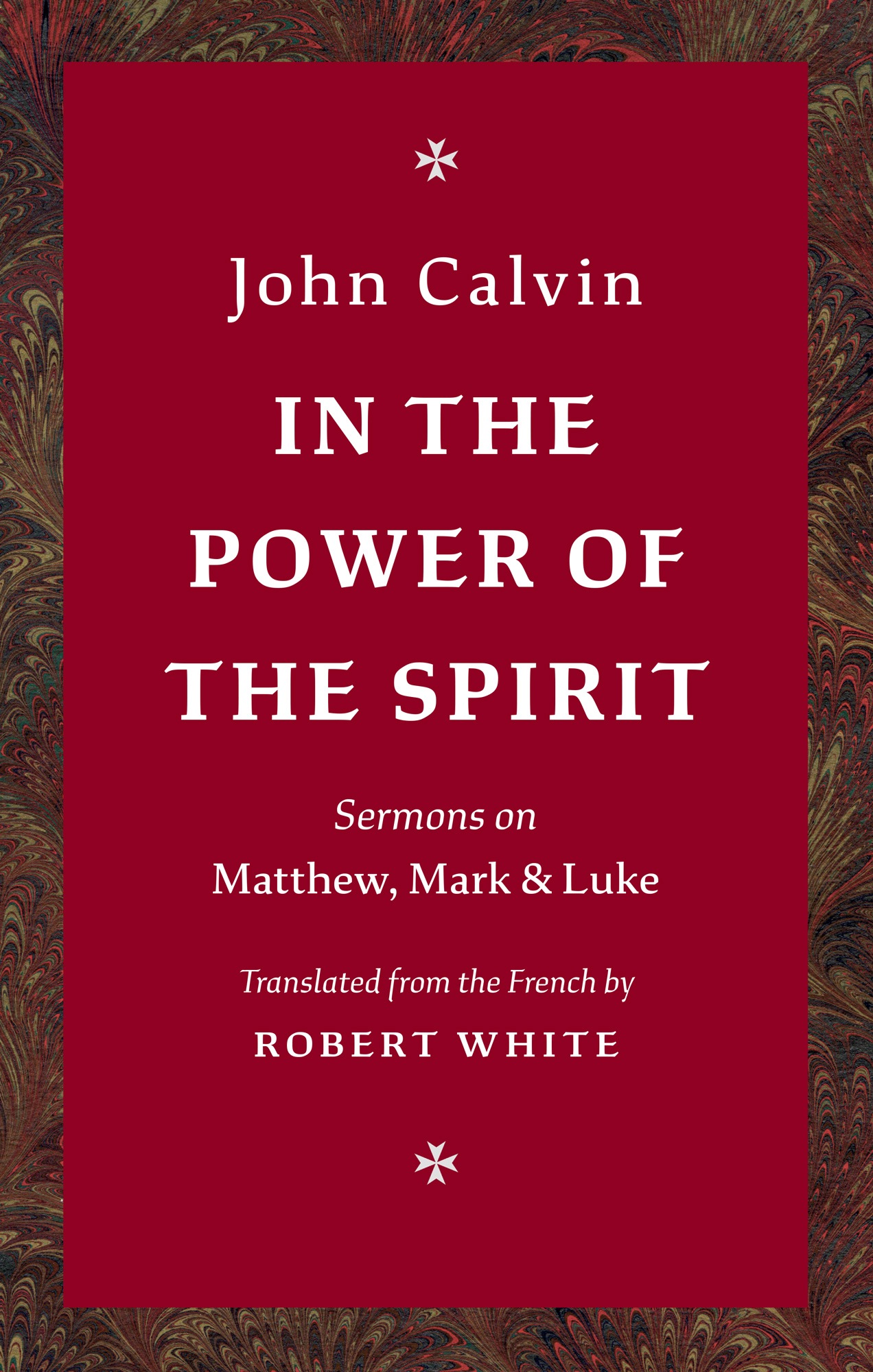
In the Power of the Spirit by Calvin

Here’s the third volume of Calvin’s sermons that survived on the Gospels. These sermons are truly captivating. Credit both Calvin for his sermon prowess and White for his exquisite translating skills. While reading you can so easily forget how old they are. If it wasn’t for a near obsession against “papists”, you’d forget these sermons weren’t new. I guess we’d better credit the timelessness of God’s Word as well.

Most people know John Calvin the theologian, maybe some John Calvin the commentator, but few John Calvin the preacher. Don’t expect a treatise on the theological system that bears his name here, but some sterling exposition. These sermons are dandies.

Preachers may love the sermons as they prepare their own, but I see another wonderful use of this book. I can’t imagine a better devotional read. The sermon “One Mightier Than I” was so piercing. I was thinking of doing one thing in my life professionally that wasn’t a sin or anything like that, but this sermon turned me around in my tracks. That is now off the table. Now that’s the kind of devotional reading I like—not those that just give you the warm fuzzies, but those that humble you.

I could go on and on as all of them are high quality . The ones that covered Jesus’ temptation were especially enlightening. Without a doubt, this is a volume that I will be returning to again in the future.

Of course it’s got the beauty and durability we have come to expect from Banner. I hope they keep translating and giving us these volumes. I’ll never stop asking for them to do Jonah, but maybe I’m the only one who wants that one.

This is a book that I feel blessed to own. I suspect you will feel the same way. 

I received this book free from the publisher. I was not required to write a positive review. The opinions I have expressed are my own. I am disclosing this in accordance with the Federal Trade Commission’s 16 CFR, Part 255.
Romans (NTL) by Beverly Gaventa

This volume brings the NTL quite close to completion. The volume on Romans in any New Testament series will tell you much about its theological predilection. That is surely true here. This series gives perhaps the clearest presentation of a mediating or critical perspective. That is not my perspective at all, but I often read at least one entry from that side of the fence to stretch myself. This series’ best contribution is often theology that really gets you thinking. This volume succeeds along all those lines.

In fact, Gaventa is an especially translucent writer (or she has a grand editor). Your eyes will easily glide along the page understanding fully her thinking whether you agree or not. Often, when you don’t agree you will still find not as abrasive of arguments as we commonly find. If you are of her theological persuasion, you may develop a deep appreciation of this book.

After a large bibliography, she jumps into the Introduction. She begins by jumping into an orientation to how she approached this commentary including her influences. I wish more commentators used that method. I found she was true throughout to what she said here and I appreciate the transparency.

Again, appreciating transparency and agreeing with what was transparently presented are not the same thing. For example, she says she reads Paul “with a hermeneutic of generosity.” She then cites as an evidence things Paul has said. She states “and there are, to be sure, elements in the letter that disturb me, particularly Paul’s use of same-sex relations as evidence of humanity’s refusal to recognize God as God.” That statement raises far greater questions than merely commentary matters on Romans like, say, what moral system do we use to judge the Word of God? I mean, what’s higher or truer that we could use? If it can be produced, why aren’t we studying it instead of Romans anyway? See what I mean.

At least she tries. In her commentary on Romans 1&2 she twists the passages relating to homosexuality until they are contorted beyond recognition. Her description of Roman views of gender hierarchy (page 68) are beyond the pale in describing what Paul was saying. It came across as an act of desperation that on the one hand apologizes for what Romans actually says to saying it’s still a good book on the other. I can’t see how that would satisfy people on either side of the fence. Don’t misunderstand—I’m neither obsessing on this issue or stating it’s one of the main themes of Romans, but I do believe it might help you understand what you have in store for yourself between the covers of this volume.

With that settled, expect nice exegesis within the confines of her perspective. When she’s on, she’s really on because of her superior writing skills. Barth is clearly her greatest influence and that tells you what to expect doctrinally. Theological nuggets are to be found as well.

If you are like me and are conservatively minded and seek light on a different perspective with theological assists, you will find what you are looking for here. If you possess a critical mindset, you will too.

I received this book free from the publisher. I was not required to write a positive review. The opinions I have expressed are my own. I am disclosing this in accordance with the Federal Trade Commission’s 16 CFR, Part 255.