The IVP Atlas of Bible History

This is a nice Bible atlas! I’d seen in the past its earlier iteration called “The Lion Atlas of Bible History”. When I saw that work decades ago, I kind of thought it stood out in some ways, but over the years it started to look quite dated, and I didn’t often consult it. In this polished rebroadcast, it again has “pop”. Its being so easy on the eyes serves to highlight its judicious choices for coverage. In short, it has exactly what you’ll likely be looking for in a Bible Atlas.

The list of things that I like about this volume is quite long. Its maps are vivid, scaled appropriately, and imaginatively designed. The charts and graphs are well chosen. The pictures, especially of Bible sites, were fantastic and nice to just pause and drink in. A Bible Atlas is not a book that you usually read from cover to cover, but anything that tickled your fancy certainly had wonderful text to go with it. I thought every article was excellent and said so much without overly accumulating paragraphs.

It was one of the better Atlas as well in providing a variety of maps for specific Bible events. Some Bible Atlases try to cram large swaths of Bible history into one map. What you have here is more to my liking for sure.

I thought this atlas was especially successful in providing chronological and archaeological data. It always mentions conservative dating respectfully, even if the authors appear to lean another way. Actually, it’s even good at laying out the reasons why there is debate about certain dates in the first place. For example, the dating of the Exodus, and why it is debated, is clearly presented.

We as Bible students are particularly blessed as there are a plethora of outstanding Bible atlases in print. Be sure to consider this one as one of your main options.

I received this book free from the publisher. I was not required to write a positive review. The opinions I have expressed are my own. I am disclosing this in accordance with the Federal Trade Commission’s 16 CFR, Part 255.
Reformed Ethics (Volume 3) by Bavinck

Fascinating! I’ve just never read anything before on the material covered here. I’ve read Bavinck, of course, but here he digs in with that penetrating style of his in a place I need led by the hand.

Somehow I missed the publishing event of this three-volume set and make my introduction through this volume 3. When it arrived, I laid other things aside and jumped in. You probably wouldn’t normally label an ethics book captivating. As good as Bavinck is, you might not call him captivating usually either as he is quite exacting in his approach. His gift is depth of content. What a mind he possessed and to read him makes you a learner. Still, I can’t believe how quickly I went through this work.

The bulk of the book is on “The Life Spheres in Which the Moral Life Must Manifest Itself”. As heady as that title is, the material distills a mountain of study and lays it at your feet in around 200 pages. Along the way, he covers family, the “duty” to marry (hadn’t thought of that), qualifications for marriage (who you can marry), betrothal and wedding, essence of marriage, and divorce.

Here’s why the book is so fascinating. He gathers all the Bible says and on some points the Bible says little specifically. He covers what Christian groups have thought from the most to least known. What you will discover is the lack of consistency among Christians. He is not so “dogmatic” except where he feels the evidence warrants it. He is honest enough not to just trumpet his opinion. He also shows how these ethics have often showed up in laws. It’s a bit tilted towards Dutch law, but that’s understandable as he ministered there. You will at least leave this book knowing what questions you must ask yourself.

The last third of the book changes direction. It addresses philosophical ethics first. I thought he was good at probing the subject, putting it in perspective, and making sure to not allow it to plow over the gospel. In the last part, contemporary morality is covered. You can decide for yourself how contemporary it is. In my view, we must at least wrestle with some of the things he brings up.

I want to consult Bavinck on any subject he covers. I may not agree, but I know I’ll be richer for reading it. Here he plows fields off the beaten trail, and I highly recommend it. 

I received this book free from the publisher. I was not required to write a positive review. The opinions I have expressed are my own. I am disclosing this in accordance with the Federal Trade Commission’s 16 CFR, Part 255.
On Classical Trinitarianism–Edited by Matthew Barrett

The subtitle “Retrieving the Nicene Doctrine of the Triune God” tells what we have here. Forty authors giving forty articles covers that subject from every vantage point imaginable. The list of authors is something of a who’s-who as well. Still, it’s a book more likely to have one pick and choose which articles to read rather than reading cover to cover. It’s an incredibly learned resource.

It’s something of a polemic too. These authors are passionate for Nicene Doctrine, perhaps to a fault. I say that because you’d think that it would moor itself to Scripture first and then show how Nicene doctrine is true to Scripture. You would also think it would call for allegiance to Scripture rather than the writings of the Nicene Council. I think the case could probably be made, so why not make it? Here it was just assumed. Still, some of us feel that there are times that Greek philosophy has too much influence, and that viewpoint would never be accepted in this book.

Along the same lines, deep doctrinal understanding is assumed. A newer Christian trying to learn doctrine would not need to begin here. This book is for those already a bit seasoned in theology.

After those caveats, this book is a tremendous resource. There are so many articles that give such opportunity to wrestle with these great things. Several I read had some things that I would not fully agree with, but they gave excellent opportunity to hone my thinking. There were several articles that really interested me, and were quite helpful to me, addressing what has become the battle between classical trinitarianism and social trinitarianism. For the record, I would lean toward classical trinitarianism.

This book will be quoted for years. I simply can’t think of another book on trinitarianism that comes close to this volume in depth. It is a treasure trove of learning. If you can’t learn from this book, you aren’t even trying.

I received this book free from the publisher. I was not required to write a positive review. The opinions I have expressed are my own. I am disclosing this in accordance with the Federal Trade Commission’s 16 CFR, Part 255.
James (NTL) by Joel Green

Joel Green who has been connected to Luke for over 25 years in my mind on account of his popular commentary in another series here turns his attention to James. I’ve been hearing for some time that he also was preparing a major commentary on Acts, so this volume on James was a surprise for me. Apparently, his career has shifted to take on a lot of editorial work as well as he is now the main editor of the NICNT series. In any event, he seemed to enjoy James as he wrote this commentary. It’s as if key parts of James’ emphasis really resonated with him.

Perhaps another surprise is the length of this commentary. It barely comes in at 200 pages. That almost makes it comparable to a TNTC volume. I’ll confess that he makes good use of the pages he used, but clearly he felt no need to drone on and on. Taking it for what he clearly intended it to be, I will label it a success.

Yet another surprise about this commentary, that ultimately does it no harm, is the organization of the book. When you get to the end of the 15-page introduction, you will think to yourself, well, that was good; but where’s the rest of it? And just when you begin to think that he has cut it short, you will jump into the commentary proper and find that he has worked several other of the introductory issues into the text of the commentary.

For example, in explaining the first verse, he describes the authorship and audience of the book. He doesn’t argue for James, the Lord‘s brother, being the author, but he is ambivalent toward it. To his mind, more or less, it doesn’t matter either way. People would take it as if James wrote it according to his view. That seems bizarre to me, but at least we won’t have to hear him attack authorship the rest of the volume. My bias would be that he is more mediating in his theological position than I would be comfortable with, and I came with those expectations, but found that he did not really make those positions the focus of this work.

He covers structure in the commentary on 1:2-27. It made sense. From there, his commentary writing was a mature work. He even had helpful graphs at times. He would offer us an excursus at opportune times throughout the work. He perhaps came to James with his own bias, or at least his own pet subjects, but his professionalism kept him on track.

In an ultimate test of the work for me, I was up for studying a particular passage in James and really read slowly and carefully what he shared on that passage. To be honest, it was really helpful to me. It stretched my thinking and gave me new pathways of thought for interpretation. This volume would be a good secondary option for a commentary on the book of James.

I received this book free from the publisher. I was not required to write a positive review. The opinions I have expressed are my own. I am disclosing this in accordance with the Federal Trade Commission’s 16 CFR, Part 255.
Alexander Stewart by James Sievewright

Alexander Stewart…a man we didn’t know before, but are blessed to meet here. Banner of Truth keeps gifting us with a steady supply of biographies of unknown giants. Calling them “giants” is not hyperbole. Don’t let their relative unknown status fool you. They are men of renown in Heaven, something like a continuation of Hebrews 11. Alexander Stewart is a worthy addition to the publisher’s growing collection.

If you have read some of the previous biographies from this publisher, you know to expect a few things. The man is going to be pious, zealous, and living a life consumed by the Lord Jesus Christ. In most cases, revival taking place during his life, even though justly credited to the Lord, is consistently found. All of that is true of Mr. Stewart.

What is different about him from some of the other biographical subjects they have published? Probably the thing that stands out the most to me is how he came to Christ. He was a pastor before he became a Christian. That certainly is not ideal, but the story itself is fascinating. You will always be saying to yourself as you read, I think he’s close, and yes, he reaches the point of becoming a believer and jumps right into a very dedicated life. You almost wonder if this book could be a help because it seems likely that we live in an age where many people are even perhaps deeply involved in Christian work while they do not yet know the Lord.

From there, the biography is more to the general pattern, but it is a pattern that we should hope starts happening more again. Only God can bring revival, but this is what it looks like. A book like this will make you crave it.

This book, like the others, is beautiful and is of impeccable binding. It’s a little smaller in height and looks a little different while retaining a definite attractiveness. It may not take quite as long to read as some of the others, but it is an absolute blessing. I say keep sending these biographies our way, and while we are at it , let’s pray that the Lord starts sending these revivals again.

I received this book free from the publisher. I was not required to write a positive review. The opinions I have expressed are my own. I am disclosing this in accordance with the Federal Trade Commission’s 16 CFR, Part 255.
The Beginning of the World by Henry Morris

Some years ago, I read a few works by Henry Morris and always had warm feelings about them. He wrote on Creationism and Christianity, sometimes even commentating on books of Scripture. His forte was clearly laying science before Scripture. He always showed evidence of being studied and had no doubts of the validly of Scripture. Not really an exegete, so devotional is really the space he works in.

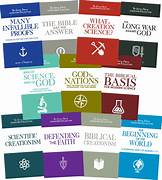
I’m excited to see the reprinting of several of his titles in a new series called The Henry Morris Signature Collection. They have a crisp look and are a good mixture of the familiar and the new. One of the titles that was new to me was this one that digs deep into the scientific aspects of the first 11 chapters of Genesis.

Obviously, this portion of Scripture is the battlefield of the war between Creation and Genesis. I’m amazed at what simple arguments he presents that absolutely obliterates evolution. For example, the two Laws of Thermodynamics as he well explains are simply insurmountable for evolution. Once after an incredible list he says, “The vaunted evidences of evolution are actually quite trivial”. Ouch! But after reading what went before you are thoroughly compelled to feel the same way.

This book will be helpful for a wide spectrum of users. Pastors and teachers will enjoy it beside a regular commentary to see the science boldly confronted in the text. Bible students, and even younger ones, can still follow the presentation and learn so much.

When you read this book you will wonder how it could possibly be such a minority position with both the Bible and science so clearly on its side. Warmly recommended.

I received this book free from the publisher. I was not required to write a positive review. The opinions I have expressed are my own. I am disclosing this in accordance with the Federal Trade Commission’s 16 CFR, Part 255.

Hebrews (ZECNT) by Douglas Moo

A master exegete tackles the toughest book for exegesis in the New Testament. What could be better than that? I often think of Moo as a Pauline scholar, but he already has an excellent work on James to his credit. Hebrews is not for amateurs and this book is a win for us.

At first, I saw the 17-page introduction and I thought, you’ve got to be kidding! Silly exaggerations entered my mind—was he not going to give this the same level of intense work he gave other commentaries? Reading it run all that silliness right out of my mind. When he made the case with perfect clarity for all that we just can’t know about Hebrews, things that make up the bulk of many Introductions, you realize that there was no need for more pages. Perhaps a few pages more on structure would have been nice, but that is never going to dominate his writings.

On to the commentary of the text—wow! He is an exegete par excellence. Honestly, I felt like I was reading someone in awe of the text accompanied by a rock-ribbed determination to be true to it wherever it took him. I offer up the warning passage in Hebrews 6 as a case in point. It was the text first and his theological predilections second. It’s hard for me to fully express how much I respect that. I’m not sure I agreed with his final conclusions completely, but I am better for having read it. I’ll never study the passage again without reading it.

This may be the best commentary for exegesis on Hebrews available. Peter O’Brien’s commentary is the only one I felt that way about before, but it’s in a defunct status now anyway. Moo needs no commendation from me, but I offer it nonetheless.

I received this book free from the publisher. I was not required to write a positive review. The opinions I have expressed are my own. I am disclosing this in accordance with the Federal Trade Commission’s 16 CFR, Part 255.
The Giver of Life (WB) by J.V. Fesko

This second volume in the We Believe (WB) holds up the high expectations established by the first one on Christology. Most major Christian publishers have a series of this sort covering various doctrines that together form a systematic theology and this one so far is standing out in a crowded field.

This volume gets two of the key topics of such systematic theologies—salvation and the Holy Spirit. I judge it far more passionate on the subject of salvation than that of the Spirit. My guess is that the author gets consumed with the Spirit carrying out the application of salvation and that swallows the discussion at large. The discussion on the Trinity and, for example, the gifts, almost seemed tacked on to get to the heart of what he really wanted to talk about—salvation.

On other quick caveat is that this book is overtly reformed. I could almost jokingly say that it is more reformed than it is Christian, but not everyone might appreciate my humor.

With that out of the way, that passion he has that I spoke of is quite beneficial and enjoyable in studying salvation in all its glorious beauty. Mr. Fesko comes across as a captivating teacher. You of necessity will learn. Isn’t that the target we’re aiming for in this type of series? You will often love what he’s saying too, and when you occasionally disagree, you’ll at least have the consolation that he’s having a good time.

I have a system of jotting brief notes and page numbers in the front cover of books where what’s being written really resonates with me. I have 17 such notations in this one of things that really rang the bell for me. In case you’re wondering, that means this one ranks high for me. I’ll consult it again too—that’s another dead giveaway for me that we have a winner here. I wouldn’t make him your only guide, but this author is a teacher at whose feet you should spend some time.

I received this book free from the publisher. I was not required to write a positive review. The opinions I have expressed are my own. I am disclosing this in accordance with the Federal Trade Commission’s 16 CFR, Part 255.
A Guide to Biblical Commentaries (11th Ed.) by John Evans

Here’s a book I love and use regularly, at least I have for over a decade with previous editions. So I deliciously devoured this new edition when it arrived. I have personally reviewed several of the new entries here that have been published since the last release, but I really value his assessments.

He’s the best in the field for these kinds of recommendations and it isn’t even close. And, yes, I’ve seen all the others. His presentation is the most logically organized and his evaluations, though a bit complex, can be followed to advantage if you read his explanation a time or two.

His work is what Spurgeon’s was long ago and Cyril Barber’s works were a generation ago. Strangely enough, he denigrates Barber for being too dispensational. Methinks a few reformed/covenantal theology titles got extra stars for that alone here just as Barber flipped it before. And let’s don’t even discuss what Spurgeon said of Plymouth Brethren writers. But it’s no problem in any of them. Find their bias and adjust accordingly. The bias is real enough that not holding Mr. Evans’ theology may get more negative comments than, say, a very critical or liberal volume. I’ll never understand that, but the world has passed me by in many ways anyway . Still, I wouldn’t even think of not having and using this book.

He tries to write for pastors, but he’s just as interested, and maybe more, for the scholarly volumes. Pastors, don’t worry about that as you’ll know inherently how to adjust. If you compensate for the few biases, you will I think find evaluations easy to line up with. At least I did. You might occasionally disagree. For me, he’s far too harsh on the EEC on the Epistles of John (Gary Derickson). He drowned on the differing theology and overlooked the impeccable exegesis. But that is mostly rare.

This can really help you plan and build a library. Even if like me you have a fair number of the books reviewed, you’ll see something you’ve just got to have. I’ve just got to grab Morales on Numbers after reading here. Grab this book, read it, and let the fun begin.

I received this book free from the publisher. I was not required to write a positive review. The opinions I have expressed are my own. I am disclosing this in accordance with the Federal Trade Commission’s 16 CFR, Part 255.

Esther (CSC) by Andrew Steinmann

Esther gets its own volume now as the NAC morphs into the CSC. The old volume was combined with Ezra-Nehemiah, and though serviceable, this one improves the commentary on Esther. Andrew Steinmann has produced quite a body of work by this point and is getting a good reputation. He is pleasantly reliable in his approach to the text.

Esther is a challenge for some scholars and the result is that plenty of commentaries have been written on this lovely book that have the equivalent value of a mechanical pencil without lead. Here the pencil is stocked and writes again.

Steinmann marshals fine material and helpfully presents it even in areas that are often dull. In my estimation, he is better presenting the trees than the forest. To be sure, he beautifully presents the trees, picks the right trees to present, and leads us to being proficient spiritual arborists. I’m not saying he never presents the big picture, it just doesn’t seem he carries it over with the right oomph. In fairness, he discusses things like reversals and things that God is doing and so he doesn’t miss it. Fortunately, he gives you every thing you need so that if you are paying attention at all, you will arrive at the big picture on your own.

In the introduction, he covers everything well except structure. An outline is all he offers on that score.

The commentary is sufficiently detailed and is exactly what most people will need. If you need a massive exegetical commentary, check out the superb EEC volume on Esther. If you just need something for teaching and preaching or personal study, you will likely highly value this work. It would in my opinion substantially outrank the similarly styled TOTC volume on Esther.

I feel this commentary might be exactly what many are looking for.

I received this book free from the publisher. I was not required to write a positive review. The opinions I have expressed are my own. I am disclosing this in accordance with the Federal Trade Commission’s 16 CFR, Part 255