Biblical Theology by John Goldingay

biblical-theology

John Goldingay, who has already produced a three-volume theology of the Old Testament and another on Isaiah’s theology among many other works, has now broadened his sights to the theology of the entire Bible. Because of his stature in the scholarly world, I predict this will become an influential volume.

As for me, I picked it up with a fair amount of skepticism. As a staunch conservative,   I find Mr. Goldingay sometimes on the other side side of the tracks. (There is a debate out there about whether he is really an evangelical or not). For the record, I found several sentences that were subversive to my eyes in this book. I thought I should pick one such statement for this review to prove my point. On page 74 in an explanation of Jesus as the I AM he says, “… The New Testament’s references to ‘worship’ of Jesus need not imply that he is seen as divine.” Are you kidding? To be fair, in the next paragraph, he returns to a more orthodox description, yet he has some such statements along the way. He is clearly a provocative writer, but where he succeeds as a writer may also be where he fails. As a provocateur he should stop short of inciting cardiac arrest in his readers!

Not that I am the standard, but I found myself disagreeing with many of his conclusions  along the way too. I only mention that because of what I want to say next.

This book threw away the mold of traditional theologies. I had never noticed before just how close a script all such volumes had in the past. From differing theological perspectives, they all present the same way. Here’s the Doctrine of God and off they go …1, 2, 3. Goldingay, for the better or worse, wrote his own script. That approach makes for creative new Approaches to study, even if you are a conservative like me who says often as you go, “O, you’re wrong again there, Mr. Goldingay.”

If you are as conservative as me, this is not going to be your first choice for a theology on your shelf. But if you are like me, you are going to make it one of a handful you always consult just to help you think outside the box. He simply made me think about things that I had never thought of before. I like that! I’ll make my own conclusions anyway, thank you. So I unashamedly give 4 out of 5 stars and recommend a book that I thought I might not.

I received this book free from the publisher. I was not required to write a positive review. The opinions I have expressed are my own. I am disclosing this in accordance with the Federal Trade Commission’s 16 CFR, Part 255.
Exploring the OT: A Guide to the Psalms and Wisdom Literature

book-exp-wisdom

Ernest Lucas provides a helpful introduction to the Wisdom literature of the Old Testament in this fine volume. It is, perhaps, the best of the four volumes that make up this series on Exploring the Old Testament. Together with the corresponding volumes covering the Pentateuch, the historical books, and the prophets, these books make for a solid Introduction the the whole Old Testament.

The strength of this volume is far and away the skill at which he describes the special elements of studying the Wisdom literature of the OT, particularly for those who might never have studied it before. He guides the student through poetry, parallelism, and how wisdom was used in ancient culture. He also spends a fair amount of ink explaining classifications of psalms. He provides a fine general introduction to each of the 5 books of Wisdom literature as well.

The only negative is too much respect was given at times to some scholars too far off the reservation. For example, in his fascinating review of psalm classification I wish he had considered more conservative scholars as well. Still, even that part was instructive. The psalms he chose to explain in depth could be argued if his premise was that they were the most important. For example, where were the Pilgrim Psalms? Overall, the strengths far outweigh the weaknesses.

I recommend this volume for your studies of the Wisdom literature of the OT.

I received this book free from the publisher. I was not required to write a positive review. The opinions I have expressed are my own. I am disclosing this in accordance with the Federal Trade Commission’s 16 CFR, Part 255.

2 Corinthians and 1 Peter by Lightfoot

book-lightfoot

This unique book finishes IVP’s The Lightfoot Legacy Set of the recently discovered unpublished writings of J. B. Lightfoot. If you ever peruse used book listings you will see just how popular his commentaries have been for many years. The book has a gorgeous cover and is, to my mind, as much a collectible item for those who are assembling fairly complete libraries as it is a usable commentary.

On the negative side, you really couldn’t call the portion on either 2 Corinthians or 1 Peter a complete commentary. There is a good bit of untranslated Greek as well. His disdain for the Textus Receptus is palpable too. Still, his logical mind is really good in many places. For example, he makes careful arguments on the chronology of Paul and takes some colleagues to task for carelessness. I wouldn’t agree with all his conclusions, but find interacting with him quite helpful.

Other things are added to this volume that makes it even more valuable. There is an expanded rendition of his justly famous “The Christian Ministry.” The volume concludes with some nice articles by others that have appeared on Lightfoot himself.

If you already have the first two in this series, you will definitely want this one as it is of equal value. The set is a nice one too.

I received this book free from the publisher. I was not required to write a positive review. The opinions I have expressed are my own. I am disclosing this in accordance with the Federal Trade Commission’s 16 CFR, Part 255.

Unceasing Kindness: A Biblical Theology of Ruth

book-ruth

It’s a tale of two books. There’s the narrow part on Ruth’s canonical placement and how that affects theology and the warm part on the great theological themes of Ruth. One is esoteric and the other is quite helpful to anyone who might be studying the Book of Ruth.

Peter Lau and Gregory Goswell provide this latest entry in the reputable New Studies In Biblical Theology series edited by D. A. Carson. It’s clear they have studied their subject carefully even if there is a mixture of the obscure and the enlightening.

As for that canonical placement there was no information given that would have made me reject Ruth’s current placement and its closest relation to Judges. I’m not saying their conclusions were bad, but I wonder if that whole section would have been better placed in a lengthy appendix.

The book gives its value to our studies when it takes theology straight on as is more traditional in such volumes. For example, the authors really mined the significance of famine and tied it in to the Bible at large. There were profound insights in that section. The volume also, as you would expect, tackles redemption in Ruth. The corollary thoughts on typology (Is Boaz a type of Christ?) are also discussed to advantage.

Overall, despite some chapters that would only appeal to specialists, this is a helpful volume.

I received this book free from the publisher. I was not required to write a positive review. The opinions I have expressed are my own. I am disclosing this in accordance with the Federal Trade Commission’s 16 CFR, Part 255.
Devoted To God by Sinclair Ferguson

This book is special. Its title might not suggest the wallop it packs, though the subtitle “Blueprints For Sanctification” at least sends you the right direction. When the author says he is going to approach his subject by doing some expositions of the key NT passages you still might realize what you are in for. It’s only when you actually start reading and the chapters add up that you see the treasure you have. Those passages he expounds are ones we read over too quickly and their incredible value he simply unfolds. Along the way, the book proves itself an instant classic. That might be cliché, but I believe time will prove it true.

There’s an appendix that lists the “Blueprint Passages” at the end, and he has something to say on each, but he soared in Romans 12, Galatians 2:20, and especially Romans 6. He really helped me see the role the Law has in the life of the Christian today. He steered away from extremes that find so many adherents these days.

I could not say that I agreed with every sentence in the book, but he always carefully explained himself and made you do your own thinking. I can’t follow all reformed conclusions that were made, but I think most Bible believers will be helped and everyone needs this book. I challenge you to see if you can’t agree with his final chapter on the ultimate goal. I sure did.

I must give you warning. This book is not for casual reading. It demands slow, reflective reading. You invest that effort and you will be rewarded immensely. This is one of the great ones.

I received this book free from the publisher. I was not required to write a positive review. The opinions I have expressed are my own. I am disclosing this in accordance with the Federal Trade Commission’s 16 CFR, Part 255.
2 Great New Surveys

book-old

book-new


Old Testament

Seasoned professors Ed Hindson and Gary Yates join forces to give us “The Essence of the Old Testament: A Survey.” This volume is aimed at beginning undergraduate students and serious laymen as well. B & H Academic has almost concerned the market on Bible surveys for every level and this one holds up the high standard of its sister volumes and yet is accessible to its target audience.

There’s three introductory chapters adeptly looking at big picture issues like people, places, archaeology and canon. Each section of the Old Testament gets like Pentateuch, historical books and so on get a helpful chapter.

The majority of the book is a chapter for each book of the Old Testament, except for joint chapters on, for example, I and II Kings. Each chapter covers background, an outline, a section on message that basically covers the contents of the book, and a short section on theological significance.

This book is a gorgeous volume with nice pictures, charts, and maps that will be a real asset to you.

I received this book free from the publisher. I was not required to write a positive review. The opinions I have expressed are my own. I am disclosing this in accordance with the Federal Trade Commission’s 16 CFR, Part 255.
New Testament

“The Essence of the New Testament: A Survey” by Elmer Towns and Ben Gutierrez is similar and companion volume to “The Essence of the Old Testament:A Survey” by Hindson and Yates. It too is aimed at beginning undergraduate students and serious laymen and continues B & H Academic’s reputation for premier surveys.

There are three chapters on introductory matters. The first two cover textual issues and New Testament interpretation respectively. The chapter on “The History Between the Testaments” sets the New Testament in perspective. While I prefer the design in its OT counterpart better, this is still acceptable. I would have also preferred a more broad approach on the Gospels than just focusing on the Synoptic Problem.

The real value in this volume is the chapters on the individual books of the New Testament. They are well done and include fine pictures, maps, charts, and content.

I highly recommend this survey, and think it even a better idea to grab its OT counterpart at the same time to have an outstanding set.

I received this book free from the publisher. I was not required to write a positive review. The opinions I have expressed are my own. I am disclosing this in accordance with the Federal Trade Commission’s 16 CFR, Part 255.
 

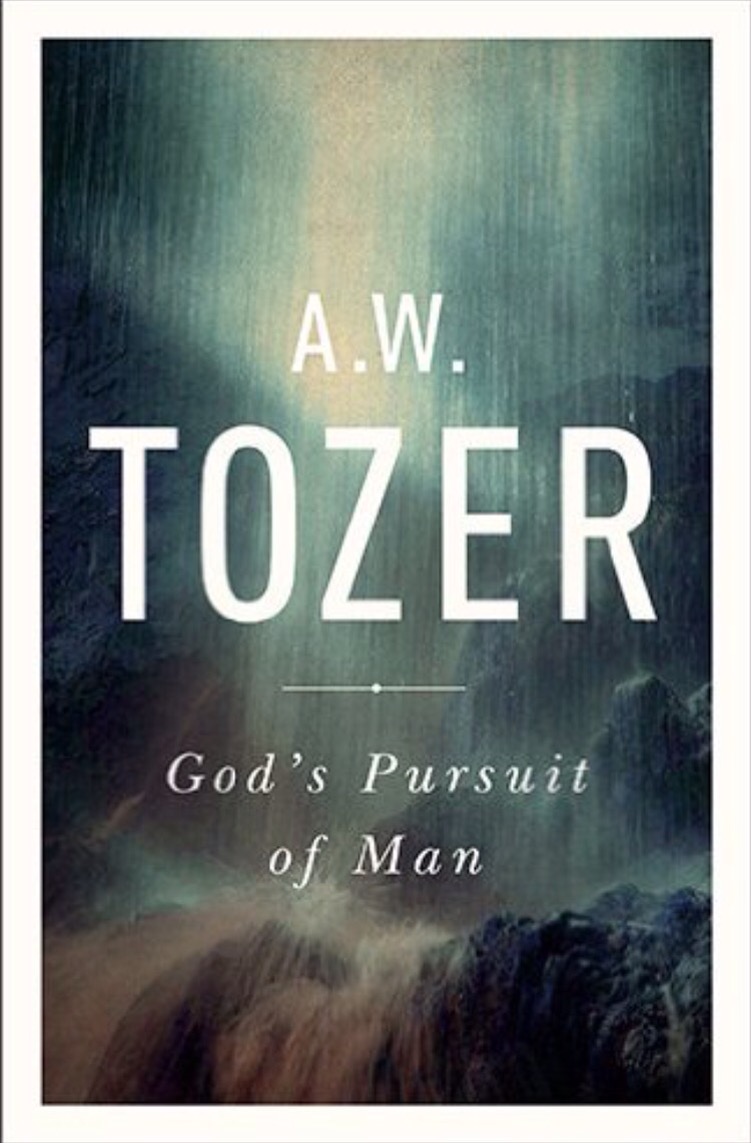
God’s Pursuit of Man by A. W. Tozer

A. W. Tozer turned out an incredible amount of probing, moving, and spiritual writings. His classics “The Pursuit of God” and ” The Knowledge of the Holy” are two of the most important Christian books that we possess today–Something like a 12 on a scale of 1-10. This volume is only slightly below those venerable books. Not agreeing exactly with the Calvinist or the non-Calvinist, he never demonstrates the fear of man and writes what he got from intimate communion with his Lord.

To my mind, he writes mostly on what salvation is, what it is not, why we often have a superficial view of it. The second half of the book he moves on to the Third Person of the Trinity–the Holy Spirit. I heard echoes of his theological masterpiece, “The Knowledge of the Holy.” Actually, this book is intended to fill in some of the gaps, as well as be a counterpart to “The Pursuit of God.”

I can’t really think of a downside to the book and was personally moved by it. Some might think they find a few strands of legalism in it, but please notice there is nothing of the Pharisee’s heart from his pen. This book is a winner all the way.

I received this book free from the publisher. I was not required to write a positive review. The opinions I have expressed are my own. I am disclosing this in accordance with the Federal Trade Commission’s 16 CFR, Part 255.
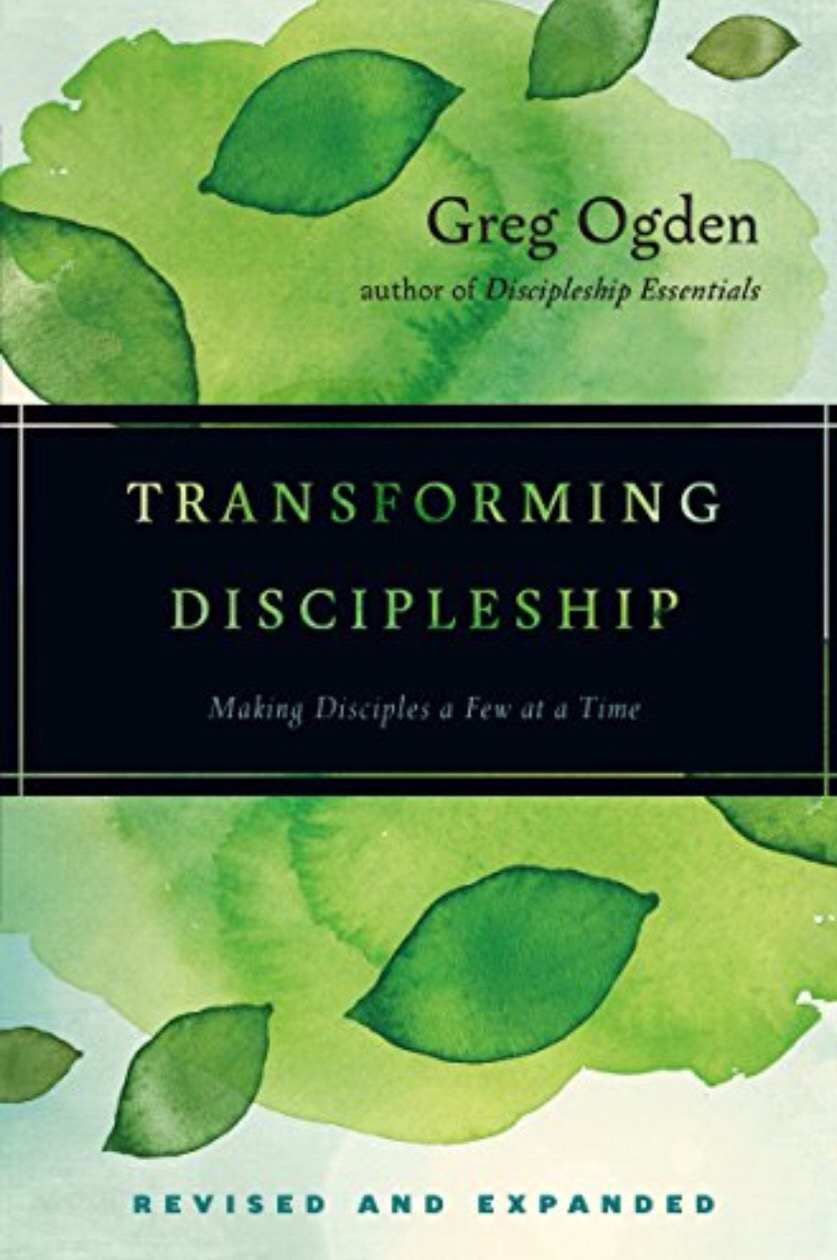
Transforming Discipleship by Greg Ogden (Revised)

Here’s a revised and expanded edition of an influential book on discipleship. Ogden is one of the most respected authors on the subject and he is passionate about the subject as well. He gives the reader a lot to chew on.

The book is in three main parts with the first one covering what has gone wrong with discipleship. He exposes the superficiality in Christians today as the proof of discipleship going awry. He says people worship “with a reviewer’s mentality.” He cites studies that show few Christians have a goal of being committed to Christ, but are more focused on the American Dream. He laments how the lifestyles of Christians and non-Christians are indistinguishable. He says, “It would appear that Christians have been almost as seduced by self-focus as the broader population.”  He surmises that we have been diverted from the main calling we have. We are consumed with programs that does not actually disciple people. We says people don’t have the right idea about church and churches don’t have it about discipleship.

The next part is where he traces discipleship in the New Testament. He goes, of course, through Christ’s ministry. Next, he tackles Paul and even admits that Paul doesn’t use the word “disciple.” He shows Paul speaks of parenting young believers and transforming lives. He draws it out with great detail.

The balance of the book is a detailed explanation of his particular method of discipleship. He emphasizes relationships and  not expecting quick results. It’s interesting, but strikes me as working better in some areas or with professional people. Still, it’s worth considering. In an added chapter, he unnecessarily pits preaching and discipleship and is too harsh on preaching. 

This book is necessary for our shelves in discipleship.


I received this book free from the publisher. I was not required to write a positive review. The opinions I have expressed are my own. I am disclosing this in accordance with the Federal Trade Commission’s 16 CFR, Part 255
.

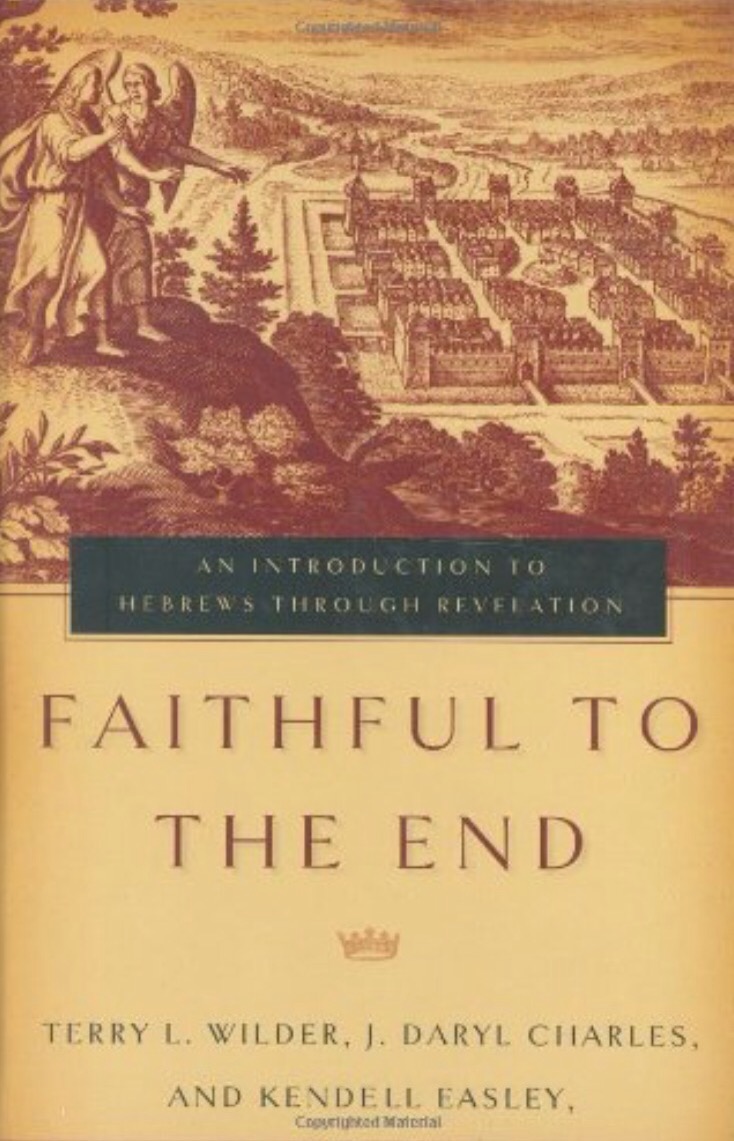
Faithful to the End by Wilder, Charles, and Easley

Are you looking for an introduction that gives more depth to a study of the General Epistles and Revelation? Then you will love this book. It’s the kind of scholarly proficient and pastorally relevant volume that can make a real impact in your studies. Besides the fact that Hebrews to Revelation is the end of the Bible, the authors see a unity of “a strong theme of being faithful and persevering in the faith.”

My favorite chapter was the first one which covered Hebrews. There were great insights on every page. It just so happened that I was recently reading the introduction in a major exegetical commentary on Hebrews and found much more here that opened up what Hebrews is all about.

The chapters on the other Epistles were good, with perhaps James and Jude getting the best treatment. Revelation was explained well, as were the schools of thought of how to view it prophetically. He attempted to explain Revelation in terms that would make sense to most of the schools of thought. In the limitations of that approach, it worked.

This is a great volume and I highly recommend it. 

I received this book free from the publisher. I was not required to write a positive review. The opinions I have expressed are my own. I am disclosing this in accordance with the Federal Trade Commission’s 16 CFR, Part 255.
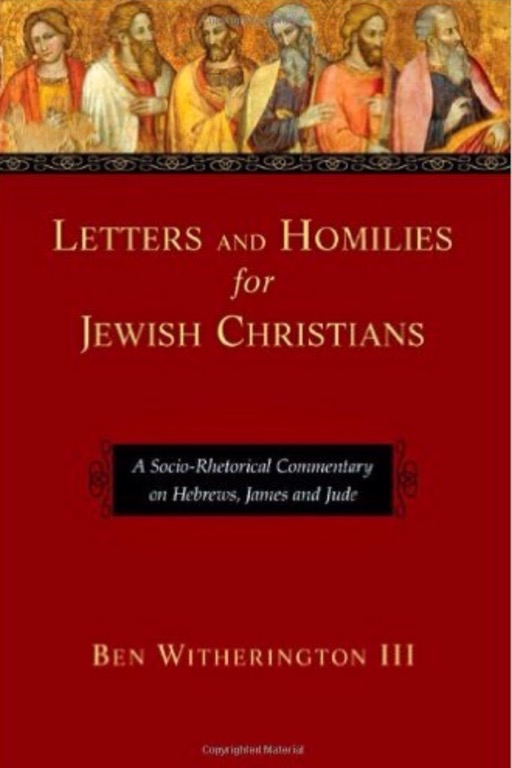
Letters and Homilies for Jewish Christians by Witherington

This volume joins “Letters and Homilies for Hellenized Christians” Volumes 1 and 2 for Witherington’s three-volume set that covers the General Epistles including the Pastorals, Epistles of John and of Peter, and in this volume, Hebrews, James, and Jude. I always marvel at his output as he has written on most of the NT and other subjects as well.

Having reviewed the other two volumes, I feel he keeps up his standard of work here. He keeps that socio-rhetorical emphasis that he is famous for as well. I can’t always agree with his conclusions, but they are never uninteresting.

He deals with Hebrews first. He summarizes the different viewpoints on authorship well (he favors Apollos) and rightfully emphasizes Christology to good effect. He sees Hebrews as a rhetorical masterpiece and I agree. His commentary, though I would disagree at points, was helpful.

I chuckle at how he writes his Introductions for each book because he approaches them in a different order each time and just seems to start at random. Still, he gets it covered each time. 

Next, he tackles James. As you might imagine with his emphases, he writes on the “social ethos of James’s audience and home congregation” with good food for thought. I found his thoughts on Jude even better.

This is a quality commentary of the acedemic type and I recommend it.

I received this book free from the publisher. I was not required to write a positive review. The opinions I have expressed are my own. I am disclosing this in accordance with the Federal Trade Commission’s 16 CFR, Part 255.