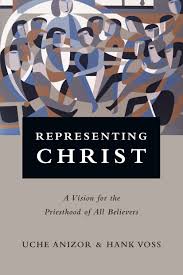
Representing Christ by Anizor and Voss

christ

Anizor and Voss write here on a doctrine, the priesthood of the believer, that is precious to some of us, yet under duress in many places. Whole segments of Christendom deny its existence. This book shows that is both a biblical idea and an idea believed by several across the centuries.

This book is at its best discussing what the Scriptural basis of the doctrine of the priesthood of the believer is. Chapter 2 entitled “A Royal Priesthood” lays out well the case for clear teaching on this doctrine. I had never considered Adam as a priest, but Israel was clearly “a kingdom of priests.” Even more important is when the authors draw out the New Testament teaching on the subject. To me, it is undeniable as they well show.

The balance of the book looks at the subject in more of a church history vein. Luther might not deserve quite as much credit as they give him, but he does play into the history. They also explain what all priesthood really means in our lives, which is the reason for the subtitle “a vision for the priesthood of the believer.”

They take care to write to those who might be in a group that has priests today and deny that all Christians are priests. Some of that explanation might not be necessary to one not in one of those groups.

They write well and make a good contribution to this important dialog. This is a fine theological volume to have.

I received this book free from the publisher. I was not required to write a positive review. The opinions I have expressed are my own. I am disclosing this in accordance with the Federal Trade Commission’s 16 CFR, Part 255.
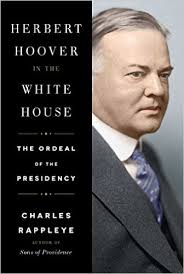
Herbert Hoover in the White House by Rappleye (Presidential Bio Series)

book

Hoover, so often vilified and ranked as one of the worst presidents, just begs for a good biography. You just know there’s more to the story than we have heard. Charles Rappleye gives us a biography of Hoover’s turbulent presidency and only enough of his life before and after to contrast it with his one term in office. He went into office with tremendous respect and admiration and left it with little love lost.

Rappleye did not write as a fan of his subject, but with keen research he did strive to present a balanced picture. Besides, perhaps, going too far in some of his psychological analysis of Hoover, Rappleye brought Hoover to life in this book.

Hoover was a hard worker, had a peculiar personality that was really not a good match for the presidency, and was somewhat petty. At the same time, he had core principles, determination, and great brains. He was also a most unfortunate victim. The Depression was in no way caused by him and was ready to explode before he even took office. There were international factors out of his control too. Really, everything lined up against him and likely no politican could have stopped it. His popular successor was much better at calming the people, but did not stop the Depression either throughout the 1930s.

I left this biography feeling sorry for Hoover and thinking that many of the things he stood for would have been better than what transpired after him. He just lacked a real connection with the American people.

This well-written biography fills in many of the questions you may have. It is a solid contribution.

I received this book free from the publisher. I was not required to write a positive review. The opinions I have expressed are my own. I am disclosing this in accordance with the Federal Trade Commission’s 16 CFR, Part 255.
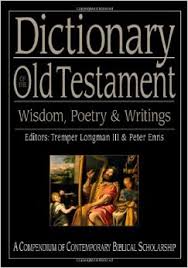
Dictionary of the Old Testament: Wisdom, Poetry & Writings (IVP)

dictionary

This volume is another of the massive volumes in IVP’s “Black Dictionary” series. It upholds the quality this series is known for. Edited by Tremper Longman and Peter Enns, with Longman particularly known for his work in Wisdom Literature, and hosting a long list of competent authors, this dictionary  is one of the most important works on the Wisdom books available today.

Beyond the usual suspects of Job through Song of Solomon, this dictionary covers the Megillot, which adds Ruth, Lamentations, and Esther to the information covered. The audience written to is clearly a scholarly one, but pastors and teachers can glean much even if they feel the need to skip a few paragraphs in some articles.

Each of the books are covered in as in-depth fashion as a major commentary. Actually, more information than is covered in many of them will be found. The one on Psalms covered most every issue on the Book of Psalms that could be imagined. Some of the history of interpretation including the wave of form criticism that Psalms has faced is covered even if it beyond what many of us thinks is important. On the other hand, the ways certain psalms are categorized was very enlightening.

I read other articles on a variety of subjects and found them helpful. For example, I read the article on Ahasuerus from the Book of Esther and found it fascinating. There are many other such articles.

This is a fine reference volume to have on hand and I recommend it.

I received this book free from the publisher. I was not required to write a positive review. The opinions I have expressed are my own. I am disclosing this in accordance with the Federal Trade Commission’s 16 CFR, Part 255.
Letters and Homilies for Hellenized Christians: Vol. 1 by Ben Witherington III

commentaryben

This volume covers Titus, I and II Timothy and the Epistles of John in the socio-rhetorical commentary style that Witherington has become famous for. In fact, it is almost beyond belief that Witherington has had such an enormous output of commentaries on New Testament books. If you suspect he may have written too quickly to have covered such ground, you will see in this volume that he hasn’t cut any corners in the subjects he addresses.

He makes quite a distinction about some of these epistles being homilies, but I couldn’t help but think as I read, what real difference does it make for we who study God’s Word? In the Pastoral Epistles he had a lengthy and quite good Introduction on them as a whole. Then there was an Introduction for each individual book before the commentary. I felt it covered the same sort of issues a regular commentary would. I did not agree with some of his conclusions, and feel perhaps his socio-rhetorical method can be overdone, but I still felt it a solid contribution.

I was even less in agreement with his conclusions on the Epistles of John, especially about who the writer is, and wonder if his thoughts about a theme of “wisdom” are beyond what the text can bear. Still, I found it easier to read than many commentaries.

At times he can be a little dogmatic, but the fact that he is a superb writer makes that a small price to pay. He will force you to think about his viewpoint, and even if you disagree, you will be far richer for having done so. In short, though I disagree in places, I give this volume a high ranking as a volume that succeeds in its mission–helping the reader to formulate his or her own positions.

I received this book free from the publisher. I was not required to write a positive review. The opinions I have expressed are my own. I am disclosing this in accordance with the Federal Trade Commission’s 16 CFR, Part 255.
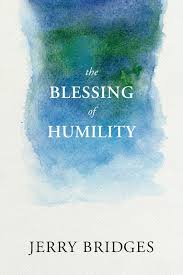
The Blessing of Humility by Jerry Bridges

bridges

I hadn’t read a Jerry Bridges title in several years, though I have no idea why. Years ago I was incredibly blessed by his book on holiness. Reading this re-released title makes me regret not having read more by this beloved, recently deceased writer. Navpress is re-releasing his titles in far more attractive paperbacks that those we saw years ago.

This title had that same heart-piercing quality I remembered from years back. The ten chapters are based the Beatitudes. In them he sees the theme of humility. I had never really thought of that, but after reading him  I am thoroughly convinced he is right. I was hooked by the time I finished the first Beatitude of “poor in spirit.”

Every chapter was superb, but I was most moved by the ones on mourning, pure in heart, and peacemaker. That will probably vary among readers based on where they are, but I would be shocked if some of these chapters didn’t move you.

The main value in this volume is its devotional or Christian growth element, but I plan to keep it on hand when I am studying the Beatitudes too. It holds up quite well as a Bible study resource as well.

I highly recommend this volume and have decided I need more Jerry Bridges reading for myself.

I received this book free from the publisher. I was not required to write a positive review. The opinions I have expressed are my own. I am disclosing this in accordance with the Federal Trade Commission’s 16 CFR, Part 255.
New Dictionary of Theology, Second Edition (IVP)

dictionary

IVP continues to uphold its well-earned reputation in quality reference works with this revised work. It is essentially a new work in that so many articles were enlarged. The material covered also differs from the first edition because another volume, IVP’s New Dictionary of Biblical Theology had already pulled out that material. This volume focuses exclusively on historical and systematic theology in its massive 1000 pages.

The list of contributors is impressive. The scholarship is of the highest quality and none of the articles I read seemed to be done in haste. You might make the mistake of forgetting a subject would actually be categorized as biblical theology and search in vain, but if you are looking for historical or systematic theology subjects you likely won’t fail to find an entry here. At least I couldn’t.

Besides the great entries on all the theological concepts, I really enjoyed the biographical entries on the great theologians. They even had an entry for Charles Spurgeon! They purposely included articles on global theology and theological trends of our day.

The book is attractive and a joy to peruse. It will serve as an outstanding reference for many years. I loved it!

I received this book free from the publisher. I was not required to write a positive review. The opinions I have expressed are my own. I am disclosing this in accordance with the Federal Trade Commission’s 16 CFR, Part 255.
Charts On Systematic Theology, Volume 1 by House and Roberts

charts

This volume of charts is part of the Kregel Charts of the Bible and Theology series. Though it covers Prolegomena, or introductory issues, this material is not for the beginning Christian like several books of charts are. Written by H. Wayne House with Kyle A. Roberts, it aims at an audience that has wrestled some with systematic theology.

It begins with helping readers see the difference between objective and subjective theologies. As is done throughout the book, it uses the explanations of the most famous corresponding theologian. That will range from the rather orthodox to the rather unorthodox theologians and theological positions.

At times, like in sharing different perspectives on possibility, the different position positions have a few that seem really close. Some charts, like the one comparing systematic, biblical, historical, and philosophical theologies, rose above the others in value. Still, they are all worthwhile.

I believe the greatest value in this book will be for those doing a deeper study on theology. From that perspective, complex things are well compiled and condensed without sacrificing understanding. It would likely be a boon to one teaching or needing a refresher in systematic theology.

I received this book free from the publisher. I was not required to write a positive review. The opinions I have expressed are my own. I am disclosing this in accordance with the Federal Trade Commission’s 16 CFR, Part 255.
Revelation: A Shorter Commentary by Beale

beale

G. K. Beale’s Commentary on Revelation in the New International Greek Commentary  series has been highly esteemed since it was written. Unfortunately, most pastors because of the technical format and untranslated Greek found it too difficult to use. Assisted by David H. Campbell, Beale has responded to requests to make his contribution more accessible. This volume has succeeded on that score and becomes a lively read.

I should disclose that I subscribe to a premillennial interpretation rather than his “eclectic, redemptive-historical idealist view”. Though he is a brilliant author, and knows something about arguing well for his position, he in my opinion too casually addressed those of my persuasion by quoting the most radical he could find in our world. On page 22, he beautifully listed the reasons futurists hold the positions they do, but does not do as well countering them. In fairness to him, my bias may have been at work.

Whether I agreed or not on his overall prophetic approach, I must confess I learned much as I read. He is adept at seeing what is there–words, repetitions, and parallels. His Introduction was given in 34 pages and was outstanding.

I’m glad to have this volume for my studies as he has insights on every page. Like me, you might not agree with everything he says, but you will be enriched for having read it. I’m a pastor who doesn’t want all my commentaries on Revelation to agree with me.

This volume will be a go-to commentary on technical issues, but is far easier to read than the others I have used. This commentary is a solid effort.

I received this book free from the publisher. I was not required to write a positive review. The opinions I have expressed are my own. I am disclosing this in accordance with the Federal Trade Commission’s 16 CFR, Part 255.

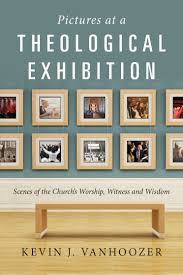
Pictures At A Theological Exhibition by Vanhoozer

exh

Kevin Vanhoozer is an excellent writer. He has a knack for making very complex concepts understandable. He has written many fine essays and sermons and this book collects several of them. What makes the book worthwhile is how well these essays work together to say something to us.

You probably picked up on his using Mussorgsky’s Pictures In An Exhibition. He effectively explains the parallel for what he is doing with Mussorgsky. It made good sense. He also looks at how we have lost our imagination (he explains its good meaning) and how we must work to get it back. He describes his book as “scenes of the church’s worship, witness, and wisdom.”

Like me, some of these essays will speak to you more than others, but they are all well thought out. Not a one of them seemed hasty to me. I loved how he picked up on a concept he came across called the “McDonaldization” of our society. How that exposed our day! He gave some great thoughts about Scripture that gave much to chew on.

There is so much more here. I loved how he could could even tackle a narrow subject like he did in “Enhancement in the Cathedral: Power, Knowledge, and Smart Pills.” Don’t miss that one.

If like theology, you will enjoy this volume.

I received this book free from the publisher. I was not required to write a positive review. The opinions I have expressed are my own. I am disclosing this in accordance with the Federal Trade Commission’s 16 CFR, Part 255.

Kregel Exegetical Commentary on the Psalms, Volume 3

psalms

The set is finally complete! Now we have a commentary on Psalms that will be a treasure for the rest of our lives. This isn’t hyperbole–it’s one of the best commentaries we have and certainly the best on the Psalms.

This final volume covers Psalms 90-150 in 1000 pages. If you already use the previous two volumes, you will be glad to know that the quality doesn’t waver as has been known to happen in some other large commentaries. His aim is pastors first and scholars second and he succeeds on both levels.

To see the value you will get in this volume just check out his commentary on Psalm 90. Most modern scholars place this Psalm claimed to be from Moses’ hand as post-exilic. He in just few words shows the shaky ground that claim is on while he argues for Moses. That takes guts in these days and I love it.

He always puts his psalms in the proper context and category. His commentary on Psalm 119 would make a fine book of its own. I might still believe the Pilgrim Psalms were pilgrims heading to worship opposite of his stance, but the commentary is outstanding.

The winning setup remains the same: text and textual footnotes, composition and context, exegetical analysis, commentary in expository form, and message and application. None of those sections are throwaway.

This is an incredible resource for pastors and teachers and I give it the highest possible recommendation.

I received this book free from the publisher. I was not required to write a positive review. The opinions I have expressed are my own. I am disclosing this in accordance with the Federal Trade Commission’s 16 CFR, Part 255.

RELATED POSTS:

Psalms Volume 1

Psalms Volume 2