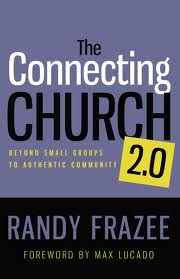
The Connecting Church 2.0 by Randy Frazee

connecting church 2.0Are people really connecting at our churches? Or are they lonely and unfulfilled? Nationwide attendance numbers tell us something is wrong. Here’s a book that makes sense of what is really going on in our society today. There’s real help here too to go with his persuasive analysis in terms of what needs to happen in our churches to stem the raging tide.

Mr. Frazee has had over 10 years to work out his ideas since the first edition of this  book was released (hence the 2.0). He is only more convinced. We are missing the unity of the early church. Who could disagree with that statement? We lack the community that characterized them. He is also particularly candid in the methods of modern churches, even what I would find fault with–I didn’t expect that!

American culture has been high-jacked by individualism. In other words, individual rights trump community, even the Christian community called the local church. Small groups became the rage a few years ago because someone figured this fact out. Individualism has even, says Mr. Frazee, robbed small groups of their real value because we are groups of individuals. The group knows we will hit the road if anything is said, so they say little. Community, then, fails at what it was designed to do.

What’s the answer? He says we must shift thinking back to a real understanding of community. There’s a common purpose there that we can all rally around and serve the Lord. After he explains just how lonely and isolated we really are. the balance of the book tells us how to implement in our churches.

He speaks so much of a neighborhood approach, called a starfish model, that quite frankly is far beyond our comfort zone. Can it work? Read and decide for yourself. My thoughts–we can glean some real ideas from him without becoming a congregation of multiple house churches. I could never follow him fully, but did he ever give me much to think about. For that, I thank you Mr. Frazee. As a pastor, after reading your book, I feel obligated for Christ’s sake and the multitudes of the unconnected to work at community again.

I received this book free from the publisher. I was not required to write a positive review. The opinions I have expressed are my own. I am disclosing this in accordance with the Federal Trade Commission’s 16 CFR, Part 255.

RELATED POST:
Does It Take A Village To Raise A Child?

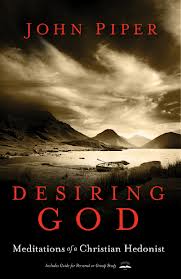
Desiring God–A Book Review For The Christian Who Seeks Joy

desiring godCan we make sense of satisfaction or real joy? It’s one life’s most common questions. Answers for most people are rather less common. I’m interested in knowing, aren’t you? Here’s a book to show us the way.

The subtitle of “Meditations of a Christian Hedonist” tells you what a unique writing John Piper presents to us in this revised edition published by Multnomah. It’s interesting that he has to answer for his writings 25 years later when life had opportunity to test his theories. I found it a real challenge to my Christian life. He goes against so much conventional wisdom, but really discusses the subject with a Bible ever in his hands.

Don’t let the term “Christian Hedonist” turn you off. He certainly isn’t suggesting that you throw your life away in a pointless pursuit of worldly pleasures. Quite the opposite, he simply believes that life’s greatest joy comes from seeking joy in God. He further proves that this is exactly what the Lord enjoys from us. As he says, “This is a serious book about being happy in God.” We all want to be happy and this truly is the only way. This works beautifully in that: “We get the mercy; He gets the glory. We get the happiness in Him; He gets the honor from us.”

He tweaks the famous confession to “The chief end of man is to glorify God by enjoying Him forever.”  I think he makes a powerful case that the Bible actually teaches this very thing. His chapter on the “The Happiness of God” is hard to refute. Apparently, in the last 25 years several have tried.

Mr. Piper weaves his premise through many of the most important aspects of the Christianity. Happiness in God is all through the warp and woof of our Christian experience in conversion, worship, love, and prayer. It gets especially interesting and life-altering when he speaks on things like money, missions, and suffering. Our modern-day Christianity comes out of those chapters bloodied but perhaps that is fair as this same modern Christianity has slaughtered our happiness on many occasions!

You simply must read this book. There’s not much Calvinism to work around if you are more of a whosoever-will man like I am. I read each chapter so much more slowly than usual. There was so much to think about, so much heart-searching demanded, but I assure you that you will be glad you took the time to read it. I can see myself referring to it again and again in the years ahead.

I received this book free from the publisher. I was not required to write a positive review. The opinions I have expressed are my own. I am disclosing this in accordance with the Federal Trade Commission’s 16 CFR, Part 255.

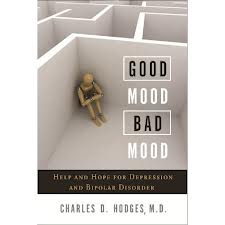
Good Mood, Bad Mood–Answers On The Subject Of Depression

moodFinally a book that settles the matter of what a Christian should think about depression. I’ve always had trouble arriving at a firm conviction as there is so much conflicting information making the rounds. Charles Hodges is both a doctor and a Christian and has carefully researched the subject in this volume published by Shepherd Press.

Don’t panic. Whatever he has to say, he says compassionately. He never has a “just-get-right-with-God” attitude! Still, he demands that the subject be looked at both from the point of verifiable medical fact and the Bible. What could be more fair?

He discusses what we have probably all noticed–an amazing number of people now have a diagnosis of having depression. He explains how a so-called “chemical imbalance” in the brain is a theory that has never been proven at any level. He further explains that diseases that have legitimate diagnosis capabilities have a clear pathology (structural and functional cellular changes) that you can see. In depression, or a chemical imbalance, there is no such pathology.

There are, however, several ailments that have mood changes as a symptom and he suggests you check these out if you think you are depressed. (He lists them in an appendix). If this is not the case, then likely you are sad. He beautifully shows how our Creator made sadness as an emotion in us to deal with life and drive us to God. Though we may not respond properly, it can help us. Unfortunately, “depression” as a medical diagnosis can be a label that short circuits the process our Creator designed. We quit seeking–we stop at our label instead of the arms of our God.

He tackles the issue of so many not only having this diagnosis, but being prescribed anti-depressants as well. Beyond having their own side effects and dangers, these medicines have little success according to studies. Placebos (sugar pills) and no medicine at all have better results in patients!

He takes Bible characters like Hannah and shows how they would have gotten a “depression” diagnosis. Their real problem was normal sadness and in being driven to God they got real relief. He really puts the Bible to good uses in later chapters!

The last few chapters tackle Bipolar Disorder. It used to be called Manic Depression. He proves it is a rare but real disorder. There are now a wave of people getting a diagnosis of Bipolar Disorder. This is because they came up with Bipolar Disorder II that has a weak criteria that really can’t be verified and now we are giving away a false label and hurting people in the process.

He writes in a way that we can all understand. If you want to know what I think on the subject of depression now, just read this book. As individuals who will have sadness, worse moods and feel depressed, this book is a real help. Were it fall to us to help someone we think acts depressed this book is an indispensable guide. I give it the highest recommendation.

I received this book free from the publisher. I was not required to write a positive review. The opinions I have expressed are my own. I am disclosing this in accordance with the Federal Trade Commission’s 16 CFR, Part 255.

Addendum

I had a fine Christian lady write me and pointed out a few things to me so I want to clarify and share what I told her.

Here’s a few things the book said that I didn’t say clearly enough:
1. He says 90% of people labeled depressed are only sad, which means 10% do have  real medical issues.
2. He says some do feel better with anti-depressants (but some get better with placebos and some with nothing).
3. He says to talk to the doctor before you change your medicine (I SHOULD HAVE TOO).
4. He never writes in a way that treats depression as something to be ashamed of and I agree. It is something to deal with and try to figure out.
This kind lady also recommends that we remember that this is just one Christian doctor and we should read others. She recommends Donald P. Hall- “Breaking Through Depression: A Medical and Spiritual Approach to Emotional Wholeness” and Tim LaHaye’s “How to Win Over Depression”. It is good to read widely!
I made it sound like this book has the final say on the subject and that is a little strong!
I suggest we use this information to encourage and not discourage! Suicide and other such things mean we should be cautious in what we say.I still think this is a great book!

Parenting On Your Knees– Book Review

parenting kneesDo you have preschool children? Then this volume by Vicki Tiede and published by Pix-N-Pens could be a real help to you. I review this book from the perspective of a pastor and parent with 2 preschool children and 4 beyond it. So I have had some time and opportunity to try various ideas and both fail and succeed at parenting in this age group. My assessment is that this book could both really help a new parent or help tweak a more experienced one. It’s so easy to fail at being diligent and to need a reminder. You will get that and some new ideas as well here.

The book aims at providing “prayers and practical guidance for the preschool years.” It is broken down into the subjects of character that should most appeal to us: self-control, responsibility, respect, honesty, conscience, etc. That is the proper beginning place.

From there it turns to even more practical subjects concerning development and social skills. Finally, it ends where most parents want to begin: behavior! Mrs. Tiede has the proper order. Still, her advise here is creative and sensible. There are things we simply must deal with if we love our children.

The book fortunately doesn’t talk down to us and has a real spiritual tone. Every chapter ends in a suggested prayer.

The only drawbacks that I could see are that, strangely, spanking is not really discussed either in a positive or negative manner, or at all really. This book, I guess, offers other creative options to either replace or supplement spanking depending on you point of view. The author is a mother and so the mother’s perspective shines a little stronger. Still, I find it helpful.

God bless on raising those little gifts from God!

I received this book free from the publisher. I was not required to write a positive review. The opinions I have expressed are my own. I am disclosing this in accordance with the Federal Trade Commission’s 16 CFR, Part 255.

Suffering Well by Paul Grimmond

suffering well   The title seems almost an oxymoron as suffering “well” strikes most of us as an unreal concept. On the other hand, if our Lord made it such a key component of our lives, it simply must be a good thing. So to read something along the lines of this book by Mr. Grimmond and published by Matthias Media should be on our agenda on occasion. We simply must get some sort of handle on something that is going to define our lives on some level.  This volume sheds light, light we really need.

This book comes from a different angle than many I’ve seen. One clue is in the sub-title: “The predictable surprise of Christian suffering.” It is part of Christian experience. While he discusses personal or general suffering, the focus of the book is clearly on suffering as a Christian. There are many fine books on general suffering (for example, the writings of Joni Erickson Tada),but far fewer on suffering because you are a Christian.

Mr. Grimmond does well in tying suffering to the larger picture in the chapter on “But why?” I appreciated this comment on the Lord: “God is not an evil young boy pulling the wings off flies. He did not make the world so he could revel in sadistic pleasure. But in some profound way (and here there are many mysteries), suffering is at the very heart of God’s plan to create a perfect world and to glorify himself through his Son.”  Well said, don’t you think?

As the book proceeds he draws out clearly from Scripture that “all Christians, without exception, must suffer.” He explains how the New Testament so changes the emphasis and that we should note it. Job and others discuss the suffering in life while Jesus and Paul focused on suffering as a Christian. I believe that both are needed for a balanced Christian perspective.

He explains that persecution is more than dying at the stake. In our culture it’s the many compromises that come in family or work that risk real persecution. An awareness is key here that this too is what the Bible is talking about. Take note of his explaining the value of Hebrews 12 on this subject.

He further explains that our goal is to be godly in the suffering the Lord allows into out lives. Then there is the value of God being so real at these times. Yes, these book has real value.

I received this book free from the publisher. I was not required to write a positive review. The opinions I have expressed are my own. I am disclosing this in accordance with the Federal Trade Commission’s 16 CFR, Part 255.

Loving The Church by John Crotts

lovingchurchHow’s this for a timely subject? Not only is the world writing off church, but more and more professing Christians are. This book by Mr. Crotts and published by Shepherd Press enters the fray to stop the bleeding. Christians ought to face his arguments head on. There is simply no doubt that the Lord meant for the local church to be part of every Christian’s life.

Mr. Crotts writes with a pastor’s sensitivity and persuasion. Having pastored since 1995, he likely has had plenty of time to consider these things. He wisely divides his manuscript into two halves: 1) What is God’s family?, and 2) How you fit into God’s family.

He uses a story of a group of people with varying attitudes about the church gathering at a coffee shop to discuss the topic. That’s a somewhat novel approach that some will like and some will not. Even if you don’t like it, it really doesn’t distract from the more theological discussion.

He hits upon the idea that deep down we all know we should go to church. I couldn’t agree more! He admits that many churches have given people a “bad church” experience and churches have such a variety of ways to fail. Whether it be theologically or either extreme of entertainment centered to reach people or extremely harsh on the other hand, there are many options. In some churches the people are off while in others the pastor might be. In a few, they might both be. In other words, church bashing is an easy sport to play.

From there Mr. Crotts lays out the Scriptural case for church. I agreed with his analysis on most every point. He even touches hot-button issues like church discipline, but writes with restraint and care.

He concludes with a plea for us to make church a priority in our lives and families. All in all, a worthy contribution.

I received this book free from the publisher. I was not required to write a positive review. The opinions I have expressed are my own. I am disclosing this in accordance with the Federal Trade Commission’s 16 CFR, Part 255.

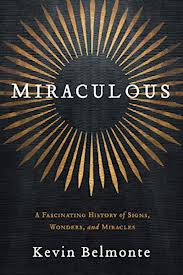
Miraculous by Kevin Belmonte–Book Review

miraculous

How do miracles fit into Christianity? Despite abuses on the subject, the story of God’s work in this world cannot be told without admitting the reality of miracles. What we have in this fine book published by Thomas Nelson is a tracing of the miraculous by the hand of God throughout history. As the sub-title says, we have “a fascinating history of signs, wonders, and miracles.”

In a brief preface we are told what he means by the term “miraculous”. Before he launches into miracles in Bible history, he tells us: ” Miracles in Scripture are like the stars. They help us glimpse the eternal. And they, like the heavens, declare the glory of God.”

In 11 chapters, he traces miracles from creation on through to the Resurrection and then Paul’s conversion. If you are well versed in the Bible these chapters will be a review, though a well-worded review. For a newer Christian, these chapters would be a real boon to understanding.

In Part 2 (chapters 12-29) Mr. Belmonte traces miracles in the lives of Christians in the post-biblical era. These make great reading–think challenging biography–that prove his thesis. Miracles aren’t for show, they aren’t to be manipulated, but they are real, and they are of God.

The first one was new to me. I was not aware of Perpetua, but was so moved by her story. The miracles he writes of were profound and surrounding the events of her martyrdom. Don’t think her death nullified the miracles. They did not.

Many other’s stories are told. Even George Washington gets a chapter, a really good one. You will enjoy these stories.

Perhaps you will wonder why some favorite character of yours didn’t get a chapter, or you might disagree with one he chose. He never, though, promised us a comprehensive volume. Also, the fact that so many chapters could have been substituted only proves his premise–miracles are a big part of God’s dealings with us. He tells the story well and without wild excesses. I recommend it.

I received this book free from the publisher. I was not required to write a positive review. The opinions I have expressed are my own. I am disclosing this in accordance with the Federal Trade Commission’s 16 CFR, Part 255.

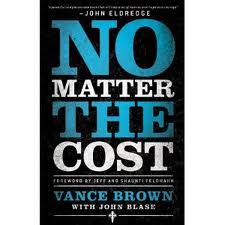
No Matter The Cost–A Needed Book!

no matter

Men, are you discouraged or broken? Have you even made foolish decisions? Do you need the courage and hope to go on? Then this book by Vance Brown with John Blasé and published by Bethany House is the book you have been waiting on.

We have here the call for “imperfect, broken, foolish men” to step up in the battle and fight “no matter the cost.” Do not suppose, however, that this book is just a pep talk, or an inspirational challenge. This is a realistic view of us coupled with a realistic view of Christ.

Because of a mix up at my home, I didn’t realize I had this book to review till I just discovered it recently. By that twist of fate I had an entire night in a waiting room to devour this book carefully. It moved me.

He weaves the story of George Bailey from “It’s A Wonderful Life” and shows that is the story of far more of us than we’d care to admit. He says this defines many of us men: “all alone, exhausted, weary, bone-tired, questioning our worth, feeling much more dead than alive, courage struggling for oxygen.” We have our dreams, or at least we had them. Years and events mingled with some stupidity and we lose hope.

Amazingly, he also uses the Lord’s Prayer to teach us. While it might not be the most exegetically precise thing you have ever read, it really works. It takes you somewhere. Somewhere you need to go. You will notice that he focuses on our relationship with the Lord on the one hand and our Christian brothers on the other. It makes sense!

He writes well. The illustrations are exceptional. The transparency is amazing. He shares real failure and proves that the Lord was not done with him. What could encourage us more?

You may be aware that Mr. Brown heads Band of Brothers. Don’t be concerned that this book is just a selling job for that organization. While the principles of this book underlie that organization, that is rarely the focus of the book. No, he writes at your heart and life. At least he spoke to mine and I highly recommend this book.

I received this book free from the publisher. I was not required to write a positive review. The opinions I have expressed are my own. I am disclosing this in accordance with the Federal Trade Commission’s 16 CFR, Part 255.

The Radical Question, A Radical Idea–Book Review

We have here a followup to the widely read volume “Radical” by David Platt. That book, I have learned, is changing the way some look at church. This book, apparently, expands on the earlier book. I have not read yet that earlier book, but some criticize this volume as being just a condensation of the earlier book and not worth the extra expense. I’ll leave that choice with you as I just consider this volume.

The core of the “Radical” question in the first half of the book is: Is Jesus worth it? That would seem to be a no-brainer as Mr. Platt readily admits, but he works to examine if we really feel that way. In the process he shows that we often act opposite to Jesus Himself. For example, we are consumed with crowds while Jesus was often turning them away. His concerns and goals were different from ours.

He finds fault with our massive building projects while we spend miniscule amounts on needs around the world. Some might feel he blurs the line between social projects and the Gospel. He is challenging but I feel that way myself as I read him. I can, however, certainly agree with his appeal that Christ is worthy of our lives.

The second half of the book is the idea for taking “Radical” forward. He criticizes our reducing church to a staff of paid professionals providing spectators a worship experience. I was about to think he wanted to put all of us full-time pastors out to pasture, but he finally confessed that was not his point as he himself was a full-time pastor! In truth he has a great point. We need to all be involved, not just a few of us. It would make such a difference in our churches were we to turn this around.

So this is an easy, quick read that will spur thought in our busy lives. You might want to give it a look.

I received this book free from the publisher. I was not required to write a positive review. The opinions I have expressed are my own. I am disclosing this in accordance with the Federal Trade Commission’s 16 CFR, Part 255.

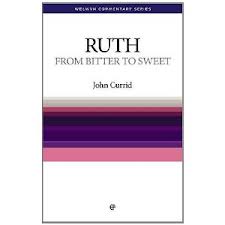
Ruth, From Bitter to Sweet–Book Review

downloadWould you like a really suggestive commentary on the Book of Ruth? Then you simply must pick up “Ruth: From Bitter To Sweet” by John Currid and published by EP Books in the helpful Welwyn Commentary Series. I had heard good things on his Genesis, Exodus, Leviticus, and Deuteronomy, but somehow had never gotten around to picking them up. So I was excited to get this volume on Ruth. I wasn’t disappointed.

The book is especially helpful for the pastor or Bible teacher though it is written in an accessible manner that could benefit anyone. The 4 chapters of Ruth are covered in 12 chapters here that would pretty much be divided along the lines one might want to preach.

It is not as much a typological commentary as many of the popular volumes on Ruth are, and though I personally do see real typology in Ruth myself, this volume is a worthy aid in working through Ruth. He still writes much of Christ and gives much help on the narrative itself.  He works out details, gives exceptionally good help on word meanings without being overly technical, and has nice illustrations from Scripture and history that really brings the text alive.

I have all the well-known volumes on Ruth and am glad to let this book take a prominent place beside them. I think I need to get those other volumes by Mr. Currid too.

I received this book free from the publisher. I was not required to write a positive review. The opinions I have expressed are my own. I am disclosing this in accordance with the Federal Trade Commission’s 16 CFR, Part 255.