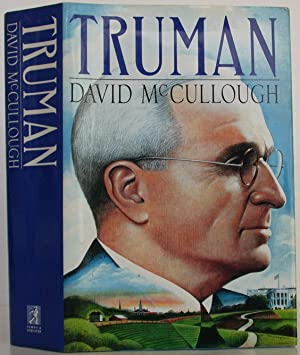
Truman by David McCullough

You know you’re a great presidential biographer if your work substantially moves the needle on how that president is viewed. That’s exactly what master biographer David McCullough did here. It amazes me how many people tell me they’ve read this book.

I even enjoyed the early section on his family background as it touched on several exciting events that happened around Missouri. His family history is colorful to say the least. Hard workers though they were, they could lose money with the best of them. Strangely enough, that’s exactly how it was for Truman himself. He failed in so many ways, lost so much money while having as strong a work ethic as any president I’ve read about, and got to middle age without ever hitting his stride. Had he not fallen in with the shady Pendergast machine he likely never would have. That association would always plague him, but he wouldn’t have a political career in the first place without it.

What is even more startling is how honest he was and how he managed to keep that reputation throughout his career. He is one of the rare politicians that earned that reputation. He had a very high ethical standard as well. He is the only Democratic president of the 20th century they can list avoiding a whole slew of sins that all the rest of them committed.

There was something real about him. He was who he was. He was incredibly practically minded. Perhaps you should say it was Providence itself that brought him into office at that moment in history. It could be said because that good practical nature came in handy. He was intelligent, but occasionally, I wondered if he could be a bit naïve. He had his limitations, but was one of those rare people who knew what they were. His lack of pride and hubris was perhaps his most compelling trait.

He clearly had much exposure to Christianity. He did profess to believe in it on many occasions. Perhaps the only thing that McCullough didn’t know how to uncover was whether or not it was a deeply personal faith or not. It was hard to tell whether or not he was more of a moralist than a Christian, but we will give him the benefit of the doubt by several statements that he made, and several actions he did like kissing the Bible at his swearing in.

Pretty much an afterthought on the presidential ticket of an ailing, dying FDR, no one even thought to bring him up to speed on the most pressing issues of the war. He was not prepared the day FDR died, and he openly admitted it, which was so refreshing, and yet acquitted himself quite well to see the war through to the end. He will always be the president who dropped the atomic bomb, but it clearly made sense to him from even a moral level. There weren’t many voices around him tell him not to do it either. Those voices didn’t arise till later on. He was sobered a bit more about it later as well.

His stratospheric poll numbers dropped quickly after his success with a war won quickly in his term. I personally appreciated the way he handled the Soviet Union. Just as he should have with a major WW2 ally, he gave them a chance. His domestic policies are not to my taste, but he was fairly successful in pushing them. In my view, he perfected the whole “we are for the people and Republicans are for Wall Street.” What stands out is how passionately he believed it. For many, that is just playing the game of politics, or strategy if you will; but in his simple way he was a true believer.

Perhaps his greatest political feat was pulling off his unexpected reelection in 1948. It’s almost as if he was the only person who thought he could win. He never wavered and shocked his opponents and friends.

That second term had several challenges, chiefly the Korean Conflict. I’m not a fan of the UN, but I agree with his stance overall. He set the ground rules for the Cold War and that made it possible for handling Communism without it becoming a hot war. His firing of the legendary MacArthur was a bold move too and I feel likely the correct one.

By the end of his term, Truman showed a few cracks in his amazing vitality. There were a few episodes of pettiness that were surprising, but no failings that would sully his overall reputation as a decent guy who wasn’t too big for his britches.

I wonder if McCullough exaggerated his conflict with Eisenhower. I sure hope so. It never struck me that McCullough liked Eisenhower as he described him as being unduly ugly to Truman. The two men had worked well together before.

His retirement years showed that Truman was perhaps the most “common man” modern president and tremendously likable. I don’t think he liked the work of any of his successors, but that may be only the cantankerousness of an old man. As much as I dislike his progressive domestic policies ( he was pretty good on foreign policy), I think he’d be one of the few presidents of the Twentieth Century I feel I could have related to enough to share, say, a meal or a long chat. I believe I like him personally more than professionally in some cases, or is that just attributed to master biographer McCullough swaying me? In any event, the book is majestic as presidential biographies go.

Check out other presidential biographies here.

FDR by Jean Edward Smith (Presidential Bio. Series)

FDR is clearly one of our most consequential presidents. Smith is one of the best presidential biographers. I knew, then, this would be a good read and I was not disappointed.

Admittedly, I started this biography with some negative impressions of him. Since Smith is an ardent admirer of Roosevelt (and a near worshipper of Eleanor), I felt I’d be giving my best shot at not viewing all through the lens of my bias. Where did I land when I finished this book? As I thought, the New Deal did a few short term positives (CCC) but I am even more convinced of it being a long term disaster. In a sense, WWII bailed it out from full exposure. On a positive note, he was, I readily admit, an effective war time leader. This book raised my grade substantially on his war leadership.

This biography showed his being raised in privilege, his tight relationship with his mother, his charming nature, his ambition, and his pride. He was a master politician who perfected the art of propaganda and was a user of people. For example, early in his political career he aligned with the Prohibition wing of his party while being famous for loving to drink and mix martinis for guests. He often fought for progressive policies for the disadvantaged while never living a moment of his life in their shoes. He was vengeful and if you ever really crossed him he never forgot. Just before the war and after unprecedented legislative success, he had a period of political missteps that even Smith admitted were born of his hubris.

The book didn’t cover up his sham of a marriage, at least after having several kids. He carried on an obvious affair that he little tried to hide. Finally, it put his career in jeopardy and he stepped back though he kept her in his life at times and she was with him when he died. Strangely, Smith praises them for sticking together in a completely loveless marriage to remain a powerful political couple.

In my presidential biography reviews, I always try to notice the religious side of the man. Had you asked FDR, he would have quickly said he was a Christian . Perhaps he helped create a Christianity that is pervasive in our day. More than a matter of faith reaching the heart, his was more tied up in his heritage. It’s what the Roosevelts and Delanos were much like they were New Yorkers. It really didn’t affect his life in any meaningful way except being against the more grotesque atrocities. Though you might could argue that he took what Woodrow Wilson started and put it over the top, he in no way had the deep religious feelings that Wilson had. I think Wilson was off base, but he thought he was following the Bible. FDR would be more likely to quote the Bible when it was politically expedient.

This book also showed me that he should be commended for how he had the grit to face the crippling affects of polio. He also likely would not have run for a third and fourth term had not the events leading up to World War II started happening. Also, everyone knew around him that he would never survive his fourth term though everyone kept it quiet. Finally, despite all the glaring character flaws I’ve mentioned, he was eminently likable.

How he rose to the heights he did in WW2 is beyond me. I agree with most of his decisions throughout. The friendship he forged with Churchhill was both real and prudent. I even see his wisdom regarding Stalin. He stretched the rules at times, and though I despise his sometimes blatant disregard for the Constitution, I can begrudgingly agree with a few wartime choices, kind of like a few things Lincoln did. Can you imagine our country today had Hitler won? Those are the only cases where the lines can be legitimately fudged I would cautiously argue.

FDR deserves some credit for saving the republic in WW2 while he set in motion actions that may still destroy it. How’s that for consequential?

For the biography itself, it’s top notch. A step below Chernow and McCullough, but not below many others. It’s only failure was its ending. You’re reading along and FDR dies and the book abruptly ends. No funeral, no postscript, no nothing. Still, I so enjoyed reading it.

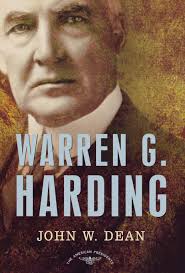
Warren G. Harding by John Dean (Pres. Bio. Series)

Probably the only thing that we really associate with Warren Harding a century after his life is scandal. Even there, we wouldn’t call it exciting scandal, because it essentially forgotten in our country. Perhaps you remember a history teacher saying something about the Teapot Dome scandal, but then again, probably not. If you are into presidential history and biography , perhaps you have noticed that Harding has always been a serious competitor for the worst president ever. At least that is what I have always thought. Now enter this biography by John W. Dean. Believe it or not, he moved my opinion of Harding… a little.

This biography is part of the American Presidents Series, a series I always turn to for the lesser known presidents. Lesser known presidents who have no particularly outstanding accomplishments generally don’t have an awesome biography anyway. For an investment of less than 200 pages you can get a concise biography in your quest to cover every president. Some of them are better than others, and this one is at least well written for what it is.

This one is perhaps unique in the series as the one that is the most driven to rehabilitate the reputation of its subject. One of Harding’s scandals is his fathering a child out of wedlock just before he assumed the presidency. Mr. Dean was convinced Harding was innocent, but subsequent DNA testing has proved the accusation was, in fact, true.

Still Mr. Dean lead me to believe that something of a hatchet job was done on Harding. As he points out, Harding‘s wife burned his papers thinking she was doing his reputation a favor when in fact any proof to counteract wild claims went up in the smoke of her actions.

Perhaps Harding did pick a few cabinet members who were crooks without his knowledge. His legislative record was not outstanding but was sufficient for his times. He took no egregious positions and showed some real political skills in a variety of ways. He is still miles away from being a great president, but as long as John Tyler is remembered he should be spared from being the worst!

As I usually do, I kept my eyes peeled for the religious background of this president. To be frank, very little existed beyond some perfunctory religious statements. He clearly had some personal life issues. Still, he was likable and decent to all those he worked with. In fact, he often tried to be very cautious about needlessly angering his opponents. For what it’s worth, both the opinion of his friends and the public was phenomenally higher before his untimely death than when several took up the pen to destroy his name afterward. My opinion: The real Warren Harding probably fell somewhere between the high marks given in this biography and the flunking grades given by many over the years. To be fair, had he not died unexpectedly of heart trouble, he might have been able to have addressed the scandal and got it turned around. There’s really no other failure in his term of office that should cause his reputation to get so thoroughly creamed. The dark stain on his reputation is exclusively from his private life and scandal involving subordinates.

I will also judge this biography a success because even beyond it’s near whitewashing of some aspects of his life it got me, the reader, to slightly sway my opinion of Harding. That would have to be a win for the biographer.

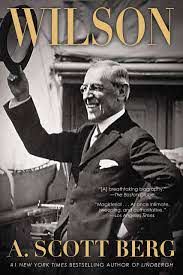
Wilson by Scott Berg (Pres. Bio. Series)

I wanted to get to Woodrow Wilson for some time on this presidential biography journey. I knew enough to know that he was incredibly influential in the direction that this country has taken in the last 100 years. Surprisingly, very few people are aware of his impactful presidency and know little more about him than any one of other dozens of forgotten presidents. Additionally, Wilson is an enigma to me. He is known for his Christian faith and in some ways is one of the fathers of a movement that has lead our nation far away from God. Let’s just say that I got what I needed from the incredibly well written biography by Scott Berg of Woodrow Wilson.

On the level of biography, this book was outstanding. To be sure, it was written as a biography, not a political treatise. Berg clearly appreciated Wilson but did not hide his flaws. Further, this biographer would probably not even conclude in any way similar to me about Wilson’s political legacy, yet this is one of the better presidential biographies that I’ve read.

Now for Wilson himself. One thing that I’ve tried to do in my presidential biography reviews that maybe no one else does is to make a concerted effort to probe the president’s religious background and corresponding influence upon his life. In the lives of several presidents I have discovered that there is very little religious influence. Wilson, however, was profoundly religious. Christian ideals that were peaking in some circles in his day were highly evident in him. Only in a careful reading of his life story can you put together his complex religious views. Again, that’s why this biography was so helpful to me.

His father was a prominent Presbyterian minister. Wilson was born in Virginia and his dad pastored churches in Georgia and South Carolina in his formative years. The effects of the Civil War and Reconstruction and the race relations in the south surrounding those events we’re deeply imbibed into his psyche. Though I hate how the term racist is thrown around in our day to the point that the concept becomes meaningless, Wilson had some racist views. These views led him to see Black people as inferior, yet his religious beliefs at least required him to treat them civilly though he always wanted them kept in their place.

Another factor in the person Woodrow Wilson is his academic career. He is the only president we have had who was truly a political scientist that possessed a PhD. he wrote influential scholarly works on history and politics and had an incredible career Princeton University that culminated in his ascendancy to the presidency of the University. He truly had a national influence even in that capacity. If you dig a little farther as I have done it matters that go beyond the scope of this biography, you will learn that Wilson rejected several concepts of our founding fathers. These rejections are neither subtle nor minor, and successfully birthed the progressive movement in our nation.

Wilson’s religious beliefs are paramount in this new direction. I’ve done much more reading in theology in my life and know that in the later 1800s Christian scholarship took a hard turn to the left because of German scholarly influence. Other similar influences were taking hold of universities and Wilson was similarly influenced. He went on record as saying that our government was founded on the Newtonian viewpoint but modern science has taught us that we should take a Darwinian viewpoint. Therefore, governments are to always be evolving and the needs of the current generation are unique and principles at the Founding cannot be a straight jacket to us.

To be fair to Wilson, he saw no incongruence with his Christianity and these beliefs. In many ways, he lived his life with fidelity to his Christian principles. In fact, he seem to hold tightly to Calvinistic doctrine and perhaps believed in redemption though this biography did not go that far. He kept the Sabbath, attended church faithfully, enjoy good sermons, and in many ways, he lived his life with firm adherence to his Christian principles and ethics. He seemed to love his wife until she died. He had a friendship with a lady that Berg went out of his way to argue that no physical adultery transpired. There is evidence that Wilson expressed regret about that friendship and after his first wife died he seemed to again truly love his second wife.

At times he may have even seen himself as a Christian crusader. Elements of his personality, perhaps, worked against him as well. He was so sure he was right that he almost never compromised or considered other viewpoints. What he thought was always right to his mind and his mission was to convince everyone else and lead them there. He lost the respect of several colleagues both in his university presidency and as president of the United States for this flaw of character. Both of those presidencies ended on a sour note after a period of soaring popularity and accomplishment. It seemed he was always ready to die on the hill of getting 100% of what he wanted.

While I vehemently disagree with both his political and religious philosophies, I must admit that I find him sincere. I would not feel that way about several who followed in his footsteps, but he believed in what he championed.

Back to the biography. Even the chapters that covered his career at Princeton were highly readable. I felt the only weakness of the book was its coverage of World War I. It seem to be viewed from a far, though by the limitations of that age, that is probably how Wilson lived it. The frustrations of the Versailles conference and Wilson’s inflexibility were tragic but well presented. Berg did a great job in eliciting pity for Wilson in the sad story of his life from the failure of getting his treaty passed and his League of Nations off the ground, all followed by an incapacitating stroke. Yes, the nation was misled by his wife and doctor, but fortunately no great harm came from it. Wilson died thinking himself a failure. Were he alive today, he might realize his progressivism with some changes thrives. What FDR gets credit for, could fairly be attributed to Wilson who FDR thought heroic.

Your assessment of Woodrow Wilson probably directly corresponds to your political opinions. Still, we can all enjoy this biography!

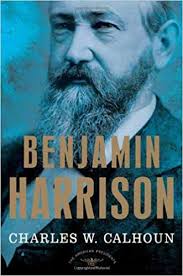
Benjamin Harrison by Charles Calhoun (Presidential Bio. Series)

harrison

Besides the fact that Benjamin Harrison is the grandson of an earlier President Harrison and that he lived in Indiana, I knew so little about the man. It was a joy to get to know him in this work by Charles Calhoun. It’s a shorter biography of a lesser-known president who was a fine man but lived in good times when no major crisis was in play. Don’t expect a riveting read, but the president and his times are what they are and that is at least given here. For what it’s worth, this is my favorite biography of the few I have read in the American President’s Series edited by Arthur Schlesinger.

Like a few other presidents in this stretch of history, Harrison was a Christian, even a true believer you might say. Sometimes he came across as stiff or even austere, but it’s also fair to say he was molded by his Presbyterian upbringing and he faithfully followed it. He was sincere, loved his family, was a man of principle, possessed some ambition like every person to hold the office of president, was a great public speaker, and was real. His life story wouldn’t make a good movie, but it was a consistent story. It’s hard to say for sure because some biographers might conceal a president’s Christianity, but Benjamin Harrison may be one of the most distinctly Christian presidents we have had.

It’s bewildering that Grover Cleveland was returned to office rather than Benjamin Harrison receiving a second term. Nothing against Cleveland, but Harrison seemed like a good president who was generally liked. There were a few issues in that day that mean little to us now that people were highly divided over. Perhaps Harrison’s desire to deal with a few problems crossed a few too many people. He got some elements of his agenda through, though some were overturned later. I don’t think I would go too far out on the limb to say that Harrison took several positions that I could see Lincoln taking. The times were not as desperate and there will never be another Lincoln so I’m only referring to positions, not impact.

Though I appreciate Benjamin Harrison as a president and a person, this short biography of less than 200 pages is enough for me. It helped that Calhoun respected his subject. Some biographies go too far in making their subjects larger than life, but if the subject garnered the respect of the biographer overall it usually makes the book a little better for me (unless it is someone I want to dislike!).

Harrison’s life story was not that dramatic, though his wife died shortly before the election he lost for a second term. It’s hard to imagine how devastating that must have been to him as a man. He did later marry his wife’s niece, though there was nothing scandalous in it. It was sad to see his family divided as his children did not accept his new wife. Let’s just call that a footnote on a good life.

This whole stretch of presidents makes me wonder if a key ingredient to a “great” president is the environment of momentous times to shine in, especially if they don’t naturally have a larger-than-life personality. In its absence, only cut-throat politics remain and there’s little occasion to rise to greatness in that putrid habitat. There are a few presidents between Lincoln and Teddy Roosevelt that might have been a “great” president had they a crisis to carry the nation through to prove it. Somehow I think Benjamin Harrison might fall in that category.

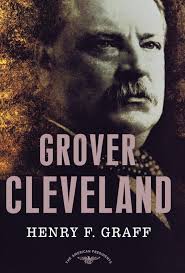
Grover Cleveland by Henry Graff (Presidential Bio. Series)

cleveland

This biography on President Grover Cleveland in the American President series is typical for that series, but this volume is a little better than some others because of the author’s appreciation of the subject. Some I’ve read in this series have disdain for the president they write about and it colors the biography in a needlessly negative direction. Perhaps part of the this work is positive was the author’s determination to make Cleveland the progressive of a mostly Republican era. That is a stretch to be sure, but he was at least the only Democrat. In a few places, I thought the author really overworked that dubious connection. Still, I feel I know Cleveland from reading this book. It’s short length was perfect in my opinion for this lesser-known president.

Cleveland was a simple, fairly unassuming president. He was straight-laced, committed to work, had far more diligence than passion, and appears to be a generally likable person. To me, that almost seems to be a trend among a stretch of presidents in this time period. He was clearly a man of principle, though not necessarily one of vision. He was true to his word and possessed distinct integrity. He was a weak communicator, an average public speaker, and has no particular claim to fame other than the fact that he is the only president to serve two non-consecutive terms. Still, his demeanor and service matched the times in which he served. He had no scandal, unless you count marrying a much younger woman while president. What I read here, makes it sound harmless enough. I personally feel that Cleveland is a man that you would be comfortable to sit down and talk to.

In these reviews of the presidents, I’ve been taking the additional task of particularly noting the religious beliefs of the president. Cleveland was raised in a pastor’s home and carried that influence throughout his life. The author of this biography did not find it interesting enough to tell us Cleveland’s personal convictions about Christ, but I read between the lines and suspect Cleveland was a believer.

Again, Cleveland was in that stretch of presidents between Grant and Teddy Roosevelt that are mostly unknown to us, but he seemed the caliber of most of them and better than a few of them. Garfield had great potential and McKinley was possibly the best of the bunch, but Cleveland was a fine man who made a competent but perhaps average president.

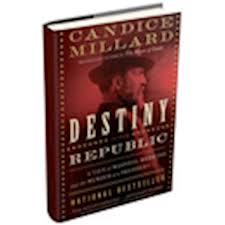
Destiny of the Republic by Candice Millard (Presidential Bio. Series)

book dest gar

What a book! Since James Garfield is likely in everyone’s category of lesser known presidents, this book is an unexpected experience. It’s not a typical cradle-to-grave biography, but I felt I knew President Garfield better than some other presidents where I read a full biography. As you may recall, Garfield was shot by an assassin early in his presidency. He really didn’t have any time to take significant action as president, but he was such a fine, genuine man that you will ask the what-if questions. I suspect he would have been one of the better presidents between the legendary Lincoln and the famous Teddy Roosevelt had he had the opportunity to serve out his term.

This book with its subtitle “a tale of madness, medicine, and the murder of a president” focuses on the peculiar aspects of his death. Kudos to Millard for seeing the potential in this fascinating story. Though she has written only a few titles, she is one of the better writers of our day. She can tell a story! She is so good with words and sentences that even the more mundane moments of the story still read easily. To my mind, and why I could easily recommend this as the perfect biography of James A. Garfield, she gives such an exquisite portrait of the man that I could imagine what it would be like if he walked in the room and sat down and started talking. That is the quintessential skill needed to be a biographer.

I don’t know how she did it, but in 300 pages she also brought to life Garfield’s bizarre assassin, Charles Guiteau. The term used for him in his day was “monomaniac”, and yet whatever you might label him today, Millard creates a full-orbed postmortem of his unique pathology. She also exposed Garfield’s failed, egotistical physician, Dr. Bliss. Unfortunately, Dr Bliss denied the scientifically sound teachings of Joseph Lister and denied the idea of germs! And yes, Dr Bliss, ultimately killed President Garfield by incompetence. People of that day could not resist saying, “ignorance is Bliss”. The famous inventor, Alexander Graham Bell, also took a large part in the story. I don’t want to give any spoilers, but I assure you there is a captivating story here. The story doesn’t have the raw adventure of Millard’s The River of Doubt about Teddy Roosevelt’s trip in the Amazon, but don’t suppose for a moment this work is any less gripping.

Back to Garfield, I think he had the potential to have been an echo of Lincoln. He was born into incredible hardship and poverty as his dad died when he was a young man. His remarkable mother held the family together, invested in young Garfield’s life, and imbibed her Christianity and its ethics into the fabric of his life. The adult Garfield was a man who loved his wife and children, was one who lived above politics in a way few politicians have ever succeeded in doing, was a man who practiced forgiveness, and was one who possessed a personal faith in God. Along the way, he was a Civil War hero and a well-read, educated man despite his background. The story of him being upset by his nomination at the Republican convention for president is the perfect example of the man he was. He was there to nominate another guy and he was truly upset that he would hurt him to the extent that he took no joy at all in his unexpected, dramatic nomination! How many politicians do you know like that? In character and genuineness, Garfield was one of our best presidents. It is truly sad that our country missed the opportunity that lie in a man of his caliber in the White House. It seemed that Americans of that day realized what they had and what they lost. They knew that later generations would probably forget him as has happened, but they also knew that he was one of the better men to have held the office.

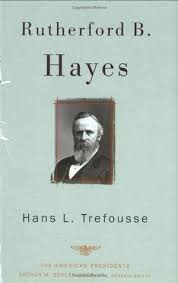
Rutherford B. Hayes by Trefousse (Presidential Bio. Series)

book hayes

Rutherford B. Hayes is not a widely remembered president. Perhaps he is too soon after Lincoln and Grant. In my quest to read at least one biography on each president, this short volume by Hans Trefousse proved to be the ideal biography for me to read on Hayes. Trefousse seemed to have at least a genuine respect for Hayes even if he wasn’t exactly overly impressed with him. In that sense, it is superior to several volumes I’ve seen in the American Presidents series because some of the authors appear almost hostile to their subjects. In fact, the only oddity of this volume is that it was written shortly after George W. Bush defeated Al Gore in 2000 and all the drama that surrounded that election, particularly in Florida. The author seemed obsessed with the fact that Hayes had also lost the popular vote yet still won the electoral college vote and it happened with some degree of disputed results. Still, the book reads really well and is truly interesting. I’d label it the perfect length for the subject.

Hayes had an interesting background including serving successfully in the Civil War. He seemed to be a man of genuine character. Though many of us highly respect President Ulysses S. Grant, it’s true that there were scandals that happened on his watch even if he were not implicated in any of them. Hayes made a point of cleaning up a lot of that corruption. He also took on the Senate and their patronage system. It was a gallant going against the grain for sure. Though there were not any major crises during his term, Hayes did seem to have a successful presidency.

A few things about his character jump out. He seemed to fight corruption because he genuinely hated it. He adored his wife and family. Unlike several other volumes in this series, this book doesn’t dodge religious background either. Hayes clearly professed to be a Christian and showed good Christian values on several occasions. Though he wasn’t a member of a church, he was highly involved with a Methodist Church that his wife was a part of. He was vice president of a Bible Society and he was even a teetotaler!

I’ve read that there are some other longer biographies out there that are more complete on his life, but if you are satisfied with an overview of the lesser-known presidents, this volume will be perfect for you.

Other Presidential biographies here.

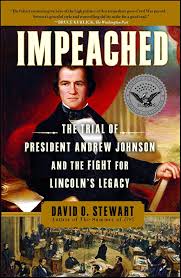
Impeached by David Stewart (Presidential Bio. Series)

book impeached

Though this is not a cradle to grave biography of President Andrew Johnson, I’m glad that I chose this volume as my biography of Johnson. Though President Johnson’s home is the closest to where I grew up of any president, he is really not a likable person from what I have read. He consistently came down on the wrong side of history in my opinion, and even if he happened to be on your side, he seemed to be a man so full of pride that it colored everything that he did.

Still, this book by David O. Stewart is outstanding. It is incredibly well written and even riveting at points. As a matter of pure coincidence, I finished reading this book the same day that the Senate failed to convict President Trump after his impeachment. There were some similarities between the two situations. To be transparent, I believe that President Trump was a victim in his impeachment and has generally been on the right side of what I feel would be best for the country. On the other hand, President Trump says many things that rub some people the wrong way. How offended you are by such statements often directly correlates to how much you agree with him. President Johnson, in my opinion, did not really commit any high crimes or misdemeanors either. He was, however, dismantling Lincoln’s accomplishments as much as he could just as Trump has been successfully dismantling many of Obama’s objectives. I’m glad that both impeachments failed to remove a president. The biggest difference, however, is that President Johnson was politically neutered after his trial while it appears that President Trump still has his same standing with both strong supporters and dedicated enemies. The irony of happening to be reading about Johnson’s impeachment while Trump’s impeachment was in process is quite strong as well as enlightening.

Back to President Johnson. It’s hard to believe that Lincoln could have had a worse vice president to take his place than Andrew Johnson. Had Lincoln finished his term, I don’t think there’s any chance that Johnson could have been elected outright. Johnson is from East Tennessee which stayed true to the Union even though the other two-thirds of the state were a majority that led to Tennessee’s secession from the Union. It is, then, bizarre to me that Johnson was so aligned with the South in many ways during his term. As it turns out, in my opinion, he did the South no favors. He contributed to the ugly history of Reconstruction. Had Lincoln lived with his big heart the South would have had a profoundly better Reconstruction than she ended up having with Johnson.

Another thing that Stewart’s book brings out is the never-changing bickering that is American politics. Politics has always been cutthroat in our country. Maybe that is because we have so much going for ourselves that it is well worth fighting for.

I always try to notice where each president falls religiously as I read through these biographies. Johnson seemed to quote the Bible when it was convenient but he did not strike me from what I read here as a man of faith. There’s always a chance that authors dodge this subject, but there were several irreligious comments recorded by him. I’ve never come across information from other sources that make him stand out as one with strong Christian beliefs.

It turns out that this book is not as well known as it deserves to be. It reads like the better presidential biographies for sure.

To read about other presidential biographies, click here.

Team of Rivals by Kearns (Presidential Bio. Series)

book rivals

This book easily qualifies as one of the most popular presidential biographies in print. To my mind, it doesn’t rank up there with the Chernow or McCullough, but I can see why it ranks highly. Doris Kearns Goodwin has now written two of these biographies that apparently tackle more than one person (The Bully Pulpit is the other). Though she also writes of William Seward, Salmon Chase, Edward Bates, and Edwin Stanton, this is an Abraham Lincoln biography. Since Lincoln has had more written about him than probably any president we have, her angle about his genius showing up in his magnanimously collecting his rivals into his cabinet because he could see their talents is a fresh and well-conceived approach. Lincoln comes out as one of the giants of American history in this book, but that has more to do with who he was than any excessive building up on the author’s part. As for the rivals, they were a mixture of ego and talent.
Then the book is of substantial length, I think she gave sufficient coverage to most aspects of Lincoln’s life. I felt she was fair describing the turbulent Mary Todd Lincoln as well. The Lincolns had plenty of pain and tragedy in their lives while Mary additionally had to endure Lincoln’s untimely death. As you read, you will see Lincoln’s brilliance every step of the way as well as his never-failing graciousness while realizing that his fame rose and fell according to that day’s war reports. Fair or not, Lincoln would not have one of the most impressive monuments on the Mall in Washington D.C. had the war not ended favorably days before his death. On the other hand, Reconstruction would have gone so much smoother had he lived. One thing you might not realize is that the South mourned his death because they too had figured out his heart lacked the guile of the other victors. His extraordinary character keeps his ambitious rivals in line more than once when they were chomping to leave the corral for their own selfish gains too. He was an amazing man.
Kearns highlights Lincoln’s anti-religious statements from his younger days. He didn’t even believe in an afterlife in those days. What Kearns missed is the clear evidence that Lincoln turned to the Lord at least in his presidential days. Fortunately, she gives us many of his statements, even if she doubts he meant them or thought him superstitious, that show a deepening faith. I’m convinced whether Kearns is or not.
Kearns is a good writer. The book is a winner even if The Bully Pulpit is better (the book, not the subjects). Abraham Lincoln, though, strikes me as throwing a softball to biographers. It would take enormous effort to make him dull.

Bonus Review: Though I have read several books on Lincoln in my younger days, one stands out: Great Captain by Honroe Morrow. I think it might be historical fiction but I had read a regular biography just before it and it followed the story right down the line. What a thrilling page-turner. I can’t believe I’d recommend this book when I’m trying to cover major biographies, but you would love for this to be your one exception I believe too.

For more presidential biographies, click here.