Last Act: The Final Years And Emerging Legacy of Ronald Reagan by Shirley

reaganlastact

What a book! If you admire Ronald Reagan, you will find this book fascinating. If you, as I did, watched for every story about him after he announced his Alzheimer’s and watched every part of his funeral with several tears along the way, this book will fill in all those questions you probably had.

Craig Shirley writes the story in a way that is gripping. When I began reading his method of jumping between the first days of President Reagan leaving office and the days just before he died, I thought it would undermine the book, but it simply did not.

So many insights into the fine character and honest makeup that defined Reagan are here. Actually, I must warn you–you will have waves of deeply missing him again as you read. You will more deeply opine the lack of people like him today too. I believe you will see that Mrs. Reagan is far better than the witch the media unfairly made her to be as well.

Those who served under him, for the most part, adored him. He forced no cynicism on those who served him as many do. Even burly Secret Service men were reduced to heavy tears when he died. Even after Alzheimer’s did its ugly work on him, he was still the man who wanted to stop and help a who man had a flat.

For the most incredible contrast, a story of Nixon ignoring his ailing wife one day and Clinton making a pass at one of Reagan’s young interns and making himself a nuisance by relentlessly begging to speak at Reagan’s funeral were told. Thanks Nancy for holding a firm “no” on that point!

There’s so much more. I love this book. I can’t think of anyone who has lived in my lifetime for whom I would want this kind of information, but Ronald Reagan was for me just such a man. This book is a treasure for those who love the Gipper and would be a great help to those who don’t, but should.

I received this book free from the publisher. I was not required to write a positive review. The opinions I have expressed are my own. I am disclosing this in accordance with the Federal Trade Commission’s 16 CFR, Part 255.
Other Presidential Biographies

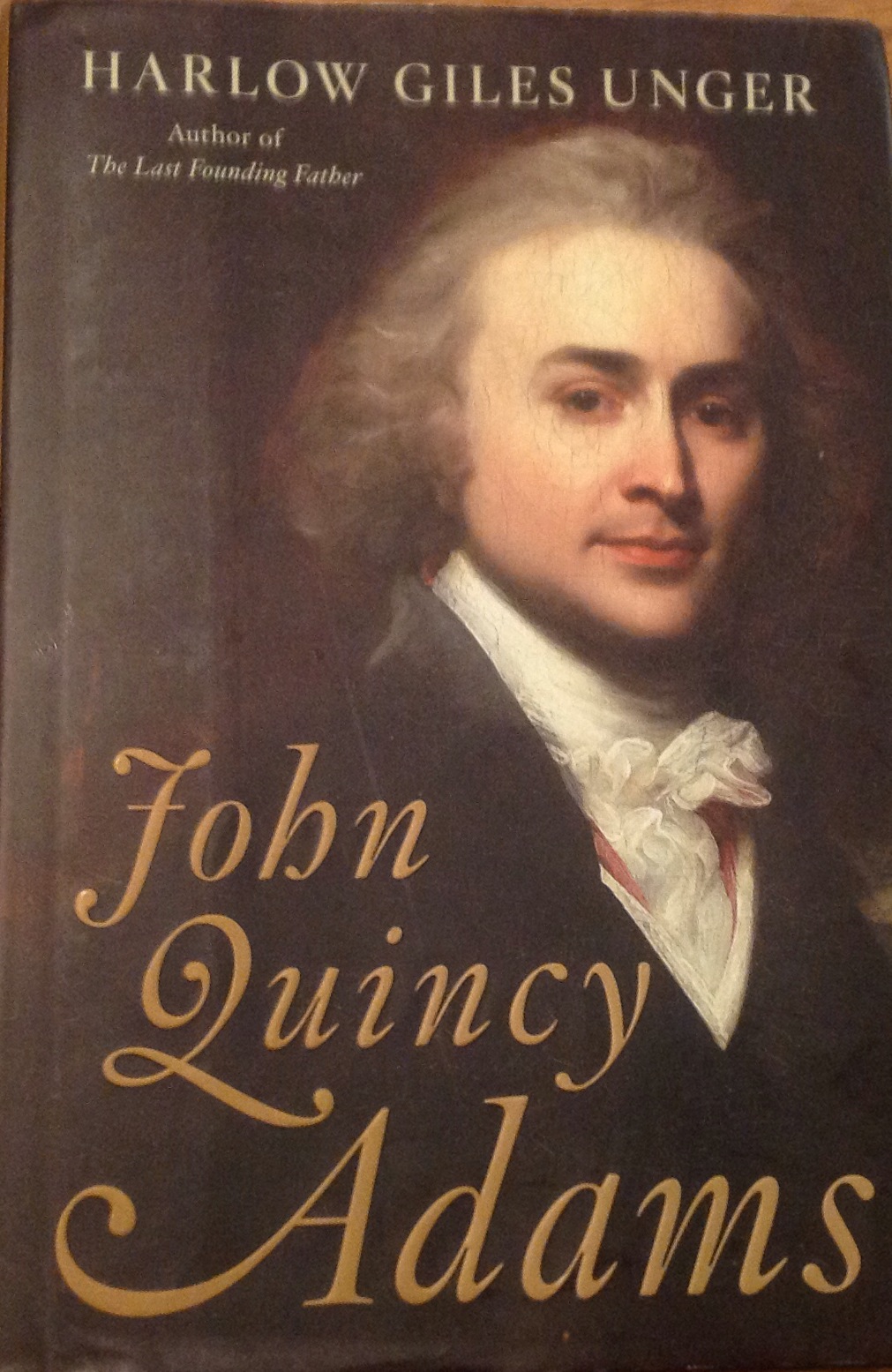
John Quincy Adams by Unger (Presidential Bio Series)

Harlow Giles Unger gives us another enjoyable presidential biography. This time it is on the underrated John Quincy Adams. Perhaps JQA gets overshadowed by his famous father, or perhaps it is because his actual term in office was a dud, but his long public career is in some ways unparalleled in our nation’s history. His life, without question, makes for sterling biography. He met George Washington and Abraham Lincoln!

Unger wells presents his early days and educational opportunities as well as getting to go on diplomatic missions with his father. His experiences were incredible and before long he was on his own diplomatic missions. 

His family life was interesting. He had a close relationship with his parents. He married a British lady and though he seemed fond of her, their marriage suffered deeply on several occasions. His leaving her at times while on political conquests surely contributed greatly to his problems. As a parent, he suffered both the deaths of some of his children, he watched others turn out as alcoholics. He knew something of suffering. Ha was, without a doubt, a believing Christian.

After a successful time as Monroe’s Secretary of State, he finally ran for President. He actually lost the popular vote to Andrew Jackson and was voted in finally by the House of Representatives. He took on several enemies at that time and he was never able to do anything as President. He was quite a discouraged man in those days and was an unpleasant and grumpy man.

Then he hit his stride. For years he became a Representative from Massachusetts where he saw himself representing the whole country. And represent he did! Many Southerners hated him but his skill in legislative procedure and constitutional law made him THE force to be reckoned with. He was the greatest champion of abolition from the founding of the nation till the eve of the Civil War. He knew before he died that the Civil War would come and, to his mind it was probably needed.

Unger draws a fine portrait of this man who lived his life on principle. How refreshing to read in these days. I learned that JQA was one of the really great ones in our nation’s history even if his term as President was largely forgettable.

Presidential biographies in the series.


The Last Founding Father (James Monroe) (Presidential Bio Series)

james monroe

Harlow Giles Unger gives us a lively easy-to-read volume on President James Monroe here. His subtitle “James Monroe and a Nation’s Call To Greatness” shows his belief that Monroe’s presidency was great times for our nation. That Monroe was our last Founding Father is open to debate and may depend on how you define it. Had Mr. Monroe died before 1800, I doubt he would have been thought a Founder.

In any event, he was the first Revolutionary War veteran since Washington, and for that matter, the last. A young man in Washington’s army, and one with close experiences with Lafayette, he was even seriously wounded in the line of duty.  He loved Washington but came under the spell of Jefferson and became one of his protegees. To be fair, he was protegee number two after Madison.

He had the same Virginia background as three of his four predecessors, including money problems, the typical troubles of one trying to be somebody in Virginia, and being a slave owner. Like them too he had some troubled family members. The difference was that he was not really born into this life and aspired to it, including the slavery. He left nothing for us to know his religious beliefs.

He career as Virginia’s governor and his time in France was productive. He showed initiative and had to make decisions in those days where communication across the Atlantic was so slow. Unger well highlighted his many accomplishments.

The flaws of the book were usually to do with getting carried away praising Monroe. He paints an inaccurate picture of James Madison being incompetent and Monroe carrying him the last two years of his presidency. Besides Monroe he seemed to praise only Washington and even suggested Monroe was another Washington in many ways. A biography where the biographer comes to really respect his subject is often a good read, but this one got carried away.

On the plus side, I left this volume feeling I had underestimated Monroe. He actually was one of the good ones. His time in office was greatly prosperous and he greatly aided the expansion of our country. His end in poverty and ill health was sad.

There must be a better biography of Monroe somewhere, but it would likely have to work hard to be as entertaining as this one. Here is a pleasant read.

Find other review in the series here.

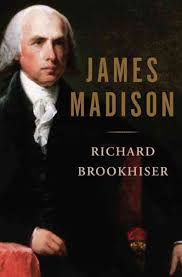
James Madison by Richard Brookhiser (Presidential Bio Series)

madison

Prolific writer Richard Brookhiser tackles President James Madison in this short biography. Though the writing skills I have come to respect in Brookhiser are present, this volume is not quite as good as the others of his that I have read. As a biography, I did not think it was as good as David Stewart’s “Madison’s Gift” either.

The book begins with a riveting retelling of the British marching on Washington during his time as President. Then, it backed up and took the story chronologically. When you finally got back to that point of his life’s story, you could never figure out what device the author had in mind by opening the book with it. I thought of it as a missed opportunity.

Still, the prose is agreeable and the reading easy in this volume. While the biography is not standout, his premise that Madison brought us the partisan politics that since has defined us was much more successful. Some think he overstated his case, and surely Jefferson had a role, but he was an essential element as Brookhiser proves.

This is not my first choice for Madison, but still a fine read.

Find all others in this presidential series here.

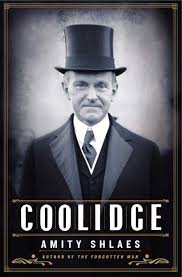
Coolidge by Amity Shales (Presidential Bio Series)

coolidge

Here is an awesome book bringing to life a man I have wanted to know ever since I heard he was a role model of Ronald Reagan. Shales was a good biographer who stepped out of the way and let us know Cal.

In her deft hands, the simply telling the story helped us see that Coolidge was a good man. He was ever motivated by principle and was, perhaps, the least politician who ever sat in the office.

He was a hard worker, and especially tireless in going after budget cuts. The country and the economy thrived in his time in office.

Shales shows us his full orbed personality. He likely was a little harsh at times. His moniker of “Silent Cal” was no exaggeration. He was a little jealous of his beautiful wife too, but he clearly adored her. Shales related one strange episode where his wife and a secret service agent got lost hiking. He exploded and the agent was transferred. It did seem he was at least a nominal Christian.

He seemed to be the perfect President for his times and you wonder if he would have done quite as well at other times. He handled the Boston Police Union strike in such a way that perhaps he could have well handled a major foreign policy crisis, but we will never know as he was spared that in his term.

I did get the feeling that he would have better handled the Depression than Hoover, as he fully realized the market was overvalued in his day.

I came to really like this man and came to love this biography along the way too. This is a real winner.

Read all in the presidential series here.

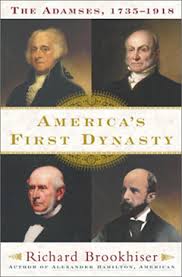
America’s First Dynasty: The Adamses by Brookhiser (Presidential Bio Series)

adams

This volume is like presidential biography plus. You get President John Adams as well President John Quincy Adams. It doesn’t stop there as you will trace the family to its dissolution too. Living up to its title “America’s First Dynasty”, Richard Brookhiser gives us another of his fast-paced, brief biographies that are a joy to read.

Brookhiser writes well on John Adams, though I found him to be less sympathetic than David McCullough. The political and historical side were adequately presented, but his niche is clearly familial. This family with two Presidents certainly had a cadre of failures too.

John Quincy Adams was shown as the striking, successful character he was. It is interesting that John Adams had only one good son (John Q) and John Quincy in turn had only one too. It seemed to me that Brookhiser missed what made for the success in these cases: time from a father. This was clearly missing in the others who failed.

The rest of the book is almost depressing. Each generation lost sons (often to alcohol) who went really bad. The last Adams was Henry and his story was one of despairing of life. He had no children and the dynasty ended, though as you read, you will see it actually ended before.

This is a fine book and the succeeding generations do not, at least for me, take away any admiration for our two President Adams.

Find other titles in Presidential series here.

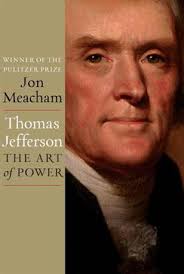
Thomas Jefferson by Jon Meacham (Presidential Bio Series)

jefferson

This fine biography by Pulitzer-Prize winning author Jon Meacham draws a vivid picture of Jefferson. Mr. Meacham clearly admires Jefferson, but as the subtitle “The Art of Power” shows, he was not blind to his weaknesses. Jefferson was charming, yet he knew how to manipulate situations to stay in control. He was never satisfied unless in control and was exceptionally good at gaining it. His compensating trait was that he genuinely liked people and beyond control he really wished no harm.

Many consider him the most intelligent President we have ever had, and that could likely be the case. He was brilliant, a voracious reader, a student, a thinker, and had a naturally inquiring mind. Despite wanting to be liked by people, he was ever true to himself. Give him a chance at personal contact and he could disarm most critics, except, of course, Alexander Hamilton. As you read you will discover a man you can’t help but like despite his bewildering moral inconsistencies.

Jefferson was the most articulate spokesman of the liberties that were the battle cry of the Founders. His writing of the Declaration of Independence was epic, though he wrote little else besides personal letters the rest of his days. He was in Paris when the Constitution was drafted, yet his influence was there in the person of his protegee, James Madison.

He served in Washington’s administration, but that was often difficult as he ever battled Hamilton. The parties of Federalist (Hamilton) and Republican (Jefferson) developed in spite of Washington’s disdain of them. Washington sided more often with the Federalists as that matched his thinking. He still respected Jefferson and always listened to what he had to say. I was saddened to see that though Jefferson respected Washington in many ways, he did not love him and was rather happy when he retired. Maybe that control thing blinded him.

After Adams term and the straining of that friendship, Jefferson finally got the control he wished in his two terms as President. He actually kicked off the Virginia Dynasty where his protegees followed him for the longest run in American politics (24 years). His term in office was a success. The Louisiana Purchase was a masterstroke.

Despite these successes, there was his lifelong approval of slavery. I fully understand that he was a product of his times and surroundings (Virginia), but for someone to so clearly see the value of liberty and freedom how did he justify it in his time? Perhaps he knew it wouldn’t last, but that it wouldn’t go away in his lifetime, so he just enjoyed things as they were. Washington was at least haunted by it while we find nothing to prove it upset Jefferson.

Then there is Sally Hemmings. Meacham is convinced that Jefferson fathered children with this slave. It was complicated in that she was actually his deceased wife’s half sister. It seems his father-in-law was a bad boy too. They say she looked a lot like her sister, whom Jefferson adored. Her death was one of the dark spots of his life. There has been long debate about this with many saying Jefferson is innocent. DNA tests prove that a Jefferson got into the Hemmings family, but there is no way to prove it was Thomas Jefferson. My own thoughts are that it is likely true. Human nature being what it is, and having the power a master has over a slave, it was bound to happen in many cases in a setting of slavery. If it is true, that Jefferson would allow his own children to be slaves in his lifetime would have to be the darkest stain on his life.

The Meacham volume is good reading and truly brings Jefferson alive. It is a winner.

Find all articles in the series here.

John Adams by David McCullough (Presidential Bio Series)

adams MMC

Here is a superb presidential biography by master writer David McCullough. Mr. McCullough could not be dull if he tried and this is one of his most popular books. This volume brought him his second Pulitzer Prize and I can see why. This biography has the distinction of rescuing a stalwart founding father from the oblivion he was sinking into. It was an undeserved retreat, which McCullough likely realized, and Adams has a 200-year history of competing with Jefferson and coming up a little short. It took McCullough to put Jefferson on the defense!

McCullough did not create something from nothing. Adams is the real deal. He is no Washington, but who is? He need not feel inferior to any other of our Founders. Perhaps a better Founder than a President, but he did as well as any one could following Washington. He had a few blunders, but some successes too.

He could be quite crusty, but he had an honest foundation that never let him down. He was far more moral in his private life than Jefferson. He was not into intrigue or political maneuvers, even to the detriment of his career, but I found myself appreciating it as I read. He wouldn’t just lie when he hit a rough spot either. That it is not to say he didn’t have his flaws. Vanity, and at times ambition, damaged his career. In his defense he realized it to some degree and even made a few attempts to improve.

This volume does a particularly good job at tracing the ups and downs of his relationship with Jefferson. As you read, you will actually rejoice to see the two improve the relationship in old age.

This volume also well explains that the seeds of the Civil War were sown at the very beginning. Adams hated slavery.

It is clear too that Adams was a believing Christian. He is not one of the Founders like Jefferson or Franklin who can be put in the Deist camp. Seeing him as a father was instructive too. Two of his children did not turn out well and his neglect was probably a contributing factor. He put much more input into John Quincy Adams’ life to better results.

This book is simply one of the great ones.

Find all articles in the series here.

Founding Father by Richard Brookhiser (Presidential Bio Series)

This volume makes the perfect primer on why we should care about Washington. It is not a biography per se, but it seeks to rescue Washington from the caricature that he has too often been presented as. I actually read this when I was in my late twenties, but I still recall the impact it made. I had read a biography of Washington in High School, though I have since forgotten the author, that I enjoyed. Too often, however, I reduced Washington to the Parson Weems recreation as cherry-tree chopper instead of the vibrant man he was. Washington is anything but cardboard and cold!

Brookhiser holds conservative principles that some will dislike, but only made the book better for me. He drew a good parallel between Washington and today and illustrated where we ought to return to the wisdom he showed. The 20 years that have passed since he wrote this book only make it more so.

It was this book that taught me that reading about presidents beyond textbooks could be both enjoyable and rewarding.  I can’t imagine how you could not enjoy this book.

Find others in the series here.

ok.founding father

Washington by Chernow (Presidential Bio Series)

washingtonchernow

This volume by Ron Chernow is the best historical biography I have ever read. It is a combination of writing skill, historical accuracy, penetrating insight, and the subject himself. Perhaps a disclaimer is in order: I love George Washington. To my mind, he is far and away the brightest star in the annals of the history of our nation. You might even say that Washington deserved this exceptional, Pulitzer Prize-winning treatment. A tad long for some at 817 pages of text, but the subject demands it.

Here in the hands of a master storyteller Washington is rescued from historical revisionism as well as the caricature of the legend he has become. What is left is a man worthy of admiration. He lived up the legend as much as flesh and blood ever could.

That is not to say that he had no character flaws. Chernow hid nothing. Washington always struggled with being a little vain even if he rarely failed in public expression. He was ambitious, at least until he became weary of his incredible success that went beyond his wildest dreams. He was horrible managing money and though he had vast land holdings, he had cash flow struggles until he died. He wrestled in his conscience over slavery, but could never take the steps his conscience suggested.The politics of his home state of Virginia made it too explosive and he could never figure out how to balance his struggling books since if he set his slaves free he would lose financially since slaves were valuable. He was a product of his times, did nothing to hamper their later release, and at least struggled where Jefferson and Madison never did. Chernow suspects he had an infatuation with a married women when he was younger, but there is no evidence of adultery. He was good to Martha and her children. He was zealous in dealing with any cases of insubordination, even too extreme for some folks. And there was Jummonville. The beauty of this volume is that even after learning of his flaws, your respect remained high.

He was the hero of the Revolution and deservedly so. He was not a tactical genius like, say, a Robert E. Lee, but he had his moments. His success came from persistence, recovering from losses, molding a motley crew, making something out of nothing, and never giving up. Chernow handled this with aplomb.

Chernow also showed what a man’s man he was. Despite his love of fine clothes, he never dodged hardship. Chernow’s recounting of Washington’s horsemanship in crossing the Ohio River is one never to be forgotten. Washington was also fearless. In fact, he has no equal in fearlessness. Bullets never scared him. He always believed God would protect him till his time was done. In that every Washington family member except his mother died young, he never expected to live long anyway. He faced life-threatening health crisis several times in his life. He faced his actual death with his fearlessness in tact.

He had hardship. Chernow traces his relationship with his wretched mother. What mother what not have been thrilled to have had as revered a son as Washington? His self-absorbed mother did not and was a carping critic throughout his life.

Chernow did not hide Washington’s Christian faith. Perhaps he did not see it as strong as I did in a few spots, but he did not obscure a vital component to who Washington was as a person.

Chernow also summarized Washington’s life in a fair way. He did succeed as a President. Perhaps he did not think he had succeeded with all the bickering of his cabinet as he presided before the official start of political parties, but he was visionary in a way that no other leader we have had has done. He truly put his country first and blessed succeeding generations beyond measure.I wish today some politicians could bury their ambition, which is a human struggle for all, and put the nation first.

This is the first volume I would purchase in creating a presidential biography series. It is a treasure.

Presidential series