A Theology of Matthew’s Gospel by Michael Wilkins

This volume gets us close to the completion of the Biblical Theology of the New Testament series. I’ve reviewed them all so far and there’s not a dud in the bunch. Matthew deserves one of the eight volumes in this series and Michael Wilkins does a phenomenal job. I’ve had an over 20 year fascination with reading everything I could get my hands on about this wonderful gospel. With that extensive background, I can tell you that this book lacks nothing.

I feel this book could hardly be better. If I had to split hairs, maybe it could’ve used a few more charts. It’s not only the depth of coverage, but the conclusions themselves that I love. I guess you couldn’t feel the need to judge a book by me liking its conclusions, but I suggest you give it a chance. What he concludes, he develops persuasively. He covered all these background issues, but in someway in so doing he has gotten to the heart of Matthew.

The book starts a bit slowly. That is because the first two chapters cover topics I find less interesting. If we have to endure such things, I’m at least glad to see that he has dispensed with some of the dumber things that have come down the path of the scholarly world. “Q” isn’t the spectacular book behind some dependent gospels, but a foray into limited imagination; but I digress.

Chapter 3 is a skillful summary of structure. It has taken several books to put together what he explains well in a few pages. The next chapter is a literary and theological reading of Matthew’s gospel. It’s not exactly a commentary, but think of it as a collection of nuggets. In other words, it’s really good.

The next part has several chapters on major themes in Matthew’s theology. What he discusses is easily the main topics that have been on the agenda of many people over the last few decades or even longer. I call your attention to his fantastic chapter on the kingdom of Heaven. I especially was enlightened by it.

He’s also fair to various groups within Christianity. For example, he is kind to those who follow dispensational theology, but at the same time, he probably doesn’t really offend any reformed thinkers either. In other words, he’s not writing for a specific team, but is just trying to do the scholar’s task. He does it well.

This book is so good that it can probably take the place of 10 other releases from the past. You will want this one. 

I received this book free from the publisher. I was not required to write a positive review. The opinions I have expressed are my own. I am disclosing this in accordance with the Federal Trade Commission’s 16 CFR, Part 255.
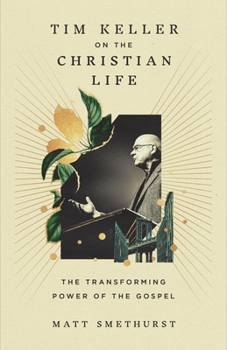
Tim Keller on the Christian Life by Matt Smethurst

This book will make a lot of people happy. People who love Tim Keller are going to see this summary of his salient teachings as an addendum to his biography, especially if they read those copious endnotes, and be happy. Those looking for some rich devotional writing with the best theological precision will be happy. You’re probably catching on, but this book makes me happy.

I admire Keller, but for some weird reason I’ve listened to many of his sermons online while not getting around to reading his works. After reading this book, that process was certainly a mistake. What was I thinking? This work convinced me that I will read him going forward. Each chapter, as best as I can tell, synthesizes his most beloved books. These chapters leave you clamoring for more. I guess this book makes the publishers of Keller’s books happy too.

This book is well written. It doesn’t only propel you to Keller’s books, but says much itself. These chapters stirred me. I prayed some prayers of repentance for the challenge and conviction I encountered (sans the guilt that you know this moralism-hater was incapable of throwing) after several chapters.

I can’t tell you which chapters were the weakest as I found none I didn’t love. I can’t tell you which chapter I love most as I loved so many of them immensely. I can tell, though, that most of them found this reviewer wanting. If I were forced to list its worst feature I guess I’d say endnotes are annoying to keep flipping to when they are so many and too delicious to miss.

Rarely does a book so gallantly reach its aims, but here’s one that did.

I received this book free from the publisher. I was not required to write a positive review. The opinions I have expressed are my own. I am disclosing this in accordance with the Federal Trade Commission’s 16 CFR, Part 255.
One, Holy, Catholic and Apostolic Church by Guy Prentiss Waters

The “We Believe” takes shape as a dandy series that taken together will finally make a major systematic theology contribution. Several of these type series are reformed in nature, as is this one, and we certainly aren’t lacking works from that perspective, but this is one to consider to cover that viewpoint. While I might disagree on points, I’ve found real help in each volume of this series.

That being said, this title is a bit more militantly reformed than others in the series. The doctrine of the Church is one that kind of forces you into a distinct lane, but did this scholarly work really need to quote a denominational source of the Presbyterian Church multiple times? Even if the author thought those sources were exquisitely worded, does it really encourage a broad readership? Perhaps, though, if you are a Presbyterian, you’ll want this title even more in the crowded field.

All of that being said, I’m not denigrating the work. Waters is a good writer who presents with clarity. You won’t misunderstood what he’s saying even if you disagree with it. I imagine him to be a good teacher. So many paragraphs are him discussing by listing items one, two, three, etc.

This systematic theology theme is run through the rubric of biblical theology here. It’s also moored to Covenant Theology. Not surprisingly then, he begins in Creation. I see the Church coming along later than that, but there are still connections worth pursuing even if I might not see them as strongly as him. I have the same reservations and enjoyments in his chapters on Abraham, Moses and the Prophets.

The work grew much more captivating in chapter 6 where we meet Jesus, the Eschatological Reconstitution of the Church. The next chapter on the Apostles returns to more expected fields for a work of this type. Part II encompassing chapters 8-13 is more traditional in its contents. Still, the parts touching on local churches especially holds to the Presbyterian mindset.

Chapter 14 felt like Bavinck to me as it addressed things like church and state as well as religious liberty. The Conclusion succeeds as a clear summary as 7 statement are winsomely made to reiterate the work.

I’ve explained a few things in this review to show that you might love this book more if you’re a Presbyterian than if you’re not. Still, it’s a book much worth having.

I received this book free from the publisher. I was not required to write a positive review. The opinions I have expressed are my own. I am disclosing this in accordance with the Federal Trade Commission’s 16 CFR, Part 255.
John (WBC) by Dorothy Lee

Here’s an interesting book on the themes found in the beloved book of John. The themes covered are widely agreed upon among scholars, but they’re gathered here and presented in a well-written form.

The first chapter is an introduction such as might be found in a commentary. The next chapter starts turning more toward those themes as the theology of John is covered. The author believes that though Jesus is the central character, the center of John is God. I’ll at least say that Jesus speaks often of and to His Father in John. The spirituality of John is also highlighted and the famed “I AM” statements are discussed.

The balance of the book is six chapters on theological pairs. The first is “Word and Wisdom”. I must confess that I find that connection tenuous. It’s two great subjects, to be sure, but I’ve just never seen them interacting in John. Nevertheless, several scholars agree with Ms. Lee, so I might be missing something.

The next pair is life and light. Even in a casual reading of John these two jump off the page in John. She expertly guides us to see this line as working through the book. She makes some excellent points on blindness that I hadn’t thought of. After tracing through the Resurrection, she even uses the fire where Jesus was cooking for a troubled Peter.

I found the pair of Temple and glory keenly instructive. Over the last few years studying biblical theology I’ve noticed just how prevalent and encompassing the concept of Temple is. Next is witnessing and believing that is again apparent in John. Still, her discussion is not mundane and goes far beyond the obvious.

Birth/family and Law/Revelation round out the book. Again, I was sold on their significance in John.

This book gives you much to digest. Perhaps you’ll think a point occasionally stretched, but overall these are for the most part some of the great themes of John. It’s good enough that I’ll consult it going forward on any major studies of John.

I received this book free from the publisher. I was not required to write a positive review. The opinions I have expressed are my own. I am disclosing this in accordance with the Federal Trade Commission’s 16 CFR, Part 255.
Reformed Social Ethics by Herman Bavinck

The Herman Bavinck body of work keeps growing! As every new title drops, our stores become fuller. To my mind, he’s one of the real master intellectuals out there. If he’s written on a subject, it was be a crime not to consult it if that’s the subject you’re working through.

You have surely heard of his Reformed Dogmatics. There are scholars who are devoting their career, like editor John Bolt here, to uncovering and freshly translating his work. I’ve only recently heard of a new set called Reformed Ethics and it looks like many are considering this work on Social Ethics as part of that set. Still, it’s unique enough to have this separate title.

We must commend the editors for taking mere notes, filling them out with careful honesty to make sure they’re authentic Bavinck, and even pulling in his other writings to fill the gaps. Your ideas must be valuable to get a group of editors to invest that kind of time to bring them to light.

The first section talks society. It approaches issues that dominate on some level political debate today. Its gift is its utterly dispassionate portrayal of politics as if what God said is all that matters. His argument that Jesus is not a social reformer, that is, He doesn’t work directly through larger social structures, is profound.

Next, he addresses art and scholarship. The section on art is less interesting to me, but others will appreciate it. Scholarship would do well to fall in line with him today.

When he next turns to the state, we find something desperately lacking today. He speaks calmly about issues that should be informed biblically rather than with our flavor of politics. The caldron of public debate today is so toxic that this book seems as if it comes from a distant time. The views explained, however, have more of a timeless quality. He is so judicious in his comments, yet so true to principle.

The next section on “the church” is stated to be different that his ecclesiology one in his Reformed Dogmatics. Here it’s more missions and its social impact. Perhaps we could say he’s arguing for the gospel over a mere social gospel.

When he approaches humanity and the kingdom of God, he defines the Kingdom as the highest good. Your views of prophecy might lead you away from him, but there are nuggets here for any viewpoint.

This completes what will likely be the last set of books by Bavinck to come out. His name is sufficient to suggest you will want it.

I received this book free from the publisher. I was not required to write a positive review. The opinions I have expressed are my own. I am disclosing this in accordance with the Federal Trade Commission’s 16 CFR, Part 255.
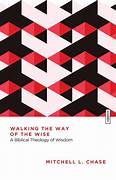
Walking the Way of the Wise (ESBT) by Mitchell Chase

More and more I find the ESBT my favorite theological series. Yes, it takes a slice of biblical theology in each volume, but not so narrow a one as most such series. Somehow these swaths of theology always take in the broad horizon as its spectrum. Other series often are one tree on that vast horizon. In this volume its wisdom that becomes the scaffolding to see the Bible at large. I love looking at theology that way.

A few prominent scholars actually say wisdom is the main organizing focus of Scripture. That’s multiple fields too far for me, but that is not at all the vibe Mitchell Chase gave as I read this book. It was more an attitude of you will find the fascinating theme of wisdom, particularly in terms of a path of life, all across the Bible. He shows that wisdom is not only to be found in Wisdom Literature in Scripture, but lurking throughout. I felt both his premise and wisdom’s place in theology overall as well reasoned and proven.

He finds the theme of wisdom in Eden in the first paragraphs of Scripture. For that matter, most all the books in this series begin there. Genesis 1-3 is rich beyond description for sure and obviously foundational to a level many overlook. Its essentiality would make theology not beginning there a bit suspect.

When he finally got to Wisdom Literature, he handled it well. Why more scholars don’t see Song of Solomon the way he does is beyond me. Perhaps wisdom is not quite as prominent in the NT, but he held my interest to the end. Ending the book with where wisdom ends was the perfect ending.

What really put this book over the top was its warmth. Here passion for theology met exegetical competence and blended beautifully. One sentence might be a theological nugget while the next might be a devotional one. I recommend the series and this fine, new book.

I received this book free from the publisher. I was not required to write a positive review. The opinions I have expressed are my own. I am disclosing this in accordance with the Federal Trade Commission’s 16 CFR, Part 255.
Human Freedom, Divine Knowledge, and Mere Molinism by Timothy Stratton

Don’t let the clunky title fool you. This is a great book. I’d come to believe that molinism was the way out of the conundrum of sorting divine sovereignty and human responsibility, but it was this book that led me fully to the invigorating air of clarity. Stratton’s gift is logical argumentation that guides you by the hand to conclusions.

So persuasive was his logical arguments that I went online and watched debates he had with others. It was as if others brought their knives to his gunfight. Strangely enough, some he debated were even more polished in the art of debate, but he just seemed to have them where it counted—actual arguments. It didn’t hurt that he was gracious either. Fortunately, that gracious spirit is also found in this book, though he is relentless in marshaling arguments and looking at the subject from all different angles.

The first two chapters are foundational and I suggest you take your time with them. Here is where you will make a quick observation. This is not casual reading. Make sure you notice that there is no fault in Stratton’s writing, but just that this is a deep subject. I think if you read an occasional paragraph over, and read slowly at all times, you will find this work quite lucid. In my judgment, we have for so long talked in broad generalities about things, and have just not followed through on what they mean. I think there’s a lot of layers inside us that have to be worked through. For example, he will explain what he calls exhaustive divine determinism (EDD), which he wisely defines as “all events are casually determined by God”. When I say there are many things that we have not thought through, you will see the profound implications if God has truly caused every single thing that happens, including every choice that’s ever made.

You probably already know, and it’s an argument that Stratton makes, that a lot of people can kind of agree with libertarian freedom until we touch upon salvation. Then we enter old battlegrounds where we must stay true to our alma mater, so to speak. Then, the focus shifts from merely seeking the truth to the propping up of the home team. I am being a bit vague on purpose here because a lot of people predetermine what they’re going to think about a book like this before they ever read the first word. This book is such a great one and it deserves better.

Chapters 3-10 survey historical periods successively to see how the debates crystallized. Sometimes I think this is not always helpful for a theological work, but in this case, it really is essential. Quite simply, many things, including definitions and categories, have all sprung from debates rather than a direct study of scripture.

Chapters 12-13 bring us back to direct theological issues. What libertarian freedom and its logical necessity simply must be addressed. I thought Stratton was masterful in showing that there logically must be some level of libertarian freedom.

The next chapter introduces us to Luis de Molina. He was a guy who made a brilliant observation that God must possess middle knowledge. Far more than anything about the guy himself, is the scriptural and logical weight of what he said. To my mind, it is profound.

Chapter 15 is the capstone of the book. Here he makes his arguments for middle knowledge and molinism. It is hard for me to see how someone coming with an open mind and a desire for truth could walk away without agreeing with what is presented here.

Chapter 16 is something of an icing-on-the-cake type of chapter. There is some apologetic ways that this teaching can help us. It’s not the heart of the book, but it is very interesting.

I rarely use the term “tour de force ” because it can be so cliche, but it fits here. Another thing I rarely say for the same reason is that I wish this book were so much better known, but I can hardly think of when I meant it more. 

I received this book free from the publisher. I was not required to write a positive review. The opinions I have expressed are my own. I am disclosing this in accordance with the Federal Trade Commission’s 16 CFR, Part 255.
A Theology of Revelation by Scott Duvall

A book on the theology of Revelation likely makes you ask, what is the author’s approach to prophecy, followed by you deciding if you find it interesting all based on that approach being in your lane. What would you think if I told you that you could have a fantastic book on Revelation’s theology and it made no difference at all what your interpretive preferences were? This volume is that book!

In fact, I’m sure Mr. Duvall and I do not agree in our approaches to prophecy and I love this book. I hardly can describe all I found that enlightened me and opened avenues that I will want to travel in future studies. All the volumes in this series so far are impressive, but this is one of the best. Perhaps it is the intense coverage of a smaller portion of Scripture. Perhaps it’s just the fascination of the Revelation. Whatever it is, it’s simply the case.

By the end of chapter 6 you have mostly covered areas typically found in a traditional introduction of a major commentary. When chapter 7 addresses grammar it delves into symbolic language. Some of us might believe not everything he finds symbolic actually is, but he gives nice coverage. The next chapter covers the prevalent use of the OT found in Revelation. Chapter 10 overviews the major interpretive systems that so often dominate discussions and he is gentle in his presentation.

Chapter 11 entitled “A Literary Theological Reading of Revelation” is a lengthy chapter of over 100 pages that gives what I guess we’d call a streamlined commentary. The learning and help in this compact section is impressive.

This work saves the best for last as the final section gives nine extraordinary chapters on the major theological themes. Again, no matter the interpretive grid you filter through, these themes are both profound and undeniable. If I had to pick a favorite, I guess I’d go with the one on worship. If you think about it, how pervasive worship is in Revelation.

I’ll be using this book for years to come. If you give this one a try, I think you might join me.

I received this book free from the publisher. I was not required to write a positive review. The opinions I have expressed are my own. I am disclosing this in accordance with the Federal Trade Commission’s 16 CFR, Part 255.
To Gaze Upon God by Samuel Parkison

Sign me up as a fan of the beatific vision! Before I had barely paid attention to the whole concept, and thought, at most, well, that’s a sweet little idea. Now Mr. Parkison has won me over.

This is one of the best books I’ve read this year. Remember in the Psalms: “Mercy and truth are met together; righteousness and peace have kissed each other.” Well here the kisses are between scholarly work and devotional manna. I suppose he was aiming at scholarly, but the devotional came bursting out. How the scholarly rigor didn’t bury the moving manna is beyond me. But I’ll take it.

There were places, to be sure, where he played with the fire of scholasticism that has burned up many a good book, but somehow he darted back out into the sun quite often. The chapters in question are three and four. Here he worked through the history of how the beatific vision has developed and been viewed. He even dared enter into the debated points and with charitable grace he kept it interesting and productive to matters of faith. I was about to be perturbed when he started down the pointless path that this lined up with Reformation thinking. Isn’t being biblical enough? But I couldn’t do it. Every time I tried he said some other touching thing.

Before these chapters were ones explaining what the beatific vision even is and its biblical credibility. Let me describe it this way, this gazing upon God takes some of the things that seem most big picture to me and tied them together in a way that they should have always been. I need not rehash it. You can read it yourself. But it sure moved me.

Chapter 5 (“Retrieval for Reformation Evangelicals”) has as dull a title as possible, but it was full of life. And it grew more so as it went along. There was doctrinal profundity in spades. Its gift was tying all back to a full orbed Trinitarian theological understanding.

The final chapter takes this grand doctrine and rubs it on like healing oil all over many facets of the Christian life.

How have I never heard of Samuel Parkison? I bet I’ll be watching for his name in the future.

I received this book free from the publisher. I was not required to write a positive review. The opinions I have expressed are my own. I am disclosing this in accordance with the Federal Trade Commission’s 16 CFR, Part 255.

Reformed Ethics (Volume 3) by Bavinck

Fascinating! I’ve just never read anything before on the material covered here. I’ve read Bavinck, of course, but here he digs in with that penetrating style of his in a place I need led by the hand.

Somehow I missed the publishing event of this three-volume set and make my introduction through this volume 3. When it arrived, I laid other things aside and jumped in. You probably wouldn’t normally label an ethics book captivating. As good as Bavinck is, you might not call him captivating usually either as he is quite exacting in his approach. His gift is depth of content. What a mind he possessed and to read him makes you a learner. Still, I can’t believe how quickly I went through this work.

The bulk of the book is on “The Life Spheres in Which the Moral Life Must Manifest Itself”. As heady as that title is, the material distills a mountain of study and lays it at your feet in around 200 pages. Along the way, he covers family, the “duty” to marry (hadn’t thought of that), qualifications for marriage (who you can marry), betrothal and wedding, essence of marriage, and divorce.

Here’s why the book is so fascinating. He gathers all the Bible says and on some points the Bible says little specifically. He covers what Christian groups have thought from the most to least known. What you will discover is the lack of consistency among Christians. He is not so “dogmatic” except where he feels the evidence warrants it. He is honest enough not to just trumpet his opinion. He also shows how these ethics have often showed up in laws. It’s a bit tilted towards Dutch law, but that’s understandable as he ministered there. You will at least leave this book knowing what questions you must ask yourself.

The last third of the book changes direction. It addresses philosophical ethics first. I thought he was good at probing the subject, putting it in perspective, and making sure to not allow it to plow over the gospel. In the last part, contemporary morality is covered. You can decide for yourself how contemporary it is. In my view, we must at least wrestle with some of the things he brings up.

I want to consult Bavinck on any subject he covers. I may not agree, but I know I’ll be richer for reading it. Here he plows fields off the beaten trail, and I highly recommend it. 

I received this book free from the publisher. I was not required to write a positive review. The opinions I have expressed are my own. I am disclosing this in accordance with the Federal Trade Commission’s 16 CFR, Part 255.