A Bird’s-Eye View of Luke and Acts by Michael Bird

Think of this book as a nice Introduction like you might find in a good commentary but presenting in a more appealing, accessible format. Its style extends past scholars only, while most of their issues are addressed, to other Bible students. The writing is easy to follow.

To my mind, the work covers much of the basics in the first few chapters. Chapter 8 on discipleship was thoroughly enjoyable and my favorite of the book. I might have discussed “salvation” differently in some ways, but he did a good job illustrating how big it is in these two books. The chapter on empire was interesting.

The design and even layout of the book is favorable. Several of the charts met a need too.

The book misses in some cases. The chapter that asks if Jesus is a feminist is a perfect example. Luke, as has long been noted, mentions women more often than other Gospels. That fact is, too, worthy of study. But why use the term “feminist”? It’s true that there has been a substantial bit of literature on feminism in the Bible, such as it was, that a comprehensive commentary might have to address, but a book to a wider audience would do better to avoid a word with so much baggage. The term means more than pro-woman and those modern notions are no where in Luke. Why write as if they were? I could argue the same way on the next chapter when he asks if Luke is a socialist. Luke speaks of the individual ethical use of money and just isn’t on the capitalist/socialist spectrum at all. It also sounds in these examples like we are taking our thoughts and judging Luke, and ultimately God, rather than the other way around.

Another problem for me is that in a work like this you can analyze Luke at the expense of the rest of the Bible. Of course, it’s good to study what he includes and excludes. But if the Spirit is the true author, then the inclusions and exclusions are better addressed theologically than with some discussion of Luke, say, just being a product of his time. Luke’s times are in play but mistakes because of it, for example, could not be.

My criticisms, to be fair, are not unique to Bird. After he traverses the landscape including some faint trails going no where, he finally concludes in a better place in most cases. I’m probably dwelling on the negatives and not sufficiently covering the far more numerous positives as well.

You’ll have to learn in this book; it’s inevitable. Luke/Acts is worthy of our learning. If your questions are exactly those scholarly questions that are hot at the moment, rather than just what you might ask usually, add a star to the rating.

I received this book free from the publisher. I was not required to write a positive review. The opinions I have expressed are my own. I am disclosing this in accordance with the Federal Trade Commission’s 16 CFR, Part 255.
The Lord Jesus Christ (WB)

This inaugural volume of the WB (We Believe) series bespeaks the idea that a great set is coming. Here Christology, a most important doctrine of our faith, gets its due. I even like the look and feel of this hardback volume.

What is unique here amongst a world of theological series and systematic theologies? I can best describe it as taking an item from systematic theology and running it the filter of biblical theology. That means it’s not just a new book to get lost in the crowd.

You’ll see this immediately as the Doctrine of the Son takes a drive through the Pentateuch. It wasn’t what I expected, but I could have gotten that somewhere else anyway. Unique yes; esoteric no. The forest dwarfs the trees here. The footnotes were often referencing some of the best biblical theology out there while the synthesis into guidance on the Doctrine of Christ was on target.

Perhaps the reformed orientation will mold your final grade one way or the other. Covenant Theology is pushed at points, but the overall biblical theology overcomes most minor objections with ease.

The dogmatic development section isn’t quite as compelling as the biblical theology, but that’s a personal preference on subject rather than any writer fails. If you’re a history buff you won’t agree with me anyway.

The last part “Truth For Worship, Life, and Mission”, though quite brief, brings this great doctrine to the issues of today.

The scholarship here will please that crowd, the theology here will please that crowd, and the writing itself will please them all. It’s a good one here.

I received this book free from the publisher. I was not required to write a positive review. The opinions I have expressed are my own. I am disclosing this in accordance with the Federal Trade Commission’s 16 CFR, Part 255.
Life in the Son (NSBT) by Clive Bowsher

Fascinating! Whether he’s teasing out or trumpeting loudly, Clive Bowsher makes John’s take on participation or union with Christ come alive. So successful is his presentation that at its end you find it as essential to the overarching understanding of Christianity. How were we not always talking about it? Why was John shelved while Paul was paraded when they should have been walking the streets of our minds arm in arm?

As much as I love this series, and it is a treasure, I wonder if this volume had better been served in a more popular setting. Unfortunately, mostly theological junkies read this series (count me in that peculiar group) and the subject here needs a larger circle. For the record, many Christians could markedly grow were they to read this series, yet platitudes and self-confidence growth hormones are the trending proclivities of palettes today.

Mr. Bowsher knew who would read this book too. That, strangely enough, is my only criticism of the book, though it is an exceedingly minor one. At times, it seemed that Mr. Bowsher wrote for Mr. D.A. Carson instead of me. Or maybe those grading his dissertation. Still, that was only a little speed bump on the way to the goodies.

I’m not going to rehash this book as you just need to read it. When you do, settle in and enjoy the ride to learning the phrase “in-one-another”. Watch him connect the idea to the interrelatedness of our Triune God. Then watch yourself brought into it. The vistas on that scenic route will take your breath away if you’ll use the pull-offs and take the long look.

On the technical side, he will work in turn through key passages in both John’s Gospel and his First Epistle to carefully construct his premise. All the necessary undergirding, too, is there and built soundly.

I guess I don’t have to summarize that I highly recommend this book as surely you intuited that already.

I received this book free from the publisher. I was not required to write a positive review. The opinions I have expressed are my own. I am disclosing this in accordance with the Federal Trade Commission’s 16 CFR, Part 255.
The Path of Faith (ESBT) by Brandon Crowe

The ESBT is a tremendous, eye-opening series. Its chief value is its ability to connect dots that only top-notch biblical theology can do. Perhaps its only downside is its rigid adherence to Covenant Theology. As one who does not wholeheartedly embrace that perspective, I still find multiple nuggets of insight that can be organized into grand vistas of the biblical horizon. Among the books I’ve encountered in this series, it is this one by Brandon Crowe that most comes across as a polemic for Covenant Theology. Still, I found connections that I really appreciated in the biblical text.

A secret for gleaning (if you’re a Covenant Theology proponent you’ll need no such secrets) is to simply substitute the continual refrain of “covenant” with the great overarching concept of our Lord reaching out to us. I find that throbs with life while funneling it through the narrow funnel of “covenant” a bit stale. That perspective makes other demands too that straightjacket God’s full-orbed vision more than is necessary. My point for rambling on about this line of thought is that non-Covenant Theology folks can benefit between the covers of this book as well. Of course it’s red meat for rabid followers, but, surprisingly, it’s pretty nourishing for the rest of us. (To be fair, I sometimes feel the same way about dispensational writings).

So where goes this book strike oil for me? It’s the walk through Scripture from a birds-eye view. You might have the ah-ha moment, like me, when you, say, see that profound connection between Judges and Ruth. There were others, but I really enjoyed that one. You can read through for the flow of Scripture or you can read sections where you are currently studying and really add to your stores.

With those caveats above, I still recommend this book.

I received this book free from the publisher. I was not required to write a positive review. The opinions I have expressed are my own. I am disclosing this in accordance with the Federal Trade Commission’s 16 CFR, Part 255.
The Beginning and End of All Things (ESBT) by Edward Klink

This is a biblical theology book par excellence. It is masterful on so many levels and is one of the best big picture books that I’ve come across. It suggests sidelines of thought in droves. It was so good that I had to really slow down and just take it in. I probably underlined half the book, which probably overthrows the value of underlining, but you get the point.

It is no surprise that this is such a good book. Edward Klink wrote a few years back one of the best commentaries on the Gospel of John that I have ever encountered. If he continues on this track, I predict an incredible career for him.

I might have a few caveats for the book, but they really don’t decrease its value. Not as badly as a few other books in this series, this book is something of a polemic for Covenant Theology. Personally, I am one who enjoys learning all I can from writers of that persuasion while ignoring some of their excesses. For the record, I approach many dispensational writers in the same way. Occasionally, he gets so carried away championing the cause of Creation and New Creation that he kind of runs over Redemption a little bit. He didn’t have to downplay heaven either in an effort to magnify the already glorious thought of what this New Creation will be. You can easily stay on track, though, and continue to learn treasures of such exquisite worth that it will be hard to really criticize the book at all.

He puts on no airs as he writes. Rather than being impressed with himself as some theological writers are, he is only impressed with his subject. You might say he is in awe. Those writers give us the best books.

All the titles in the ESBT are helpful, but not all as incredible as this one. I’ve not explored them all yet, but I will be shocked if one can surpass this one. Whether you procure the entire series or not, don’t miss this one!

I received this book free from the publisher. I was not required to write a positive review. The opinions I have expressed are my own. I am disclosing this in accordance with the Federal Trade Commission’s 16 CFR, Part 255.
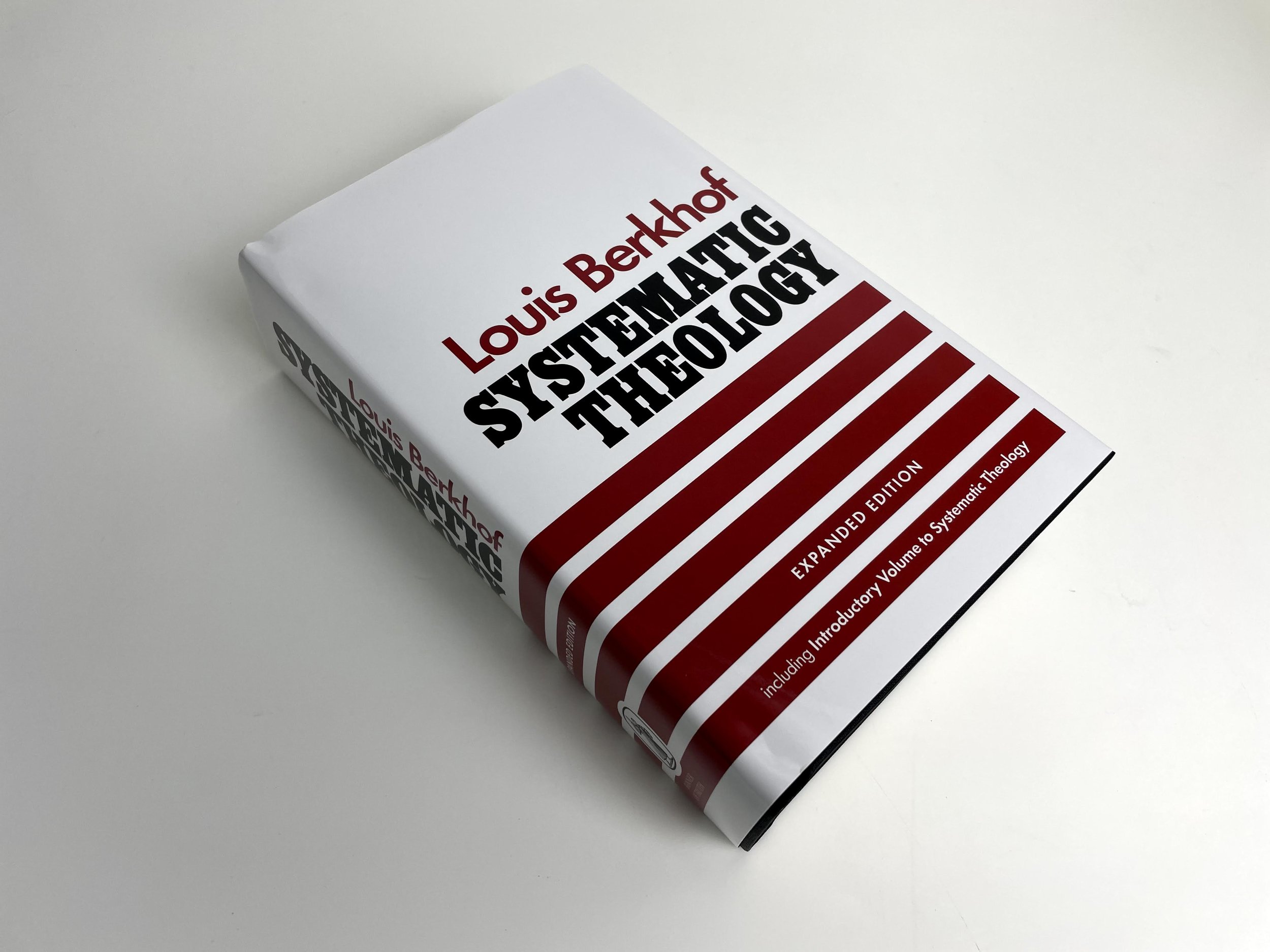
Systematic Theology by Louis Berkhof

This influential book has merited this beautiful new release. Included now as an extra is Berkhof’s Introductory Volume to Systematic Theology. That’s almost 200 pages of additional material. It’s slightly more academic as it explains Dogmatic Theology including description and methodology. It particularly gives additional insights on the Doctrine of Revelation or Scripture.

The main text gives a treasure trove for students of near 800 pages. He gives what I’ll call the classic reformed position. If you’re trying to get a handle on that view, start here. I like to have systematic theologies from a few perspectives on hand and I want them dogmatically written. My thought is, give me your best shot. From there, I can compare and weigh. Probably systematic theologies are the only category of books I want in that style.

Berkhof won’t fail you on that score. In fact, my only slight criticism of the book is when he goes off on certain personalities and groups. He is not insulting, but he wants you to see them as off the reservation.

Still, the book is an awesome resource. What amazed me is that even though he wrote as a teacher, he was wonderfully clear, engaging, and even lively. In a systematic theology that helps. I read several sections and thought, I’ve got to come back and work through this the next time I’m doing major work on that doctrine.

This is one of the heavy hitters in the systematic theology category. I guarantee you I’ll always be consulting it in the future.

I received this book free from the publisher. I was not required to write a positive review. The opinions I have expressed are my own. I am disclosing this in accordance with the Federal Trade Commission’s 16 CFR, Part 255.

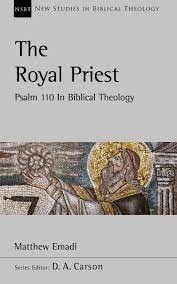
The Royal Priest (NSBT) by Matthew Emadi

Biblical Theology shines in this latest NSBT series. Every volume in this series flourishes with information for the Bible student, yet some of them sing. This one sings.

This volume is not a retread of God’s Mediators, an earlier entry in this series, but something that dives into the the idea of priesthood at its loftiest heights in Melchizedek, the divinely intertwined ideas of king and priest, its standing with the Levitical priesthood, and all coalescing in Psalm 110.

Pages 4-5 outline what Emadi is up to, so you shouldn’t go astray. It’s deep wading so read slowly. My only caveat is the sometimes overly academic language. There’s no need to hide treasure behind rocks. At times, I wonder if these authors are writing exclusively for Mr. D.A. Carson, the editor, or at least, only for colleagues. It’s us regular Jimmy and Joes who can most use a book like this to advantage. Still, the flow of argument is good and what is shared is golden.

In the middle of the book there’s a full-blown exegesis of Psalm 110 (it’s needed), but then he goes back (after a side trip to the intertestamental period) to the big picture again with the New Testament. Jesus in Mark’s Gospel and the Book of Hebrews serves as the framework.

As far as I’m concerned the NSBT series can keep entries like this one coming!

I received this book free from the publisher. I was not required to write a positive review. The opinions I have expressed are my own. I am disclosing this in accordance with the Federal Trade Commission’s 16 CFR, Part 255.
Discontinuity to Continuity by Benjamin Merkle

This book is needed. Or at least I needed it. I always felt books of this nature have so often in my experience been a proponent of one view at the expense of the others. To be sure, there’s a place for a few of those, but I found it helpful to have each of the positions laid out respectfully side by side. Mr. Merkle excelled with that set up. The careful reader can probably find his position, but that it was hard to find is amazing on this subject where everyone likes to be a screaming fan of the team they are on. In other words, this subject with its implications for the big picture of Scripture needed this approach. And Mr. Merkle delivered.

The only negative, and it’s not that huge, is that the terms “discontinuity” and “continuity” are loaded terms in this case. “Discontinuity” is really a negative term and is not a great distance from “chaos”. Clearly those on the side of “continuity” slyly chose these terms. In Mr. Merkle’s defense, he did not create these labels.

It’s also not surprising that this discussion is tricky. Dispensationalism and Covenant Theology have been the big boys at the table for a long time. Both have issues because they, with good intentions I’m sure, tried to make sense of the Bible at large. They both tried to pack in more than the systems could hold resulting in ruptures in places where the excess pops out. There’s as much theological positions from other major issues being crammed in as unadulterated Bible being brought in. No wonder it’s hard to keep straight.

Mr. Merkle was a gentleman in a space where few reside and it paid off. I enjoyed going through his thoughtful, careful presentation of each position. Every position had something to be commended for even though they may have been boxed in at times. You could tell (he listed them in the acknowledgements) that he genuinely interacted with those in each position. That paid off too.

His framework of comparing, a) basic hermeneutic, b) view of the covenants, c) view of Israel and the church, and d) view of the Kingdom of God was well conceived. It didn’t favor any position and got at the real goal of just explaining positions.

I didn’t change my position, but I honed a few important points in my mind. This book helped me and I suspect it could help anyone. It’s a keeper.

I received this book free from the publisher. I was not required to write a positive review. The opinions I have expressed are my own. I am disclosing this in accordance with the Federal Trade Commission’s 16 CFR, Part 255.
The Kingdom of God (Biblical Theology for Life Series) by Perrin

This book sneaks up on you. At first, you will think Mr. Perrin is not coming at his subject head on, but more a coming in from the side. You will be gaining incredibly interesting information as you go, but it may be nearing the end, at least if you are like me, before you realize that he has really delivered on bringing out what precisely is the Kingdom of God. It’s not exactly like other books on the subject I’ve seen, but by the end that’s why it’s good.

He has a lively writing style. He’s a little heavy on pop culture. I mean he named several popular modern musicians that I couldn’t identify in a police lineup, but it’s not really a detriment to the book. He writes in a vein that is happily catching fire in biblical theology these days where the main themes of the Bible are held on to no matter the subject at hand. That’s a richer track to travel in my book.

The beginning is a bit clanky as he discusses scholarly background stuff, but he reaches cruising altitude by the second chapter and maintains it to the end. Only chapter 8 on the signs of the Kingdom had me scratching my head AND never quite putting it together. The fault, though, may be mine. Mostly you get nuggets dug out and laid before you.

My only slight criticism would be occasional exegesis that seemed a little overwrought. He did like sometimes an obscure linguistic choice that you wonder if hardly anyone else would agree and then make it key to interpreting the passage. I’m not saying he was wrong, but you might need more proof to really accept it. Overall, however, the work is provocative in a meaningful way.

This book with its scriptural index is a treasure trove where you go could go seeking specific insights; but more importantly, it really contributes something tangible to the often nebulous topic of the Kingdom of God.

I received this book free from the publisher. I was not required to write a positive review. The opinions I have expressed are my own. I am disclosing this in accordance with the Federal Trade Commission’s 16 CFR, Part 255.

Who Shall Ascend the Mountain of the Lord? (NSBT) by Michael Morales

I. Love. This. Book. I could string together enough positive adjectives to describe it to fully wrap three Christmas trees. Instead of exhausting the thesaurus, however, let me tell you why I love this book with descriptive nouns—essence, landscape, theme, theology, insight, wisdom, and treasures.

Morales knows how to step back and take in the horizon, so much so that after reading this book I have a much better grasp of not only Leviticus but the whole Pentateuch. For that matter, the whole OT and even the whole Bible are clearer. I know you think I’m getting carried away, but give it a try. The details are many, but they are not wasted. God is really after a sanctuary where we meet Him.

I’m not going to review the contents as I often do because I think you’ll enjoy the experience I had—just diving in with no idea of what to expect and just enjoying discovery after discovery.

As I read this book I fell more in love with Leviticus. Leviticus! You know, the place where Bible reading plans come to die!

The NSBT was developed into a mighty forest and this one is a Redwood. I could only wish that all 66 books of the Bible had such a one to honor it as this one does Leviticus.

I received this book free from the publisher. I was not required to write a positive review. The opinions I have expressed are my own. I am disclosing this in accordance with the Federal Trade Commission’s 16 CFR, Part 255.