Revelation (RCS), NT XV, Edited by Petersen and Bray

These commentaries assembled from Reformation writers can be quite interesting. Just as I imagined, this one covering Revelation is exceptionally unique. I don’t think there’s any way you’d be able to grasp the big picture of Revelation in this volume. That’s no fault of the editors whose work is as diligent as others in the series, but with what they had to work with.

No matter your approach to prophecy, you will not really find a polemic for your position here. Reformers approached Revelation as passages to directly apply to the Christian life. As you might guess, that gets tremendously subjective. That almost turns it into a devotional work. What they had to say could be very accurate and insightful to the Christian life, but I’m not sure how much it fully expounded the text.

So come to this book with the right expectations. For a historical representation for how the reformers tackled this book it’s tremendously helpful. If you would approach it more as just devotional reading, you would also find blessing I would think. If you are exegeting the book of Revelation, I think you might not have much help. I’m not sure that’s a problem, because I don’t think the task of exegeting the text has this series as its first choice anyway. Again, remember what this series is about and you will have you a nice book here.

Still, it is fascinating. Just reading how they approached the thousand year reign, for example, will show you what I mean.

For the things that we should be coming to this volume for, I can fully recommend it. 

I received this book free from the publisher. I was not required to write a positive review. The opinions I have expressed are my own. I am disclosing this in accordance with the Federal Trade Commission’s 16 CFR, Part 255.
Zephaniah (ZECOT) by Jason Derouchie

Here’s the best solo volume on Zephaniah that I’ve encountered and that’s coming from one who has always enjoyed Zephaniah. It’s a small book that packs a punch. The author did the spadework and gave us a gift here.

The style of the this series is a great match for Zephaniah. The Discourse Analysis that is this series’ niche was well done. In fact, as much as I love and have expectations for discussion on structure, this may be the rare volume that had too much. I’ll say this for sure, you won’t need a second book covering the structure of Zephaniah because this book thoroughly weighs all the scholarly perspectives on it. I can’t even say that I agreed with every conclusion on structure, but the options are so thoroughly laid out that the work is done and all you need to do is pick among the options. Kudos to a commentary that pulls that off.

Don’t think that other important topics, however, are overlooked. The introduction discusses authorship, date and occasion, genre, literary features, and audience all before structure is addressed. After structure, there’s some excellent discussion of theology. I thought the highlight was how the author explains Zephaniah anticipating Jesus and his mission. That is taking theology down the correct avenue for sure.

The commentary was strikingly full. Unlike some prolix works, this work does not run off on weird scholarly tangents. There’s much excellent exegesis, linguistics, and thorough discussion of structure, even in every individual passage. I don’t see how preachers or scholars could go wrong with this volume. For preachers, I don’t think the scholarship is so dry that you’ll be turned off at all. Every section ends with more helpful theology, and for all the trees, the forest is never lost sight of. For Zephaniah, this is the way to go.

I received this book free from the publisher. I was not required to write a positive review. The opinions I have expressed are my own. I am disclosing this in accordance with the Federal Trade Commission’s 16 CFR, Part 255.
Alexander Stewart by James Sievewright

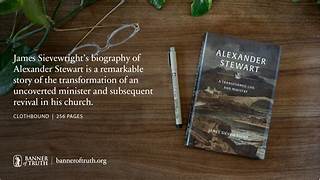
Alexander Stewart…a man we didn’t know before, but are blessed to meet here. Banner of Truth keeps gifting us with a steady supply of biographies of unknown giants. Calling them “giants” is not hyperbole. Don’t let their relative unknown status fool you. They are men of renown in Heaven, something like a continuation of Hebrews 11. Alexander Stewart is a worthy addition to the publisher’s growing collection.

If you have read some of the previous biographies from this publisher, you know to expect a few things. The man is going to be pious, zealous, and living a life consumed by the Lord Jesus Christ. In most cases, revival taking place during his life, even though justly credited to the Lord, is consistently found. All of that is true of Mr. Stewart.

What is different about him from some of the other biographical subjects they have published? Probably the thing that stands out the most to me is how he came to Christ. He was a pastor before he became a Christian. That certainly is not ideal, but the story itself is fascinating. You will always be saying to yourself as you read, I think he’s close, and yes, he reaches the point of becoming a believer and jumps right into a very dedicated life. You almost wonder if this book could be a help because it seems likely that we live in an age where many people are even perhaps deeply involved in Christian work while they do not yet know the Lord.

From there, the biography is more to the general pattern, but it is a pattern that we should hope starts happening more again. Only God can bring revival, but this is what it looks like. A book like this will make you crave it.

This book, like the others, is beautiful and is of impeccable binding. It’s a little smaller in height and looks a little different while retaining a definite attractiveness. It may not take quite as long to read as some of the others, but it is an absolute blessing. I say keep sending these biographies our way, and while we are at it , let’s pray that the Lord starts sending these revivals again.

I received this book free from the publisher. I was not required to write a positive review. The opinions I have expressed are my own. I am disclosing this in accordance with the Federal Trade Commission’s 16 CFR, Part 255.
Colossians (WBC) by Clinton Arnold

This is an erudite, massive commentary in spades. Mark it down as far less tedious than we might often label commentaries on this scale. Mr. Arnold is not like some commentators who have a whole string of commentaries like, say, Douglas Moo, but he is rather that one who walks for years with one book of the Bible (well he did Ephesians too). The twenty years Arnold spent on Colossians makes him able to deliver on a magnitude that not many people can. He probably knows how many times Paul sneezed as he wrote Colossians (yes he believes Paul is the author), or what he had for lunch.

The thing that is amazing about this book is that the stars were aligned for it to be dull, but it wasn’t. For example, he wrote the most prolific section on the archaeology of the area that I have ever, and I read to the end! He has been there over and over and though he had all the requisite research, he really gave a bird’s-eye view. I simply don’t remember ever seeing something like that before.

Another trick he pulled off is in how he “interacted” with other scholars without turning into a sleep aid. He more weighed them in the balances and found them wanting. Consider the authorship of Colossians by Paul that has had pot shots taken at it for years. Arnold took the four categories of language, style, theology and historical plausibility and analyzed all the evidence for scholarly opinion. Sometimes the evidence was suspect while at other points it just didn’t exist, more like pulled out of the air. Read the excursus on Bujard where he took Bujard’s own data and proved him wrong.

In the commentary proper discussing the Hymn look how he exposed Kasemann. He wasn’t ugly about it, but proved it was merely a collection of unproven assumptions. As fascinating as it was to read, it’s also bewildering that such nonsense can enter scholarship and dominate it.

There are things mentioned in Colossians chapter 2 that are difficult to grasp even if the larger picture is quite clear. I really appreciated Arnold here. The discussion of “magic” is a weird scholarly exaggeration in many ways, but Arnold is for sure an expert on that line.

His writing on the Household Code was restrained and yet helpful. He really didn’t get in the whole egalitarian versus complementarian discussion, as much as just stating what the text was saying. He didn’t skirt it, but was as thorough as ever. I appreciated much of what he said there.

This is an outstanding commentary. Its scholarship is impeccable while what the rest of are after is here if you will invest just a bit of time. I don’t think you’ll regret it.

I received this book free from the publisher. I was not required to write a positive review. The opinions I have expressed are my own. I am disclosing this in accordance with the Federal Trade Commission’s 16 CFR, Part 255.
A Guide to Biblical Commentaries (11th Ed.) by John Evans

Here’s a book I love and use regularly, at least I have for over a decade with previous editions. So I deliciously devoured this new edition when it arrived. I have personally reviewed several of the new entries here that have been published since the last release, but I really value his assessments.

He’s the best in the field for these kinds of recommendations and it isn’t even close. And, yes, I’ve seen all the others. His presentation is the most logically organized and his evaluations, though a bit complex, can be followed to advantage if you read his explanation a time or two.

His work is what Spurgeon’s was long ago and Cyril Barber’s works were a generation ago. Strangely enough, he denigrates Barber for being too dispensational. Methinks a few reformed/covenantal theology titles got extra stars for that alone here just as Barber flipped it before. And let’s don’t even discuss what Spurgeon said of Plymouth Brethren writers. But it’s no problem in any of them. Find their bias and adjust accordingly. The bias is real enough that not holding Mr. Evans’ theology may get more negative comments than, say, a very critical or liberal volume. I’ll never understand that, but the world has passed me by in many ways anyway . Still, I wouldn’t even think of not having and using this book.

He tries to write for pastors, but he’s just as interested, and maybe more, for the scholarly volumes. Pastors, don’t worry about that as you’ll know inherently how to adjust. If you compensate for the few biases, you will I think find evaluations easy to line up with. At least I did. You might occasionally disagree. For me, he’s far too harsh on the EEC on the Epistles of John (Gary Derickson). He drowned on the differing theology and overlooked the impeccable exegesis. But that is mostly rare.

This can really help you plan and build a library. Even if like me you have a fair number of the books reviewed, you’ll see something you’ve just got to have. I’ve just got to grab Morales on Numbers after reading here. Grab this book, read it, and let the fun begin.

I received this book free from the publisher. I was not required to write a positive review. The opinions I have expressed are my own. I am disclosing this in accordance with the Federal Trade Commission’s 16 CFR, Part 255.
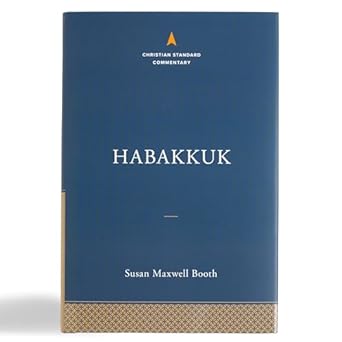
Habakkuk (CSC) by Susan Maxwell Booth

Habakkuk gets a plush treatment here. Because this volume succeeds on so many levels, I see it as the best single volume on Habakkuk around.

The depth of the Introduction quickly becomes apparent and serves as a forerunner to what the whole commentary will be. Authorship and dating are well established. The Historical Background section is thoroughly enjoyable to read and even makes good theological reflections. After the requisite section on the text, literary concerns are deeply surveyed. Next, one of the best sections on structure that I’ve seen in major commentary series in a long time is given. Whether you fully conclude as does the author, you will love the fullness with which that subject is broached. Equally helpful, Habakkuk’s place in the Book of the Twelve was quite imaginatively sketched.

The skills introduced in the Introduction cascade out through the commentary proper. 350 pages on Habakkuk is perfect for your main commentary on this prophet. I’ll give this volume the highest recommendation. 

I received this book free from the publisher. I was not required to write a positive review. The opinions I have expressed are my own. I am disclosing this in accordance with the Federal Trade Commission’s 16 CFR, Part 255

Romans (NTL) by Beverly Gaventa

This volume brings the NTL quite close to completion. The volume on Romans in any New Testament series will tell you much about its theological predilection. That is surely true here. This series gives perhaps the clearest presentation of a mediating or critical perspective. That is not my perspective at all, but I often read at least one entry from that side of the fence to stretch myself. This series’ best contribution is often theology that really gets you thinking. This volume succeeds along all those lines.

In fact, Gaventa is an especially translucent writer (or she has a grand editor). Your eyes will easily glide along the page understanding fully her thinking whether you agree or not. Often, when you don’t agree you will still find not as abrasive of arguments as we commonly find. If you are of her theological persuasion, you may develop a deep appreciation of this book.

After a large bibliography, she jumps into the Introduction. She begins by jumping into an orientation to how she approached this commentary including her influences. I wish more commentators used that method. I found she was true throughout to what she said here and I appreciate the transparency.

Again, appreciating transparency and agreeing with what was transparently presented are not the same thing. For example, she says she reads Paul “with a hermeneutic of generosity.” She then cites as an evidence things Paul has said. She states “and there are, to be sure, elements in the letter that disturb me, particularly Paul’s use of same-sex relations as evidence of humanity’s refusal to recognize God as God.” That statement raises far greater questions than merely commentary matters on Romans like, say, what moral system do we use to judge the Word of God? I mean, what’s higher or truer that we could use? If it can be produced, why aren’t we studying it instead of Romans anyway? See what I mean.

At least she tries. In her commentary on Romans 1&2 she twists the passages relating to homosexuality until they are contorted beyond recognition. Her description of Roman views of gender hierarchy (page 68) are beyond the pale in describing what Paul was saying. It came across as an act of desperation that on the one hand apologizes for what Romans actually says to saying it’s still a good book on the other. I can’t see how that would satisfy people on either side of the fence. Don’t misunderstand—I’m neither obsessing on this issue or stating it’s one of the main themes of Romans, but I do believe it might help you understand what you have in store for yourself between the covers of this volume.

With that settled, expect nice exegesis within the confines of her perspective. When she’s on, she’s really on because of her superior writing skills. Barth is clearly her greatest influence and that tells you what to expect doctrinally. Theological nuggets are to be found as well.

If you are like me and are conservatively minded and seek light on a different perspective with theological assists, you will find what you are looking for here. If you possess a critical mindset, you will too.

I received this book free from the publisher. I was not required to write a positive review. The opinions I have expressed are my own. I am disclosing this in accordance with the Federal Trade Commission’s 16 CFR, Part 255.
The 30 Days Series Bundle by Trevin Wax

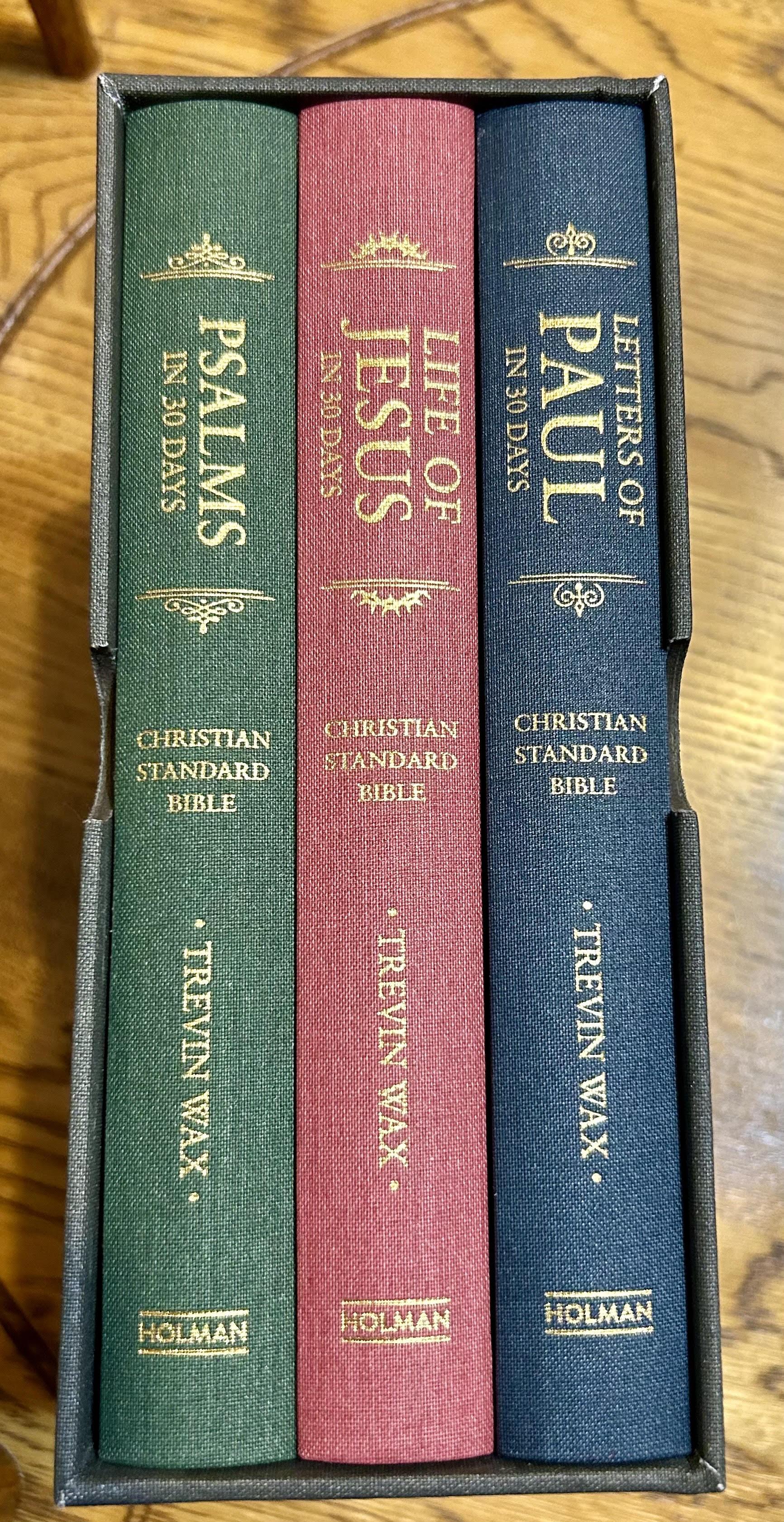
This gorgeous set is a boon to one’s devotional life. It’s actually three popular titles to use for one month each with a morning, mid-day, and evening reading. The first one covers all 150 psalms in a month. That’s a cool undertaking for sure. The next volume covers the life of Jesus by a collection of key passages in the Gospels. The final one comes from the letters of Paul.

Every entry has a short call to prayer followed by a “Confession of Faith” for morning entries. The evening portion substitutes a “Confession of Sin”. Next, there’s a canticle followed by the Biblical reading. After the Gloria, you get the Lord’s Prayer in every entry. The selection ends with a short famous prayer and a blessing. It’s a nice design.

The set itself makes you think of an heirloom set. The volumes look so sharp in the slipcase. These books will easily last for many years.

It would be impossible to not benefit from these books and I recommend them. Mr. Wax envisioned these volumes masterfully and you will be blessed.

I received this book free from the publisher. I was not required to write a positive review. The opinions I have expressed are my own. I am disclosing this in accordance with the Federal Trade Commission’s 16 CFR, Part 255.

CSB Notetaking Bible, Expanded Reference Edition, Brown LeatherTouch Over Board

Here is a lovely Bible for those who enjoy note taking directly in your Bible. As for the translation, this is the Christian Standard Bible, which is one owned by Holman Publishers. There’s a short article at the beginning where they explain their approach to making this translation. They say they combine the best of formal equivalence and dynamic equivalence to produce what they call optimal equivalence. I did a little checking and they offer the KJV as well.

The one in front of me for review is the “Brown Leather Touch Over Board”. It’s an attractive hardback volume that seems well crafted. Others options they provide are “Cream Suede Soft”, “Floral Cloth Over Board”, and “Sea Depth Leather Touch”. They are all nice and cater to various tastes, but I prefer this brown one by far.

They give ample room for notes. To have that space for notes you have to give up something. Even though it’s a reference Bible, there’s not many other features outside those references. That’s no problem though because you’d only pick this one if you specifically wanted space for notes. Personally, I love a Bible with the note taking space. I’ve used one for many years. My scribbled notes would be worthless to others and probably illegible. Still, they are so helpful to me. Mark me down as firmly in the note taking Bible camp.

I received this book free from the publisher. I was not required to write a positive review. The opinions I have expressed are my own. I am disclosing this in accordance with the Federal Trade Commission’s 16 CFR, Part 255.
How Do We Know? by Dew and Foreman

Here’s another volume in the “Questions in Christian philosophy” series that distills what I imagine would be a semester-long class. I enjoyed the earlier one on Logic especially, and found this one on epistemology helpful too. Though I read theological works regularly, this material is new to me. The subject itself, not the author’s writing, can be challenging. At times philosophy has split the hair too finely on what it is to “know”, and yet how powerful is the thought that we can “know” something.

As for the book itself, it’s clearly written. Often the examples are catchy and effective to make the idea clear. I imagine Dew and Foreman would be engaging teachers. The only problem I had with the book is that too often they wouldn’t pick a side. They never failed to give you the strengths and weaknesses of every viewpoint, but it almost seemed like they never champion any one of them. They never really forged their own new way forward either. Since this was newer material for me, perhaps I wanted that feature more than usual. Especially I wanted to know how a Christian ought to think as so many of the philosophers were not Christian. I am not saying they didn’t give information that you could dig out, perhaps, and find your own opinion. But that design would be better for those who are well-versed on the subject. I hope my one criticism of the book is not actually more one of my own self than of the authors, but I’ll leave that to your judgment.

Still, when I have a question on epistemology, I’ll be reaching for this book.

I received this book free from the publisher. I was not required to write a positive review. The opinions I have expressed are my own. I am disclosing this in accordance with the Federal Trade Commission’s 16 CFR, Part 255.