Rediscovering Discipleship by Robby Gallaty

download

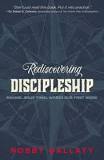
“Making Jesus’ Final Words Our First Work” reads the subtitle as it reveals the passion for discipleship that you will find between the covers of this book. I have never read a book that biblically makes the case for discipleship as well as this one. Beyond that is the practical guidelines given by one with much experience. There’s seven chapters on the why and six on the how.

Part One includes an in-depth look at how Christ made disciples. The chapter on “Thinking Like A Hebrew” is profound in its insights and one of the most powerful in the book. Then he got into the type of people Jesus discipled–blue collar, untrained, and young–and shows us there might be better candidates around us than we supposed. He also makes sure that we don’t lose sight of the goal that the disciple be transformed in the image of Christ. 

He looks at discipleship historically as well going back to Augustine. His analysis of Wesley’s effective methods will really get you thinking. His thought that a comma in the KJV did the most damage to discipleship seems overdone, but otherwise his historical insights seem hard to refute.

The second part of the book highlights what he has learned from personal experience. His way is not the only way, but his experience makes him deserve our ear. Finally, he makes a clear distinction between evangelism and discipleship. Discipleship is for believers! This work deserves the prominent place on our shelves for often use.
   

I received this book free from the publisher. I was not required to write a positive review. The opinions I have expressed are my own. I am disclosing this in accordance with the Federal Trade Commission’s 16 CFR, Part 255.

A Lost God in a Lost World by Tinker

lost

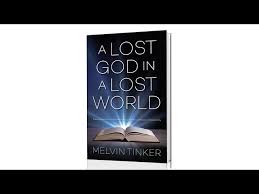
Are you sad about where Christianity is in our world today? Are you sure that it is mostly run amok? Do you wonder if you have your own head on straight? Then you will likely find comfort and guidance in this volume. Its subtitle “From deception to deliverance; a plea for authentic Christianity”  tells us that much of the problem could be the kind of Christianity many of us have.

The Foreward by David Wells and the author’s Preface are succinct, powerful, and well-written descriptions. Then, to carry the case forward,  we are treated to nine expositions from Scripture that strongly make the point. It is powerful, in my judgement, to let the authoritative Scriptures make the case. Though I might disagree on a sentence or two by the author, these are excellent expositions.

I particularly enjoyed his perceptive discussion of idolatry from Isaiah 44:9-23 called “When God Is Weightless”. Pride is also grandly exposed in his examination of Ezekiel 28 (I still see Satan where he does not, but his interpretation is the perfect application). Philippians 2:5-11 made an outstanding study on Christ and the cross. When we are discussing the big picture this book tackles we must make our way by Christ and His cross. He naturally ends with expositions on the Second Coming and a need to be heavenly minded.

This book is both thought provoking and a blessing, and I recommend it.
 

I received this book free from the publisher. I was not required to write a positive review. The opinions I have expressed are my own. I am disclosing this in accordance with the Federal Trade Commission’s 16 CFR, Part 255.

Old Fashioned Church? (IBTR #64)

A battle rages on today that will last until Jesus comes–the battle between traditional church and something newer or contemporary. I fall in a more conservative line than many, yet do not get as worked up about some of the newer stuff as some do. In the Independent Baptist world the battle is even more intense than in other circles. There is not, to my mind, some simple answer that is beyond dispute. In either case the argument will go better if there is no one in the room from the other side.

Still, there is an unusual phenomenon in these days. Some advertise themselves as being one of the few that still do “old fashioned church”. Again, if someone says they are traditional or conservative, those terms at least make sense. We have some idea what that means and it seems at least fair advertising.

While there is not one uniform model of the churches that call themselves old-fashioned, some of them carry a few similar traits. We should, too, specify that calling ourselves old fashioned when we feel the whole world is running ahead of us is a fair and common usage of the word. To use it, though, as many do now should have a more accurate time element to it–it should be at least a little ancient.

In my unscientific observation, I have noticed many of these churches will have conservative music, though it may have some get-up-and-go to it. Others may prefer a great deal of shouting. Others a very specific order of service. I have nothing negative to say about any of it. Phrases like “have it your way” come to mind; or as they said where I grew up, “More power to you.”

The funny thing is how did those specific things become the standard bearer of being old fashioned? Right or wrong, how far back can you really trace them? If you carried one of these old fashioned services back just 100 years, how do you think it would have been perceived? Or how about going on back to the frontier in colonial days? Do you think you would have been thought some sort of modern usurper of the godly way of doing church? I think you likely would have. I think we have no evidence that our “old fashioned ways” look anything like what a service led by the Apostle Paul would have.

A lively, yet very conservative, piano piece would not have been accepted in the not-so-recent past. I have read of the scandal the first organ playing brought to church services in the Middle Ages. 

It is a fair discussion to try to figure out what is appropriate for our churches, or more importantly, what would please Christ. Whether we all arrive at the same answer, we should all seek the Lord till we think we are where He would want us to be. On the other hand, I don’t see how we are going to make much progress on the discussion between ourselves until we learn to choose our words more carefully. I am not sure “old fashioned” as often used is very accurate.

Find all articles in the series here.