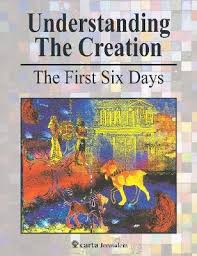
Understanding the Creation–Another New Carta Release!

book und crea.jpg

You will not have encountered a work on Creation like this new title by Menashe Har-El before! It’s not a polemic on Creation, but a look at the landscape of Israel fashioned by the hands of the Creator. He has already co-authored the outstanding Understanding the Geography of the Bible in this same lavish photogenic series of unique books (9 X 12 inches) that wonderfully supplement your atlas library.

After an Introduction that overviews the physical aspects of Israel, there’s a section based on “who laid the foundations of the earth” from Psalm 104 that describes how the land formed the way it did. Several Scriptures are marshaled to make the case. Next, there is a section on volcanic activity and how it shaped Israel. Earthquakes and waves are also reviewed. The Book of Job is mined thoroughly in putting this incredible picture together.

He looks at stone, rock, and flint (zur), as well as gold. From there, he surveys iron, copper, and other raw materials. The book turns toward early craftsmen in Israel before looking at trees and other vegetation. You will be surprised by all the author uncovers.

As you would expect, the Carta maps, graphs, and other pictorial treasures are featured to advantage throughout. All these specialty atlases are a treat and this one is no exception!

I received this book free from the publisher. I was not required to write a positive review. The opinions I have expressed are my own. I am disclosing this in accordance with the Federal Trade Commission’s 16 CFR, Part 255.
Knowing God Through the Old Testament by Christopher J. H. Wright

book know god

Having three titles by Christopher J. H. Wright between the covers of one attractive hardback is a treat indeed. I’ve found all his writings to be theologically perceptive, devotionally warm, and personally helpful. He reminds me much of his mentor, John Stott, only that the Old Testament is his specialty while Stott’s was the New Testament. That’s not to say that he mimics him in any way, just that he writes with that same spiritual penetration. The scholarship is always topnotch, but the spiritual concerns just rank a little higher—as of course they should.

These three titles deserve to be together. You can figure that out by the titles alone. Knowing God the Father Through the Old Testament, Knowing Jesus Through the Old Testament, and Knowing the Holy Spirit Through the Old Testament weave together perfectly to take the role of each member of the Trinity as revealed in the Old Testament in this compilation.

The book on Jesus was the first title written back before it became apparent that he would pen the trilogy. It has been popular enough to call for the second edition in 2014, which is the edition here. The latter two books were originally published by publishers other than IVP. This edition will the one you will want for all three titles.

Since I happened to be studying the doctrine of the Holy Spirit, I really dug into that title for this review. What the Old Testament has to say on the Spirit is somewhat more obscure than the later revelation of the New Testament and help is appreciated. Wright masterfully found the Spirit on the pages of the Old Testament in five chapters on the Creating Spirit, the Empowering Spirit, the Prophetic Spirit, the Anointing Spirit, and the Coming Spirit. He really helped me crystallize my thinking in places where I really needed the help. Glancing through the other two, I what the same clear thinking and good writing throughout.

This book is a treasure that you simply must have at hand. I love it and highly recommend it.

I received this book free from the publisher. I was not required to write a positive review. The opinions I have expressed are my own. I am disclosing this in accordance with the Federal Trade Commission’s 16 CFR, Part 255.
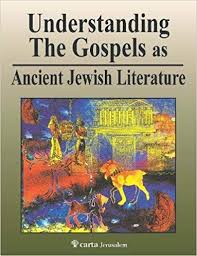
Understanding the Gospels as Ancient Jewish Literature–a New Carta Title!

book und gos gar.jpg

Carta continues its line of interesting, creative, and colorful titles that address something that you will be hard pressed to find somewhere else here in this lovely volume. Though only 40 pages, they are 40 large (9 x 12inches) eye-appealing pages. In every case, Carta’s unparalleled Bible atlas resources fill out the work of a text prepared by an accomplished scholar. In this title, Jeffrey Garcia, takes the Gospels and looks for what they reveal about ancient Judaism. Really, it’s a look at how the Gospels and Judaism shed light on each other.

The introductory section covers the journey of scholarship on these issues. He works his way through a succession of what he calls sources for understanding the Gospels including the Hebrew Bible, other Jewish literature, the Dead Sea Scrolls, Josephus, rabbinic literature, and Philo.

Even better is the section that delves into the geography of Israel in the times of the Gospels. The pictures and maps here are superb. From there, he takes us through Jewish political history. Be sure to check out the chart on the family of Herod the Great. Then, as you might have predicted, he looks at Jewish life in those days in a helpful, detailed section that covers several pages.

In the section on Jewish styles of teaching that exams Jesus’ use of parables as well as Halakhah. Along the way, you get a penetrating overview of Jewish methods of Bible interpretation. The final section looks at some unique elements of what Jesus shared with insights from Judaism.

I’ve you’ve had the privilege to use some of these titles from Carta, you know what to expect. Mark this down as another title worthy of the reputation that Carta has developed over the years.

I received this book free from the publisher. I was not required to write a positive review. The opinions I have expressed are my own. I am disclosing this in accordance with the Federal Trade Commission’s 16 CFR, Part 255.
Psalms 73-150 (NAC) by Daniel Estes

book nac ps

Well, we’ve been waiting for this one for a long time! The New American Commentary (NAC) series came out in a fairly timely manner, but the Psalms had to be reassigned for undisclosed reasons. In any event, the editors secured Daniel Estes to cover Psalms 73-150 in this volume and redeemed the lost time by securing this greater firepower of a seasoned commentator. He has already made his mark in the Wisdom books by writing a handbook on the Wisdom books and Psalms as well as commentaries on Job and Solomon’s Song. He’s the kind of scholar you need for a commentary like this NAC volume and he delivers!

Since this volume will be the second on the Psalms in the NAC series, the overall introduction to Psalms will appear in the forthcoming volume. I’ve just heard that Mr. Estes has signed on to do the volume on Psalms 1-72. It likely will take a few years, but I’m excited that he will get to give us a complete work on the Psalms now. Still, in this volume there is for now an introduction for how Mr. Estes approaches Psalms 73-150.

Pastors, especially, will appreciate his approach (though I imagine scholars will be pleased as well). For each psalm, he provides a look at form, structure, and setting, quality commentary, a succinct summary of theme, a brief look at intertextuality, the main theology, and a section on response to help a believer use the psalm to advantage.

I evaluated this commentary by reviewing some psalms that I had recently studied and that were more freshly on my mind. I liked what I found in this book! This volume will be much help to a wide variety of users. I’ve said for years that this series is the best overall for pastors because it balances so well all the goals you might have for thoughtful but not overly voluminous commentary. In addition, it doesn’t hurt that it will only cost about two-thirds to half of what you will pay for most commentaries. I give it the highest recommendation.

I received this book free from the publisher. I was not required to write a positive review. The opinions I have expressed are my own. I am disclosing this in accordance with the Federal Trade Commission’s 16 CFR, Part 255.
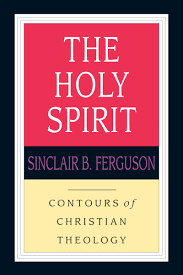
The Holy Spirit by Sinclair Ferguson

book hs ferg

There’s no doubt that Sinclair Ferguson is a savvy theological writer. There’s no doubt that the Contours of Christian Theology series by IVP is a theological heavyweight either. While I couldn’t exactly call this my favorite Ferguson title, it did dig deep as the series is known to do. Books in this series don’t merely regurgitate the main tenets of a doctrine but linger where it makes sense to look under stones where treasure might be found. I always reach for this series when I’m starting a detailed study of a particular doctrine.

Chapter 1 introduces the Holy Spirit in an effort to shorten the distance that stands between Him and most believers while explaining all kinds of theological perspectives. Chapter 2 looks at the Spirit of Christ by explaining “Paraclete” and scoping out the relationship between Christ and the Spirit. Chapter 3 looks at the gift of the Spirit by examining Pentecost. Chapter 4 tackles the ongoing aspects of Pentecost. Chapters 5 through 7 wades through the Spirit’s role in salvation. I felt the author bogged down in a pet subject here. His theological positions are well known, and whether you agree or not, perhaps some of this would have fit better in a different book. Chapter 8 looks at other issues involving the Spirit and salvation like first fruits and sealing. Chapter 9 reviews the relationship between the Spirit and the body before chapter 10 dives into the explosive territory of gifts. The final chapter on the “Cosmic Spirit” serves as a great conclusion.

Ferguson always stretches my mind. Whether I agree with him or not, I always find a warmness of one who loves Christ as he writes. There’s no way I’d study the Spirit and not see what he has to say.

I received this book free from the publisher. I was not required to write a positive review. The opinions I have expressed are my own. I am disclosing this in accordance with the Federal Trade Commission’s 16 CFR, Part 255.
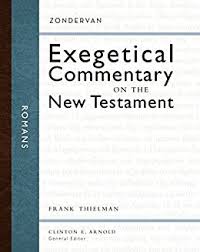
Romans (ZEC) by Frank Thielman

book zec rom.jpg

The Zondervan Exegetical Commentary on the New Testament (ZECNT) continues its sustained excellence in this latest release on Romans by Frank Thielman. Thielman has already proven his commentary writing skills by writing a well-received work on that other deep Pauline Epistle of Ephesians. In addition, he’s written on Paul as well as New Testament theology. Writing a commentary on Romans would be, I would guess, one of the toughest assignments, but as you can see, he is up to the task. Besides the necessary credentials to predict a winning commentary, Thielman’s actual results live up to expectations.

The Introduction was not as full as in some such works, but what he did tackle met with superb results. The historical background came alive as he took us back to the Rome of Paul’s day. The way he transported us to those days was far more captivating than the normal sterile approach that we commonly meet. When he transitioned into Christianity in Rome it only got better as was the section where he brought Paul’s life into the equation. There’s a little on the text of Romans before we get an outline and bibliography.

I’m a fan of the unique approach to every passage. It’s far superior to others that have tried to make its own way like, say, WBC. You get literary context, main idea, diagrammed translation, structure, exegetical outline, all followed by a quality explanation of the text and concluded with theology in application. In my view, that covers all the right bases. Thielman uses that design to advantage here in one of the most important epistles of the New Testament.

The competition is fierce on Romans but mark this down as a winner all the way.

I received this book free from the publisher. I was not required to write a positive review. The opinions I have expressed are my own. I am disclosing this in accordance with the Federal Trade Commission’s 16 CFR, Part 255.
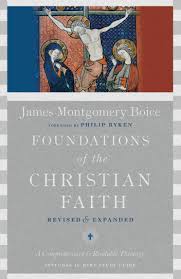
Foundations of the Christian Faith by Boice

bookfoundboice

Here’s a book that deserves to slide not only onto your shelves among your important systematic theologies, but also to be open on your desk. James Montgomery Boice was the quintessential pastor-scholar. In other words, there’s real scholarly depth in what he shares to go along with a full-orbed real-life outlook. I’ve used several of his volumes that cover books of the Bible to real profit. I’ve seen glowing recommendations in book review sources printed in the 1980s of the original four volumes that later turned into this volume as well as the current reviews that suggest the luster hasn’t faded as is often the case in many academic titles. It’s nice to finally get my own crack at it.

What, then, is my own opinion of its value? Strangely enough, I opened it first to the section on the Spirit of God because I had been doing some in-depth study on that doctrine. I noticed two things quickly: a) he had something to say that was worth wrestling with, and b) it was not a regurgitation of what I just recently read in the well-known systematic theologies I consulted.  As I looked further into the book, I then saw that the section on the Spirit wasn’t even the best one in the book!

The book is an attractive hardback that also now has a study guide. I don’t agree with every conclusion he arrives at, but this is a quality resource. Better still, for pastors, it will help you see how to take deep theological concepts and make them palpable to those in the pew without devolving into watered-down, calorie-free doctrine trying to pass itself off as a real theological meal.

I received this book free from the publisher. I was not required to write a positive review. The opinions I have expressed are my own. I am disclosing this in accordance with the Federal Trade Commission’s 16 CFR, Part 255.
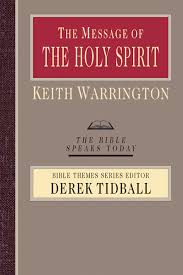
The Message of the Holy Spirit (BST) by Keith Warrington

book hs warr.jpg

The Holy Spirit is expertly drawn by Keith Warrington from all across Scripture in this helpful volume that’s part of the Bible Speaks Today (BST) series. I’ve used BST volumes on various books of the Bible for a long time but have really started loving these ones on Bible Themes. The design is simple but laudable: develop the doctrine directly from properly-exegeted texts. You probably have your systematic theology volumes at hand, but these books come from another angle and add something meaningful to your studies. I’ve not seen a loser among those I’ve perused.

After a bibliography and a brief Introduction, this book jumps in at Genesis and starts finding the Holy Spirit. The flow of argument follows the path the best works on the Holy Spirit do. We have two chapters on the Holy Spirit in the Old Testament. Next, the author lingers over the relationship of Jesus and the Holy Spirit in six chapters covering the Holy Spirit in the Gospels. In my estimation, this section carried the most bullion on its pages. Part Three, as you would expect, presents the Holy Spirit in the Book of Acts. The final seven chapters on the Holy Spirit in the Epistles covers many additional doctrinal subjects involving the Spirit such as gifts, the role in salvation, sealing, unity, and filling. You need not agree with every point made to glean from this careful walkthrough of the most important biblical passages on the subject.

I enjoyed this book, underlined many sentences, wrote the most important page numbers in the front to be able to return to them, and clarified many points along the way. What more could I ask for from this book well worth seeking out?

I received this book free from the publisher. I was not required to write a positive review. The opinions I have expressed are my own. I am disclosing this in accordance with the Federal Trade Commission’s 16 CFR, Part 255.
The Gospel of Mark by Witherington

book mark with.jpg

Perhaps you’ve already used other works by prolific commentator Ben Witherington. If so, you’ll know what to expect—broad research, lively writing, and a socio-rhetorical emphasis. This work on Mark is up to the same level as others of his that I have used. No one understands how he gets such copious amounts of writing done, but that is not ours to know. What is apparent is that he grades out well on quality amid all that quantity.

The Introduction will prove that he’s not skimming but probing deeply all the scholarly questions. In the first sections, unsurprisingly, he addresses genre and rhetoric. Next, he wades through Mark’s sources. I find both his ideas and the overall importance of the whole question of sources off the mark, but he again is clear as a bell on explaining what he thinks. There are, however, some good points on Mark’s style that he digs out that help no matter your perspective on sources themselves. From there he slides into authorship and dates Mark from 66 to 70. I enjoyed his explanation of Mark’s social context much more. You’ll find plenty of insights there as well as the next section on structure. He gives perceptive analysis on both Mark’s Christology and the widely-debated Messianic Secret viewpoint. All in all, the Introduction is a deep dive running over 60 pages.

The commentary proper maintains his level of work. You’ll see things introduced in the Introduction fleshed out even more in the commentary. There’s real value here and the writing remains engaging throughout.

I don’t always agree with Witherington’s conclusions, but I appreciate the clarity that he presents his with. Some scholarly writing so entertains differing viewpoints that you’re not quite sure which ones the author holds. Witherington will not fail you on that count ever.

While this commentary would not be my first choice for an exegetical commentary, it’s an excellent volume to give another angle. He’s not a parrot of any other commentator and that means you will get food for thought throughout.

I received this book free from the publisher. I was not required to write a positive review. The opinions I have expressed are my own. I am disclosing this in accordance with the Federal Trade Commission’s 16 CFR, Part 255.

A Legacy of Preaching–A Great Two-Volume Set!

book leg preach.jpg

Every preacher will want this set! Occasionally, a book about the history of preaching will come along and serve as a mighty motivating force for preachers. Dedication, zeal, power—all put on display in the lives of the best preachers of days gone by. It’s been at least 20 years since a book that blends biography and preaching counsel in a way that makes you want to grab a biblical text and get going has come along. This set, edited by Benjamin K. Forrest, Kevin L. King, Bill Curtis, and Dwayne Milioni, has filled that lacuna for our generation.

Improving on the works of previous decades, this book employs a winning design. First, specialists on the subject were secured to pen each entry. Second, each writer had to follow the same format: historical background (biography), theology of preaching, methodology for preaching, and contributions to preaching. There’s even a helpful bibliography for each entry. This format was particularly helpful. You got to know the preacher and his preaching. You could say that the approach maximized the impact you could glean from each one.

Volume One covered the Apostles to the Revivalists. You got to think of Paul and Peter as preachers before heading into some of the Church Fathers. Next, Medieval times were covered including Bernard of Clairvaux, John Huss, and Girolamo Savonarola. The Reformers including Luther, Tyndale, and Calvin as preachers were given a look next. Puritan greats Perkins, Baxter, Owen, Bunyan, and Henry were great selections in that group of preachers. Only four revivalists were covered including Edwards, Wesley, and Whitefield, but they were preaching giants.

Volume Two that covered the Enlightenment through modern times was even better. I love Nineteenth-Century British preaching and so was Part One here was my favorite in either volume. Alexander Maclaren and Charles Spurgeon are two of my favorite preaching heroes and real insights could be gained from their entries. I’ve read much on both of them, but I learned more here. The story of Gipsy Smith surprised me too.

Many more outstanding entries finished out the book. You might quibble over a few selections or omissions, (Where was G. Campbell Morgan?), but these volumes are pure gold. Mark them off as must-have books for the preacher! I’ll be consulting my set many times in the coming years I’m sure.

I received this book free from the publisher. I was not required to write a positive review. The opinions I have expressed are my own. I am disclosing this in accordance with the Federal Trade Commission’s 16 CFR, Part 255.