The Lord Is Good by Christopher R. J. Holmes

book lord good

This book by Christopher R. J. Holmes challenged me. For sure I enjoyed it, and I learned great things, but this is no lazy summer afternoon reading. You can decide for yourself, but I need books like this. I need to be pushed past the fluff that prevails in Christianity today. I can’t say I agreed with every single word he said or every conclusion he drew, but I felt a connection with Mr. Holmes because I felt on every page that he sincerely believed that the Lord is good!

Don’t let the subtitle “seeking the God of the Psalter” lead you to believe that this is some sort of commentary on the Book of Psalms. Truth be told, had the printer accidentally left off the subtitle, I would probably have only thought that he quoted Psalms more than other books of the Bible. This observation is no criticism, however, because this is a profound theological work. Still, you will likely see a few verses in the Psalms far differently after reading this book.

As I read this book, I thought at times that the author could easily go to the field of philosophy and succeed. Still, his biblical observations were rich. At other times, I thought he had something of a love affair with Thomas Aquinas and was at least a member of the fan club of Augustine and Barth. For me, what he drew from each of them and put together was closer to what I would think than any one of the three individually. Mr. Holmes deserves credit because it would be a gross misrepresentation to say that he merely regurgitated what others had said. These three theologians have put such a strong stamp on what Christianity believes on the subject of the goodness of God that it would be impossible not to greatly interact with them in a book like this one.

There are nine chapters in this book that cover the subjects of simplicity, you are good (that doesn’t mean what you first think), goodness and the Trinity, you do good, the good Creator, goodness and evil, teach me your statutes, goodness and Jesus Christ, and perfection. I could only read one chapter, or sometimes only half a chapter, at a time. There was too much to take in! Every chapter was great, but my personal favorite was the one on goodness and evil. That one really helped some light bulbs come on for me.

I’ve learned that this book is part of IVP’s series entitled Studies in Christian Doctrine and Scripture. Though this is by far the most interesting subject to me of those released, if this series can turn out more works like this one it will be a dandy.

We all have our systematic theologies on our shelves, but this is the type of theological work that needs to find its place beside them. The Lord’s attribute of being good is brought alive here and I’m a richer person for it.

I received this book free from the publisher. I was not required to write a positive review. The opinions I have expressed are my own. I am disclosing this in accordance with the Federal Trade Commission’s 16 CFR, Part 255.
Leviticus (OTL) by Gerstenberger

book lev otl

Erhard Gerstenberger replaces Noth in the Old Testament Library (OTL) series with this volume. It strikes me differently than many other volumes in this series. Whereas many volumes in the series make a greater theological contribution than an exegetical one, this one gives us little theology around its exegesis. The whole series is known as a critical one yet in this volume it seems more pronounced to me. Known as a form critic, the author talks much about sources. Those discussions seem nebulous and unprovable to my mind and give the text a devastating uncertainty. How deeply you fall into the critical viewpoint will determine how high you rate this volume. If you’re more conservative like me, you may not find the theological compensations that some others in the series provide.

The Introduction begins by describing difficulties in reading the Bible. The aforementioned subject of sources arises immediately. He describes the audience as “a colorless someone” and does not demonstrate a passion for the book of the Bible that he commentates on that is found in the best commentaries. He discusses authorship, subsequent influence of cultic law, and structure. He takes the critical line across the board.

In the commentary proper, he does provide a lot of exegesis (the best trait of the book) and a lot of detail about the ceremonial things that are foreign to our thinking. He would bring up things like feminist concerns that put him at odds with the text.

In a nutshell, critical scholars will likely rate this book highly, those doing exegesis will appreciate some details, and more conservative readers will likely not enjoy this book as much as several others in the series. In fairness, it could be that the Book of Leviticus doesn’t lend itself to the same kind of theological treatment several others in this series provide.

I received this book free from the publisher. I was not required to write a positive review. The opinions I have expressed are my own. I am disclosing this in accordance with the Federal Trade Commission’s 16 CFR, Part 255.
Becoming a Welcoming Church by Thom Rainer

book bec wel

Thom Rainer has become the guru of all things local church. This book, another of the small, attractive, hardback volumes published by B&H Publishing that he has turned out over the last few years, teaches us how to become a welcoming church. It’s not so much a book of suggestions as one of necessity because all of its recommendations are drawn from real data from church visitors.

Rainer explains that visitors often don’t rate our friendliness, facilities, or services in the way we do. Our friendliness is often in “holy huddles” that excludes visitors, our facilities are laid out nicely only because we’ve had years to get used to it, and our services are not as geared to visitors as we have allowed ourselves to believe.

Chapter 1 chips away our determined belief that we are welcoming and asks us to be willing to do a true evaluation. He warns us that we may be in for quite a shock. In this chapter, he explains what consistently bothers visitors (hint: it has nothing to do with doctrine or gospel faithfulness) and what makes for happy visitors. As I read over these lists, I marveled that there was no spiritual element, just practical things that we could work on. Chapter 2 goes on and give us what he calls a confidential report where he digs deeper into how our churches are viewed by visitors. Chapter 3 looks at the practical items of signage, parking, and websites. Chapter 4 describes how visitors expect a safe and clean church and what is most important on that list. Chapter 5 explains greeters and welcome centers while Chapter 6 is a concluding chapter. There is an appendix with a church facility audit and secret guest survey.

If you are familiar with Rainer’s work, this book is classic Rainer. I happen to be blessed to be a pastor of a friendly church yet see several things on these pages that we need to shore up. This book is a practical, top-notch work and I highly recommend it!

I received this book free from the publisher. I was not required to write a positive review. The opinions I have expressed are my own. I am disclosing this in accordance with the Federal Trade Commission’s 16 CFR, Part 255.
Determined to Believe? by Lennox

book determined

This book is one of the most thoughtful, balanced, and needed volumes that I have seen a long time in the always turbulent Calvinist/Arminian debate. He takes us back before these later labels to the more correct label of theological determinism and helps us wrestle with the sometimes tricky concepts of the sovereignty of God and human freedom. In tone and in content this book is a tour de force that refuses to accept the theological constraints that have been foisted upon us and takes us back to the Bible itself.

Both in the brief prologue and the introduction on what this book is about, we immediately notice something that is rare in this debate –civility. There’s no way he can agree with everyone, but he is altogether kind to those with whom he cannot. Occasionally, I almost wondered if he’s spilled too much ink in a cautious attempt to be respectful. Still, that may be what this subject demanded.

He had me by just a few pages into chapter 1. His discussion of the nature and limitations of freedom brought the subject into clear focus as he explains the difference between the liberty of spontaneity and the liberty of indifference. He introduces terms like determinist, indeterminacy, compatibilists, and incompatiblists. He makes an indisputable case that there can be no morality without freedom, nor love without free will. He gives a great discussion of how there are both atheists and Christians who hold to determinism. Chapter 2 dives into various kinds of determinism including physical determinism and theistic determinism. The logic employed is flawless and unanswerable. Chapter 3 develops some of the earlier thoughts to discuss the moral problem with determinism. As you will see, there is a major moral problem with it. Chapter 4 with its interesting title of “weapons of mass distraction” talks about the plethora of labels that have overtaken this debate. He turns us to Scripture and shows us what the apostle Paul said about following men or labels and how perhaps this debate stumbles out of the gate in the approach to it that so many of us take.

Chapter 5 begins part two that now feels comfortable to address God’s sovereignty and human responsibility head on. Again, he writes with clarity and does not allow himself to be bound by the clichés that have robbed the debate of its vitality. In chapter 6 he turns to the biblical vocabulary and instead of turning to a theological book goes straight to the Bible to discuss and define foreknowledge, predestination, and election. Part three begins with a chapter on human capacity and its limits and it is where we are now able to discuss some of the common arguments given, including some of the letters of TULIP. The next chapter looks at the human condition and digs into God’s righteousness and justification by faith. Chapter 9 tackles what the Bible says about being drawn by the Father and coming to Jesus Christ. Chapter 10 asks hard questions about the common explanations given for regeneration. Chapter 11 cycles to the gospel and human moral responsibility. The balance of the book looks directly at some of the key Scriptures that serve as the battleground of this issue: Romans 9 – 11 (5 chapters), several passages on assurance (1 chapter), several passages on endurance (1 chapter), and passages in Hebrews (2 chapters). The book ends with a very brief epilogue and questions for reflection.

I don’t see how you’d want to dig into this subject without availing yourself of this incredible book. I give it the highest recommendation!

I received this book free from the publisher. I was not required to write a positive review. The opinions I have expressed are my own. I am disclosing this in accordance with the Federal Trade Commission’s 16 CFR, Part 255.
Philippians and Philemon (NTL) by Cousar

book ph ntl

This volume by Charles Cousar in the New Testament Library (NTL) series covers Philippians and Philemon. I’ve read some unfavorable reviews on this book mostly owing to its brevity. While that charge is true, I came away rating this book better than I expected. It does hold to the familiar NTL pattern, is less critical than I anticipated, and provides insight.

After a bibliography, we have an Introduction to Philippians. He begins by acknowledging the theme of joy. (How could we trust any book on Philippians that ignored the theme of joy?) He introduces us to both the city and the church at Philippi. Its history in the Roman Empire, as well as its significance, are clearly reviewed. He refers, as he has at other times, on the fondness Paul has for this congregation. When he moved to the subject of authorship and integrity of the letter, he admits that the Pauline authorship is rarely questioned. Though he mentions a few absurd prognostications about authorship, he seems comfortable with Paul. As to place and date of writing, he presents briefly the evidence for Rome, Caesarea, and Ephesus before cautiously choosing Ephesus for this commentary. He explains Paul sending this letter as a thank you to the Philippians. He discusses structure and suggests an outline. As with any of these Philippian commentaries, he discusses the opponents. I thought he provided his best observations when he discussed the message of the letter. In less than 70 pages, he provides a commentary on Philippians that is worth consulting.

I felt the Introduction to Philemon was simply too short and discussed too little. What he did discuss, though, was some of the things that you wrestle with in such an introduction. The commentary on Philemon was unacceptably brief.

While this volume may not rate as highly as some in the series, it’s by no means a throwaway volume, at least on Philippians. If you are filling out your NTL collection, there is still value here as this author does his best work in providing nuggets for the preacher.

I received this book free from the publisher. I was not required to write a positive review. The opinions I have expressed are my own. I am disclosing this in accordance with the Federal Trade Commission’s 16 CFR, Part 255.
Preaching God’s Word (Second Edition)

book preach 2nd.jpg

Now in its second edition, this book by Terry G. Carter, J. Scott Duvall, and J. Daniel Hayes lives up to its subtitle: a hands-on approach to preparing, developing, and delivering the sermon. It strikes me as a success because of its clear value as a first textbook for someone learning how to put together a sermon. It does better than most at keeping a big-picture view as it assembles the pieces of the sermon. There are other books that, perhaps, dive deeper into the details – the works of Jerry Vines comes to mind – but this one may be “just right” for a wide array of readers.

The book is divided into three parts: eight chapters on developing and preaching a sermon, three chapters on preaching the New Testament, and four chapters on preaching the Old Testament. Duvall and Hays had earlier produced a hermeneutics textbook entitled Grasping God’s Word, which is also published by Zondervan, so this book assumes an understanding of hermeneutics and goes straight into putting together a sermon after that work has been done.

The first chapter introduces their 11-step sermon process. Chapter 2 covers the first five steps: grasp the meaning of the text in their town, measure the width of the interpretive river, cross the principlizing bridge, consult the biblical map, and grasp the text in our town. As you can see, they word this information in practical terms aimed at our maximum understanding. Again, they avoid being either too shallow or too deep and succeed at being “just right”.

After all that wonderful help for putting the sermon together, the other two parts on the Old and New Testaments look at the genres and their unique challenges for the preacher found in each. Most of these were wonderful. The value of the chapter on preaching Revelation might correspond to your own prophetic viewpoint. Actually, they tell you that that might be the case when you preach the Book of Revelation.

If you’ve been called to preach and are trying to figure out how to put a sermon together, you owe it to yourself to check this book out.

I received this book free from the publisher. I was not required to write a positive review. The opinions I have expressed are my own. I am disclosing this in accordance with the Federal Trade Commission’s 16 CFR, Part 255.
First and Second Chronicles (Interpretation) by Tuell

book chron i

Here’s a moderately critical work that’s one of the best in the Interpretation Bible Commentary series. Steven Tuell, who has also written a succinct commentary on Ezekiel that has been well received, writes on First and Second Chronicles here. Though you might consider a work of 250 pages on both books of Chronicles a little too brief, he makes good use of every page. To my mind, the best contributions of this book are the theological reflection on and a big-picture presentation of Chronicles.

The Introduction begins by opining the diminished acceptance of Chronicles compared to other books of the Bible. He explains that to many Chronicles is little more “than a dull rewrite of Samuel and Kings”. The author works against that comman viewpoint and champions Chronicles as a unique book of the Bible that covers the broadest historical range of any book in the Bible – from Adam to the Babylonian Captivity. Though I don’t care for the label “Deuteronomistic history” as a description of Joshua through Kings, he gives good explanation of how they interact, are similar, and are different. He highlights how Chronicles uses other scriptures widely. In fact, he says, “the most distinctive feature of Chronicles is the large degree to which it reproduces other biblical texts”. He looks at Chronicles as it relates to Ezra and Nehemiah, and from there launches into an explanation of date and composition. The dating he explains is more conservative than what you might expect in a more critical series. The brief section on the theology in Chronicles is just a preview of what you will find in the commentary itself.

While this commentary might not be my first choice when I’m digging into a passage in Chronicles, I still see it as a great second choice and one that I will enjoy consulting. What I see in the commentary proper is of distinct value.

I received this book free from the publisher. I was not required to write a positive review. The opinions I have expressed are my own. I am disclosing this in accordance with the Federal Trade Commission’s 16 CFR, Part 255.
Understanding the Ecology of the Bible-An Exciting New Carta Introductory Atlas

book carta ecology.jpg

If you’ve had the privilege of reading some of these attractive introductory atlases published by Carta, you know how rewarding they can be. This latest one on the ecology of the Bible by prolific writer Paul H. Wright, who excels on works of Bible geography, history, and even a major Bible Atlas, is one of the best yet. Mr. Wright has already produced in this series of introductory atlases works that include an overview of the New Testament, one on geography, one on biblical kingdoms and empires, and one on biblical archaeology. Mastering these works by Mr. Wright will greatly expand your Bible study.

Don’t for a minute think of 48 large pages on the ecology of the Bible as an esoteric effort. So much is missed in Bible passages when you miss these details. For many of us, the natural world and ecology we live in are so different from that of the Bible that we can easily miss even the main flow of the story itself. I believe a thorough perusal of this work would be the equivalent of a college class. Fortunately, the writing is accessible and even beginners can glean so much here.

It’s thorough enough to be effective as I didn’t see any ecological or natural world item that was overlooked. The pictures were so beautiful that I would catch myself thinking, wow, I’d like to be there! The maps are all top-notch and what we’ve come to expect in any work bearing the Carta imprint. Again, I especially adored this title and I’m a fan of all these Carta introductory atlases. Look this one up!

I received this book free from the publisher. I was not required to write a positive review. The opinions I have expressed are my own. I am disclosing this in accordance with the Federal Trade Commission’s 16 CFR, Part 255.
Jeremiah and Lamentations (Reformation Commentary on Scripture)

book jer rcs

Don’t think of this as a curiosity piece. There’s real value here as previous generations have distinct contributions they can make to our understanding of the Bible. The Lord has spoken in every generation. This large, beautiful volume is the latest release in the Reformation Commentary on Scripture series. Covering Jeremiah and Lamentations, this book of 600 large pages makes many important observations that can enrich our Bible studies.

I can’t imagine the amount of research that was required by J. Jeffery Tyler to produce this volume. Without a doubt, this book also has great historical value. The trends in the Reformation become clear as a more careful return to the text of Scripture is apparent in their work. My only problem with calling this a historical work would be a possible misinterpretation that you couldn’t use it as a commentary. For my time, this volume’s expository light is its greatest asset. In addition, the Book of Jeremiah is always one of those where you would appreciate a little more help.

All of this is not to say that you will fail to enjoy the historical contribution this book makes. There is a general introduction that overviews the Reformation and explains what this commentary series is trying to accomplish. There’s also a wonderful introduction to Jeremiah and Lamentations in the Reformation. I enjoyed reading it. There were the names I was very familiar with and those I had never heard of it at all. All facets of the Reformation were fair game for this work and even the Anabaptists were brought into the commentary. Some of those unknown names reminded me that all of our heroes are not household names. Many more than we know are worth knowing. When the introduction explained the main themes that the Reformers often discussed it’s easy to see that those probably are the true themes of Jeremiah and Lamentations. Maybe new is not always better!

Every passage gets an overview and commentary from the Reformers in the commentary section. Again, it must’ve taken so much sifting to cherry pick for us readers the best of the bunch. The editor doesn’t excessively quote any one Reformer and that variety strengthens the work.

I’ve only reviewed a few of the volumes in this series so far, but I really like this one! When complete, this series will be a force to be reckoned with. In the meanwhile, don’t miss this great commentary on Jeremiah and Lamentations!

I received this book free from the publisher. I was not required to write a positive review. The opinions I have expressed are my own. I am disclosing this in accordance with the Federal Trade Commission’s 16 CFR, Part 255.

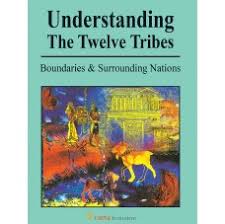
Understanding the Twelve Tribes–A New Carta Resource!

book carta 12

This volume is another of the outstanding, profusely illustrated resources published by Carta. At this point, they have several of these large paged (9 X 12”) in a similar design that will provide the opportunity for much pleasurable study for Bible students. This new volume by Menashe Har-El is a fascinating treatment that will open up your thinking to all kinds of new things you didn’t know. The author is a biblical geography expert who has taught and written widely. This work illustrates several biblical passages that only gets a cursory look in other volumes. The word “fascinating” is not an exaggerated description.

The subtitle “Boundaries and Surrounding Nations” articulates the value of this book. After a broad introduction, the geographical division of the land among the tribes at the time of Joshua is explained. Some boundaries were natural landmarks while others were erected with piles of stones or fences. There’s further development of the tribe of Dan because it went to the coast and interacted with the area that the Philistines came and possessed. Dan also inhabited the far north of Israel.

From there, the book surveys the boundaries and major neighbors of Israel. First, we have a fascinating look at Egypt. From there we learn about the Amorites, more details about Egypt because of the interaction with Moses and the Exodus, Dedan and Tema (modern Saudia Arabia), and the land of Edom (later called Petra).

Several other people groups and nations are mentioned, and many Scriptures are quoted. These places are too quickly skimmed over by Bible students. In truth, they impact a large swath of Scripture and this book gives incredible help to our understanding.

The book is filled with incredible Carta maps! Without doubt, Carta maps are the best in print today. They are colorful, accurate, use miles/feet for measurement, and specifically illustrate what the author is discussing. The map of ancient routes in the holy land and the one showing the boundaries of the Tribes are exceptional. Other maps effectively bring alive the boundaries of Israel. Additionally, the pictures are beautiful and outstanding throughout.

Do you love digging in your Bible studies? You will want this book!

I received this book free from the publisher. I was not required to write a positive review. The opinions I have expressed are my own. I am disclosing this in accordance with the Federal Trade Commission’s 16 CFR, Part 255.