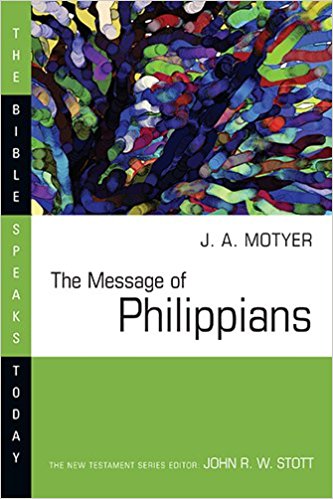
2 Great Motyer Commentaries!

Here are two wonderful commentaries by Motyer:

  1. The Message of Philippians

book bst p

This commentary by the late J. A. Motyer in the Bible Speaks Today (BST) series is a reminder of what a commentary should be. Though he describes lots of trees, he never fails to present the forest. I even got the feeling as I read this book, and it’s a feeling too often missing in many commentaries, that the author here believed God wrote the book. He seemed in awe of Philippians. Christ was magnified throughout.

In the Introduction, the author did not run straight to the theme of joy as most do. In fact, he opened with: “Philippians is a joyful letter, but its undercurrent is a sober realization that time is running out.” It made sense to me! He described the setbacks Paul was facing here in his second missionary journey. He further gave a good view of Philippi as Paul’s first European church. He well highlighted unity, the coming day of the Lord, and the Person of the Lord Jesus Christ as the three keys to understanding the book. More than referencing other scholars, he referenced other scriptures. That probably tells you more than anything what kind of commentary this is, but I believe we all need some of this type.

The commentary itself was outstanding. I will always pull out Motyer even if there’s only time to glance at a few volumes. He may have been an Old Testament expert, but reading here you would assume the New Testament was his field.

There’s a chance this volume may be replaced as the BST series updates volumes from time to time. Since this author has passed away, I want to encourage the publisher to slide this volume over and print it as a classic. It’s a warm volume, so I give it the warmest recommendation.

I received this book free from the publisher. I was not required to write a positive review. The opinions I have expressed are my own. I am disclosing this in accordance with the Federal Trade Commission’s 16 CFR, Part 255.

2. The Message of James
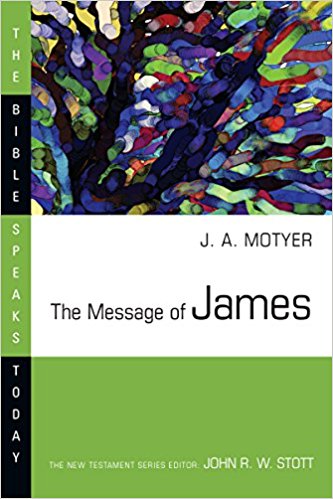
book bst j.jpg

Here’s another of the great commentaries by the late J. A. Motyer in the Bible Speaks Today (BST) series. In my view, it’s as top-notch as the one on Philippians. The author had written a smaller book several years ago on James but rewrote it in its entirety to produce this commentary. It’s not as scholarly or exegetical as many commentaries, but he captures James’s message better than most.

The Introduction is quite perceptive. Though he doesn’t talk about structure per se, he gives some great insights on how the book is designed. He sees the themes of conflict, holiness or a Christian lifestyle, the recovery of the local church, concern to meet the needs of others, and our tongue. He shreds a few of the strange scholarly trends that somehow has reached ascendancy and brings us back to basic conservative conclusions. It’s good stuff!

The commentary is outstanding at getting to the heart of what James is talking about. It would be a mistake to not add this inexpensive commentary to your collection.

I received this book free from the publisher. I was not required to write a positive review. The opinions I have expressed are my own. I am disclosing this in accordance with the Federal Trade Commission’s 16 CFR, Part 255.

Ruth (Interpretation) by Sakenfeld

book ruth i

This slim volume is part of the Interpretation Bible Commentary series. It’s one of the best books available to lay out the critical position (your other option is the OTL from the same publisher). Of the two, this one probably has more theology and insights to glean for the preacher. The author writes clearly, accessibly, and with enough verve to hold the reader’s attention well.

The Introduction begins by stating that Ruth is the favorite of many Bible readers and that it could be viewed as “an island of tranquility”. The first main section discusses date and purpose. Though I can’t accept all her conclusions, she reviews well the scholarly debate over the date. She also well explains the belief that the point of Ruth is to reinforce David’s right to the throne. She goes on to state her belief that the use of David is only “the storyteller’s means of legitimizing an inclusive attitude towards foreigners, perhaps especially toward foreign women”. I personally doubt that’s the theme of the Book of Ruth, but it was interesting. She also confesses that tradition has long held Samuel to be the author of this book and doesn’t counteract it other than stating her fascination with the possibility of a female author. She’s indecisive on what exactly the levirate marriage’s role is. She well describes the canonical context. The best part by far of the Introduction is her description of theological themes. She sees the themes as the peaceable community, examples of loyal living, and the place of God in the story.

The commentary itself makes for interesting reading. Yes, there are critical conclusions at many junctures, but also many perceptive theological points. I felt I got exactly what I was looking for in this commentary, and for those looking for the same, I highly recommend this book.

I received this book free from the publisher. I was not required to write a positive review. The opinions I have expressed are my own. I am disclosing this in accordance with the Federal Trade Commission’s 16 CFR, Part 255.

In Defense of the Bible–A Great Book!

book def bib

This is a needed book! Its subtitle explains its approach: “a comprehensive apologetic for the authority of Scripture”. Edited by Steven B. Cowan and Terry L. Wilder, this book gathers a fine collection of articles by competent writers. I was especially impressed that though these writers were scholars, they truly succeeded in writing in a way that was accessible to a wide array of readers.

You will find this book to be expertly designed. After a brief introduction, Part One discusses philosophical and methodological challenges in four chapters. That covers things like special revelation, the veracity of the Bible, what higher criticism says and how it’s wrong, as well as our ability to understand the Bible. Part Two explains textual and historical challenges in seven chapters. In this section, you will learn how that neither the Old nor the New Testament are hopelessly corrupted. You will also be made aware of the reliability of each Testament and how to view apparent contradictions in the Bible.

Part Three, which was my favorite, looked at ethical, scientific, and theological challenges in six chapters. It covers subjects that often bewilder Christians when the world attacks. What about the Bible’s apparent condoning of genocide? There’s a profound chapter answering the question–does the Bible condone slavery and sexism? There’s another chapter on the Bible’s conflict with science, and though I did not agree with all of it, it did give some help in understanding the subject. Considering the charges that our Bible is missing several books, the chapter on Canon was especially enlightening. All in all, every chapter was a winner.

My library contains just about every major work on the authority and inspiration of the Bible. I have all the old standbys and love them, but if I had to choose to recommend just one volume to someone wanting to really dig into this subject, I would choose this book. The main reason that it’s so valuable is that it takes a high view of Scripture just as the best books have in the past while focusing on the most turbulent issues that our non-Christian culture hurls at the Bible today. It’s fair to say this book succeeds in both defending the Bible and in offering an apologetic for our day. Every pastor could benefit from this book, but I recommended it to anyone feeling overwhelmed by the criticisms widely broadcast against the Bible in our day. This is an awesome resource!

I received this book free from the publisher. I was not required to write a positive review. The opinions I have expressed are my own. I am disclosing this in accordance with the Federal Trade Commission’s 16 CFR, Part 255.

God’s Mediators (NSBT) by Andrew Malone

book gods mediators.jpg

God’s Mediators: A Biblical Theology of Priesthood by Andrew S. Malone is one of the latest entries in the versatile New Studies in Biblical Theology (NSBT) series by IVP. This series is so multifaceted that you never know what to expect next. Often, you come across a subject that you haven’t studied much before. Such is the case for me in this volume. I had no books in my library from the scholarly world on the concept of priesthood in the Scriptures. Now I have a go-to volume on the subject with this book that probes the subject deeply.

The first chapter is an orientation. The author gives his own background, followed by the academic and pastoral perspectives that are out there. In addition, he seeks to place priesthood within biblical theology.

Chapters 2-5 make up Part One that looks at God’s individual priests. There’s a chapter on the Aaronic priesthood, one on biblical antecedents to that priesthood, and one on Old Testament prospects. Chapter 5 is one of the most interesting in the book as it looks at new-covenant transformations. That entails a careful look at Jesus as priest both in the Gospels (that’s a scholarly debate) and in Hebrews (where it’s obvious to everyone).

Part Two looks at God’s corporate priesthoods in three chapters. I could see the wisdom in breaking down the subject between individual priests and corporate priesthoods. Chapter 6 looks at Israel as a kingdom of priests, which was quite enlightening. Chapter 7 considers the church’s priestly commission in the New Testament. It was also helpful, but I thought he might talk more about the individual priesthood of the believer. Chapter 8 was a nice conclusion. The book ended with a lengthy bibliography.

This title is another good one in this much-appreciated series. My only gripe is that I thought the author retained a wee bit too much scholarly jargon when perhaps a little less would have made the book more accessible to a wider audience. No one, however, could possibly have a gripe with his thorough scholarship.

The book helped crystallize my thinking on a few points, and so it’s much appreciated. I recommend this book!

I received this book free from the publisher. I was not required to write a positive review. The opinions I have expressed are my own. I am disclosing this in accordance with the Federal Trade Commission’s 16 CFR, Part 255.

Portraits of a Pastor (Books on Ministry #21)


book pas

Pastors, we need this book! The nine key roles of our work are beautifully discussed in this outstanding volume. By taking these nine traits we can re-calibrate to what the Lord intended us to be. All the things that are not on the list are almost as instructive as the nine that are. Pastors who have a different nine main spheres of work need to do some soul-searching. If that happens to be the case, this is the perfect book for you. Even if you already agree that these are the main nine areas of the ministry that God has given you, you have here the reminder you may be needing as well as the cheerleading to pick up the mantle of God’s design in a world of contrary voices.

Jason Allen is both the editor and one of the contributors. Danny Akin, Jason Duesing, Ronnie Floyd, Christian George, Owen Strachan, Don Whitney, Jared Wilson, and John Mark Yeats round out the list of contributors. Sometimes a book seems cobbled together when it is a group production. In this case, the work has been so beautifully edited that every chapter seamlessly connects with the others. My guess is that Mr. Allen pulled this off by assigning each contributor to his most passionate area. I repeatedly forgot as I read that the author of the chapter I was in was not the author of the chapter before.

Mr. Allen gives a brief introduction that describes the almost maddening situation that most pastors are thrown into. In other words, they are to fulfill more roles than any human being could. It’s that very same cauldron that pulls them away from doing what they’re supposed to do.

I loved how chapter 1 that described a pastor as shepherd gave this simple outline of our work: 1) shepherds feed the sheep, 2) shepherds love the Lamb, and 3) shepherds trust the Good Shepherd.  Wow! The next chapter discussed the pastor as husband and father. Many pastors fail in this area and this chapter was a superb antidote. Chapter 3 discussed the pastor as preacher and described our primary work as preaching. There was a strong plea for expository preaching here.

The next chapter was on the pastor as theologian. It looked back and reminded us of the place pastors once held in society, and even if that is no longer true it is still our task to be theologians. The next chapter was on the pastor as church historian and I assure you it will make sense once you read it. The following chapter on the pastor as evangelist powerfully challenged us to remember our obligation to the lost. There was a chapter on the pastor as missionary that reminds us of our need to help missionary efforts around the globe. You would expect the chapter on the pastor as a leader, as was the subject of the next chapter, but it was not the self-help type material that has flooded the market for the last 40 years. No, it looked at the need for us to lead in living out the Christian life. The final chapter on the pastor as the man of God, which is a term that has fallen out of use for some but will be appreciated in the context given here, again calls us to personal holiness and is a reminder of the big picture of what we do. Mr. Allen gives a fine conclusion that further ties together what we have just read.

This book is less than 200 pages, is easy-to-read, but don’t let that fool you. It packs quite a punch! Every pastor would do well to grab and read this book.

I received this book free from the publisher. I was not required to write a positive review. The opinions I have expressed are my own. I am disclosing this in accordance with the Federal Trade Commission’s 16 CFR, Part 255. 

First Corinthians (I) by Hays

book gal I.jpg

Richard B. Hayes has given us in this commentary on First Corinthians one of the best volumes in the Interpretation Bible Commentary series. Though I often turn to this series to grasp the critical angle on a book of the Bible, I found this one to be more conservative than several I’ve seen in that series. Mr. Hayes is a captivating writer and that is a pleasant bonus in any commentary.

The Introduction begins with an explanation of setting. When he describes the city of Corinth, he feels that it is not as wild as some writers say. He believes it had only the normal vices of any seaport city. In describing the occasion of the letter, he feels it springs from two factors: a report from “Chloe’s people” that contained alarming news and a letter from the Corinthians themselves asking for clarification on several matters. He explained Paul’s background with the group and the socioeconomic diversity in the congregation. He feels the Corinthians had issues that Paul turns to theological ideas. The section on unity and structure is a little weak as well as the arbitrary comment about certain texts being altered or added. He sees as the major theological themes as Christology, apocalyptic eschatology, embodied existence, the primacy of love, and the transformation of power and status through the cross. His last section is on the major focal points of the commentary. After a brief outline, he jumps into the commentary itself.

The commentary is thoughtful and well done. Take for example the passage of I Corinthians 5:1-13. Because that passage censures the incestuous behavior of someone in the Corinthian church with his mother-in-law, many struggle with the passage or rob it of its urgency. The author stuck to the text but didn’t dodge any of the issues involved. He defended the concept of church discipline. As I said, this book is more conservative than many in the series.

There are, as you would imagine, some places where I just couldn’t follow his conclusions; especially if those conclusions were based on his unsubstantiated claim of a textual alteration or addition. Still, it’s a vivacious effort. I believe it will make a fine addition to your library.

I received this book free from the publisher. I was not required to write a positive review. The opinions I have expressed are my own. I am disclosing this in accordance with the Federal Trade Commission’s 16 CFR, Part 255. 
Revelation (NIGTC) by Beale

book rev NIGNT

This commentary in the New International Greek Testament Commentary (NIGTC) series is considered by many to be the preeminent major exegetical commentary for Revelation on the market today. It’s prized for its work on the Greek and its explanation of Revelation’s Old Testament background. Since this is quite a technical work, the author has also prepared “Revelation: A Shorter Commentary” that effectively presents this work in a less technical manner. Eerdmans publishes it as well.

I should disclose that I subscribe to a premillennial interpretation rather than his “eclectic, redemptive-historical idealist view”. Though he is a brilliant author and knows something about arguing well for his position, he, in my opinion, has too casually addressed those of my persuasion by quoting the most radical authors he could find in our world. For example, he beautifully listed the reasons futurists hold the positions they do, but he does not, in my opinion, do as well countering them. In fairness to him, my bias may have been at work.

This work is thorough. You will figure that out when you see an almost 40-page bibliography. More amazingly, the Introduction is 176 pages! I doubt you will come across a scholarly issue involving the book of Revelation that is not addressed in this massive volume.

In the Introduction Beale spends a great deal of time examining the date of this book. His discussion is primarily between a later date (95 A.D.) and an earlier one (70 A.D.). Though it’s quite a rarity in scholarship, conservative scholars prefer the later one in this case. He brings out the issues from every conceivable angle. Next, he tackles the situation of the churches and the purpose and theme of the book. Regarding authorship, he is open to the Apostle John having written it but argues that it doesn’t matter since it has no effect on the message of the book. After discussing genre, he previews the major interpretive approaches including: the Preterist view, the Historicist view, the Futuristic view, and the idealist views. It’s at the end of this section that he declares his own eclectic view. Since it’s so important in the Revelation, he spends a good deal of time discussing symbolism. He looks at the text of Revelation, the use of the Old Testament in the Apocalypse, the grammar of the Apocalypse. In these sections he is extremely detailed. Next, he investigates the structure of the book and even include some helpful charts. It was my favorite section of his Introduction. He spent time overviewing the disputed significance of Revelation 1:19. In the last section he discusses theology and the goal of the Apocalypse. He sees the important items as suffering in victory, the throne, the new creation, and the place of Christians in the world.

The commentary itself is as detailed as anyone could want. Again, I don’t see how any item could be missed that may pop into your mind. Like me, you may also have a different interpretive outlook on the book of Revelation than the author, but you come here for exegetical help. I see this book as a treasure trove for scholars, but pastors will likely prefer his shorter commentary by the same publisher mentioned above. I imagine this commentary will hold the top spot in the scholarly world on the Book of Revelation for many years to come.

I received this book free from the publisher. I was not required to write a positive review. The opinions I have expressed are my own. I am disclosing this in accordance with the Federal Trade Commission’s 16 CFR, Part 255. 
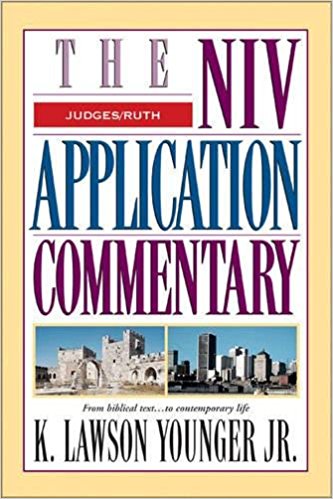
Judges & Ruth (NIVAC) by Younger


book nivac j.jpg

Lawson Younger, Jr., has turned out a fine volume on Judges and Ruth in the pastor-friendly NIVAC series. He did a fine job in pulling out the type of scholarly information that is most beneficial to pastors while also aiding pastors to connect with modern audiences when presenting the text.

In his Introduction to Judges, he begins with a brief discussion of the title of the book and role of the judges in Israel. Since the Book of Judges is anonymous, he spends little time on authorship other than stating that fact. In explaining the purpose of the book, he agrees with Daniel Block that it has to do with “the Canaanization of Israel”. He also discusses chronology, the role of the tribes in Israel, and the concept of “herem” found in Judges. I felt he excelled in his discussion of the structure of the book. In fact, he was more succinct than I have seen in larger works. He describes the double introduction and double conclusion found in the book. He also describes the cycles section and relates how the book differentiates between the major and minor judges. That section was full of insights. Next, he discussed bridging contexts by looking at interpretive issues. His analysis seemed well on the mark.

He does a fine job in his Introduction to Ruth as well. He explains that the author is unknown, and the date of composition can’t really be arrived at by some of the overly subjective ways that some scholars do. He has more to say about canonical status and position. He debunks some scholarly attempts to disprove the unity of Ruth. As we would expect, he well explains the concept of “hesed”. He gave one of the better, brief explanations that I’ve seen. He briefly discusses genre and purpose, as well as the structure of the book. Since it is central to the story he does discuss a few other background issues: the “goel”, the levirate marriage, and genealogy. For both books he provides an outline and a bibliography.

The commentary is ideal for what this series aims for. For each text, he discusses original meaning, how to bridge contexts, and contemporary significance. This is one of the more successful volumes in the NIVAC series. I plan to use it myself when I’m in Ruth and Judges, and warmly recommended to you!

I received this book free from the publisher. I was not required to write a positive review. The opinions I have expressed are my own. I am disclosing this in accordance with the Federal Trade Commission’s 16 CFR, Part 255.
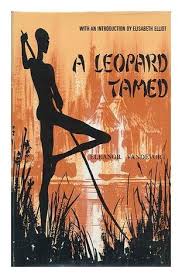
A Leopard Tamed by Vandevort

book leop

I’ve never read a mission story quite like this one. Missions stories make some of the most challenging reading to bolster faith, so I’ve read several such titles over the years. While it’s clear the Lord was at work in this mission story just like I expect in such tales, the frank honesty of the difficulties makes this volume by Eleanor Vandevort unique. The author didn’t even hide the hard questions she had for God in this book. When the back cover says that this book “was too honest for many in 1968”, you can see that this statement is not mere marketing hype once you read the book for yourself. Whoever suggested rereleasing this volume in the 50th-anniversary edition did a favor for us all.

You will do well to read all the preliminaries. Both the Forward by Trudy Summers and the introduction to the 50th-anniversary edition by Valerie Elliott Sheppard as well as the introduction to the original edition by Elizabeth Elliott give the kind of background and perspective that makes the reading of the book more meaningful. Plus, if you’re like me you had not heard of the author, but at least had heard of Elizabeth Elliott. Since I respect Mrs. Elliott, and since she has deep confidence in the author of this book, I began reading this book with complete confidence about the character of an author I’d never heard of.

The author comes out of the gate in riveting fashion when she describes going to watch the rite of passage that young men in Sudan face that entails six horizontal lines being cut in parallel rows on their forehead. I loved how she confessed her original feelings of repulsion for what appeared to be a dark, hedonistic act. It was in this first chapter that she makes us aware of her ability to probe deeply into the meaning other cultures find in certain acts. She was able to separate our faith that we receive from God and should take to the world for our culture that we sometimes confuse with it. That accomplishment alone makes this a book worth reading. Even better, she doesn’t preach at us for confusing our culture with the gospel but just explains the wrestlings in her own soul. Her journey was instructive.

There are all kinds of other thrills. Yes, there’s a scary snake story but as is the case with this author, she looks deeper at their overall view of death and how the young boy would miss out on his markings that proclaimed to the world he was a man. It was a loss the whole family would feel, yet a different sort of loss that we would feel in our culture.

You don’t get very far into the book before you meet Kuac Nyoat, a young man who came to Christ and was trained for the pastorate in the ministry where the author worked. Without a doubt, Miss Vandevort loved, admired, and respected this young pastor. It was through his life that she told her story and tried to separate culture from the gospel. In no way did she sugarcoat his struggles or even his failures. What she was able to do, however, is get to the end of the book with me respecting him just as she did.

This book has the requisite excitement but forces you to do a lot of important thinking too. You will likely enjoy the story so much that you won’t even mind. It’s a beautiful paperback edition and is written so that anyone from a teenager to a seasoned Christian would consider reading it time well spent. It’s a winner that I highly recommend!

I received this book free from the publisher. I was not required to write a positive review. The opinions I have expressed are my own. I am disclosing this in accordance with the Federal Trade Commission’s 16 CFR, Part 255. 

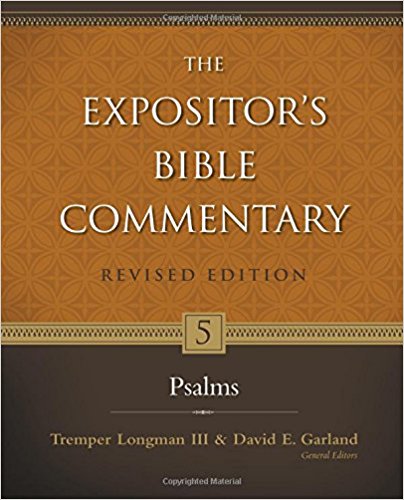
The Expositor’s Bible Commentary (Rev. Ed.) – Volume 5, Psalms

book ebc ps.jpg

This commentary on the Book of Psalms was easily one of the most acclaimed in the original EBC commentary series. Many rate it one of the best on Psalms for pastors while scholars can’t deny its expertise, so it was wise for the publishers to ask Mr. VanGemeren to update his earlier work to extend its life for another generation of pastors.

Though it is not a major revision, the Introduction gives a great overview of the Book of Psalms. The author begins by seeing the place of the Psalms in the life of Israel, and then wisely describes the Psalms as both our word to God and God’s Word to us. That’s an outstanding way to think about the Psalms! Next, he gets into the nuts and bolts of Psalms. That includes a discussion of Hebrew poetry, its use of parallelism, and literary analysis. From there, he dives into the forms and the formation of the Psalter. That includes a breakdown of the types of Psalms, his thoughts on editorial shaping of the Psalms, and doing a holistic reading of the Psalter. In discussing themes, he highlights the names of God, the perfections of God, the acts of God, the hope of redemption and righteousness, the kingdom of God, the Davidic Messiah, and wisdom from above. After a brief section on composition, he gets into structure. That requires going deeper in some of the subjects like parallelism and other literary devices that were brought up earlier. All told, he covers 16 of these literary devices. He reviews literary genre and discusses praise, lament, and other types of Psalms like enthronement, wisdom, and other miscellaneous types. There’s a quite helpful discussion of Psalm titles including people, background, and musical information. There’s a bibliography and outline before he begins the commentary.

The commentary includes the text, verse by verse commentary, and exegetical notes. At key places, there are sections called reflections that go deeper into repeated themes. The commentary itself is superb. I’ve used and loved the old edition for years, and am glad to have this revised edition for the years ahead. They’ve even made the font larger and dedicated the whole of volume 5 for this one outstanding commentary on the Book of Psalms.

Pastors, the hype matches reality! This is a great commentary for you. Don’t miss it!

I received this book free from the publisher. I was not required to write a positive review. The opinions I have expressed are my own. I am disclosing this in accordance with the Federal Trade Commission’s 16 CFR, Part 255.